Oeschinen Lake
📍 Kandersteg, Bernese Oberland, Switzerland
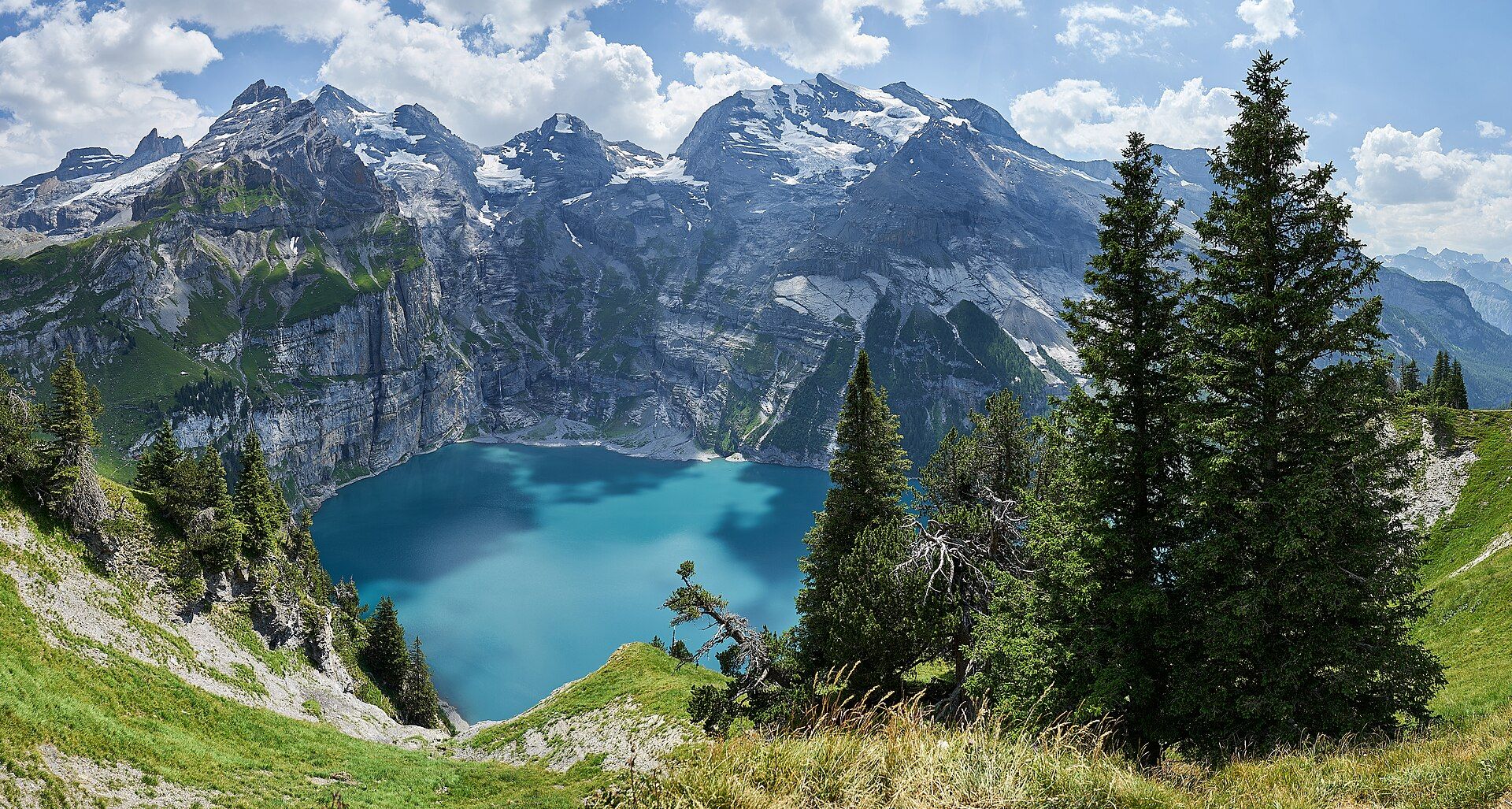
A turquoise mountain lake cupped beneath the snow-streaked Blüemlisalp peaks — part of the UNESCO Jungfrau-Aletsch World Heritage area, reached by gondola and a short walk high above Kandersteg.
What makes it marvelous
The Oeschinensee lies in a natural amphitheatre, dammed long ago by rockfall and fed by meltwater streams that carry fine rock flour, which scatters light into an intense turquoise-blue. Around it the walls of the Blüemlisalp massif rise more than 2,000 metres above the water, streaked with hanging glaciers and threaded by waterfalls. It sits within the Swiss Alps Jungfrau-Aletsch UNESCO World Heritage Site, recognised for its outstanding glacial mountain landscape.
Why visit
It is one of the most beautiful and accessible high lakes in the Alps: a gondola and a gentle 20-minute walk deliver a scene of turquoise water beneath a wall of peaks. You can walk the shore, row a boat, or take the longer panorama trail — and in winter the bowl becomes a snow-play area.
Still deciding?
Oeschinen Lake comes up most often against one other place — each one weighs cost, effort, season and crowds side by side.
What to know before you go
🗓️ Best time
June to October, once the snow has cleared the trails and the lake is ice-free and at its most vivid; the gondola and shore facilities run on a seasonal timetable.
🧭 Getting there & access
Above the village of Kandersteg in the Bernese Oberland. A gondola rises from Kandersteg and a well-made path of about 20–30 minutes leads down to the lakeshore.
Good to know
- Walk the higher panorama trail for the classic view down onto the turquoise lake.
- Go early or stay late — the gondola day-trippers thin out and the light softens.
- Bring layers; the bowl holds cold air even on warm valley days.
Plan your visit
Easy🧭 Getting there
From Kandersteg, Bernese Oberland (via Bern or Interlaken)
- Take the train to Kandersteg, easily reached from Bern or Interlaken
- Ride the gondola up from the village edge
- Walk the well-graded path down to the lakeshore, about 20–30 minutes
- Total travel
- A half-day from Bern or Interlaken
- Time at site
- A half to full day for the shore and panorama trails
- Access
- Open access to the lake; the gondola charges a fare and runs seasonally, so check its operating dates and hours. The paths are well maintained but include a descent and climb back to the gondola station.
🎒 What to bring & consider
- Comfortable walking shoes for the graded but steepish path
- Warm layers — the lake basin stays cool even in summer
- Sun protection at altitude, where the sun is strong
- A Swiss rail/mountain pass, which can cover the train and gondola
👁️ What to expect
- Crowds
- Busy on fine summer days near the shore; quieter on the higher trails and early or late.
- Conditions
- Easy, well-made paths with some up-and-down to and from the gondola.
- Facilities
- A gondola, a lakeside restaurant, boats for hire and toilets.
- The view
- The turquoise lake beneath the Blüemlisalp from the panorama trail, best in the calm, clear light of morning.
Times and requirements are approximate and change with season, weather, and local rules — confirm permits, fares, and schedules with operators before you travel.
Natural riches of the area
- A rock-dammed glacial lake coloured by meltwater rock flour
- The Blüemlisalp massif with its hanging glaciers
- Alpine meadows, waterfalls and mountain streams
- Part of the Jungfrau-Aletsch UNESCO glacial landscape
Local food
- Alpine cheese
- Hard mountain cheeses from the high pastures of the Bernese Oberland.
- Rösti
- Crisp grated-potato cake, a staple of German-speaking Switzerland.
- Meringue with cream
- A regional dessert traditionally paired with thick Alpine double cream.
The Oeschinensee is the picture many people carry of the Swiss Alps without knowing its name: a lake of vivid turquoise set in a rock amphitheatre, with the Blüemlisalp peaks rising more than 2,000 metres straight from the far shore. The colour comes from meltwater, which carries suspended rock flour so fine it turns the water an almost luminous blue, and the lake itself was dammed long ago by rockfall high above the village of Kandersteg. It lies within the Swiss Alps Jungfrau-Aletsch UNESCO World Heritage Site.
Part of its appeal is how easily such a high, wild-looking place can be reached. A gondola lifts you from Kandersteg, and a gentle path of twenty minutes or so brings you down to the water, where you can walk the shore, hire a rowing boat, or climb the panorama trail for the classic view looking down on the lake. Come early or linger late and the day-trippers thin, leaving the turquoise water and the wall of peaks to a quiet handful of walkers.
Oeschinen Lake: common questions
How do you get to Oeschinen Lake?
From Kandersteg, Bernese Oberland (via Bern or Interlaken): Take the train to Kandersteg, easily reached from Bern or Interlaken; Ride the gondola up from the village edge; Walk the well-graded path down to the lakeshore, about 20–30 minutes. Total travel time: A half-day from Bern or Interlaken.
When is the best time to visit Oeschinen Lake?
June to October, once the snow has cleared the trails and the lake is ice-free and at its most vivid; the gondola and shore facilities run on a seasonal timetable.
How long should you spend at Oeschinen Lake?
A half to full day for the shore and panorama trails. Total travel time: A half-day from Bern or Interlaken.
What should you bring to Oeschinen Lake?
Comfortable walking shoes for the graded but steepish path Warm layers — the lake basin stays cool even in summer Sun protection at altitude, where the sun is strong A Swiss rail/mountain pass, which can cover the train and gondola
Do you need a permit or guide for Oeschinen Lake?
Open access to the lake; the gondola charges a fare and runs seasonally, so check its operating dates and hours. The paths are well maintained but include a descent and climb back to the gondola station.
Is Oeschinen Lake crowded, and what are conditions like?
Busy on fine summer days near the shore; quieter on the higher trails and early or late. Easy, well-made paths with some up-and-down to and from the gondola. Facilities: A gondola, a lakeside restaurant, boats for hire and toilets.
Added
More wonders to explore