Killarney National Park
📍 County Kerry, Ireland
Ireland's first national park — a storied landscape of lakes, ancient oak woods and mountains around Killarney, home to the country's only wild red deer herd and its largest surviving native forest.
What makes it marvelous
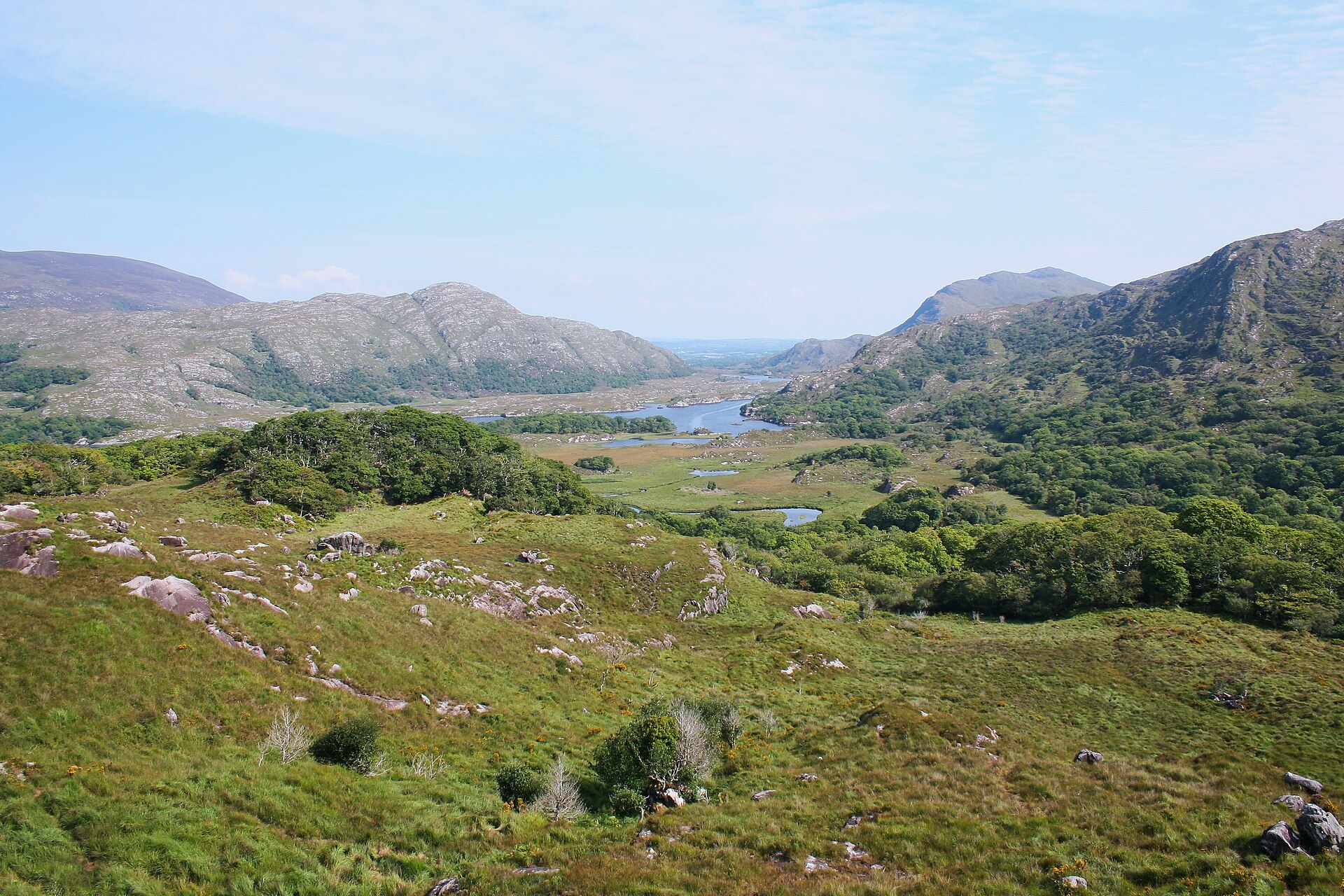
Killarney National Park sprawls across the mountainous heart of County Kerry, where three famous lakes — Lough Leane, Muckross Lake and the Upper Lake — mirror the peaks of the MacGillycuddy's Reeks, Ireland's highest range. Designated in 1932 as the country's first national park, it protects the largest area of native forest left in Ireland, including rare ancient oak and yew woods, along with mountain bog and moorland. It shelters the only herd of wild native red deer to have survived continuously in Ireland, and its blend of Atlantic oakwood and southern climate nurtures mosses, ferns and lichens of international importance.
Why visit
Few places pack so much of Ireland into one park: still lakes dotted with wooded islands, the tumbling Torc Waterfall, the mountain pass of the Gap of Dunloe, and the great house and gardens of Muckross. You can walk or cycle the lakeshore, take a traditional boat across Lough Leane to the ruins of Innisfallen, or ride a jaunting car through the oak woods. It is the beating heart of the Ring of Kerry and one of the most beloved landscapes in the country.
More views of Killarney National Park
Additional photographs of the actual site — each freely licensed, with its photographer and licence credited.
What to know before you go
🗓️ Best time
Spring and autumn are glorious — bluebells and fresh green in May, russet oak woods and rutting red deer in October; summer is warmest but busiest.
🧭 Getting there & access
Reached on foot, by bike, jaunting car or boat from Killarney town, with Muckross House, Torc Waterfall and the lakeshore trails all close by.
Good to know
- Base yourself in Killarney town — the park begins at its edge and much is walkable or cyclable.
- Bring rain gear; Kerry is one of the wettest corners of Ireland year-round.
- Keep your distance from the wild red deer, especially during the autumn rut.
Plan your visit
Easy🧭 Getting there
From Killarney, via Kerry (airport KIR) or Cork
- Reach Killarney town by road or rail from Cork or Dublin
- From the town explore the park on foot, by bike, by boat on the lakes, or by jaunting car
- Total travel
- A day or more from a Killarney base
- Time at site
- A full day for lakes, woods and Muckross; more for the Gap of Dunloe
- Access
- Free open access to the park and trails; Muckross House and some tours charge admission.
🎒 What to bring & consider
- Waterproof jacket for frequent Kerry rain
- Comfortable walking or cycling shoes
- Binoculars for red deer and birdlife
- Layers for cool, changeable weather
👁️ What to expect
- Crowds
- Busy around Muckross and Torc in summer; the lakeshore and hills quickly grow peaceful.
- Conditions
- Easy lakeside and woodland walking; wetter, rougher ground on the mountain trails.
- Facilities
- Full services in Killarney town; visitor centre, café and parking at Muckross.
- The view
- The MacGillycuddy's Reeks reflected in Lough Leane, or red deer among autumn oaks.
Times and requirements are approximate and change with season, weather, and local rules — confirm permits, fares, and schedules with operators before you travel.
Natural riches of the area
- Three interconnected lakes below high mountains
- Ireland's largest native oak and yew woodland
- The only wild native red deer herd in Ireland
- Torc Waterfall and the Gap of Dunloe
Local food
- Kerry lamb
- Mountain-grazed lamb from the hills around Killarney.
- Fresh Atlantic seafood
- Kerry crab, mussels and fish from the nearby coast.
- Brown soda bread
- Dense wheaten soda bread served with butter and seafood chowder.
Killarney National Park is where Ireland first set land aside for the nation, in 1932, and it remains one of the most beloved landscapes in the country. It fills the mountainous heart of County Kerry with a scene that seems almost designed to distil Ireland into a single place: three linked lakes — Lough Leane, Muckross Lake and the Upper Lake — spread beneath the MacGillycuddy’s Reeks, the highest mountains in the land, their slopes cloaked in ancient woodland.
The park guards the largest surviving native forest in Ireland, including rare old oak and yew woods whose damp, mild Atlantic air nurtures a wealth of mosses, ferns and lichens found in few other places. Among the trees roams the only herd of wild native red deer to have survived unbroken in Ireland since the last ice age, and the lakes and bogs draw otters, eagles and countless birds. It is a genuine wild core within easy reach of a busy town.
That accessibility is part of its charm. From Killarney town you can walk or cycle to the thundering Torc Waterfall, ride a jaunting car through the oaks to the Victorian mansion and gardens of Muckross House, row out across Lough Leane to the monastic ruins on Innisfallen island, or head for the dramatic mountain pass of the Gap of Dunloe. As the gateway to the famous Ring of Kerry, Killarney offers lake, forest, waterfall and mountain all in one — the essence of Ireland’s wild beauty, gathered into a single park.
Killarney National Park: common questions
How do you get to Killarney National Park?
From Killarney, via Kerry (airport KIR) or Cork: Reach Killarney town by road or rail from Cork or Dublin; From the town explore the park on foot, by bike, by boat on the lakes, or by jaunting car. Total travel time: A day or more from a Killarney base.
When is the best time to visit Killarney National Park?
Spring and autumn are glorious — bluebells and fresh green in May, russet oak woods and rutting red deer in October; summer is warmest but busiest.
How long should you spend at Killarney National Park?
A full day for lakes, woods and Muckross; more for the Gap of Dunloe. Total travel time: A day or more from a Killarney base.
What should you bring to Killarney National Park?
Waterproof jacket for frequent Kerry rain Comfortable walking or cycling shoes Binoculars for red deer and birdlife Layers for cool, changeable weather
Do you need a permit or guide for Killarney National Park?
Free open access to the park and trails; Muckross House and some tours charge admission.
Is Killarney National Park crowded, and what are conditions like?
Busy around Muckross and Torc in summer; the lakeshore and hills quickly grow peaceful. Easy lakeside and woodland walking; wetter, rougher ground on the mountain trails. Facilities: Full services in Killarney town; visitor centre, café and parking at Muckross.
Added
More wonders to explore