Places · Switzerland

Natural Wonders of Switzerland: The 9 Most Beautiful Places to Visit

9 places in the atlas

Switzerland sits at the core of the Alpine arc, raised by the collision of the African and European plates. Glaciers sculpted its peaks into horns and ridges, gouged its U-shaped valleys, and left behind the clear lakes and rivers that supply much of Europe's water. High pastures above the tree line have shaped a centuries-old dairy culture, while the country's famous mountain railways and cable cars open the high Alps to anyone, not just climbers. Iconic summits like the Matterhorn rise in near-perfect isolation above it all. Below are the 9 natural wonders of Switzerland in the atlas — the most beautiful places to build a trip around, each with what makes it remarkable, when to go, and how to reach it. Best overall time: July to September for hiking, wildflower meadows, and clear peak views; December to April for skiing. The mountain railways run in most seasons.

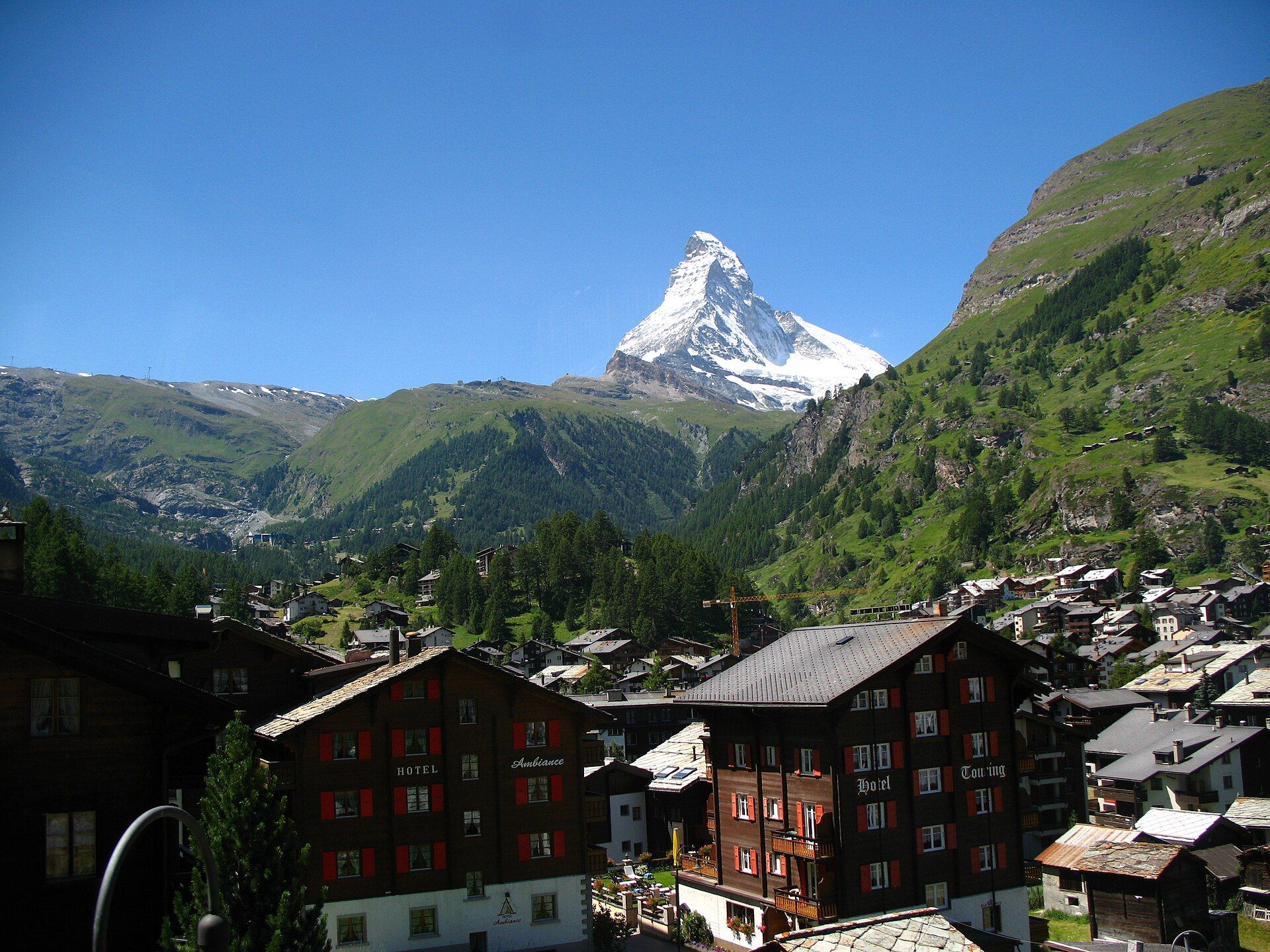
The Matterhorn, Zermatt, Valais — Swiss/Italian border

The Matterhorn

Zermatt, Valais — Swiss/Italian border

The most iconic peak in the Alps — a near-perfect rock pyramid rising in isolation above Zermatt, its four steep faces aligned almost to the compass points, mirrored in still alpine lakes.

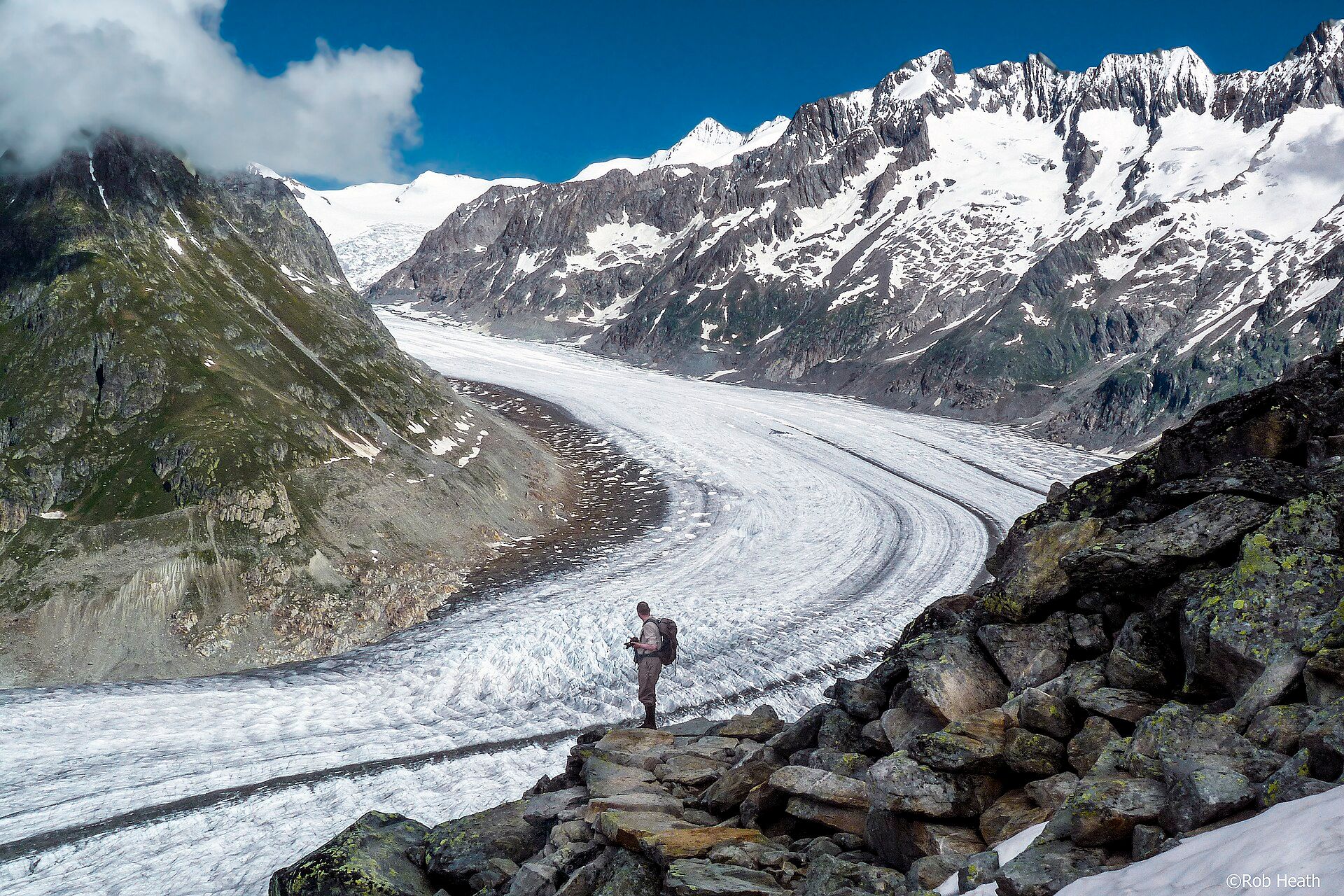
Aletsch Glacier, Valais, Switzerland

Aletsch Glacier

Valais, Switzerland

The largest glacier in the Alps — a 20-kilometre river of ice up to 900 metres thick, curving between 4,000-metre peaks in a vast frozen highway.

Creux du Van, Jura Mountains, Neuchâtel, Switzerland

Creux du Van

Jura Mountains, Neuchâtel, Switzerland

A vast natural rock amphitheatre in the Swiss Jura — a horseshoe of sheer 150-metre limestone cliffs curving nearly a kilometre and a half around a green forested hollow.

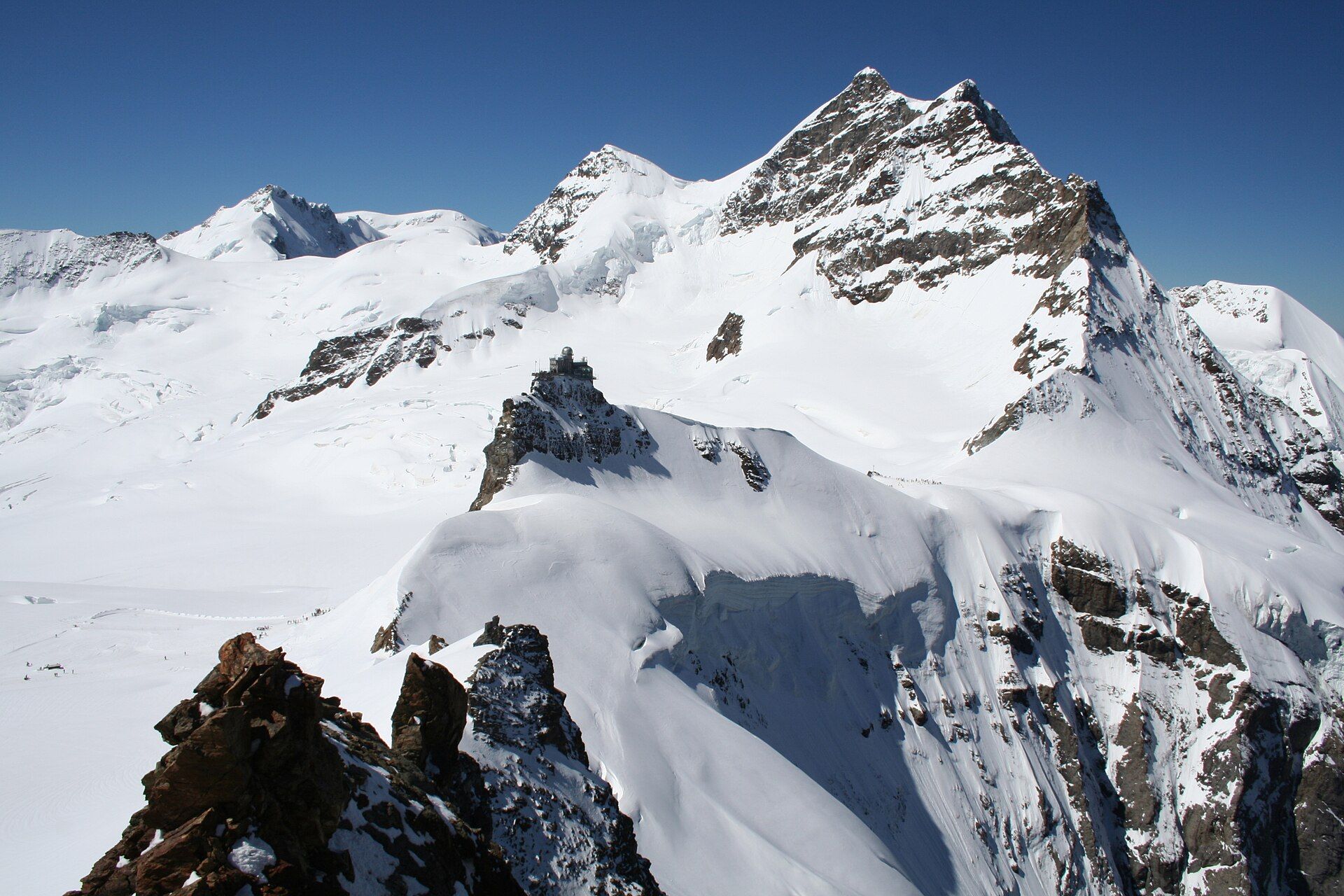
Jungfrau, Bernese Alps, Switzerland

Jungfrau

Bernese Alps, Switzerland

One of the great peaks of the Bernese Alps at 4,158 metres — reached, uniquely, by a cog railway tunnelled through the mountain to the Jungfraujoch, the 'Top of Europe', overlooking the head of the Aletsch Glacier.

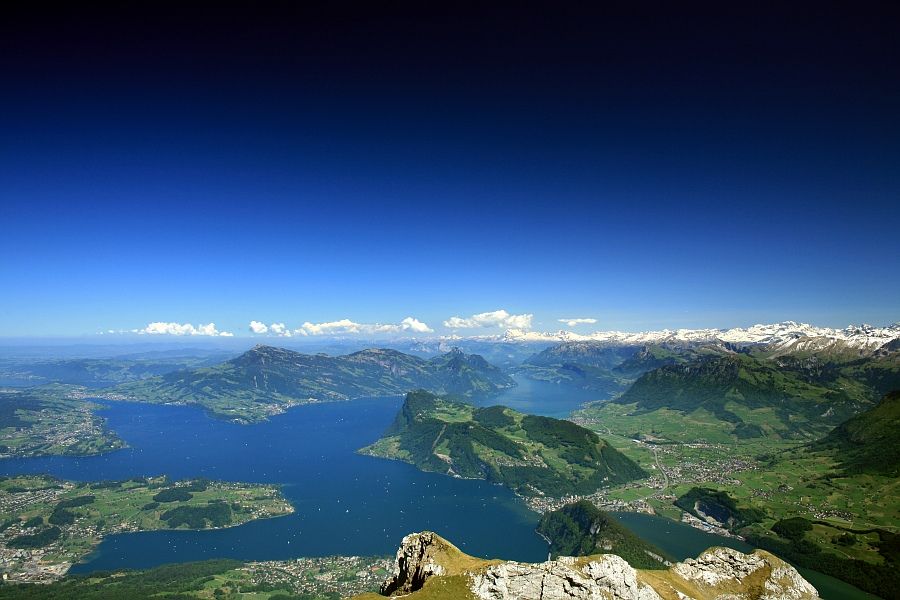
Lake Lucerne, Central Switzerland (cantons of Lucerne, Nidwalden, Obwalden, Schwyz, Uri)

Lake Lucerne

Central Switzerland (cantons of Lucerne, Nidwalden, Obwalden, Schwyz, Uri)

A many-armed alpine lake at the heart of Switzerland — 114 square kilometres of deep blue-green water winding between the peaks of Rigi, Pilatus, and the Uri Alps, ringed by lakeside towns and the meadow where the Swiss Confederation was born.

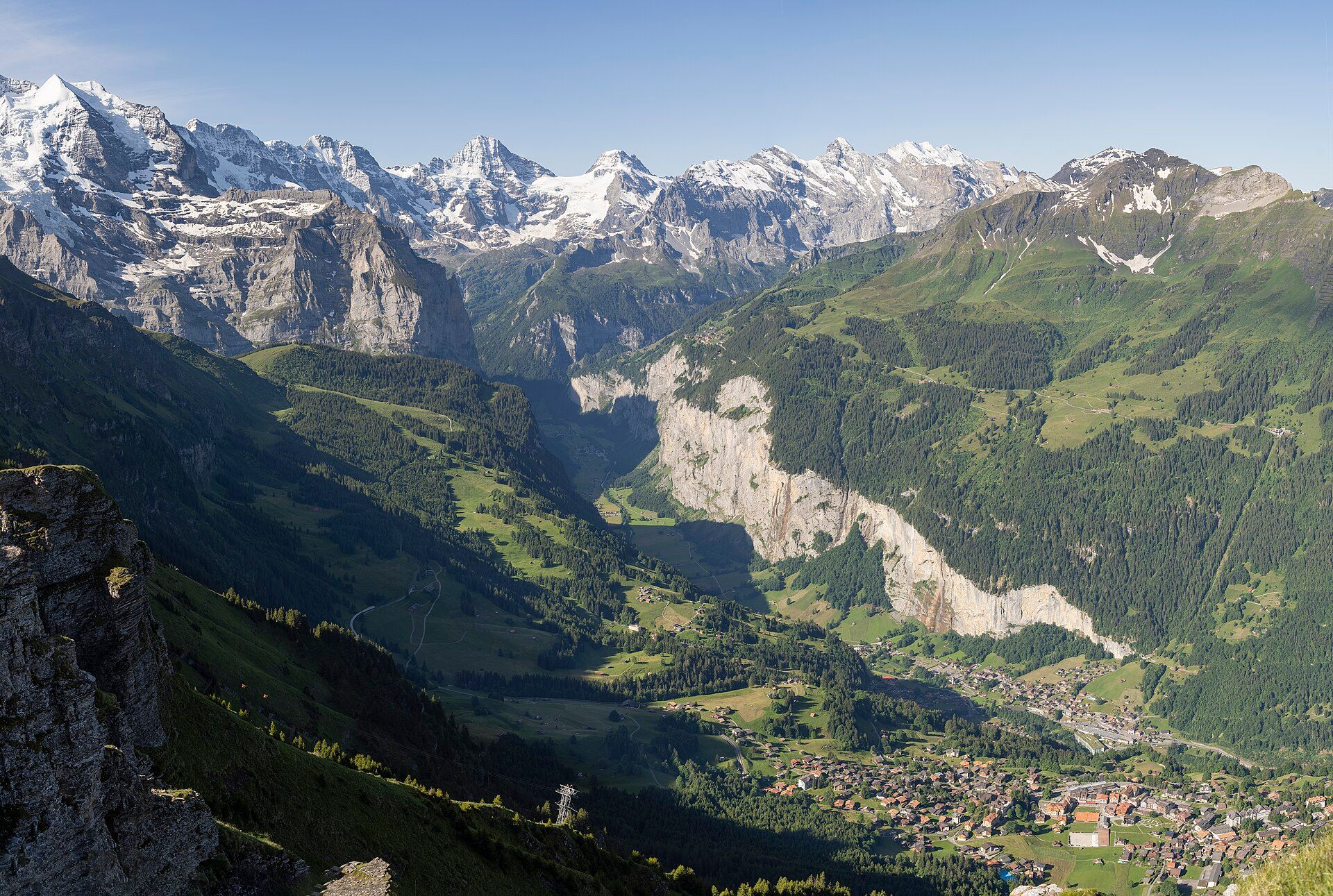
Lauterbrunnen Valley, Bernese Oberland, Switzerland

Lauterbrunnen Valley

Bernese Oberland, Switzerland

A glacier-carved Alpine valley walled by sheer cliffs down which seventy-two waterfalls pour — including the free-falling Staubbach and the thundering Trümmelbach inside the mountain.

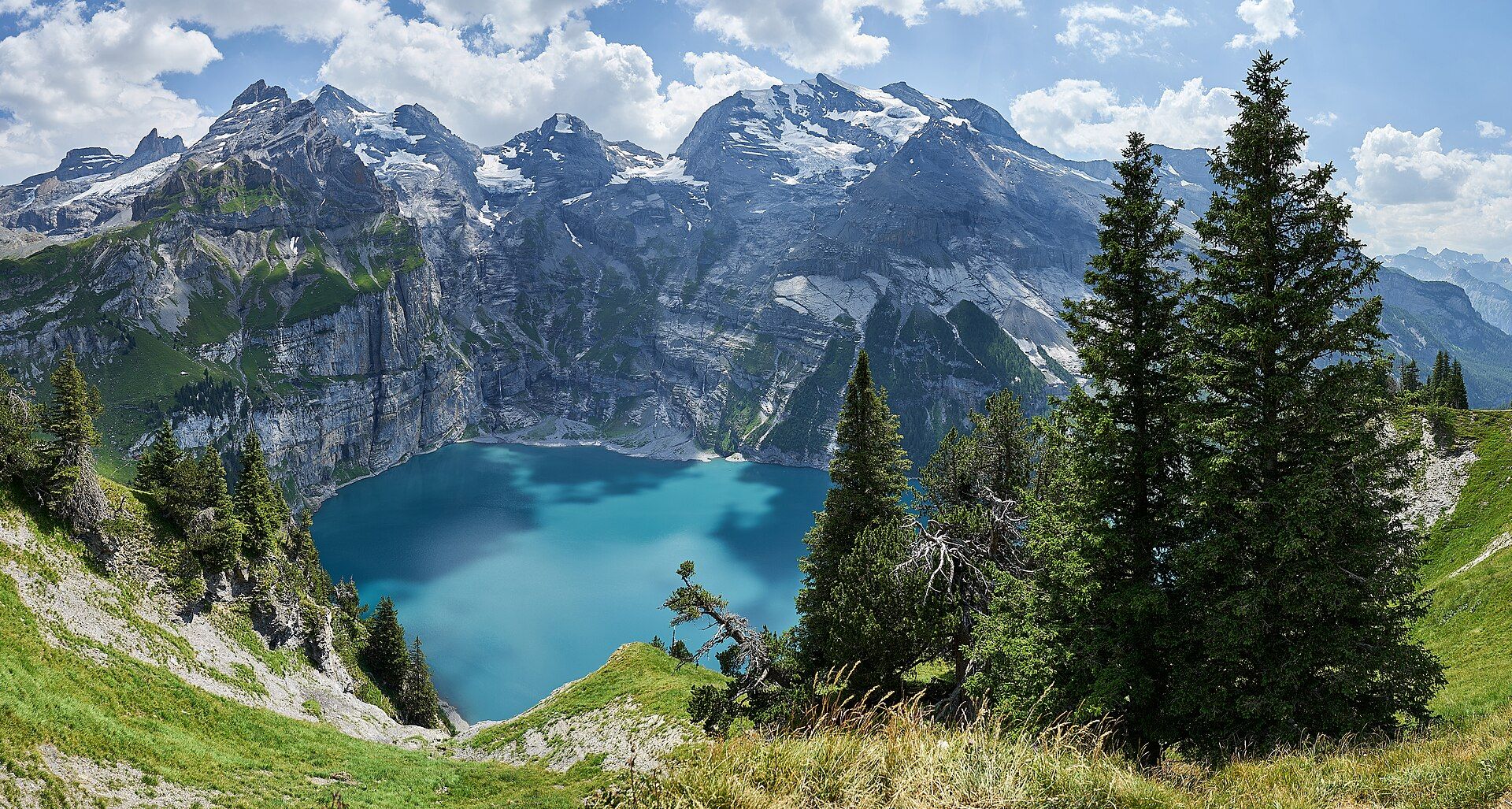
Oeschinen Lake, Kandersteg, Bernese Oberland, Switzerland

Oeschinen Lake

Kandersteg, Bernese Oberland, Switzerland

A turquoise mountain lake cupped beneath the snow-streaked Blüemlisalp peaks — part of the UNESCO Jungfrau-Aletsch World Heritage area, reached by gondola and a short walk high above Kandersteg.

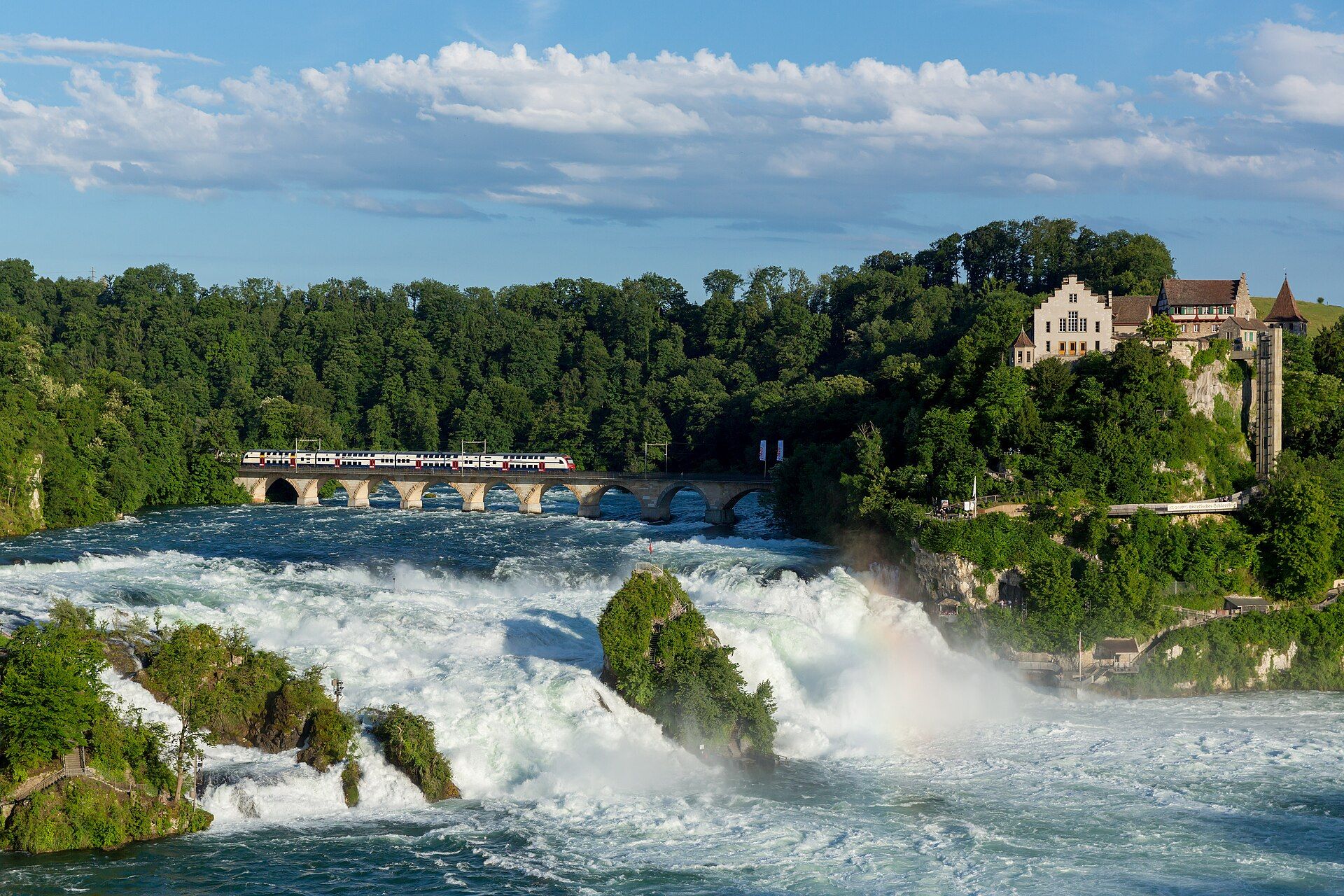
Rhine Falls, Near Schaffhausen, Northern Switzerland

Rhine Falls

Near Schaffhausen, Northern Switzerland

The largest waterfall in Europe by volume — 150 metres of the Rhine thundering over a 23-metre ledge around a rock pinnacle you can climb, in a green gorge below a hilltop castle.

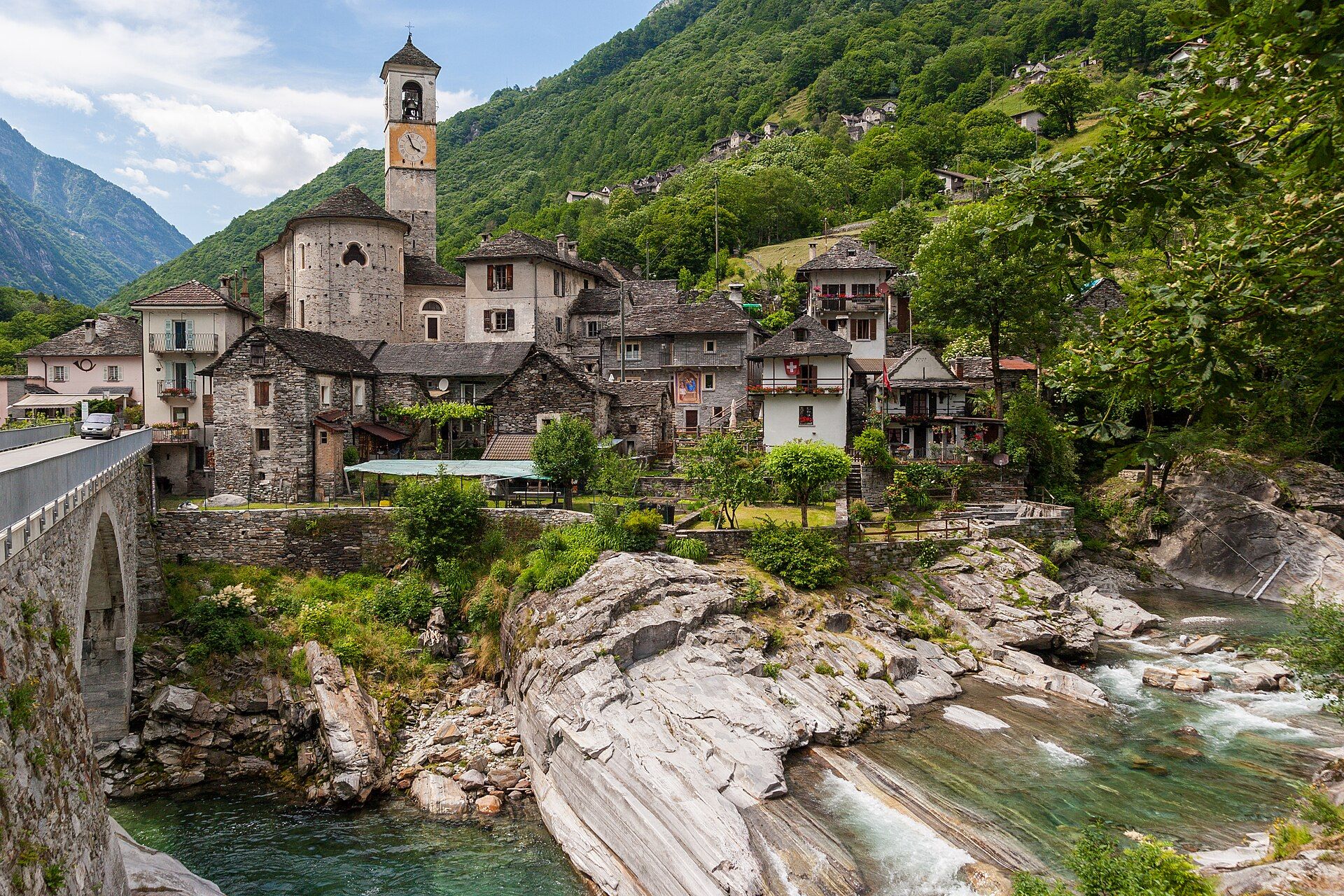
The Verzasca River, Verzasca Valley, Ticino, Southern Switzerland

The Verzasca River

Verzasca Valley, Ticino, Southern Switzerland

One of the clearest rivers in Europe — an emerald-green mountain stream tumbling through the Verzasca Valley in Italian-speaking Ticino, past smooth sculpted granite and the double-arched stone bridge of Lavertezzo.