Aletsch Glacier
📍 Valais, Switzerland
The largest glacier in the Alps — a 20-kilometre river of ice up to 900 metres thick, curving between 4,000-metre peaks in a vast frozen highway.
What makes it marvelous
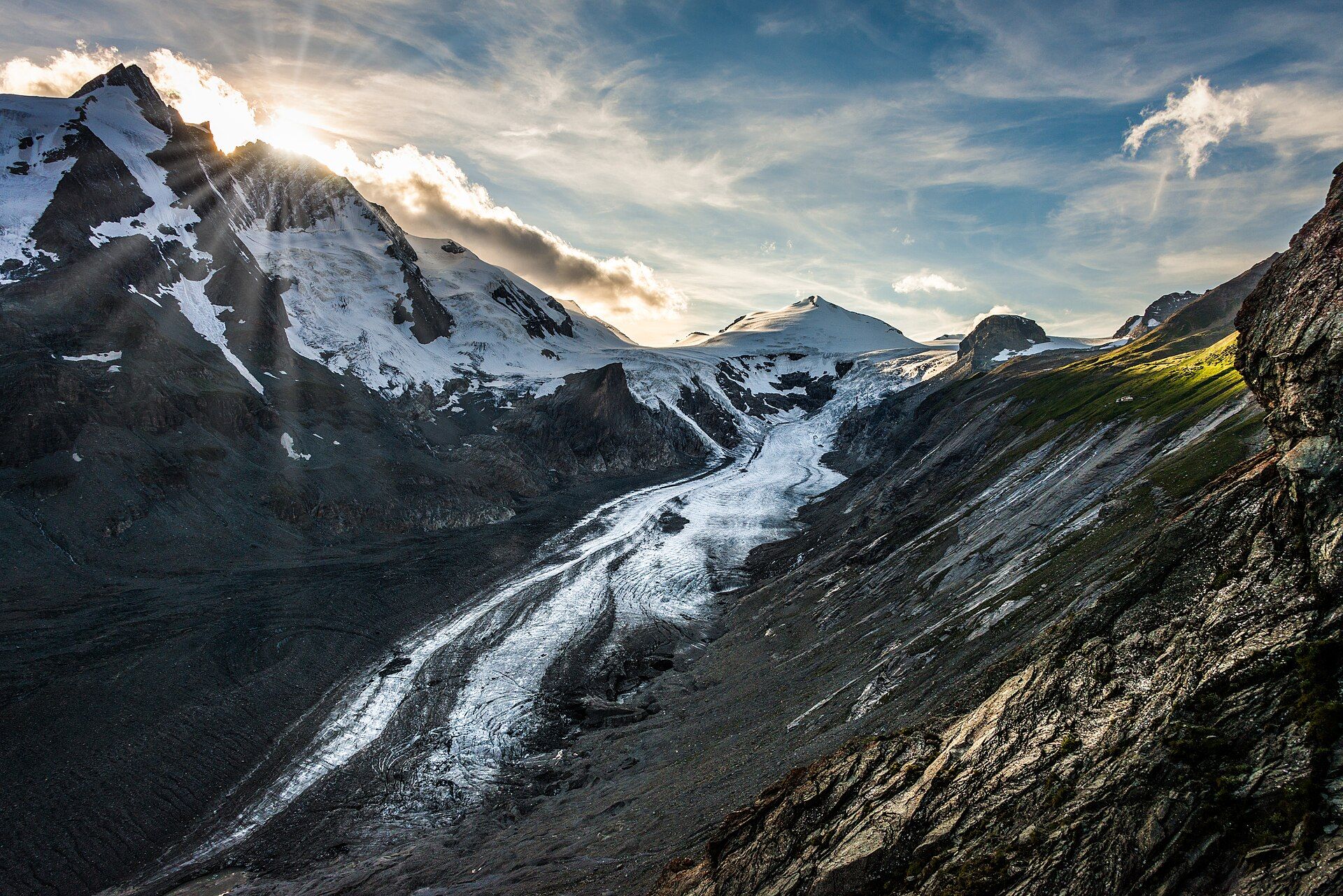
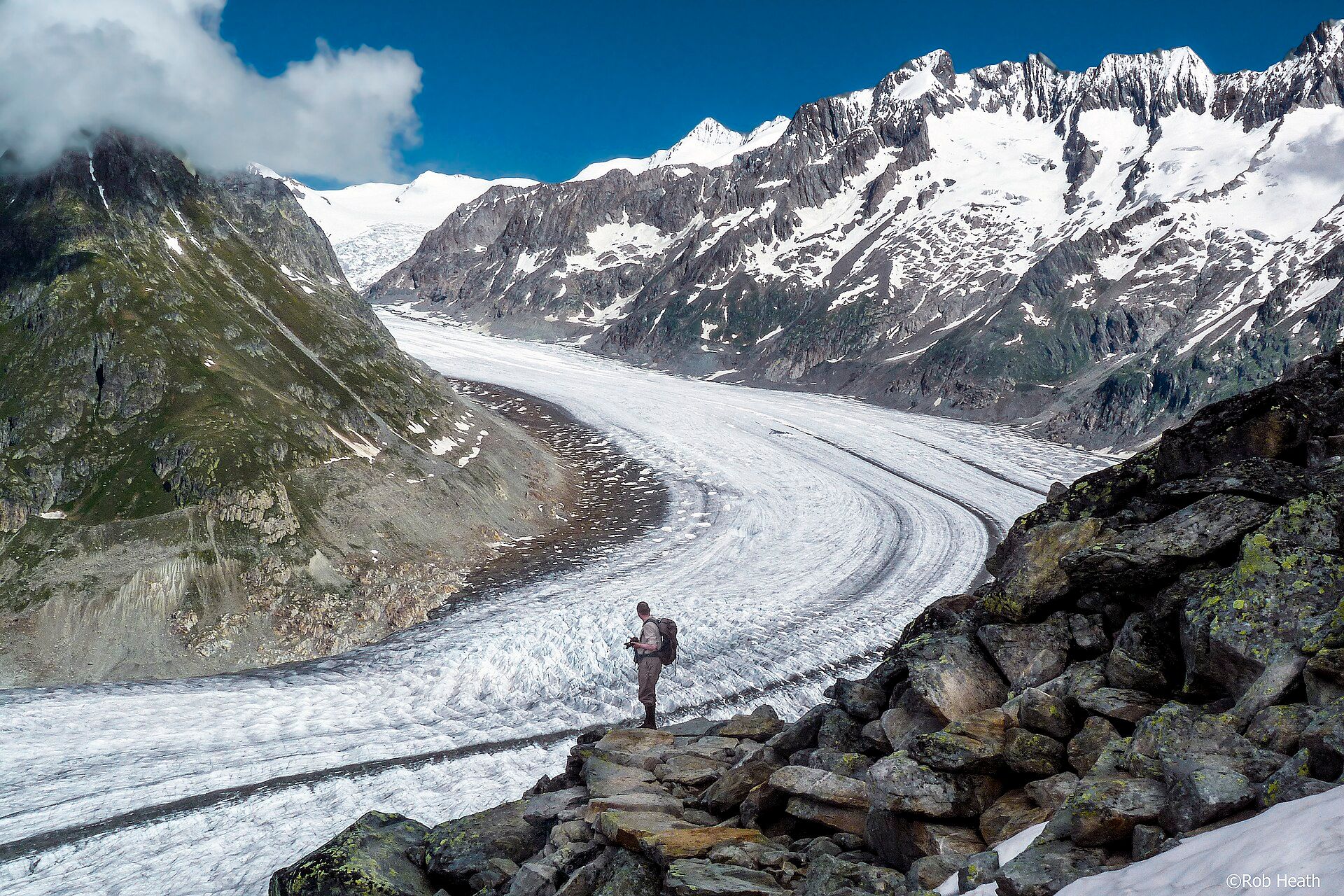
The Great Aletsch is the largest and longest glacier in the Alps: roughly 20 kilometres of ice flowing down from the Jungfrau region, reaching depths of around 900 metres at its thickest and holding more ice than any other in western Europe. Seen from the ridges above, it is a majestic frozen river, its surface striped with dark medial moraines — bands of rock debris carried down where tributary glaciers merge — that trace its flow like lanes on a highway. Around it stand the great peaks of the Bernese Alps, the Jungfrau, Mönch, and Eiger among them. It is also a stark record of change: the glacier has retreated substantially over the past century and continues to shrink, making it one of Europe's most closely watched indicators of a warming climate. The region is a UNESCO World Heritage Site.
Why visit
Standing on a viewpoint above 20 kilometres of curving ice, ringed by 4,000-metre peaks, is one of the most spectacular and easily reached alpine panoramas in Europe — no mountaineering required.
Still deciding?
Aletsch Glacier comes up most often against these — each one weighs cost, effort, season and crowds side by side.
What to know before you go
🗓️ Best time
Summer and early autumn (roughly June–September) for clear views, open cable cars, and ridge walking; winter turns the region into a major ski area with the glacier snow-covered.
🧭 Getting there & access
In Switzerland's Valais, viewed from cable-car-served ridges above Bettmeralp, Riederalp, or Fiescheralp, or from the Jungfraujoch railway; guided glacier walks are available with mountain guides.
Good to know
- Ride the cable cars to Eggishorn or Bettmerhorn for the classic panorama.
- Never walk on the glacier unguided — crevasses are hidden and lethal.
- Come in summer for the ridge trails and clearest views of the ice.
Plan your visit
Moderate🧭 Getting there
From Brig or Fiesch, Valais, Switzerland
- Train Zurich → Brig — roughly 2h30–3h
- Train Brig → Betten, Mörel or Fiesch — about 15–30 minutes
- Cable car up to Bettmeralp, Riederalp or Fiescheralp — roughly 10 minutes
- Further lift to Eggishorn or Bettmerhorn for the viewpoint — about 15 minutes
- Total travel
- Around four hours from Zurich
- Time at site
- Two days to walk more than one viewpoint
- Access
- No permit for the viewpoints and the marked trails along the moraine, which are reached by public lifts running on a seasonal timetable. Walking on the glacier itself is a different matter entirely and requires a mountain guide with rope and crevasse rescue equipment — the surface is crevassed and the safe line changes. The villages above the valley are car-free, so you leave the car at the valley station. Check lift operating dates, which have shoulder-season gaps.
🎒 What to bring & consider
- A guide and glacier equipment if you intend to set foot on the ice, which is not something to improvise from the moraine path
- Sturdy boots and sun protection for high, bright, exposed trails above 2,000m
- Layers for alpine weather that turns quickly even in August
- A check of the lift timetable, since the last descent is earlier than people expect and the walk down is long
- Water, as the trails have few sources and altitude dehydrates you faster
👁️ What to expect
- Crowds
- Manageable. Busy at the Eggishorn viewing platform in high summer, quiet on the moraine trails.
- Conditions
- High alpine walking on good paths with real exposure in places. Snow closes the higher trails outside summer.
- Facilities
- Excellent Swiss infrastructure — lifts, mountain restaurants, hotels in the car-free villages.
- The view
- The great white river of ice curving away from the Konkordiaplatz, from Eggishorn. Compare it with a photograph from a few decades ago and the retreat is obvious, which is part of what makes the view worth the trip now.
Times and requirements are approximate and change with season, weather, and local rules — confirm permits, fares, and schedules with operators before you travel.
Natural riches of the area
- The largest glacier in the Alps (~20 km, up to ~900 m thick)
- Medial moraines tracing the merging of tributary glaciers
- Surrounded by the Jungfrau, Mönch, and Eiger
- A key climate indicator, retreating measurably each decade
Local food
- Raclette & fondue
- Swiss melted-cheese classics, at their most traditional in Valais.
- Valais dried meat
- Air-dried beef (viande séchée), a specialty of the canton.
- Alpine cheese & rye bread
- Mountain cheeses made from summer pasture milk, with dense rye bread.
The Great Aletsch is the largest glacier in the Alps — roughly twenty kilometres of ice flowing down from the Jungfrau region, reaching around 900 metres deep at its thickest and holding more ice than anything else in western Europe. From the ridges above it looks like a frozen river in motion, its surface striped with dark medial moraines: bands of rock debris carried along where tributary glaciers merge, tracing the flow like lanes on a highway.
Around it stand the giants of the Bernese Alps — the Jungfrau, Mönch, and Eiger. And the glacier tells a harder story too: it has retreated substantially over the past century and continues to shrink, making it one of Europe’s most closely watched climate indicators. Cable cars carry visitors to ridge viewpoints above the ice, so this UNESCO World Heritage panorama is open to anyone, no mountaineering required.
Aletsch Glacier: common questions
How do you get to Aletsch Glacier?
From Brig or Fiesch, Valais, Switzerland: Train Zurich → Brig — roughly 2h30–3h; Train Brig → Betten, Mörel or Fiesch — about 15–30 minutes; Cable car up to Bettmeralp, Riederalp or Fiescheralp — roughly 10 minutes; Further lift to Eggishorn or Bettmerhorn for the viewpoint — about 15 minutes. Total travel time: Around four hours from Zurich.
When is the best time to visit Aletsch Glacier?
Summer and early autumn (roughly June–September) for clear views, open cable cars, and ridge walking; winter turns the region into a major ski area with the glacier snow-covered.
How long should you spend at Aletsch Glacier?
Two days to walk more than one viewpoint. Total travel time: Around four hours from Zurich.
What should you bring to Aletsch Glacier?
A guide and glacier equipment if you intend to set foot on the ice, which is not something to improvise from the moraine path Sturdy boots and sun protection for high, bright, exposed trails above 2,000m Layers for alpine weather that turns quickly even in August A check of the lift timetable, since the last descent is earlier than people expect and the walk down is long Water, as the trails have few sources and altitude dehydrates you faster
Do you need a permit or guide for Aletsch Glacier?
No permit for the viewpoints and the marked trails along the moraine, which are reached by public lifts running on a seasonal timetable. Walking on the glacier itself is a different matter entirely and requires a mountain guide with rope and crevasse rescue equipment — the surface is crevassed and the safe line changes. The villages above the valley are car-free, so you leave the car at the valley station. Check lift operating dates, which have shoulder-season gaps.
Is Aletsch Glacier crowded, and what are conditions like?
Manageable. Busy at the Eggishorn viewing platform in high summer, quiet on the moraine trails. High alpine walking on good paths with real exposure in places. Snow closes the higher trails outside summer. Facilities: Excellent Swiss infrastructure — lifts, mountain restaurants, hotels in the car-free villages.
Added
More wonders to explore