Nature route · A week
Swiss Alps: Peaks, Lakes & Glaciers
Lauterbrunnen's waterfalls, the Jungfrau, the great Aletsch Glacier, and the Matterhorn — the high Alps by train.
A week in the Swiss high Alps linking the waterfall valley of Lauterbrunnen, the Jungfrau region, the turquoise Oeschinen Lake, the vast Aletsch Glacier, and Zermatt's Matterhorn — almost entirely by Switzerland's superb mountain railways.
- Length 7–8 days
- Stops 5 wonders
- Budget CHF 1,200–3,200 pp
- Region Bernese Oberland & Valais, Switzerland
Trip map
The route
Stops in travel order — tap any one for the full wonder guide.
-
Lauterbrunnen Valley 3 nights
Bernese Oberland, Switzerland
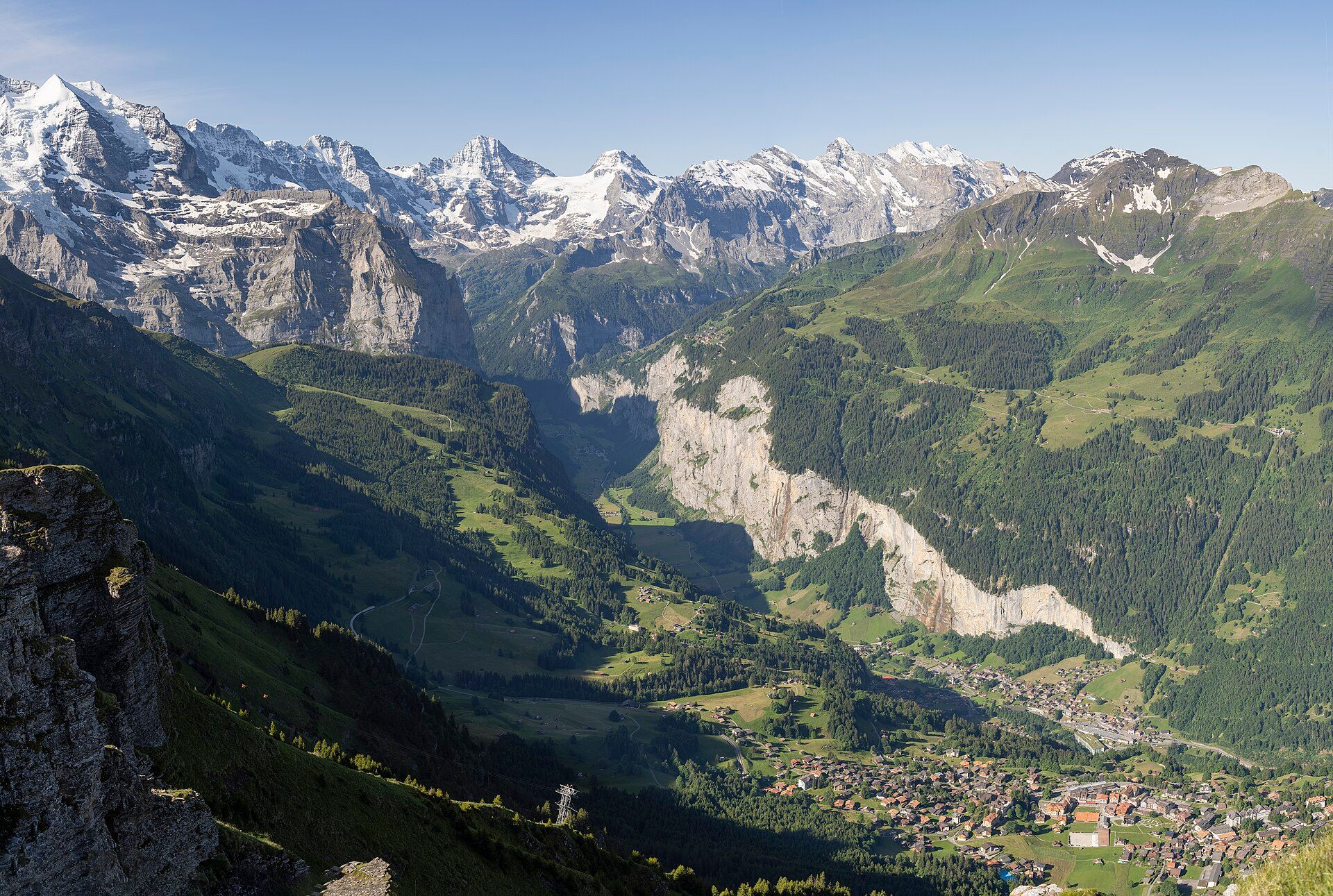
The classic U-shaped valley of 72 waterfalls and sheer walls — a perfect base for the Jungfrau region.
-
Jungfrau
Bernese Alps, Switzerland
Day trips up to Kleine Scheidegg, Mürren, and the Jungfraujoch 'Top of Europe' from Lauterbrunnen.
-
Oeschinen Lake 1 night
Kandersteg, Bernese Oberland, Switzerland
A gondola and short walk from Kandersteg to a turquoise lake under a wall of peaks.
-
Aletsch Glacier 1 night
Valais, Switzerland
The largest glacier in the Alps, seen from the Eggishorn and Bettmerhorn ridges above the Valais.
-
The Matterhorn 2 nights
Zermatt, Valais — Swiss/Italian border
Car-free Zermatt beneath the most famous peak in the Alps, with the Gornergrat railway for the classic view.
Day by day
-
Into the Lauterbrunnen valley
Base Lauterbrunnen / Wengen / Mürren
- Train from Zürich or Geneva via Interlaken — roughly 2.5–3h
Arrive in the waterfall valley and settle in for three nights. An evening stroll to Staubbach Falls eases you into the scale of the place.
-
Top of Europe — the Jungfrau
Base Lauterbrunnen
- Cog railways via Kleine Scheidegg to the Jungfraujoch — a half- to full-day return
Ride the railway to the Jungfraujoch saddle for glaciers and, weather permitting, huge views, or walk the Eiger Trail beneath the north face.
-
Mürren, Gimmelwald & the Schilthorn
Base Lauterbrunnen
- Cable car to Mürren and up to the Schilthorn
A day among the cliff-edge villages and high trails on the valley's western wall, with the Eiger, Mönch, and Jungfrau lined up across the gap.
-
To Kandersteg & Oeschinen Lake
Base Kandersteg
- Train to Kandersteg — about 1.5–2h; gondola + 20-min walk to the lake
Move base and spend the afternoon at the turquoise Oeschinensee, ringed by peaks and easy lakeshore trails.
-
Over to the Valais & the Aletsch
Base Fiesch / Bettmeralp
- Train through the Lötschberg to the Valais and up to a car-free village — about 2–3h
Cross into the Rhône valley and ride a cable car up to the ridges above the Aletsch Glacier for your first sight of the great river of ice.
-
The Great Aletsch Glacier
Base Fiesch / Bettmeralp
- Cable car to the Eggishorn or Bettmerhorn viewpoints
Walk the moraine trails above the largest glacier in the Alps — 20 km of ice curving between 4,000-metre peaks. Never step onto the ice without a guide.
-
Zermatt & the Matterhorn
Base Zermatt
- Train to Zermatt via Visp — about 2–2.5h
Arrive in car-free Zermatt and ride the Gornergrat railway for the postcard Matterhorn, or walk the Riffelsee trail where the peak mirrors in the tarn.
-
Last views, then out
Base Zermatt
- Train back to Zürich or Geneva — roughly 3.5–4h
A final cable-car morning or lakeside walk before the scenic ride down out of the mountains.
What it costs
Per person, two sharing, 7 nights. Excludes international flights; includes trains, lifts, lodging, and meals.
| Category | Range (per person) |
|---|---|
| TransportScenic rail, cable cars, and a travel pass; the Jungfraujoch is a costly extra. | CHF 350–800 |
| Lodging7 nights in mountain guesthouses and hotels; dorms and half-board keep it lower. | CHF 550–1,500 |
| FoodSwitzerland is expensive; supermarket lunches and picnics cut this sharply. | CHF 250–700 |
| Fees & guidesMuseum, viewpoint, and any guided-walk fees. | CHF 50–200 |
| Estimated total | CHF 1,200–3,200 |
What moves the number
- Whether you ride the Jungfraujoch and other supplement railways
- Hotels vs guesthouses and dorms, and half-board vs self-catering
- How many paid cable-car ascents you do
- Season and the Swiss franc exchange rate
Indicative mid-2026 ranges; confirm current rail fares, lift prices, and room rates before booking. Roughly US$1,350–3,600 per person at mid-2026 exchange rates, excluding international flights. These are honest ranges, not quotes — real prices swing with season, group size, and how you travel. Always confirm current fares, room rates, permits, and fees with operators before you commit.
Best season & getting around
🗓️ Best time to go
Mid-June to late September is the window: the high trails are snow-free, the cable cars and mountain railways all run, and the alpine meadows are in flower. July and August are busiest and clearest; September brings quieter trails and the first golden larches. Winter is a separate world of world-class skiing, with many summer trails closed.
🧭 Getting around
Switzerland's trains, cog railways, cable cars, and postbuses are the point — punctual, integrated, and reaching astonishing heights. A Swiss Travel Pass or regional pass usually pays off given the scenic railways and lifts; some high mountain railways (the Jungfraujoch especially) carry a supplement. You do not need a car, and the headline villages (Wengen, Mürren, Zermatt) are car-free anyway.
Know before you go
- Switzerland is among the most expensive countries in Europe — a travel pass, self-catered lunches, and guesthouses make a real difference.
- High views live and die by the weather; keep a flexible day or two and go up on the clear mornings rather than by schedule.
- Never walk on the Aletsch (or any glacier) without a qualified mountain guide — crevasses are hidden and lethal.
- Check the seasonal operating dates of cable cars and mountain railways, which have shoulder-season gaps.
- All times, distances, and prices are approximate and shift with weather, season, and demand.
The Swiss Alps pack more high-mountain spectacle into a small, superbly connected space than almost anywhere on Earth — and you can experience the best of it without a car or a rope. This route strings together five of the atlas’s Swiss wonders by train and cable car: the waterfall valley of Lauterbrunnen and the Jungfrau above it, the turquoise Oeschinensee, the vast Aletsch Glacier, and the Matterhorn over car-free Zermatt.
It is a week built around Switzerland’s genius for moving people into the mountains — cog railways to glacier saddles, gondolas to ridge-top trails — so that landscapes that would be serious expeditions elsewhere become a comfortable day out. Go in high summer for open trails and running lifts, keep your plans flexible for weather, and let the timetable, for once, be part of the pleasure.
Swiss Alps: Peaks, Lakes & Glaciers: common questions
How many days is the Swiss Alps: Peaks, Lakes & Glaciers?
7–8 days — the plan is built around 7 nights. ~300 km of trains and cable cars between the Bernese Oberland and Zermatt
When is the best time to do the Swiss Alps: Peaks, Lakes & Glaciers?
Mid-June to late September is the window: the high trails are snow-free, the cable cars and mountain railways all run, and the alpine meadows are in flower. July and August are busiest and clearest; September brings quieter trails and the first golden larches. Winter is a separate world of world-class skiing, with many summer trails closed.
How much does the Swiss Alps: Peaks, Lakes & Glaciers cost?
A rough guide is CHF 1,200–3,200 per person (Per person, two sharing, 7 nights. Excludes international flights; includes trains, lifts, lodging, and meals.). Indicative mid-2026 ranges; confirm current rail fares, lift prices, and room rates before booking. Main cost variables: Whether you ride the Jungfraujoch and other supplement railways; Hotels vs guesthouses and dorms, and half-board vs self-catering; How many paid cable-car ascents you do.
How do you get around on the Swiss Alps: Peaks, Lakes & Glaciers?
Switzerland's trains, cog railways, cable cars, and postbuses are the point — punctual, integrated, and reaching astonishing heights. A Swiss Travel Pass or regional pass usually pays off given the scenic railways and lifts; some high mountain railways (the Jungfraujoch especially) carry a supplement. You do not need a car, and the headline villages (Wengen, Mürren, Zermatt) are car-free anyway.
Which natural wonders does the Swiss Alps: Peaks, Lakes & Glaciers include?
Lauterbrunnen Valley, Jungfrau, Oeschinen Lake, Aletsch Glacier, The Matterhorn.
Added