Lake Bled
📍 Upper Carniola, Slovenia
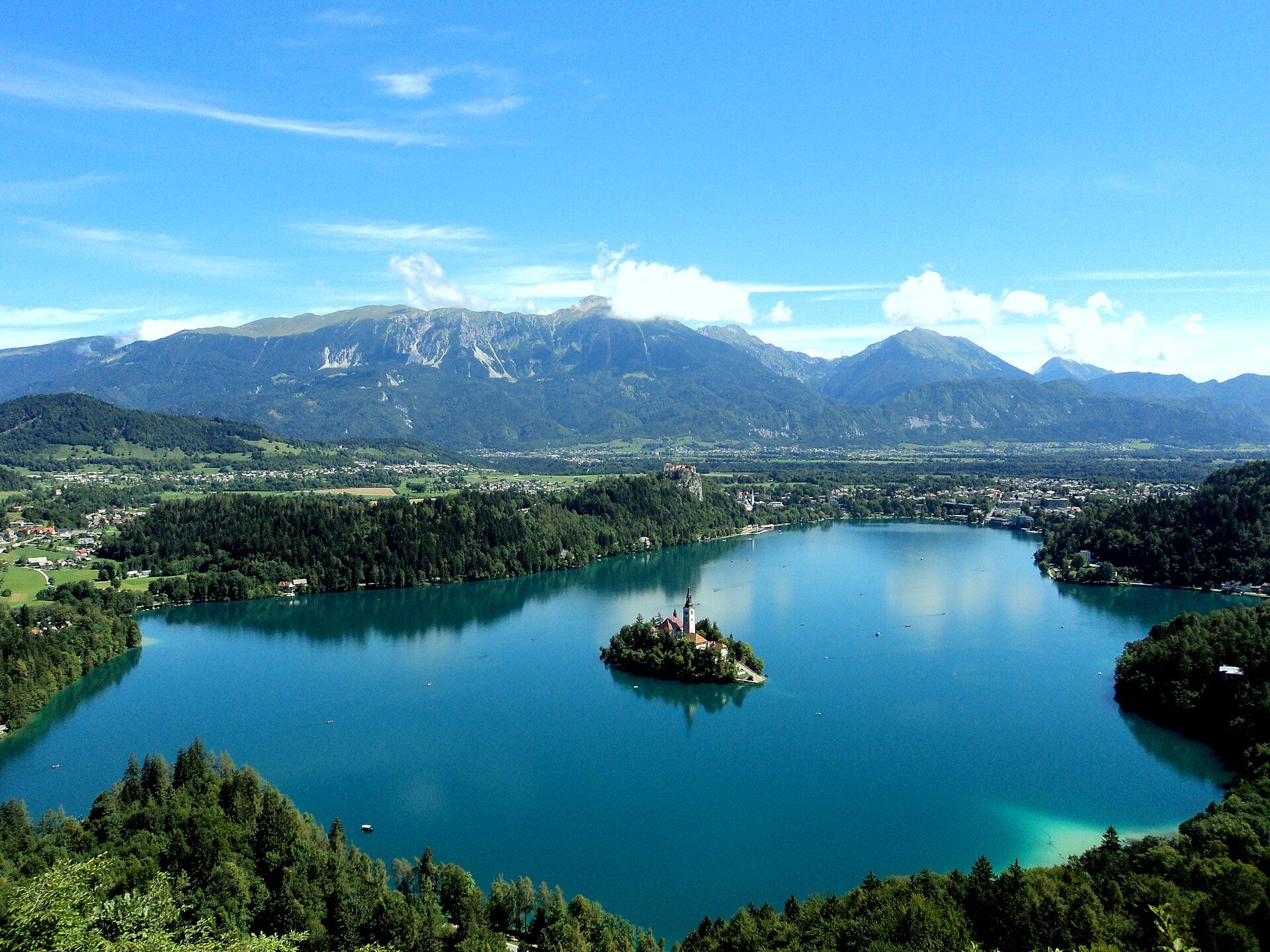
A serene glacial lake with a tiny church-topped island at its heart, cupped beneath a clifftop castle and the peaks of the Julian Alps — one of the most picture-perfect scenes in Europe.
What makes it marvelous
Lake Bled is a glacial lake of clear blue-green water in the foothills of Slovenia's Julian Alps, it holds at its centre the country's only natural island — a small teardrop of land crowned by a white church whose bell tower rises among the trees. On a cliff above the shore perches a medieval castle, and beyond stand the snow-dusted alpine peaks, all mirrored in the still water. Fed partly by warm springs, the lake is mild enough to swim in during summer. Rowed out to the island in a traditional flat-bottomed pletna boat, then climbing the ninety-nine stone steps from the jetty, visitors have been coming to this small, complete scene for centuries. It is the emblem of Slovenia and one of the most photographed lakes in all of Europe.
Why visit
Rowing to the island church across mirror-still water, with a castle above and the Alps behind, is a genuinely serene experience — the essence of Slovenia and one of the loveliest short escapes in Europe.
Still deciding?
Lake Bled comes up most often against these — each one weighs cost, effort, season and crowds side by side.
What to know before you go
🗓️ Best time
Late spring through early autumn (roughly May–September) for swimming, boating, and warm weather; autumn brings golden colour and winter a quiet, sometimes snowy calm.
🧭 Getting there & access
In northwestern Slovenia, an easy drive or bus ride from Ljubljana or Ljubljana Airport; a lakeside path circles the water, and pletna boats and rowboats reach the island.
Good to know
- Take a traditional pletna boat to the island and climb the ninety-nine steps.
- Walk the easy 6 km loop around the lake for changing views.
- Hike up to Bled Castle or the Ojstrica viewpoint for the classic photo.
Plan your visit
Easy🧭 Getting there
From Ljubljana, Slovenia
- Fly → Ljubljana (LJU)
- Drive or bus Ljubljana → Bled — roughly 45 minutes
- Walk the lakeshore loop, and take a pletna boat to the island
- Total travel
- Under an hour from Ljubljana
- Time at site
- A full day, easily
- Access
- Bled is open and free to walk — the roughly 6km shoreline loop needs no ticket — with charges only for the specific experiences: the traditional pletna boat out to the island, entry to the island church and its bell tower, and the cliff-top castle above the lake. Rowing yourself out in a hired boat is the alternative to the pletna. It gets genuinely crowded in summer, so early morning and evening are calmer and better lit. In a cold winter the lake can freeze, changing the whole scene.
🎒 What to bring & consider
- Comfortable walking shoes for the flat but roughly 6km shoreline loop, which is the best free way to see the lake from every angle
- Small notes for the pletna boat, the island church and the castle, the three things that actually cost money here
- An early start or an evening visit to beat the summer crowds and catch soft light on the island church
- A swimsuit in summer, since the lake is clean and warm enough to swim well away from the boat traffic
- A slice of the local Bled cream cake, which is less a necessity than a local law
👁️ What to expect
- Crowds
- Busy in summer around the boat jetties and photo spots. Early, late and off-season are peaceful.
- Conditions
- Gentle and easy — a flat lakeside walk and short boat trip, with an optional climb to the castle.
- Facilities
- Excellent — a full resort town with cafés, boat hire, hotels and toilets around the lake.
- The view
- The island church with its tower against the Julian Alps, framed from the Ojstrica or Mala Osojnica viewpoints on the hill above, best at sunrise. The pletna boats crossing the still morning water complete it.
Times and requirements are approximate and change with season, weather, and local rules — confirm permits, fares, and schedules with operators before you travel.
Natural riches of the area
- A clear glacial lake fed partly by warm springs
- Slovenia's only natural island, topped by a church
- A clifftop medieval castle and Julian Alps backdrop
- Gateway to Triglav National Park's alpine wilderness
Local food
- Bled cream cake
- Kremšnita — the town's famous custard-and-cream vanilla slice.
- Slovenian lake fish & sausage
- Freshwater fish and traditional Carniolan sausage (kranjska klobasa).
- Alpine dairy & honey
- Cheeses, buckwheat dishes, and honey from the surrounding hills.
Lake Bled is a clear blue-green glacial lake in the foothills of Slovenia’s Julian Alps, it holds at its heart the country’s only natural island — a small teardrop of land crowned by a white church whose bell tower rises among the trees. A medieval castle perches on a cliff above the shore, and snow-dusted alpine peaks stand beyond, all reflected in the still water.
The details are what make it. Fed partly by warm springs, the lake is mild enough to swim in come summer; visitors are rowed out to the island in traditional flat-bottomed pletna boats, then climb the ninety-nine stone steps that run up from the jetty to the church at the top. For centuries this small, perfect scene has drawn travellers, and today it is the emblem of Slovenia and one of the most photographed — and most serene — lakes in all of Europe.
Lake Bled: common questions
How do you get to Lake Bled?
From Ljubljana, Slovenia: Fly → Ljubljana (LJU); Drive or bus Ljubljana → Bled — roughly 45 minutes; Walk the lakeshore loop, and take a pletna boat to the island. Total travel time: Under an hour from Ljubljana.
When is the best time to visit Lake Bled?
Late spring through early autumn (roughly May–September) for swimming, boating, and warm weather; autumn brings golden colour and winter a quiet, sometimes snowy calm.
How long should you spend at Lake Bled?
A full day, easily. Total travel time: Under an hour from Ljubljana.
What should you bring to Lake Bled?
Comfortable walking shoes for the flat but roughly 6km shoreline loop, which is the best free way to see the lake from every angle Small notes for the pletna boat, the island church and the castle, the three things that actually cost money here An early start or an evening visit to beat the summer crowds and catch soft light on the island church A swimsuit in summer, since the lake is clean and warm enough to swim well away from the boat traffic A slice of the local Bled cream cake, which is less a necessity than a local law
Do you need a permit or guide for Lake Bled?
Bled is open and free to walk — the roughly 6km shoreline loop needs no ticket — with charges only for the specific experiences: the traditional pletna boat out to the island, entry to the island church and its bell tower, and the cliff-top castle above the lake. Rowing yourself out in a hired boat is the alternative to the pletna. It gets genuinely crowded in summer, so early morning and evening are calmer and better lit. In a cold winter the lake can freeze, changing the whole scene.
Is Lake Bled crowded, and what are conditions like?
Busy in summer around the boat jetties and photo spots. Early, late and off-season are peaceful. Gentle and easy — a flat lakeside walk and short boat trip, with an optional climb to the castle. Facilities: Excellent — a full resort town with cafés, boat hire, hotels and toilets around the lake.
Added Updated
More wonders to explore