Lake Baikal
📍 Siberia, Russia
The deepest and oldest lake on Earth — a vast Siberian sea holding a fifth of the world's unfrozen fresh water, its waters so clear you can see 40 metres down, and freezing each winter into sheets of turquoise ice.
What makes it marvelous
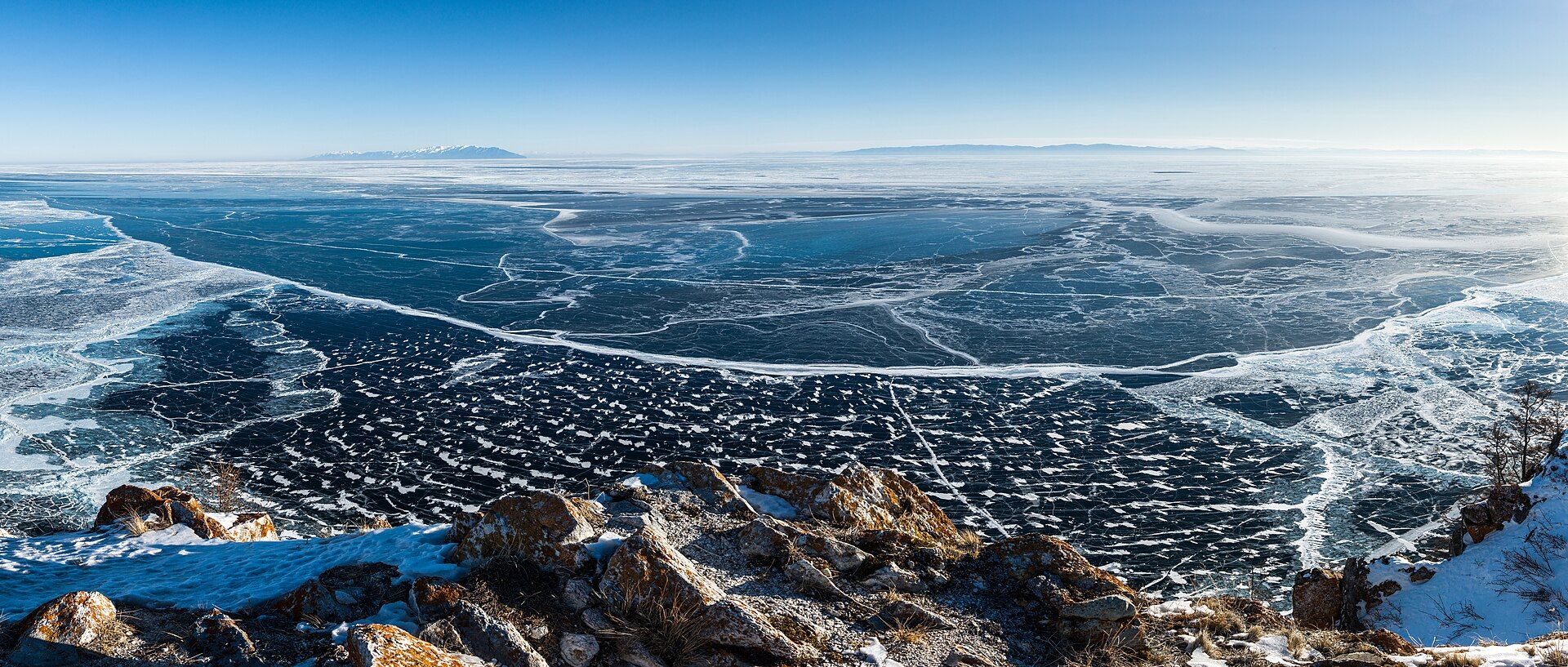
Lake Baikal is a superlative among lakes. At 1,642 metres it is the deepest on Earth, and at around 25 million years the oldest, a rift lake still slowly widening. It holds roughly a fifth of all the unfrozen fresh water on the planet — more than all the North American Great Lakes combined — and its water is famously pure and clear, transparent to depths of 40 metres. This ancient isolation has made it an evolutionary treasure house: some four-fifths of its animal species live nowhere else, including the nerpa, the world's only exclusively freshwater seal. In winter the lake freezes into a metre-thick sheet laced with turquoise pressure cracks and stacks of transparent ice, one of the most surreal frozen landscapes anywhere. It is a UNESCO World Heritage Site.
Why visit
Whether gazing into impossibly clear summer water ringed by Siberian mountains or walking across turquoise winter ice over a kilometre of depth, Baikal offers a sense of scale, age, and purity matched by no other lake on Earth.
Still deciding?
Lake Baikal comes up most often against one other place — each one weighs cost, effort, season and crowds side by side.
What to know before you go
🗓️ Best time
Summer (roughly June–September) for hiking, boat trips, and mild weather; late winter (February–March) for the spectacular clear turquoise ice, when the lake freezes solid enough to cross.
🧭 Getting there & access
In southern Siberia, reached via Irkutsk (on the Trans-Siberian Railway); Listvyanka and Olkhon Island are the main gateways to the lake by road, boat, or winter ice road.
Good to know
- Visit in summer for hiking and boats, or Feb–Mar for the famous clear ice.
- Base on Olkhon Island for the most dramatic scenery and access.
- Dress for extremes — Siberian winters are brutally cold.
Plan your visit
Moderate🧭 Getting there
From Irkutsk (IKT), then Listvyanka or Olkhon Island
- Fly to Irkutsk, or arrive on the Trans-Siberian
- Road Irkutsk → Listvyanka — about 1h–1h30
- Irkutsk → Olkhon — roughly 5–6h including a ferry, or across the ice road in deep winter
- Total travel
- Most of a day from Moscow
- Time at site
- 3–5 days; the lake is vast and the transfers eat the time
- Access
- Largely open access, with Pribaikalsky National Park charging entry in places. Understand that there are two entirely different Baikals: open water in summer, and metre-thick clear ice from roughly February to early April, which is what nearly every photograph shows. The shoulder weeks, when ice is forming or breaking up, are dangerous and effectively unusable. Check current entry requirements and your government's travel advisory for Russia before planning anything.
🎒 What to bring & consider
- Genuinely severe cold-weather gear for the ice season — this is deep continental Siberian winter, well below -20C as a matter of course, and the risk is hypothermia rather than discomfort
- Ice traction or studded boots; the clear ice is mirror-smooth and falls are common and hard
- Goggles or strong sunglasses, because glare off the ice is blinding and burns
- Cash in roubles and a plan that does not assume foreign cards will work
- A guide or driver for any travel out onto the ice, where cracks and pressure ridges move daily
👁️ What to expect
- Crowds
- Listvyanka takes day visitors from Irkutsk and is busy. Olkhon and the eastern shore are far quieter.
- Conditions
- Extreme cold in winter, long rough transfers, and thin infrastructure once you leave the main settlements.
- Facilities
- Guesthouses and cafes in Listvyanka and in Khuzhir on Olkhon. Sparse elsewhere.
- The view
- The transparent ice with trapped methane bubbles and turquoise hummocks exists only in the deep-winter window — and a snowfall on top of the ice erases it completely. Whether there is snow when you arrive is simply chance.
Times and requirements are approximate and change with season, weather, and local rules — confirm permits, fares, and schedules with operators before you travel.
Natural riches of the area
- The deepest (1,642 m) and oldest (~25 million years) lake on Earth
- About a fifth of the world's unfrozen fresh water
- The nerpa — the only exclusively freshwater seal — and many endemics
- Turquoise winter ice over a kilometre of depth
Local food
- Omul
- A whitefish endemic to Baikal, traditionally smoked — a regional specialty.
- Siberian pelmeni
- Hearty meat dumplings, a staple of the Russian far east.
- Buryat buuz
- Steamed meat dumplings from the Indigenous Buryat people of the region.
Lake Baikal is a lake of superlatives. Curving for more than 600 kilometres through southern Siberia, it is the deepest lake on Earth at 1,642 metres and, at around 25 million years old, the most ancient — a slowly widening rift that holds roughly a fifth of all the unfrozen fresh water on the planet, more than all of North America’s Great Lakes together. Its water is so pure you can see forty metres down.
That vast age and isolation have made Baikal an evolutionary refuge: about four-fifths of its animal species exist nowhere else, among them the nerpa, the only seal on Earth that lives entirely in fresh water. In summer the lake shimmers cold and clear beneath Siberian mountains; in late winter it freezes into a metre-thick sheet veined with turquoise cracks and stacked with panes of transparent ice — one of the most surreal frozen landscapes anywhere. A UNESCO World Heritage Site, it is unlike any other lake in the world.
The scale of Baikal is easy to state and hard to believe, so it is worth separating two different measurements. By surface area it is not especially remarkable — only about seventh in the world, smaller than several lakes you could name. By volume it is in a class of its own, because it is so extraordinarily deep: that single lake holds roughly a fifth of all the unfrozen fresh surface water on Earth, more than all five North American Great Lakes put together. Area and volume give completely different answers, and only one of them is interesting. The other thing visitors get wrong is the season. Baikal’s most extraordinary face is winter, roughly February and March, when the surface freezes about a metre thick and clear enough to walk on over the water below.
Lake Baikal: common questions
How do you get to Lake Baikal?
From Irkutsk (IKT), then Listvyanka or Olkhon Island: Fly to Irkutsk, or arrive on the Trans-Siberian; Road Irkutsk → Listvyanka — about 1h–1h30; Irkutsk → Olkhon — roughly 5–6h including a ferry, or across the ice road in deep winter. Total travel time: Most of a day from Moscow.
When is the best time to visit Lake Baikal?
Summer (roughly June–September) for hiking, boat trips, and mild weather; late winter (February–March) for the spectacular clear turquoise ice, when the lake freezes solid enough to cross.
How long should you spend at Lake Baikal?
3–5 days; the lake is vast and the transfers eat the time. Total travel time: Most of a day from Moscow.
What should you bring to Lake Baikal?
Genuinely severe cold-weather gear for the ice season — this is deep continental Siberian winter, well below -20C as a matter of course, and the risk is hypothermia rather than discomfort Ice traction or studded boots; the clear ice is mirror-smooth and falls are common and hard Goggles or strong sunglasses, because glare off the ice is blinding and burns Cash in roubles and a plan that does not assume foreign cards will work A guide or driver for any travel out onto the ice, where cracks and pressure ridges move daily
Do you need a permit or guide for Lake Baikal?
Largely open access, with Pribaikalsky National Park charging entry in places. Understand that there are two entirely different Baikals: open water in summer, and metre-thick clear ice from roughly February to early April, which is what nearly every photograph shows. The shoulder weeks, when ice is forming or breaking up, are dangerous and effectively unusable. Check current entry requirements and your government's travel advisory for Russia before planning anything.
Is Lake Baikal crowded, and what are conditions like?
Listvyanka takes day visitors from Irkutsk and is busy. Olkhon and the eastern shore are far quieter. Extreme cold in winter, long rough transfers, and thin infrastructure once you leave the main settlements. Facilities: Guesthouses and cafes in Listvyanka and in Khuzhir on Olkhon. Sparse elsewhere.
Added Updated
More wonders to explore