Banff & Moraine Lake
📍 Banff National Park, Alberta, Canada
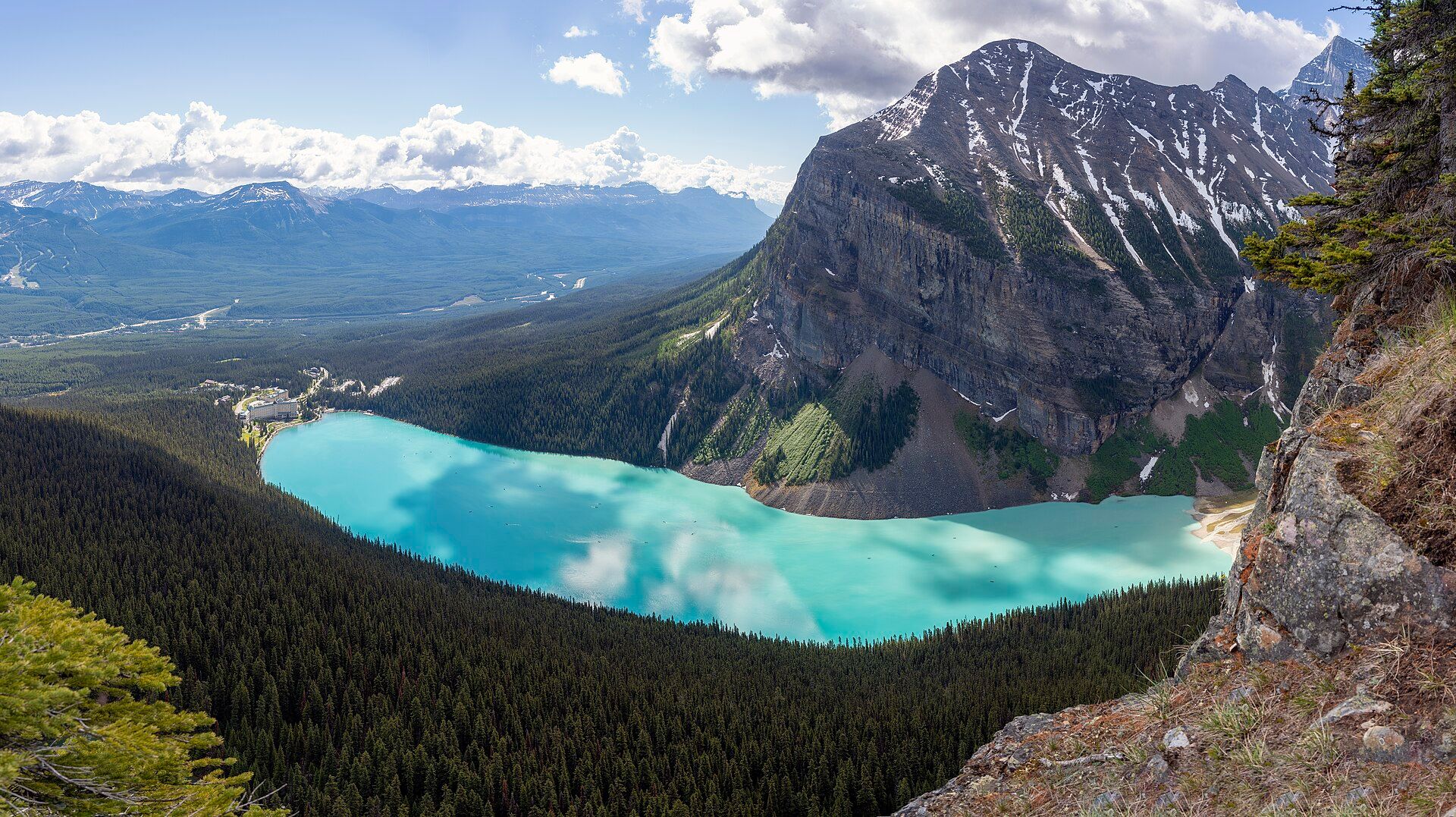
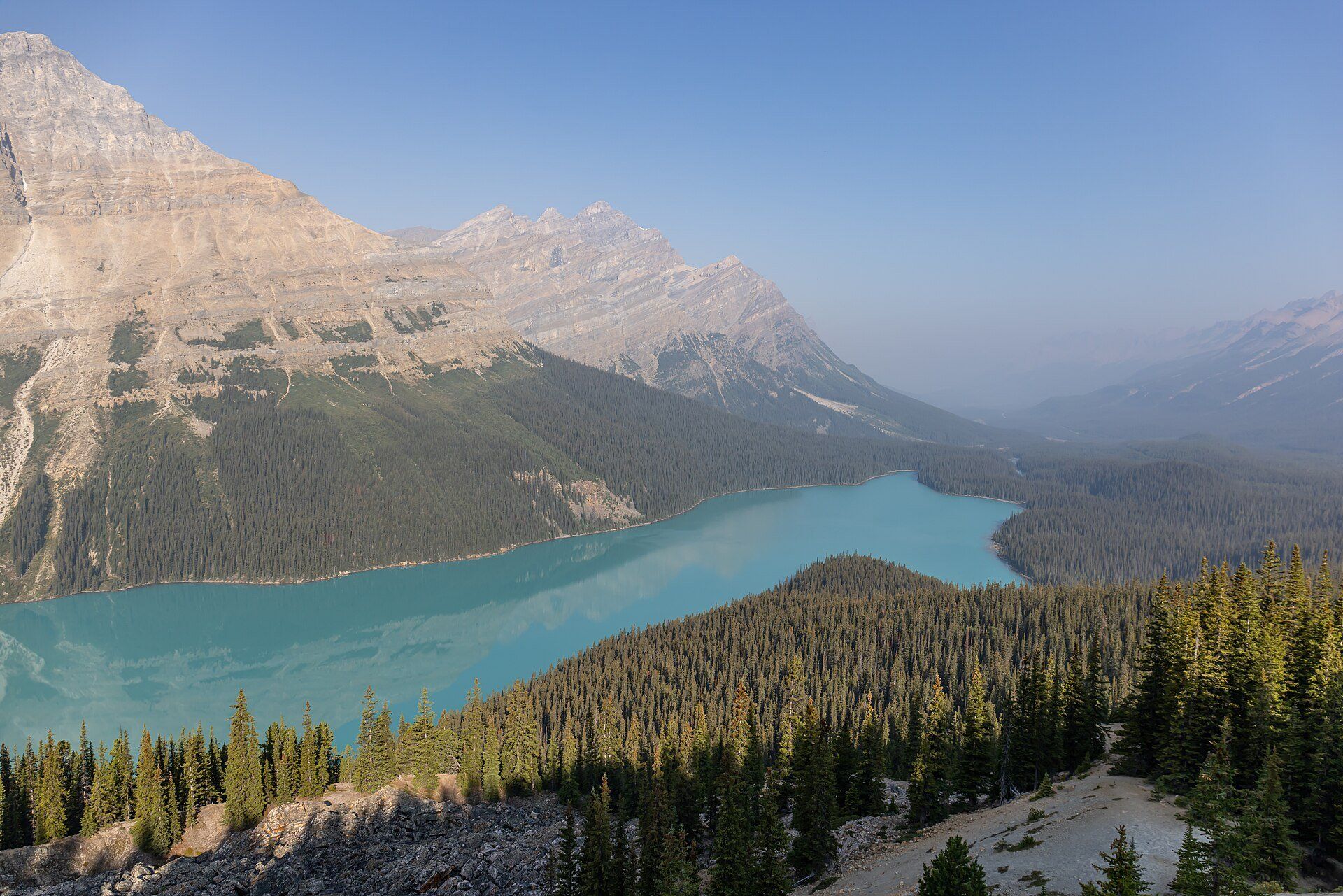
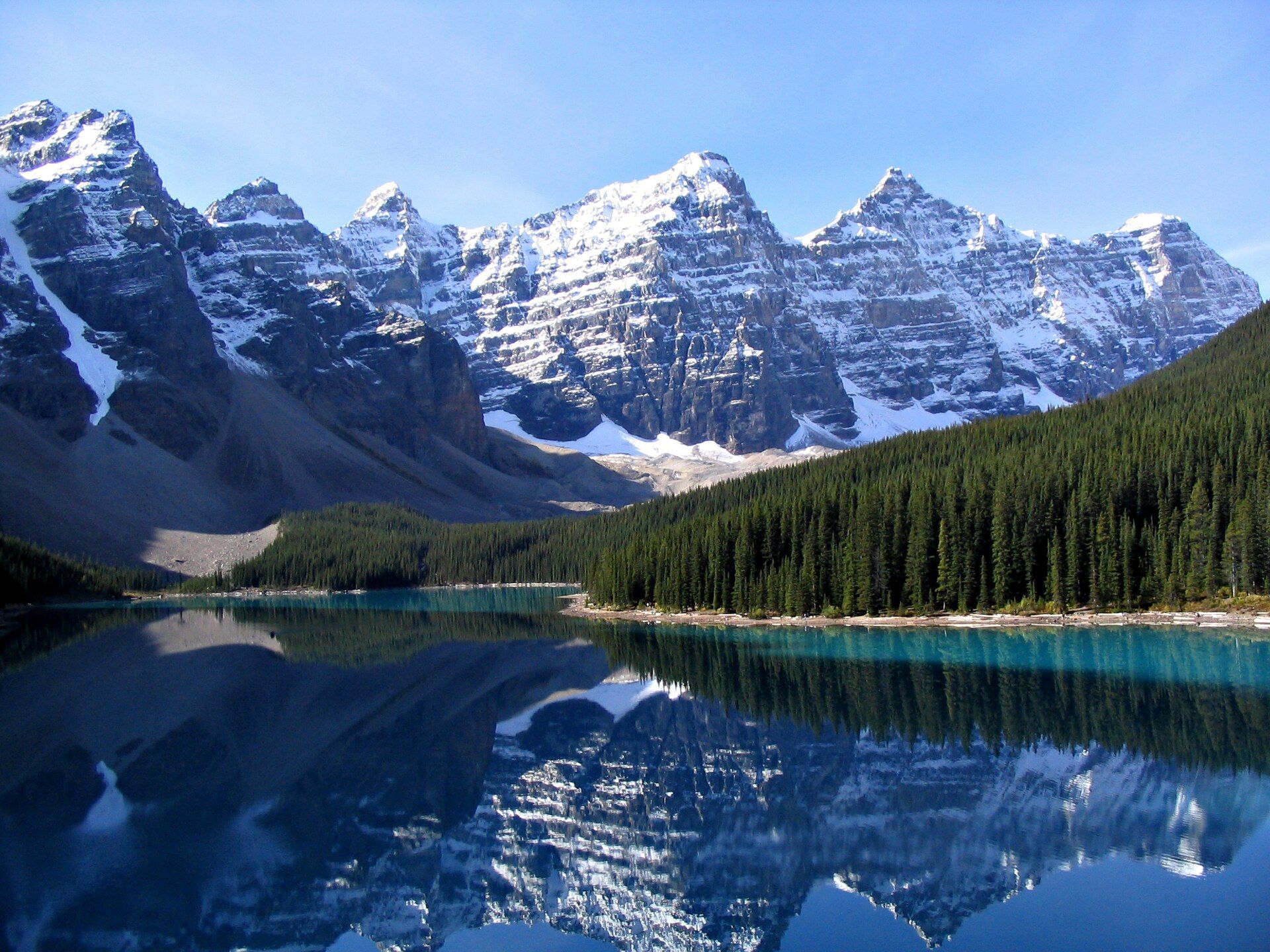
The turquoise glacial lakes of the Canadian Rockies — Moraine Lake beneath the Valley of the Ten Peaks and nearby Lake Louise — where glacier-ground rock flour turns the water an electric blue-green beneath snow-capped mountains.
What makes it marvelous
Moraine Lake and Lake Louise get their startling colour from 'rock flour' — rock ground to fine powder by glaciers and carried into the lakes by meltwater, where it stays suspended and scatters sunlight toward blue and green. Cradled by the sheer peaks of the Valley of the Ten Peaks and fed by glaciers, they sit within Banff, Canada's first national park (1885) and part of a UNESCO World Heritage area of the Canadian Rockies.
Why visit
Few lake views on Earth are as instantly recognisable: vivid turquoise water, a rim of jagged peaks, and glaciers above. Add hiking, canoeing, wildlife (bears, elk, mountain goats), and the wider splendour of Banff and the Icefields Parkway, and it's one of the great mountain destinations.
Still deciding?
Banff & Moraine Lake comes up most often against these — each one weighs cost, effort, season and crowds side by side.
More views of Banff & Moraine Lake
Additional photographs of the actual site — each freely licensed, with its photographer and licence credited.
What to know before you go
🗓️ Best time
Moraine Lake is typically accessible roughly mid-June to mid-October, once the road opens and the ice melts to reveal the colour; summer is peak, autumn is quieter and beautiful.
🧭 Getting there & access
Near Lake Louise in Banff National Park, Alberta (from Calgary). Private-vehicle access to Moraine Lake is restricted — use the park shuttle or authorized transport; book ahead in summer.
Good to know
- Book the shuttle to Moraine Lake early — private cars are largely restricted.
- Sunrise light on the Ten Peaks over the lake is the classic view.
- Carry bear spray and know bear-safety basics on the trails.
Plan your visit
Easy🧭 Getting there
From Calgary (YYC), then Banff or Lake Louise
- Fly into Calgary
- Drive Calgary → Banff — roughly 1h30
- Banff → Lake Louise — about 45 minutes, then a shuttle up to Moraine Lake, around 15 minutes
- Total travel
- Half a day from Calgary
- Time at site
- 2–3 days for the Bow Valley lakes and viewpoints
- Access
- A Parks Canada pass is required. The Moraine Lake road is closed to personal vehicles — access is by Parks Canada shuttle, a commercial shuttle, or bicycle, and shuttle seats book out well ahead in summer. The road closes entirely for the snow season, broadly mid-October to late spring. These arrangements have changed repeatedly in recent years, so check Parks Canada for the current position.
🎒 What to bring & consider
- A booked shuttle seat — simply driving up will not work and turns people away daily
- Bear spray if you walk any trail, plus the habit of making noise in the trees
- Layers; alpine weather at around 1,900m turns fast and snow can fall in any month
- Sun protection, because glare off snow and water at altitude is strong
- Food and water, since service at the lake itself is limited
👁️ What to expect
- Crowds
- The Moraine and Louise shorelines are busy right through the summer day, and even the first shuttles are full. Trails climbing away from the water thin out quickly.
- Conditions
- Easy lakeside paths, with steeper hikes up to Larch Valley and the teahouses. Snow lingers on the higher trails well into summer.
- Facilities
- Full in Banff and Lake Louise village. Minimal at Moraine Lake itself.
- The view
- The famous blue comes from suspended glacial rock flour and is strongest once the lake has fully thawed, roughly from June. Sunrise from the Rockpile is the classic — which is exactly why the earliest shuttles sell out first.
Times and requirements are approximate and change with season, weather, and local rules — confirm permits, fares, and schedules with operators before you travel.
Natural riches of the area
- Glaciers and glacier-fed turquoise lakes (rock flour)
- Rugged Rocky Mountain peaks and forests
- Grizzly and black bears, elk, mountain goats
- Alpine watersheds feeding major rivers
Local food
- Alberta beef
- The region's renowned grass-and-grain-fed beef.
- Bannock
- A traditional bread with deep roots among Canada's Indigenous peoples.
- Maple & wild berries
- Canadian maple syrup and mountain berries like saskatoons.
The lakes of Banff look almost artificially colourful, but the electric turquoise is pure physics. Glaciers grind mountain rock into an ultra-fine powder — ‘rock flour’ — which meltwater carries into lakes like Moraine and Lake Louise. Suspended in the cold water, it scatters sunlight toward the blue-green end of the spectrum, and the result is that unmistakable glowing colour, framed by the snow-dusted peaks of the Valley of the Ten Peaks.
This is the heart of the Canadian Rockies, within Banff — Canada’s first national park, established in 1885 — and part of a UNESCO World Heritage mountain landscape. Beyond the famous lake views lie glaciers, hiking trails, canoe-still water, and abundant wildlife, from elk to grizzlies. Because it’s so popular, access to Moraine Lake is now managed by shuttle; plan ahead, arrive for the dawn light on the peaks, and the reward is one of the most beautiful mountain scenes anywhere.
Moraine Lake’s intense blue is not a trick of the light: glaciers grind rock into a fine “rock flour” that washes into the water and stays suspended, scattering sunlight toward the blue-green end of the spectrum. It sits in the Valley of the Ten Peaks, and the classic view — from the Rockpile above the outlet — was famous enough to appear on an old Canadian twenty-dollar note. The lake is fed by snowmelt, so it only fills and shows its colour through the warmer months and the access road is closed by snow in winter; personal vehicles are now restricted even in season, so check Parks Canada for the current shuttle or reservation system before you go. Banff itself, established in 1885, was Canada’s first national park.
Banff & Moraine Lake: common questions
How do you get to Banff & Moraine Lake?
From Calgary (YYC), then Banff or Lake Louise: Fly into Calgary; Drive Calgary → Banff — roughly 1h30; Banff → Lake Louise — about 45 minutes, then a shuttle up to Moraine Lake, around 15 minutes. Total travel time: Half a day from Calgary.
When is the best time to visit Banff & Moraine Lake?
Moraine Lake is typically accessible roughly mid-June to mid-October, once the road opens and the ice melts to reveal the colour; summer is peak, autumn is quieter and beautiful.
How long should you spend at Banff & Moraine Lake?
2–3 days for the Bow Valley lakes and viewpoints. Total travel time: Half a day from Calgary.
What should you bring to Banff & Moraine Lake?
A booked shuttle seat — simply driving up will not work and turns people away daily Bear spray if you walk any trail, plus the habit of making noise in the trees Layers; alpine weather at around 1,900m turns fast and snow can fall in any month Sun protection, because glare off snow and water at altitude is strong Food and water, since service at the lake itself is limited
Do you need a permit or guide for Banff & Moraine Lake?
A Parks Canada pass is required. The Moraine Lake road is closed to personal vehicles — access is by Parks Canada shuttle, a commercial shuttle, or bicycle, and shuttle seats book out well ahead in summer. The road closes entirely for the snow season, broadly mid-October to late spring. These arrangements have changed repeatedly in recent years, so check Parks Canada for the current position.
Is Banff & Moraine Lake crowded, and what are conditions like?
The Moraine and Louise shorelines are busy right through the summer day, and even the first shuttles are full. Trails climbing away from the water thin out quickly. Easy lakeside paths, with steeper hikes up to Larch Valley and the teahouses. Snow lingers on the higher trails well into summer. Facilities: Full in Banff and Lake Louise village. Minimal at Moraine Lake itself.
Added Updated
More wonders to explore