Waterfalls · Europe
What Are the Most Beautiful Waterfalls in Europe? 11 Falls, From Skógafoss to Krimml
11 places · every one real, mapped, and worth the trip
Short answer: Iceland has the most famous run of them — Skógafoss, a 60-metre curtain with a rainbow on almost any sunny day; Seljalandsfoss, which you can walk behind; Gullfoss's two stepped tiers; and Dettifoss, often called the most powerful in Europe. On the mainland, the Rhine Falls are the largest in Europe by volume, Austria's Krimml Waterfalls drop 380 metres in three tiers, and Croatia's Krka and Bosnia's Kravica pour over terraces of living travertine.
Almost all of them are at their fullest from late spring to early summer, when snowmelt or glacial melt peaks. The Icelandic highland roads to Dettifoss and the mountain paths at Krimml and Vøringsfossen are typically snow-closed in winter. The list is unranked.
-
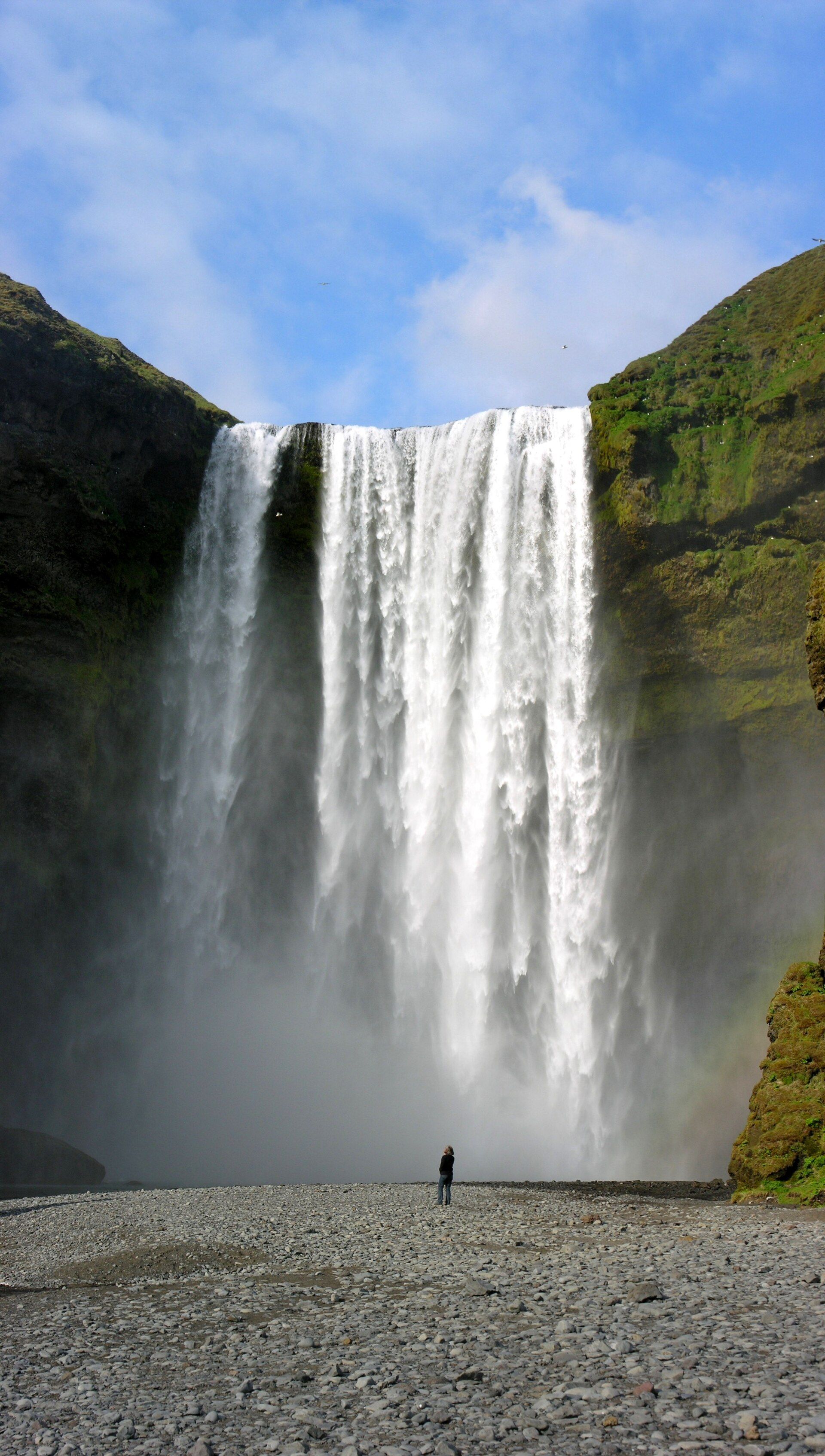
Skógafoss The rainbow curtain
Skógar, South Iceland
A 60-metre, roughly 25-metre-wide fall on the Skógá river, dropping over a former sea cliff right beside the Ring Road at Skógar, about 150 km southeast of Reykjavík. Free entry; a steel staircase climbs to a platform at the top. May–September for the greenest valley and the rainbow.
-
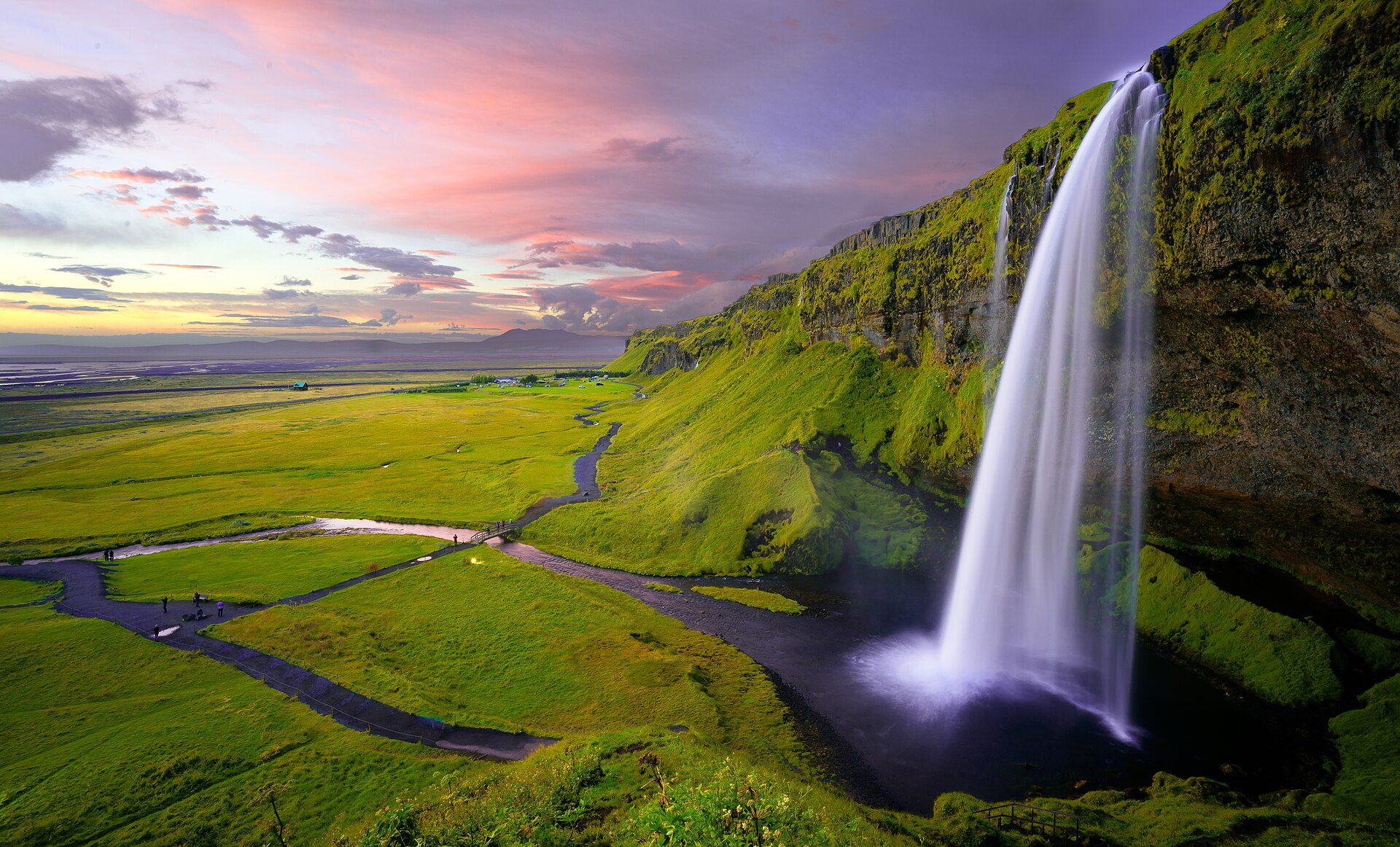
Seljalandsfoss The one you walk behind
Seljaland, South Iceland
A slender 60-metre ribbon fed by the Eyjafjallajökull ice cap, with a loop path right around behind the falling water. Beside the Ring Road about 120 km southeast of Reykjavík (paid car park). May–September, when the rear path is open and safe; in winter it turns to sheet ice.
-
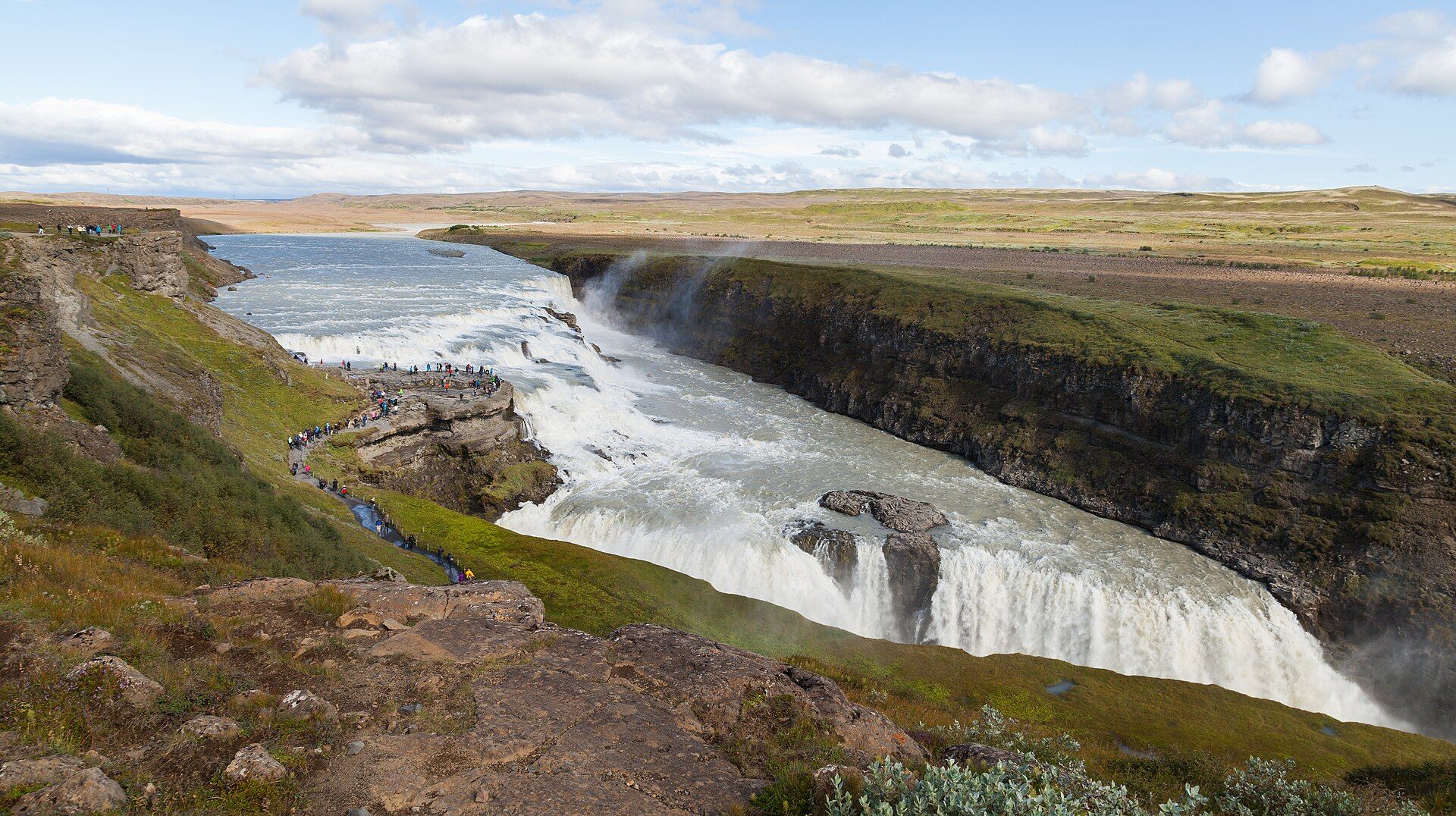
Gullfoss Golden Circle classic
Hvítá river, Southwest Iceland
The glacial Hvítá plunges about 32 metres in two stepped tiers into a rugged canyon, throwing up spray that catches near-constant rainbows. About 1.5–2 hours from Reykjavík on the Golden Circle; free car park, no entry fee. June–August for full flow and open paths.
-
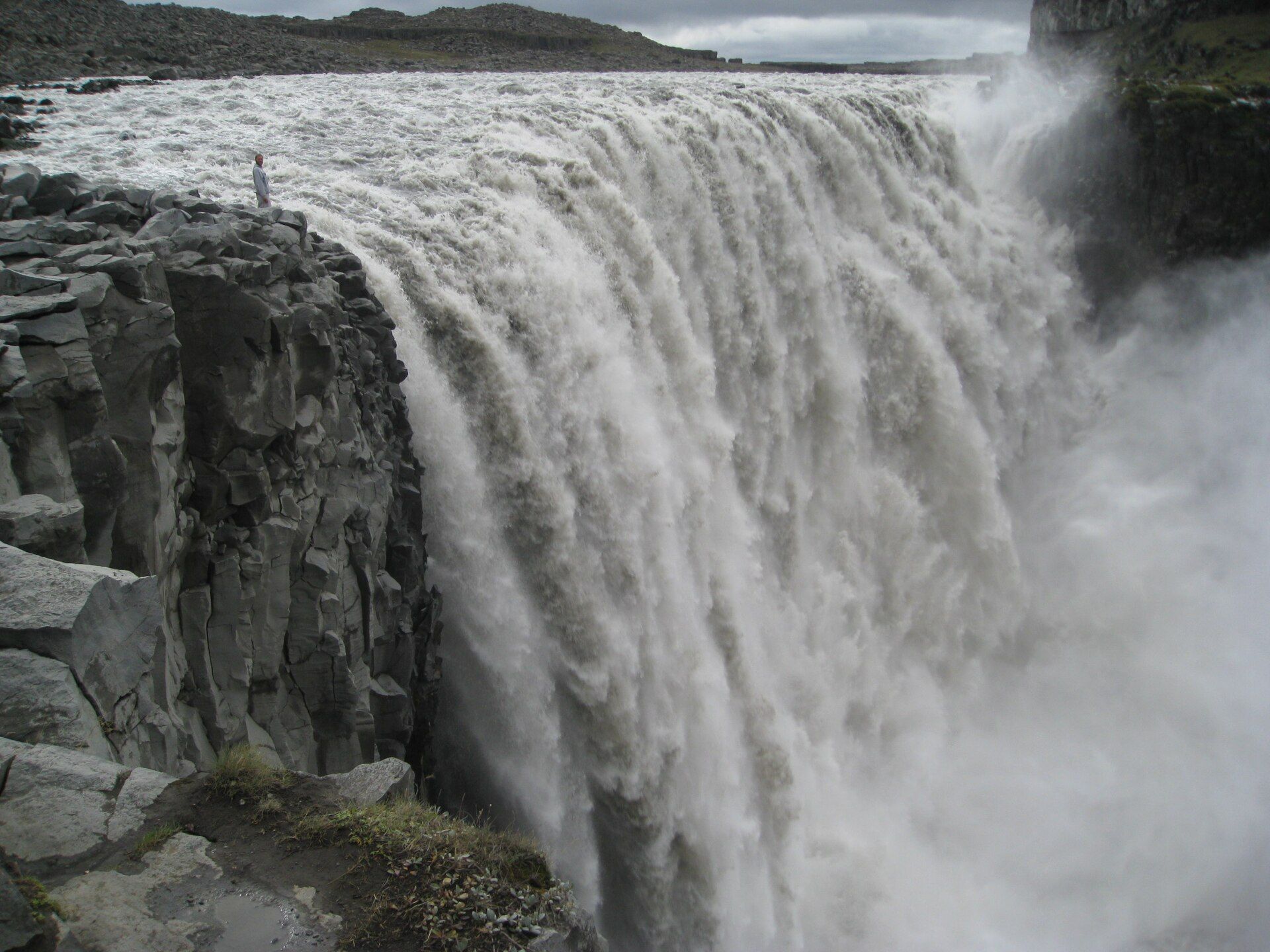
Dettifoss Often called Europe's most powerful
Jökulsárgljúfur, Vatnajökull National Park, Northeast Iceland
A grey glacial river thrown 44 metres into a black canyon, about 100 metres wide, with an average flow around 200 m³/s — loud enough to shake the ground. Road 862 serves the west bank, the rougher 864 the east; the two sides are not connected. June to early September only.
-
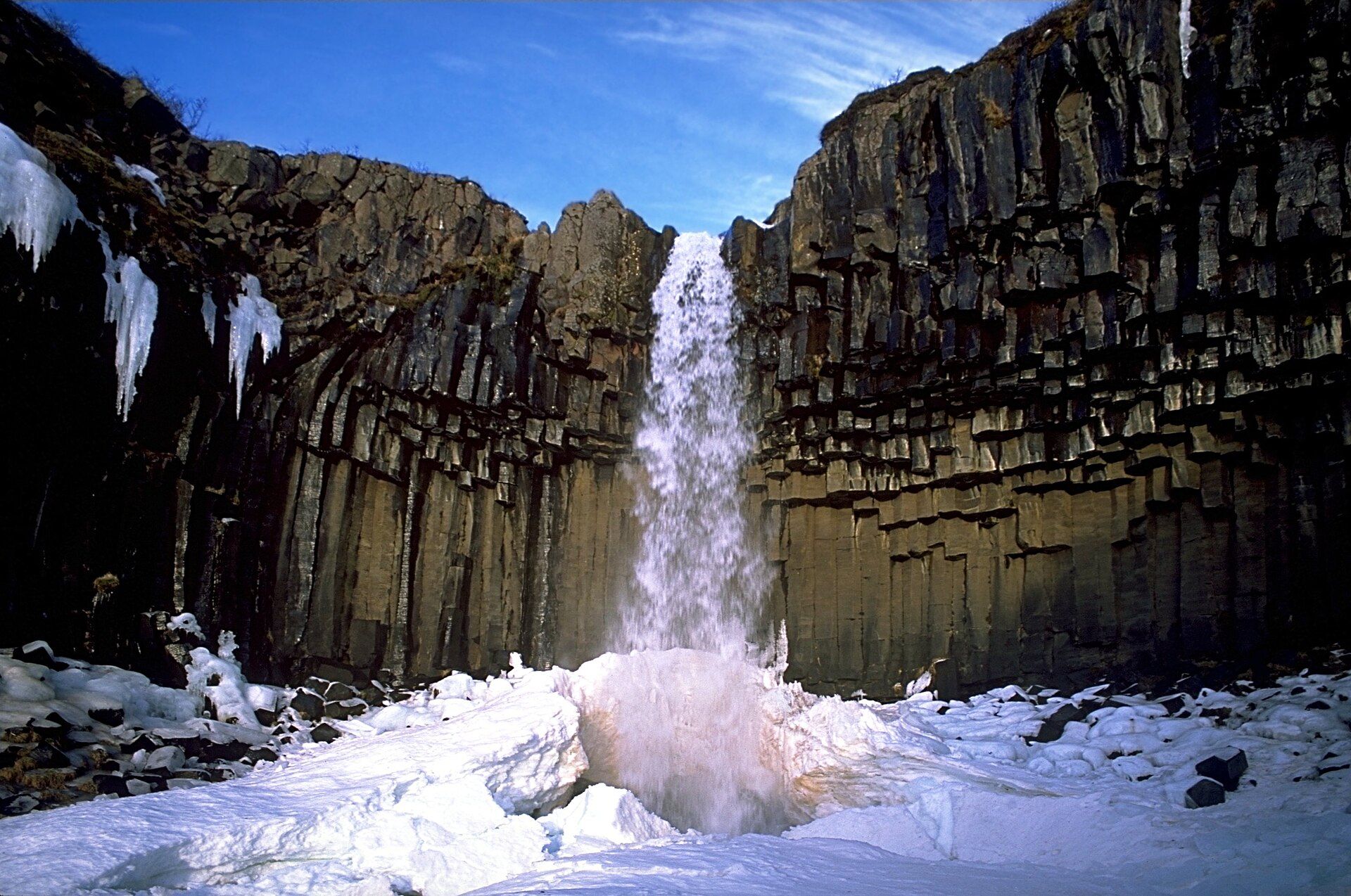
Svartifoss Framed by basalt columns
Skaftafell, Vatnajökull National Park, South Iceland
A slender 20-metre fall in Skaftafell hung with dark hexagonal basalt columns like organ pipes. A roughly 1.5 km uphill walk (about 45 minutes) from the Skaftafell visitor centre in Vatnajökull National Park. June–September; crampons are often needed in winter.
-
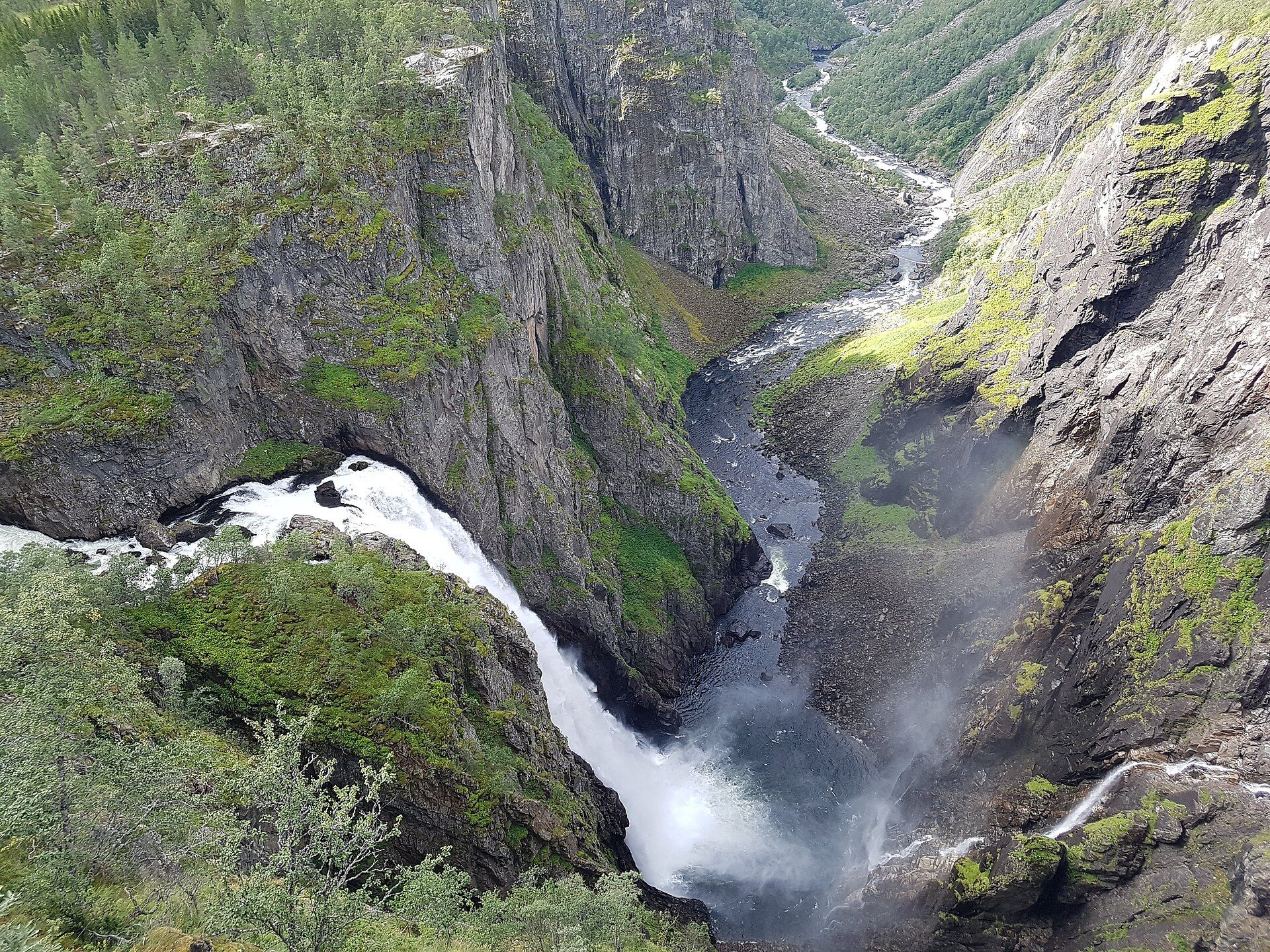
Vøringsfossen Off the edge of Hardangervidda
Eidfjord, Vestland, Western Norway
Norway's most celebrated waterfall drops around 180 metres from the Hardangervidda plateau into Måbødalen, with a single free fall of roughly 145 metres. Viewpoints by the Fossli hotel and a stepped bridge, beside the road from Eidfjord. Late May–September, when the mountain road is open.
-
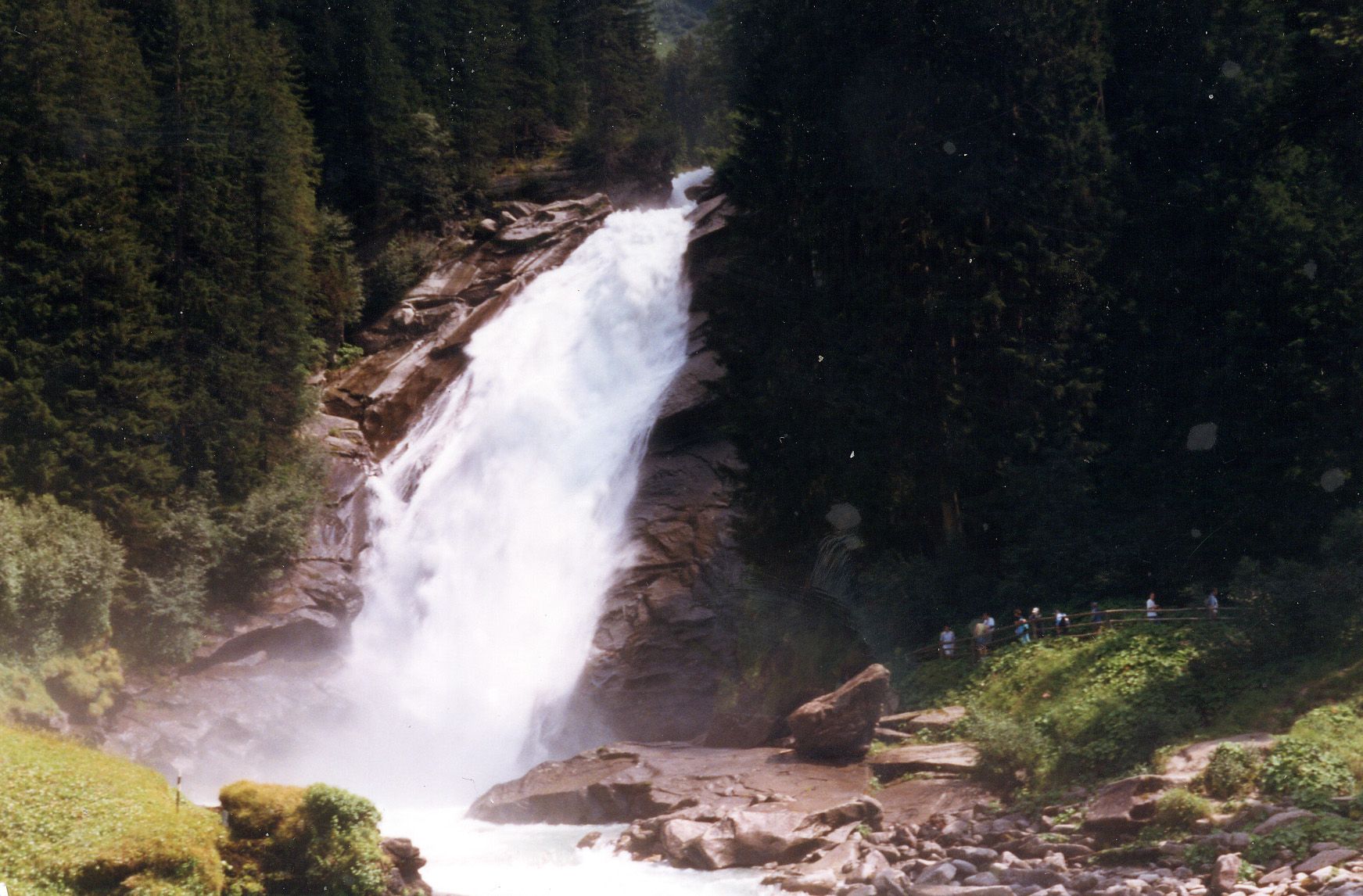
Krimml Waterfalls 380 metres in three tiers
High Tauern National Park, Salzburg, Austria
Austria's highest waterfall: the Krimmler Ache thrown 380 metres down the mountainside in three great tiers, in the High Tauern National Park. The trail starts near Krimml village and climbs beside the falls. June and July are the most powerful; the trail typically closes in winter.
-
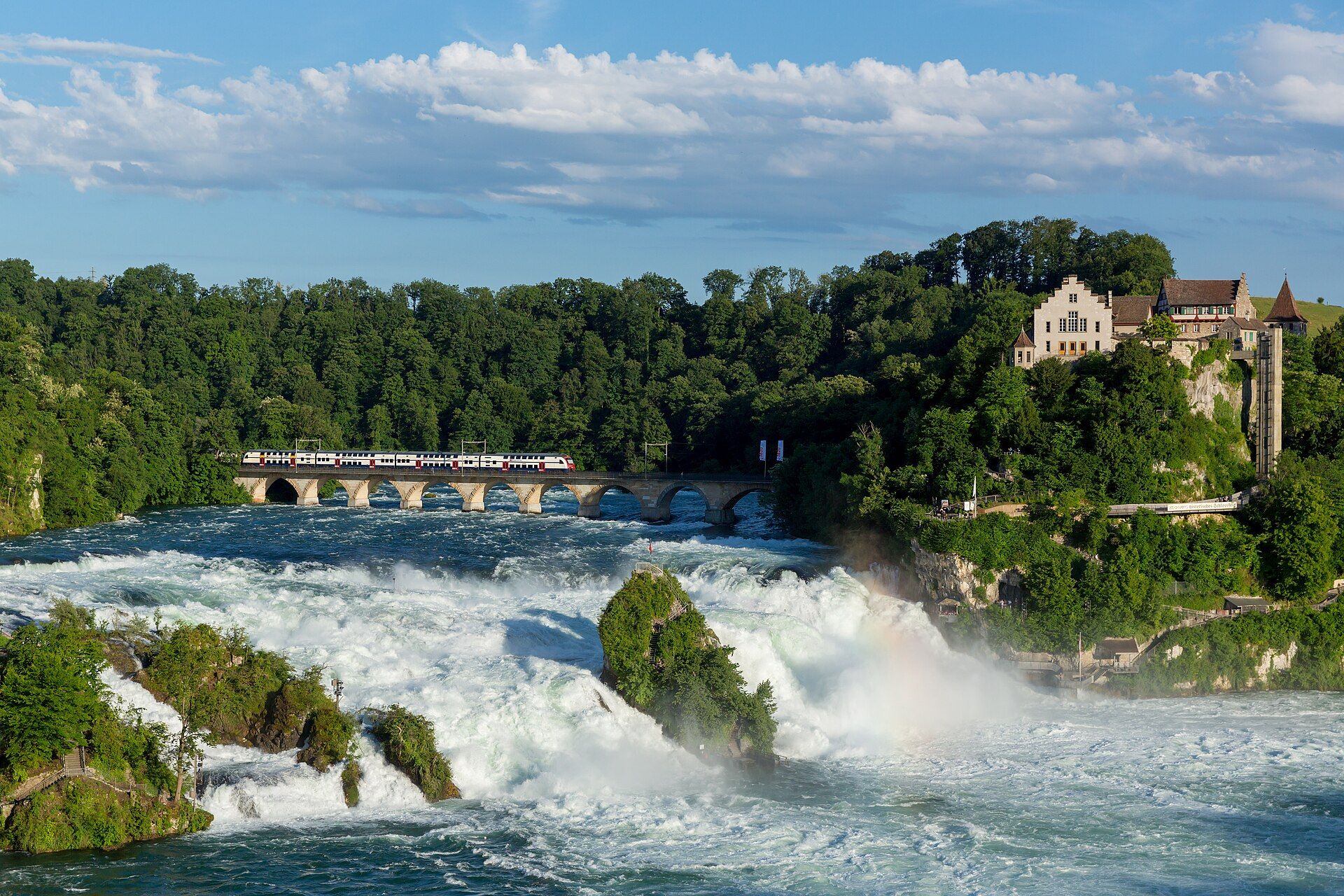
Rhine Falls Europe's largest by volume
Near Schaffhausen, Northern Switzerland
150 metres of the Rhine thundering over a 23-metre ledge around a rock pinnacle you can climb by boat, with an average summer flow of about 600 m³/s. Between Neuhausen and Schaffhausen in northern Switzerland, with rail access. Fullest in late spring and early summer.
-
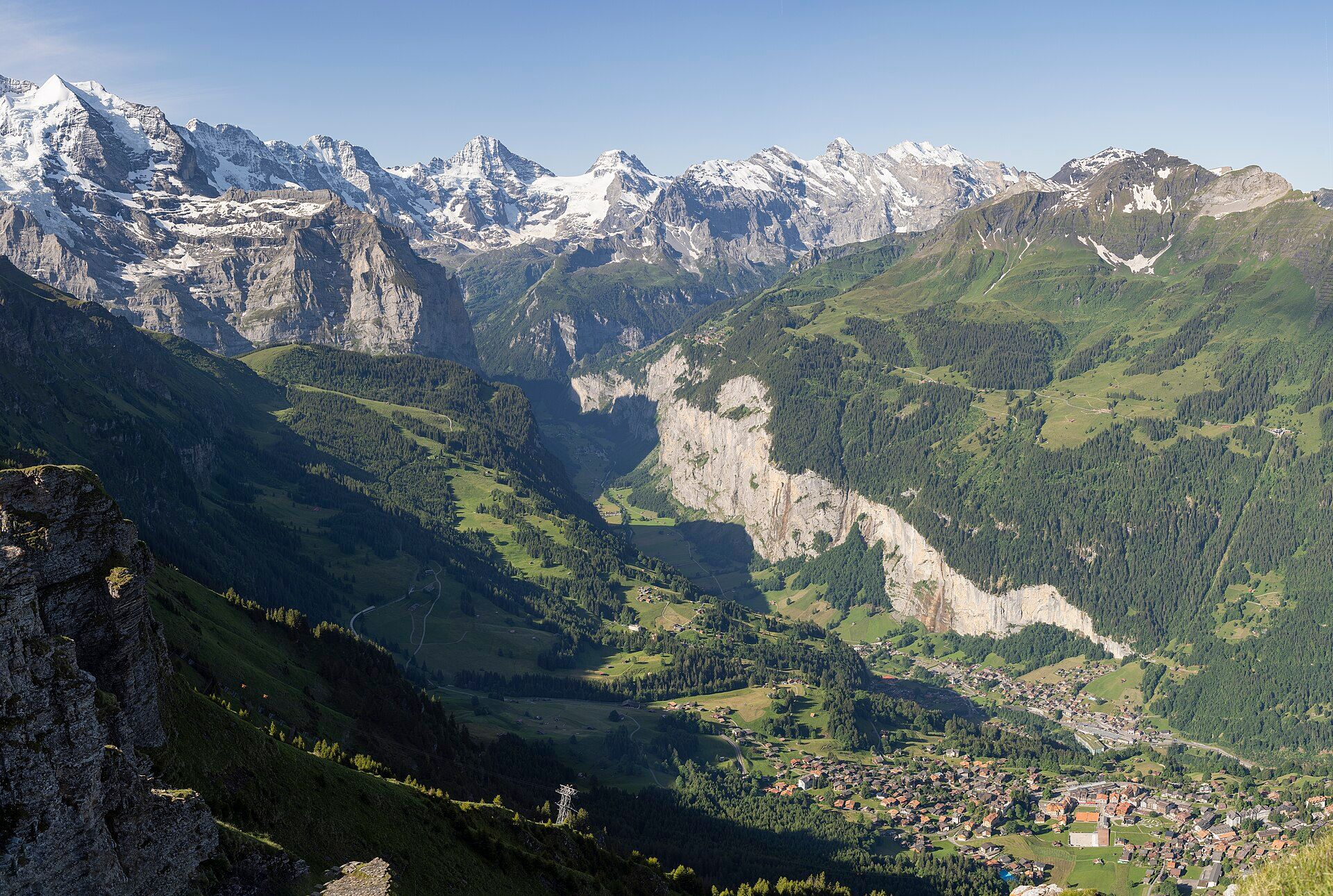
Lauterbrunnen Valley Seventy-two waterfalls in one valley
Bernese Oberland, Switzerland
A glacier-carved valley walled by cliffs about 1,000 metres high, with the free-falling Staubbach (about 300 m) and the Trümmelbach thundering inside the mountain. By train via Interlaken. May–October; the falls are strongest in early summer.
-
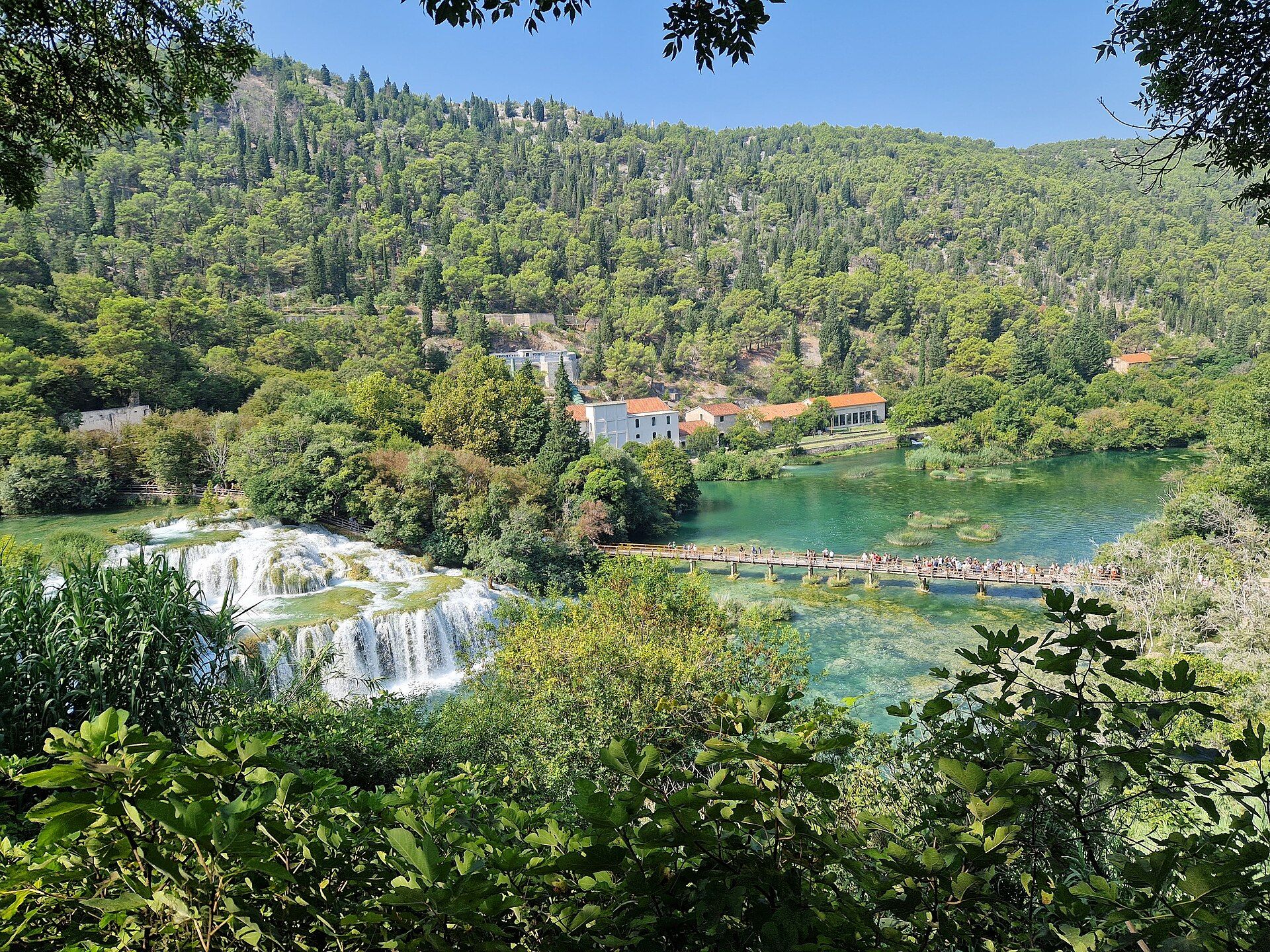
Krka National Park Seventeen travertine steps
Šibenik-Knin County, Dalmatia, Croatia
Skradinski Buk drops about 46 metres over some seventeen natural travertine steps that the river builds as it flows. Entrances at Lozovac and Skradin near Šibenik; a park boat or path from Skradin. May–September; swimming at the falls is no longer permitted.
-
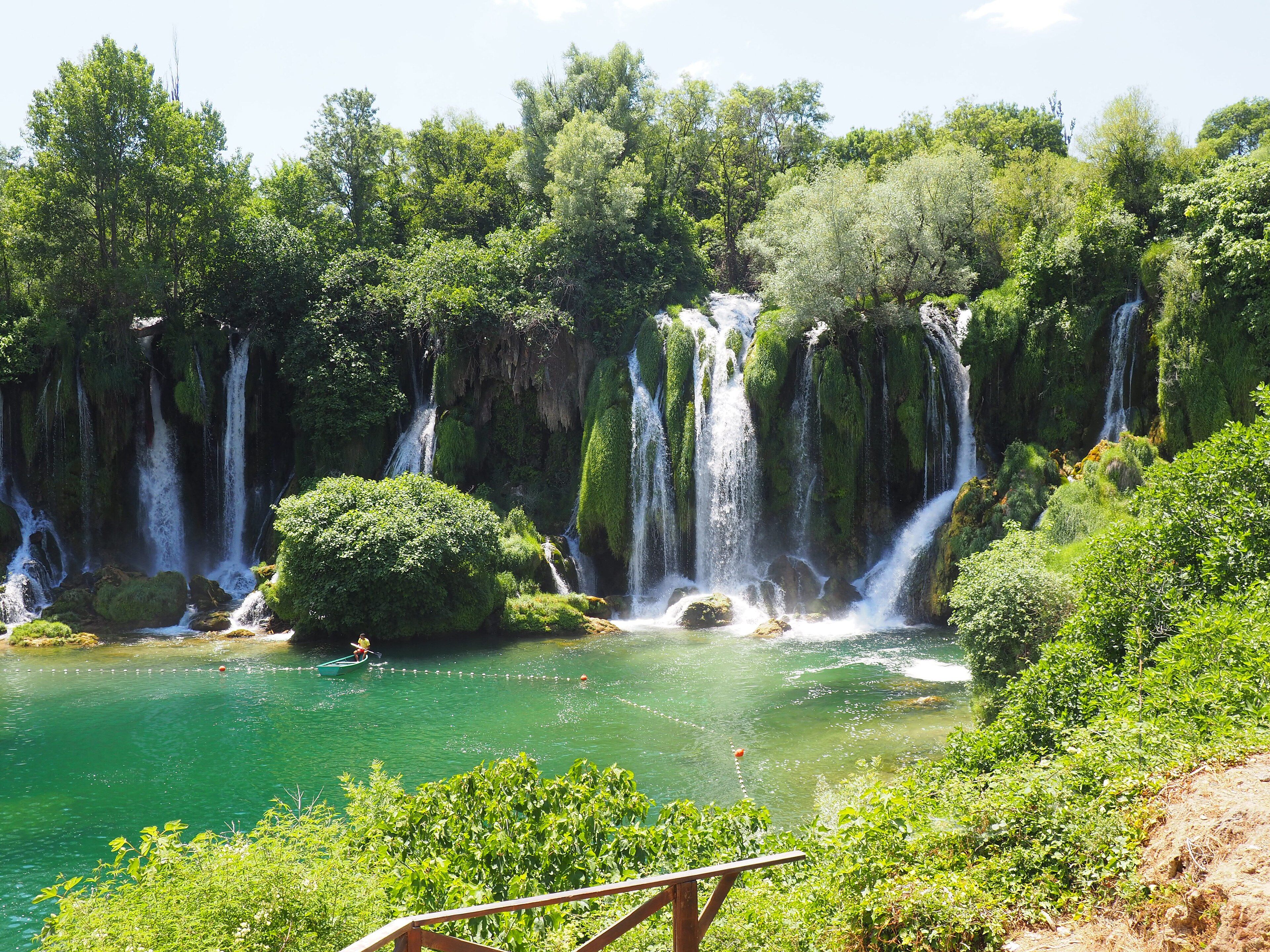
Kravica Falls A swimmable amphitheatre
Trebižat River, near Ljubuški, Herzegovina, Bosnia and Herzegovina
A 25-metre curtain spread across a moss-and-travertine amphitheatre on the Trebižat in Herzegovina, about 40 minutes by road from Mostar. Fullest roughly April to early June; July and August are hot and busy but warm enough to swim.
For full flow, aim for late spring to early summer, when snowmelt and glacial melt peak — and check road and trail status for Dettifoss, Krimml and Vøringsfossen, which are typically snow-closed in winter. Iceland's south-coast falls sit right on the Ring Road and can be seen in a day from Reykjavík.
Added