Krka National Park
📍 Šibenik-Knin County, Dalmatia, Croatia
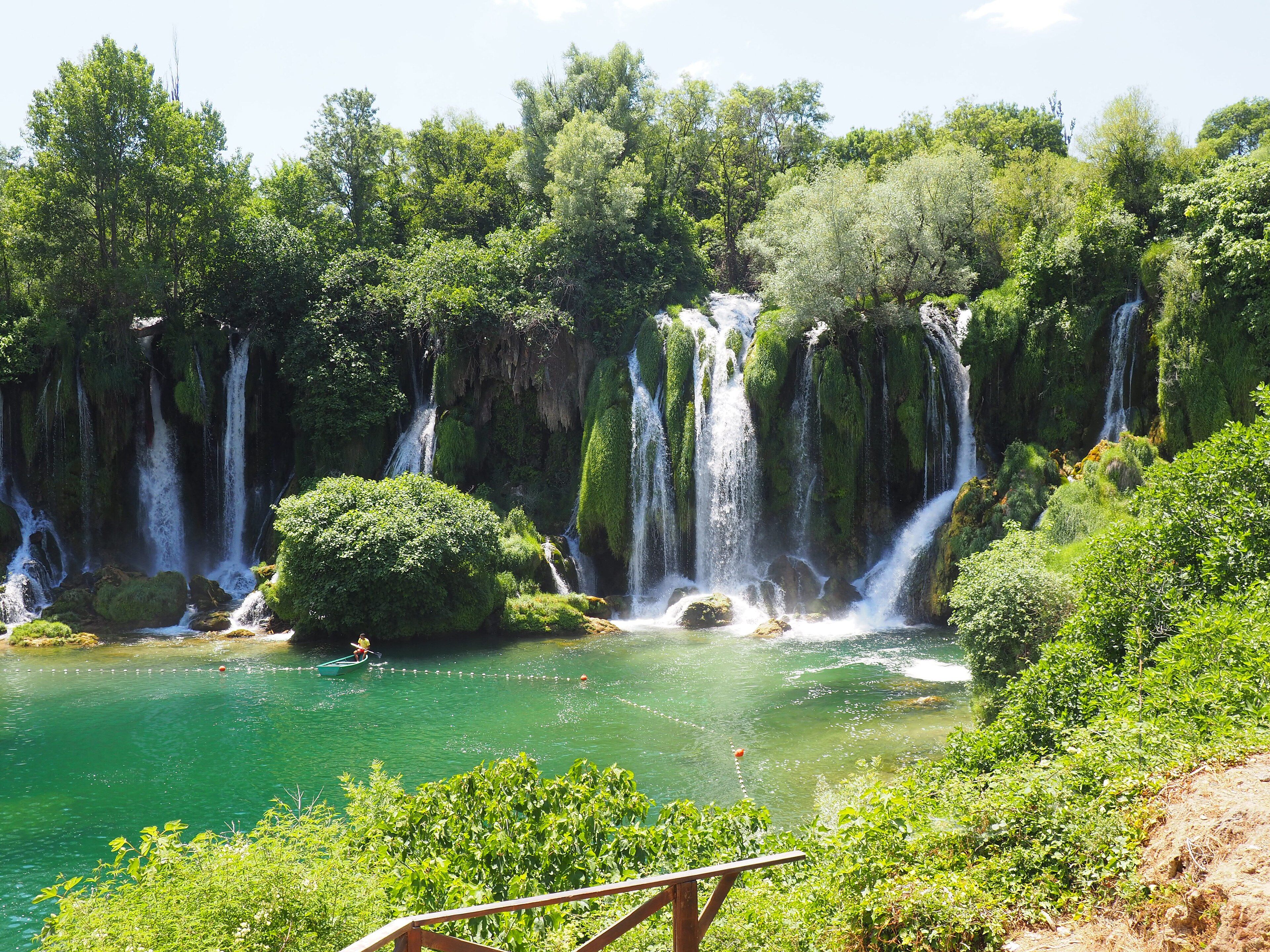
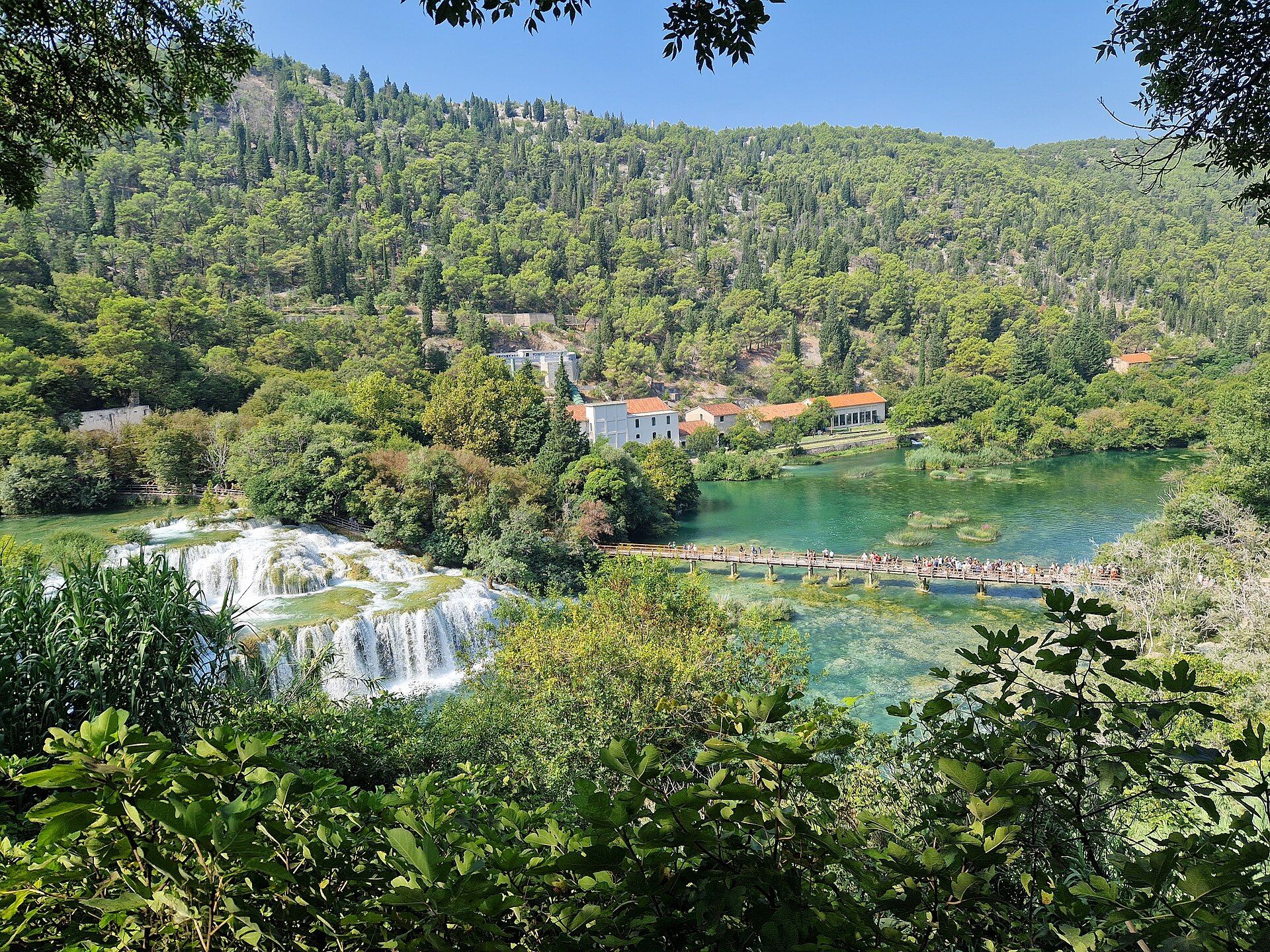
A Dalmatian river that builds its own waterfalls — the Krka lays down travertine barriers of living rock as it flows, culminating in Skradinski Buk, a broad staircase of cascades tumbling over seventeen natural steps.
What makes it marvelous
The Krka is a karst river, rich in dissolved limestone, and it does something rare: it grows its own waterfalls. As the water tumbles and aerates, mineral comes out of solution and, with the help of mosses and algae, is deposited as travertine — a porous rock that builds up into dams and barriers over centuries. The result is a chain of falls along the river's course, the grandest being Skradinski Buk, where the Krka spills roughly 46 m over about seventeen travertine steps spread 200–400 m wide — the longest travertine barrier in Europe. Upstream, Roški Slap fans out in dozens of trickling 'necklaces', and an island monastery sits mid-river. The park protects this whole travertine-building system, a fragile process that only a handful of the world's rivers still perform on this scale.
Why visit
Wooden walkways carry you right over and alongside the cascades of Skradinski Buk, close enough to feel the spray, through a park humming with dragonflies, fish, and birdsong. It has the tiered, turquoise beauty that made Croatia's falls famous, with the added wonder of watching rock quite literally being born from moving water.
Still deciding?
Krka National Park comes up most often against these — each one weighs cost, effort, season and crowds side by side.
More views of Krka National Park
Additional photographs of the actual site — each freely licensed, with its photographer and licence credited.
What to know before you go
🗓️ Best time
Late spring to early autumn (May–September) for warm weather and full, lively falls; spring runs highest after the melt, while summer is warmest but busiest. Note that swimming at the falls is no longer permitted.
🧭 Getting there & access
Main entrances at Lozovac and Skradin, near Šibenik in Dalmatia — an easy drive from Split or Zadar. From Skradin a park boat or riverside path leads to the falls.
Good to know
- Arrive early or late in summer; midday at Skradinski Buk is very crowded.
- Swimming below the falls is banned to protect the fragile travertine — plan to walk, not bathe.
- Combine the boardwalk at Skradinski Buk with a boat trip to Visovac island and Roški Slap.
Plan your visit
Easy🧭 Getting there
From Split (SPU) or Zadar (ZAD)
- Fly to Split or Zadar
- Drive to the Lozovac or Skradin entrance — roughly 1–1.5 hours
- Total travel
- Around 1.5 hours from either airport
- Time at site
- Half to a full day; longer to add Roski Slap and Visovac by boat
- Access
- A ticketed national park with entrances at Lozovac and Skradin; from Skradin a park boat or a riverside walkway reaches the falls. Prices and boat schedules vary by season, so check the park's official information before you go.
🎒 What to bring & consider
- Comfortable walking shoes for the boardwalks and riverside paths
- Sun protection and water — the falls area is warm and partly exposed
- A little cash and a booking in peak season, when entry is capped
- A camera; leave the swimwear, as bathing at the falls is no longer allowed
- Time for the boat if you want Visovac island and Roski Slap
👁️ What to expect
- Crowds
- Skradinski Buk is one of Croatia's busiest sights midday in summer; early and late are calmer.
- Conditions
- Flat, easy walking on wooden boardwalks and gravel paths, with some steps and spray.
- Facilities
- Good at the main entrances — ticketing, cafes, boats, parking, information.
- The view
- The wide staircase of falls photographs best in softer morning or late-afternoon light.
Times and requirements are approximate and change with season, weather, and local rules — confirm permits, fares, and schedules with operators before you travel.
Natural riches of the area
- A karst river actively building travertine waterfalls
- Skradinski Buk — Europe's longest travertine barrier
- River pools, reed beds, and riverine forest rich in wildlife
- Endemic fish and abundant birdlife along the Krka canyon
Local food
- Skradinski rižot
- A slow-cooked Skradin risotto, traditionally simmered for hours with veal and beef.
- Soparnik
- A thin Dalmatian chard pie baked between two layers of dough.
- Prošek
- A sweet Dalmatian dessert wine made from dried grapes.
Most rivers wear rock away. The Krka, in the Dalmatian hinterland behind Šibenik, does the opposite: it builds. Its water is charged with dissolved limestone from the karst it drains, and wherever it tumbles and churns, that mineral comes back out of solution and — helped along by mosses and algae — sets as travertine, a porous stone that piles up over centuries into dams and barriers. In effect, the river manufactures its own waterfalls.
The masterpiece is Skradinski Buk, where the Krka spreads 200 to 400 metres wide and pours some 46 metres down about seventeen travertine steps — the longest such barrier in Europe. Wooden walkways lace across and around it, carrying you close enough to feel the spray, past mill houses that once harnessed the flow. Upstream, Roški Slap fans out in a delicate spread of cascades, and the little island monastery of Visovac floats mid-river, reachable by park boat.
Krka became a national park in 1985 to protect this whole living system, because travertine-building on such a scale is genuinely rare — only a handful of rivers on Earth still do it. That fragility is why swimming below the falls, once a summer ritual, is now banned. What remains is arguably better: the chance to walk right through a turquoise, tiered waterscape and watch new rock being born, drop by mineral drop, from moving water.
Krka National Park: common questions
How do you get to Krka National Park?
From Split (SPU) or Zadar (ZAD): Fly to Split or Zadar; Drive to the Lozovac or Skradin entrance — roughly 1–1.5 hours. Total travel time: Around 1.5 hours from either airport.
When is the best time to visit Krka National Park?
Late spring to early autumn (May–September) for warm weather and full, lively falls; spring runs highest after the melt, while summer is warmest but busiest. Note that swimming at the falls is no longer permitted.
How long should you spend at Krka National Park?
Half to a full day; longer to add Roski Slap and Visovac by boat. Total travel time: Around 1.5 hours from either airport.
What should you bring to Krka National Park?
Comfortable walking shoes for the boardwalks and riverside paths Sun protection and water — the falls area is warm and partly exposed A little cash and a booking in peak season, when entry is capped A camera; leave the swimwear, as bathing at the falls is no longer allowed Time for the boat if you want Visovac island and Roski Slap
Do you need a permit or guide for Krka National Park?
A ticketed national park with entrances at Lozovac and Skradin; from Skradin a park boat or a riverside walkway reaches the falls. Prices and boat schedules vary by season, so check the park's official information before you go.
Is Krka National Park crowded, and what are conditions like?
Skradinski Buk is one of Croatia's busiest sights midday in summer; early and late are calmer. Flat, easy walking on wooden boardwalks and gravel paths, with some steps and spray. Facilities: Good at the main entrances — ticketing, cafes, boats, parking, information.
Added
More wonders to explore