Kravica Falls
📍 Trebižat River, near Ljubuški, Herzegovina, Bosnia and Herzegovina
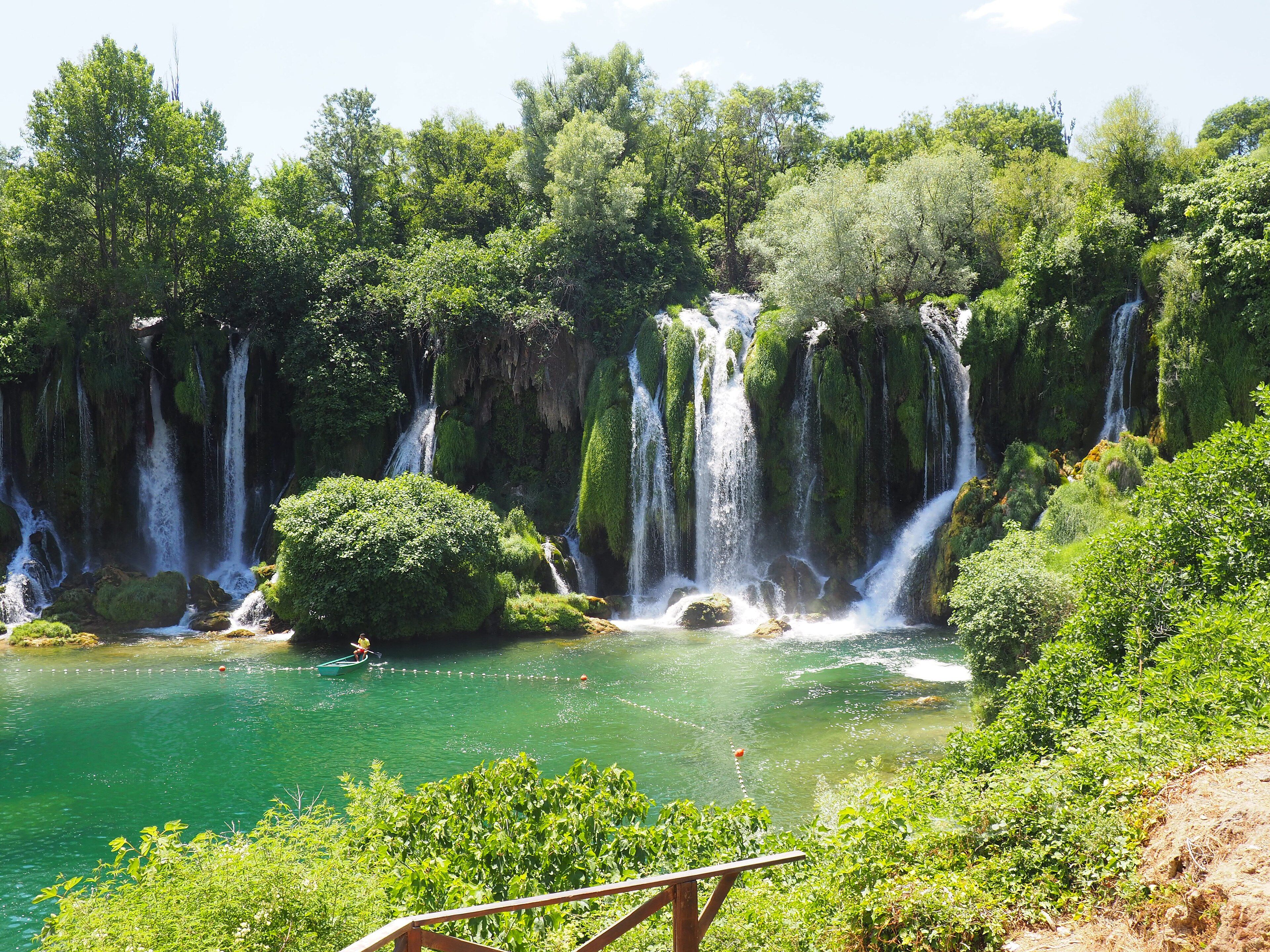
A 25-metre curtain of water spread across an amphitheatre of moss and living rock in the karst of Herzegovina — a waterfall that is still building itself out of the river it carries.
What makes it marvelous
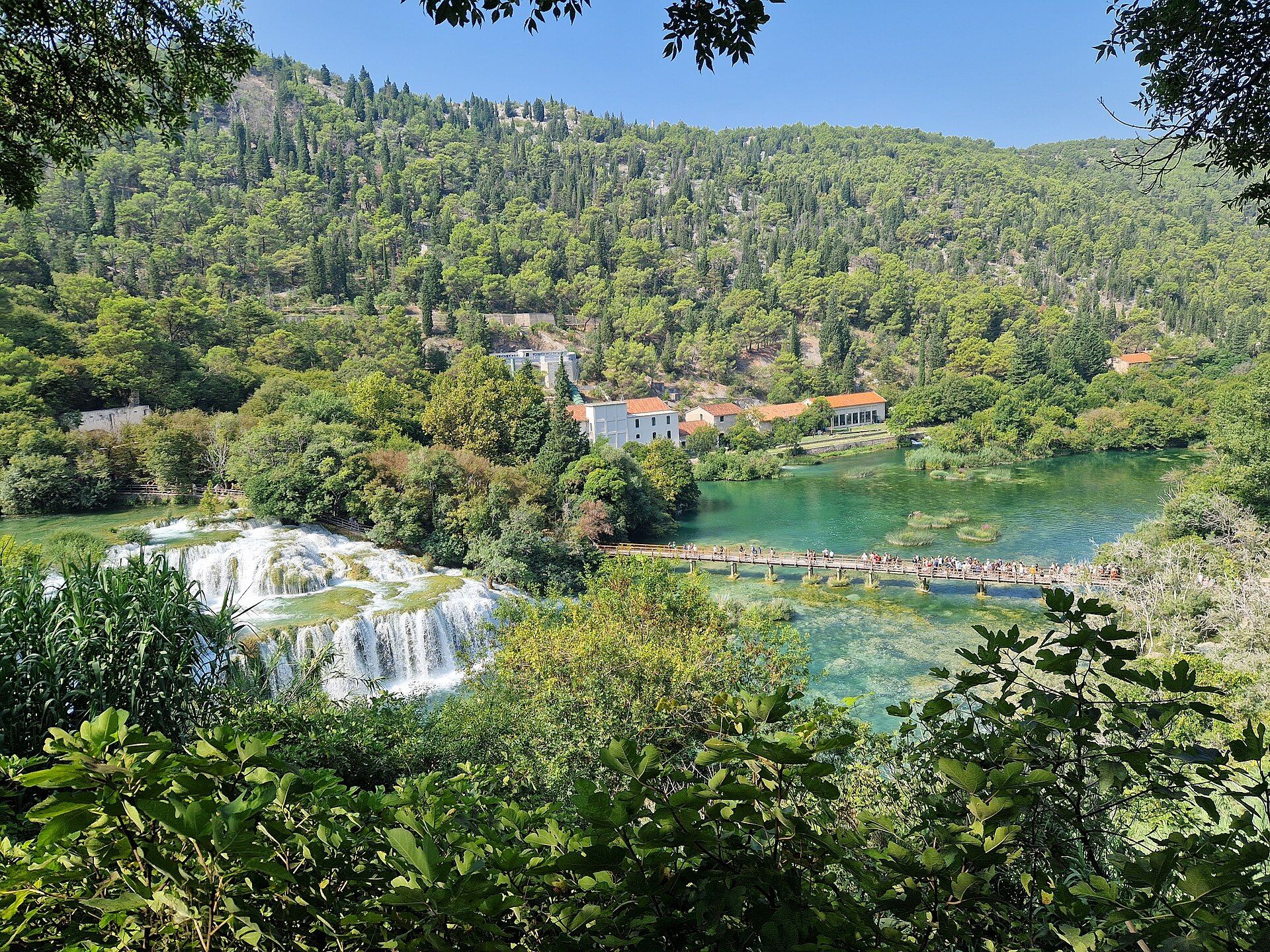
Kravica is a tufa cascade, which means the rock it falls over is being made by the water. The Trebižat runs through limestone karst and comes out saturated with dissolved calcium carbonate; where mosses and algae grow in the spray, they strip carbon dioxide out of the water and the carbonate precipitates around them, hardening into porous tufa. The falls therefore grow: the lip advances, curtains of moss calcify into rock, and the whole amphitheatre is a structure the river has built rather than one it has cut. It is the same process that produced the terraced barriers at Plitvice. Kravica drops about 25 metres across a broad arc into a pool with a radius of roughly 120 metres, and because the water is warm in summer and the pool is deep and clear, it functions as the swimming hole for this whole corner of Herzegovina.
Why visit
It is a rare waterfall you can get right into — the pool is large, swimmable and startlingly green, with the cascade spread across the far side. The setting is arid Herzegovinian karst, so the sudden mass of water and dense green in a dry stony landscape is more surprising than the numbers suggest, and it is close enough to Mostar to pair with it easily.
What to know before you go
🗓️ Best time
Late spring, roughly April to early June, is when the falls are fullest and the surrounding landscape is green. July and August are hot and busy but the water is warm enough to swim. By late summer the flow drops noticeably. Winter is loud and full but cold and largely unvisited.
🧭 Getting there & access
About 10 km south of Ljubuški and 40 km south of Mostar, roughly forty minutes by road from Mostar. There is a paid car park above the falls; from there it is a steep path or a shuttle vehicle down to the water. The site is privately managed and charges entry.
Good to know
- Come in the morning. By midday in summer this is one of the busiest spots in Herzegovina.
- Spring flow is the spectacle; late summer is the swimming. They are not the same visit.
- The tufa is living rock and breaks easily — stay on the paths and off the formations.
- Pair it with the Trebižat's other falls at Koćuša, which are quieter.
Plan your visit
Easy🧭 Getting there
From Mostar or Sarajevo, Bosnia and Herzegovina
- Fly to Sarajevo, Mostar or Split and travel to Mostar
- Drive about 40 minutes south toward Ljubuški
- Park above the falls and descend by path or shuttle
- Continue to Koćuša falls on the same river if you have time
- Total travel
- About 40 minutes from Mostar
- Time at site
- Half a day
- Access
- The site is ticketed and privately managed, with a car park above the falls and a shuttle down. Swimming is permitted in the pool but not everywhere in it, and the marked limits are there because of the current under the cascade. There are cafés and a restaurant on site.
🎒 What to bring & consider
- Swimming kit and a towel; this is a bathing site as much as a viewpoint
- Water shoes for the tufa, which is sharp and slippery
- Cash or card for entry and the shuttle
- Sun protection — Herzegovina in July is severe
- An early start if you want the pool to yourself
👁️ What to expect
- Crowds
- Very busy from late morning in summer, with coach groups from Mostar and the Croatian coast. Early and out of season it is quiet.
- Conditions
- Hot and dry above, cool and wet at the water. Short steep walk down and back up.
- Facilities
- Car park, shuttle, cafés, restaurant, changing areas and a picnic ground.
- The view
- The full arc of the cascade with the green pool in front of it, from the path down, in morning light before the swimmers arrive.
Times and requirements are approximate and change with season, weather, and local rules — confirm permits, fares, and schedules with operators before you travel.
Natural riches of the area
- A tufa cascade about 25 m high on the Trebižat River
- A plunge pool roughly 120 m in radius
- Actively forming tufa — the same process that built the barriers at Plitvice
- Moss and algae curtains calcifying into porous rock
- Arid Herzegovinian karst surrounding a permanently wet oasis
Local food
- Ćevapi
- Small grilled minced-meat rolls with flatbread and raw onion.
- Peka
- Meat and vegetables baked slowly under a metal bell covered in embers.
- Herzegovinian wine
- Žilavka and Blatina, both grown on the karst around Ljubuški and Mostar.
- Trout
- Farmed and wild river trout, grilled and served with chard and potato.
Most waterfalls are the result of a river cutting down. Kravica is the result of one building up.
The Trebižat runs through the limestone karst of Herzegovina, and by the time it reaches the falls it is carrying as much dissolved calcium carbonate as it can hold. Where mosses and algae grow in the permanent spray, they take carbon dioxide out of the water, and the carbonate comes out of solution and hardens around them into tufa — a porous, plant-shaped rock that is still being made. Curtains of moss calcify into stone. The lip creeps forward. The whole amphitheatre is a structure the river has deposited rather than one it has carved, and it is the same process that built the stepped barriers at Plitvice a few hours north.
The falls drop about 25 metres in a broad arc into a pool with a radius of around 120 metres. That combination — a lot of water, a large deep pool, and Herzegovinian summers — has made Kravica the swimming hole for this entire corner of the country. It is properly green, and startlingly so, because the landscape immediately around it is dry stony karst with very little in it.
The practical consequence is timing. Spring is when the falls are at full volume and the surrounding hills are briefly green; high summer is when the water is warm enough to swim and when the coach parties arrive from Mostar and the Croatian coast. Those are two different visits, and the second one is best started early.
Kravica Falls: common questions
How do you get to Kravica Falls?
From Mostar or Sarajevo, Bosnia and Herzegovina: Fly to Sarajevo, Mostar or Split and travel to Mostar; Drive about 40 minutes south toward Ljubuški; Park above the falls and descend by path or shuttle; Continue to Koćuša falls on the same river if you have time. Total travel time: About 40 minutes from Mostar.
When is the best time to visit Kravica Falls?
Late spring, roughly April to early June, is when the falls are fullest and the surrounding landscape is green. July and August are hot and busy but the water is warm enough to swim. By late summer the flow drops noticeably. Winter is loud and full but cold and largely unvisited.
How long should you spend at Kravica Falls?
Half a day. Total travel time: About 40 minutes from Mostar.
What should you bring to Kravica Falls?
Swimming kit and a towel; this is a bathing site as much as a viewpoint Water shoes for the tufa, which is sharp and slippery Cash or card for entry and the shuttle Sun protection — Herzegovina in July is severe An early start if you want the pool to yourself
Do you need a permit or guide for Kravica Falls?
The site is ticketed and privately managed, with a car park above the falls and a shuttle down. Swimming is permitted in the pool but not everywhere in it, and the marked limits are there because of the current under the cascade. There are cafés and a restaurant on site.
Is Kravica Falls crowded, and what are conditions like?
Very busy from late morning in summer, with coach groups from Mostar and the Croatian coast. Early and out of season it is quiet. Hot and dry above, cool and wet at the water. Short steep walk down and back up. Facilities: Car park, shuttle, cafés, restaurant, changing areas and a picnic ground.
Added
More wonders to explore