Rhine Falls
📍 Near Schaffhausen, Northern Switzerland
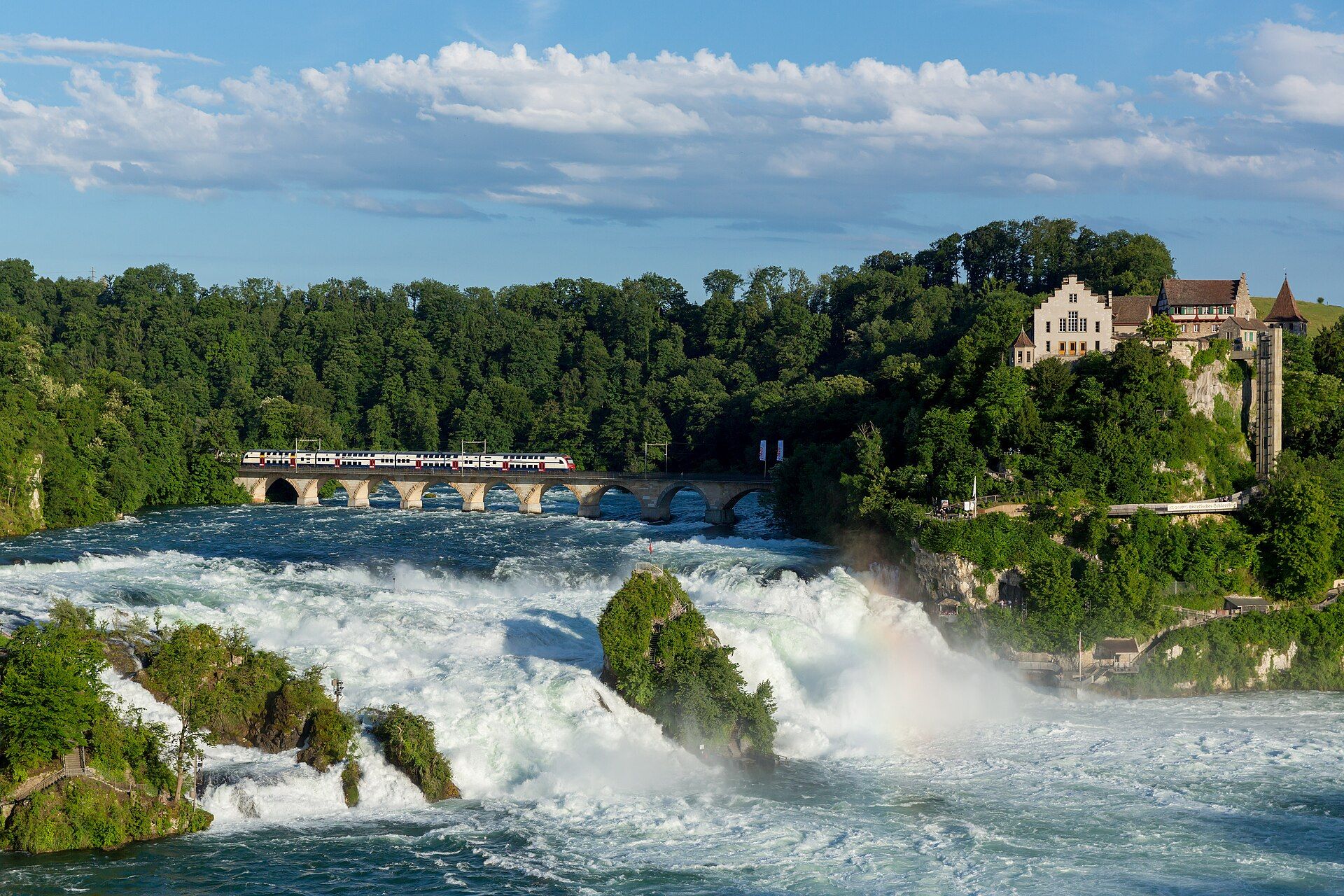
The largest waterfall in Europe by volume — 150 metres of the Rhine thundering over a 23-metre ledge around a rock pinnacle you can climb, in a green gorge below a hilltop castle.
What makes it marvelous
The Rhine Falls are not tall, but they are enormous: the river spreads about 150 metres wide and drops some 23 metres, and in the summer melt the flow averages around 600 cubic metres a second — the greatest volume of any waterfall in Europe. The falls formed at a band of hard limestone the river could not easily cut through, and a resistant crag still stands mid-stream as a natural rock tower rising straight out of the white water.
Why visit
The sheer noise and mass are the point, and the falls are unusually accessible: viewing platforms hang right over the water, boats cross to the mid-river rock you can climb, and Schloss Laufen castle looks down on the whole spectacle. It is one of the easiest great natural sights in Europe to reach, with a train station beside it.
Still deciding?
Rhine Falls comes up most often against these — each one weighs cost, effort, season and crowds side by side.
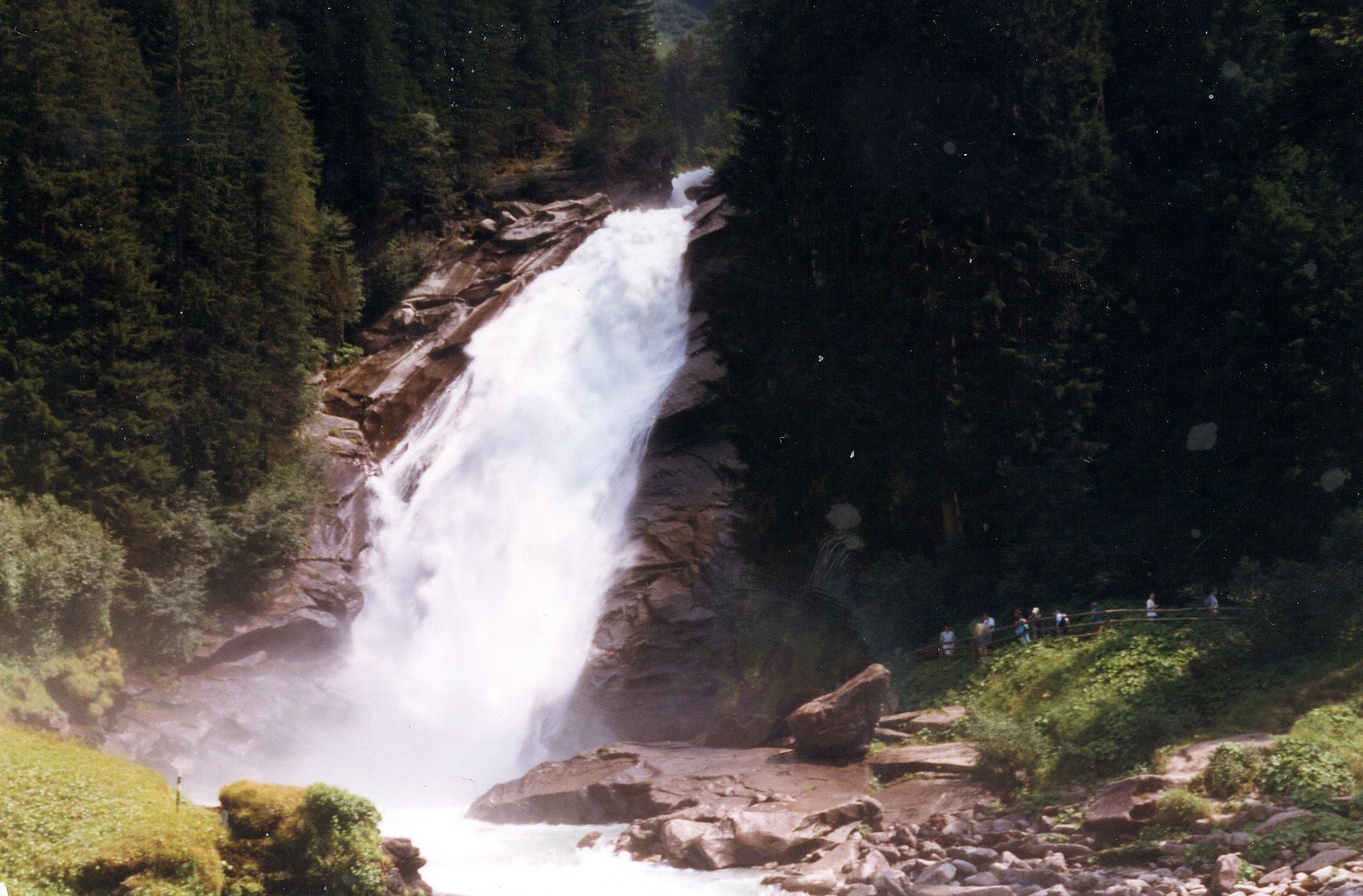
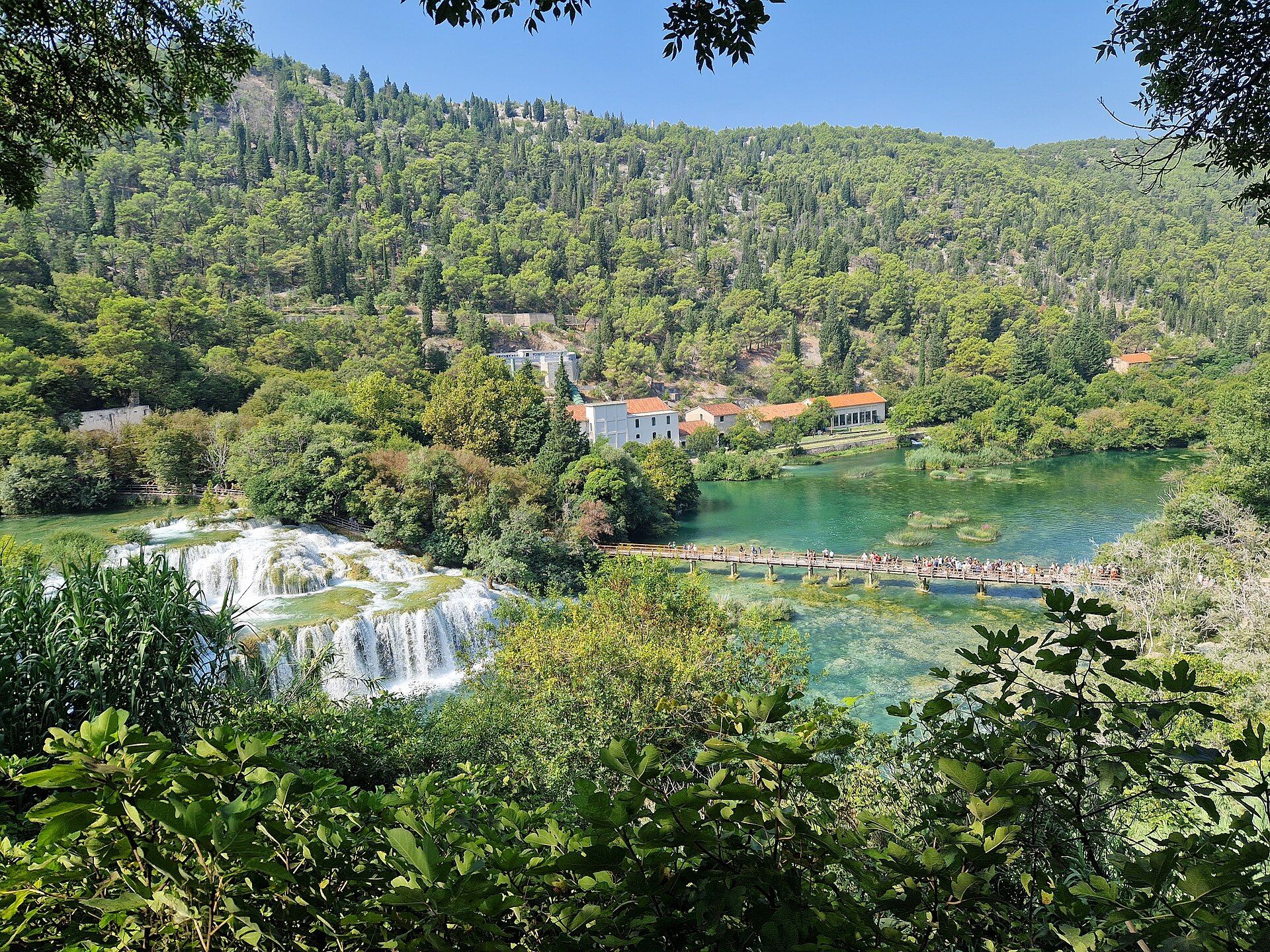
More views of Rhine Falls
Additional photographs of the actual site — each freely licensed, with its photographer and licence credited.
What to know before you go
🗓️ Best time
Late spring to early summer, when Alpine snowmelt swells the Rhine to its fullest and loudest; the falls run impressively year-round but are calmest in late winter.
🧭 Getting there & access
Between the towns of Neuhausen and Schaffhausen in northern Switzerland. Platforms and boat jetties sit on both banks, with rail and road access and parking close by.
Good to know
- Take a boat to the mid-river rock and climb its steps for the view from inside the falls.
- Visit in late spring for peak flow after the Alpine melt.
- The Schloss Laufen side has the classic elevated viewpoints down onto the water.
Plan your visit
Easy🧭 Getting there
From Zurich (ZRH), Switzerland
- From Zurich take a direct train toward Schaffhausen — under an hour
- Alight at Schloss Laufen am Rheinfall or Neuhausen Rheinfall station beside the falls
- Platforms, boats and the castle viewpoints are a short walk away
- Total travel
- Under an hour from Zurich
- Time at site
- 1–2h, or half a day with a boat trip and the castle
- Access
- Open access to the riverbanks; the Schloss Laufen viewing platforms and the boat trips charge admission. It is one of the most visitor-ready natural sights in Europe, with stations, parking and facilities on both banks.
🎒 What to bring & consider
- A light waterproof — the lower platforms catch spray in high flow
- Shoes with grip for the wet steps down to the water
- A rail day pass, as the falls sit on the Swiss train network
- A card, though Swiss francs are useful for small purchases
👁️ What to expect
- Crowds
- Busy in summer and on fine weekends; quieter early and out of season.
- Conditions
- Easy, with stepped paths down to the viewing galleries.
- Facilities
- Excellent — cafes, shops, boats and stations on both banks.
- The view
- The full width from the Schloss Laufen platforms with the mid-river rock in the spray — strongest at high water in late spring.
Times and requirements are approximate and change with season, weather, and local rules — confirm permits, fares, and schedules with operators before you travel.
Natural riches of the area
- The High Rhine, one of Central Europe's major rivers
- A hard-limestone ledge and the mid-stream rock pinnacle
- A wooded river gorge and its fish populations
- Migratory and resident birds along the river
Local food
- Swiss freshwater fish
- Perch and other lake and river fish, pan-fried and served by the water.
- Rösti
- Crisp grated-potato cake, a Swiss-German staple.
- Regional wine
- The Schaffhausen area produces notable Blauburgunder (Pinot Noir).
The Rhine Falls make their case not with height but with sheer force. The river fans out to about 150 metres wide and drops roughly 23 metres, and when the Alpine snows melt in early summer the flow averages around 600 cubic metres a second — the largest volume of any waterfall in Europe. They formed where the Rhine met a stubborn band of hard limestone, and a piece of that resistant rock still stands mid-current as a natural tower, streaming with white water, with steps that let visitors climb it.
For all their power, the falls are remarkably easy to enjoy. Platforms lean out over the torrent, boats ferry visitors across to the central rock, and the hilltop castle of Schloss Laufen surveys the scene from above, all served by their own railway stations. That combination — a genuinely huge waterfall you can reach in under an hour from Zurich and stand right on top of — makes the Rhine Falls one of the most accessible great natural spectacles on the continent.
Rhine Falls: common questions
How do you get to Rhine Falls?
From Zurich (ZRH), Switzerland: From Zurich take a direct train toward Schaffhausen — under an hour; Alight at Schloss Laufen am Rheinfall or Neuhausen Rheinfall station beside the falls; Platforms, boats and the castle viewpoints are a short walk away. Total travel time: Under an hour from Zurich.
When is the best time to visit Rhine Falls?
Late spring to early summer, when Alpine snowmelt swells the Rhine to its fullest and loudest; the falls run impressively year-round but are calmest in late winter.
How long should you spend at Rhine Falls?
1–2h, or half a day with a boat trip and the castle. Total travel time: Under an hour from Zurich.
What should you bring to Rhine Falls?
A light waterproof — the lower platforms catch spray in high flow Shoes with grip for the wet steps down to the water A rail day pass, as the falls sit on the Swiss train network A card, though Swiss francs are useful for small purchases
Do you need a permit or guide for Rhine Falls?
Open access to the riverbanks; the Schloss Laufen viewing platforms and the boat trips charge admission. It is one of the most visitor-ready natural sights in Europe, with stations, parking and facilities on both banks.
Is Rhine Falls crowded, and what are conditions like?
Busy in summer and on fine weekends; quieter early and out of season. Easy, with stepped paths down to the viewing galleries. Facilities: Excellent — cafes, shops, boats and stations on both banks.
Added
More wonders to explore