Head to head · glacial valleys
Lauterbrunnen vs Yosemite Valley: Two Great Glacial Valleys Compared
They are the same landform twice: a glacier ground out a deep U-shaped trough, then retreated, leaving side valleys stranded high on the walls so their streams fall as free-leaping waterfalls. Lauterbrunnen did it in Alpine limestone and Yosemite in Sierra granite, and the results are recognisably cousins — which is why John Muir's writing on Yosemite so often draws Alpine comparisons.
Here is how the two compare on what actually shapes a visit: the rock, the waterfalls, how you move around, and when each is at its best.
Lauterbrunnen
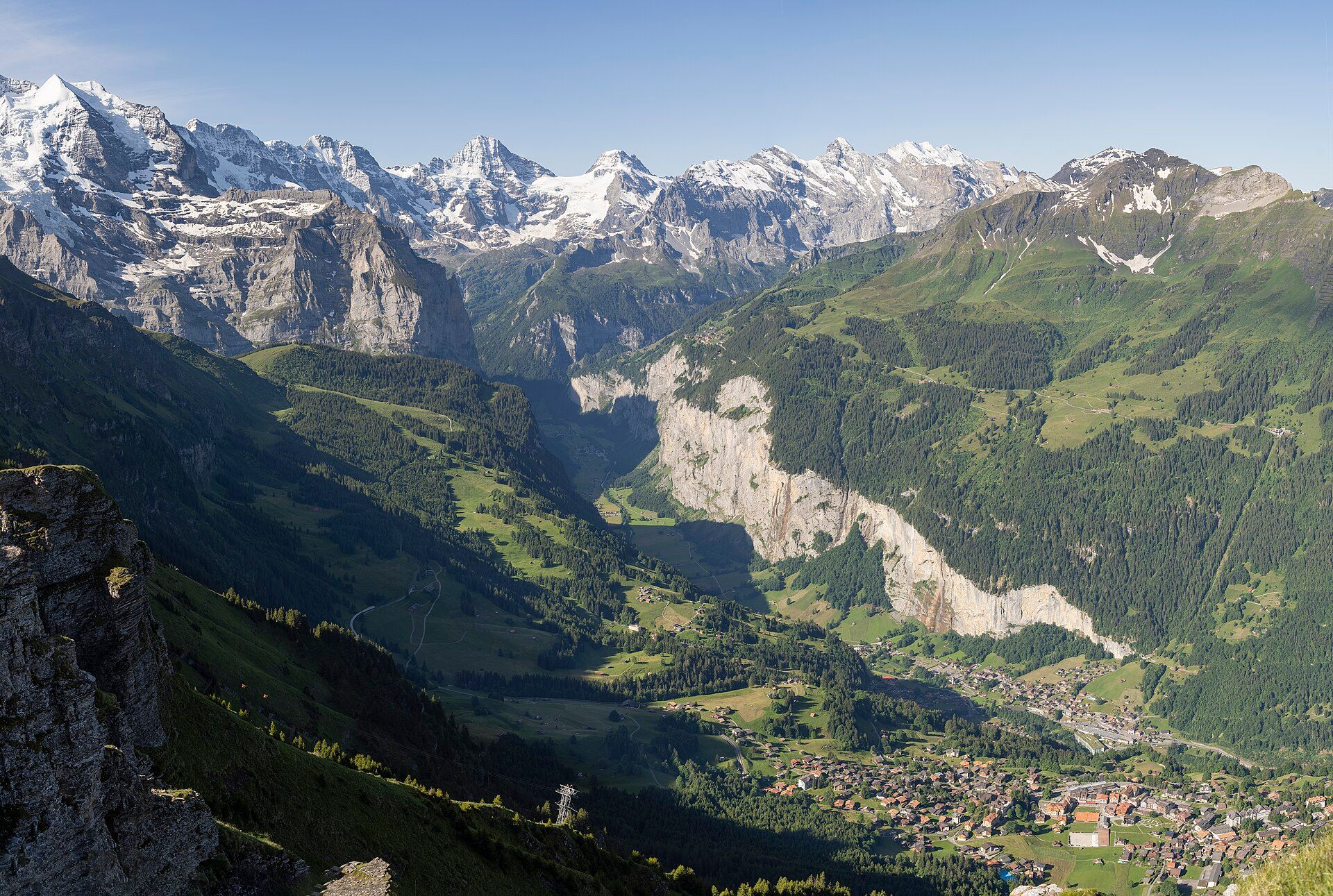
The valley of seventy-two waterfalls
A narrow Swiss trough in the Bernese Oberland with near-vertical walls and, by local count, seventy-two waterfalls — Staubbach among them dropping close to 300 metres in a single plume that the wind frequently blows into mist before it lands. What sets Lauterbrunnen apart is that a full public-transport network reaches into the high country above it: trains and cable cars climb to Wengen, Mürren and the Schilthorn without a car ever being needed.
- Seventy-two waterfalls in one short valley
- Car-free villages reached by cog railway and cable car
- Trails at every level, from valley floor to high ridge
- The Eiger, Mönch and Jungfrau immediately above
Yosemite Valley
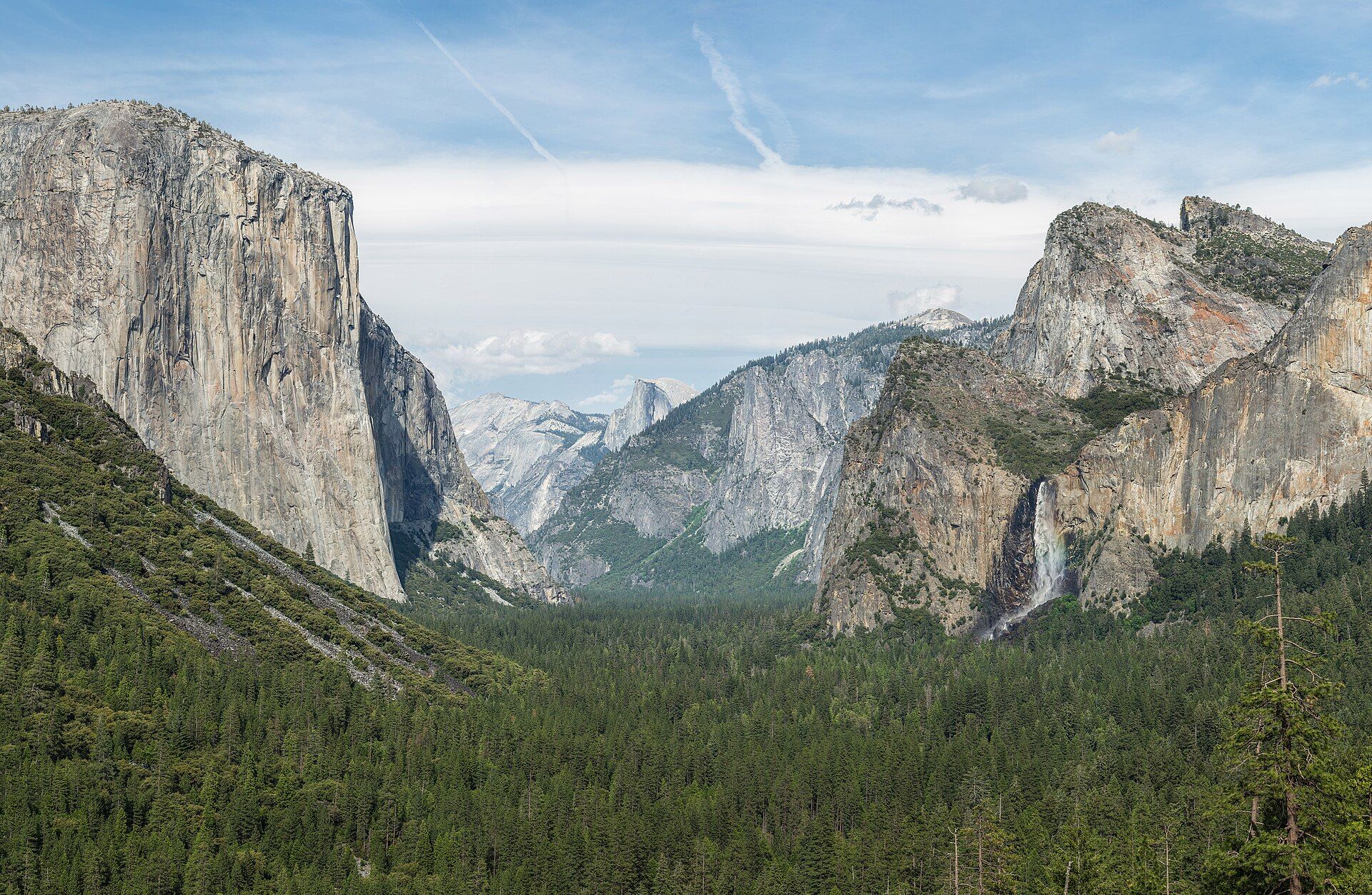
The granite cathedral
A far wider glacial valley in California's Sierra Nevada, walled by the largest exposed granite faces on Earth — El Capitan's roughly 900-metre wall and the sheared dome of Half Dome. Its waterfalls are fed purely by snowmelt, so they are colossal in late spring and can vanish entirely by late summer. Beyond the valley floor lie high country, meadows, and groves of giant sequoia.
- El Capitan and Half Dome — world-class granite
- Some of the tallest waterfalls in North America at peak melt
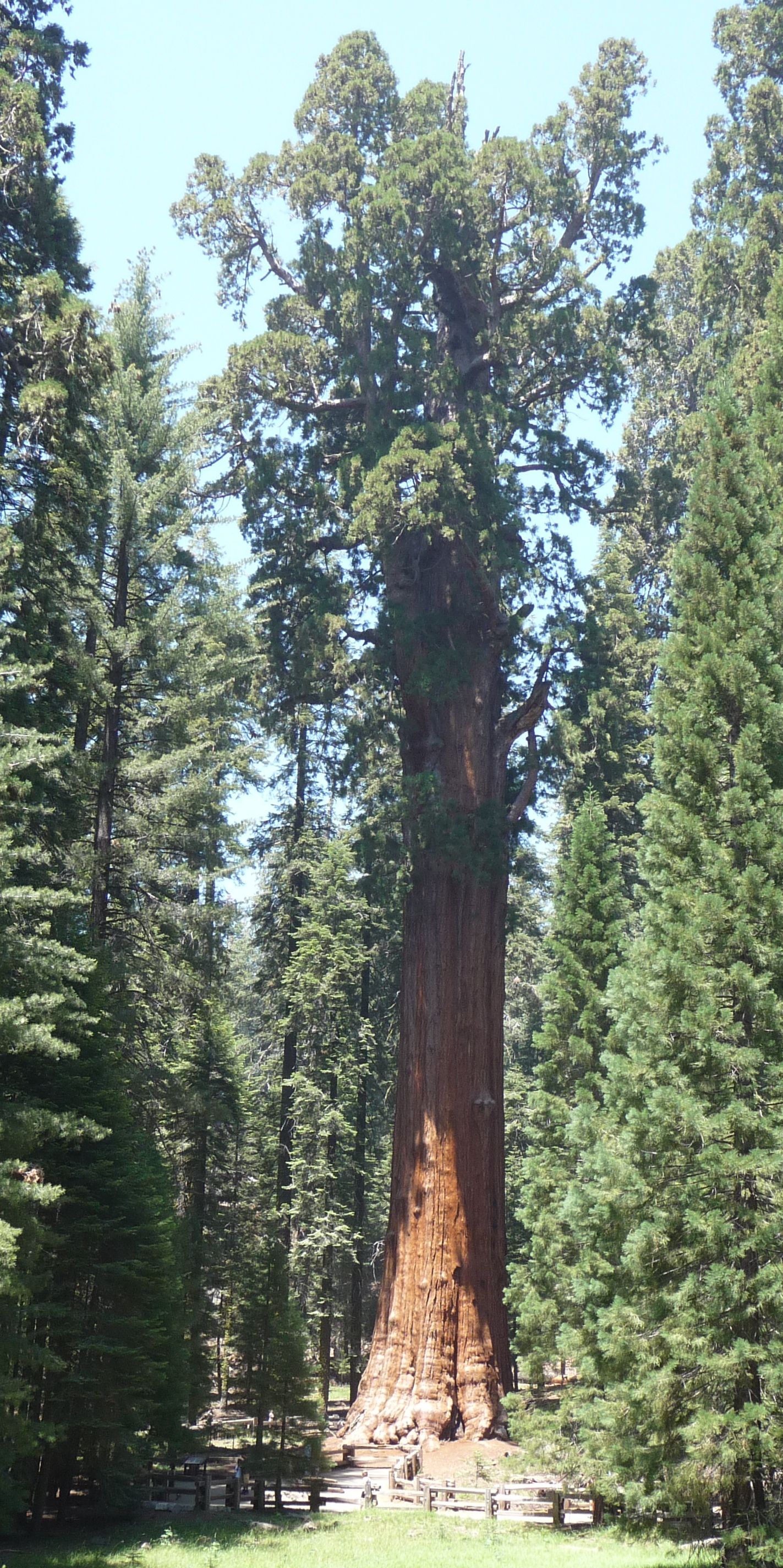
- Giant sequoia groves and extensive high country
- A vast wilderness beyond the valley rim
Head to head
| What matters | Lauterbrunnen | Yosemite Valley |
|---|---|---|
| The rock Edge: Yosemite Valley | Limestone and slate walls, narrow and steep, with the big Bernese peaks behind. | Bare granite on an enormous scale — monoliths that define the sport of big-wall climbing. |
| Waterfalls Edge: Toss-up | Seventy-two in one valley, many spring-fed, so water runs through most of the year. | Taller and far more powerful, but snowmelt-fed — Yosemite Falls is often dry by August. |
| Scale and openness Edge: Yosemite Valley | Tight and intimate; you can walk across the valley floor in minutes. | Broad and monumental, with far more ground to cover and a much bigger backcountry. |
| Getting around Edge: Lauterbrunnen | Exceptional — cog railways and cable cars serve car-free villages high on both walls. | Car or shuttle bus; peak-season entry has recently required a timed reservation. |
| Crowds Edge: Lauterbrunnen | Busy in summer, but the transport network disperses people quickly onto the heights. | The valley floor concentrates very large numbers into a small area in peak season. |
| Best season Edge: Toss-up | June to September for the high trails and lifts; the falls run well into autumn. | Late April to June — the waterfalls peak with the snowmelt and fade fast afterwards. |
Which should you choose?
Choose Lauterbrunnen if…
Anyone who wants a car-free Alpine base with waterfalls that are reliably running, high mountain views reachable by train and cable car, and walking options for every fitness level.
Choose Yosemite Valley if…
Anyone drawn by sheer geological scale — the biggest granite walls anywhere, huge spring waterfalls, and a wilderness that continues far beyond the valley itself.
The honest verdict
It genuinely depends on timing. If you can only travel in late summer, Lauterbrunnen wins outright: its waterfalls still run when Yosemite Falls has dried to a stain on the cliff.
If you can travel in May, Yosemite is hard to beat — the falls are at maximum flow against the largest granite faces on the planet, and nothing in the Alps matches that combination.
For ease, Lauterbrunnen is the more forgiving trip. You can arrive without a car, ride a train to a car-free village, and be on a high trail within an hour of dropping your bag.
Wonders mentioned here
Added