Longji Rice Terraces
📍 Longsheng County, Guangxi, China
The Dragon's Backbone — centuries-old rice terraces climbing whole mountainsides in coils and ribbons above the villages of the Zhuang and Yao people, near Guilin in southern China, flooded to mirror the sky in spring and turning gold at harvest.
What makes it marvelous
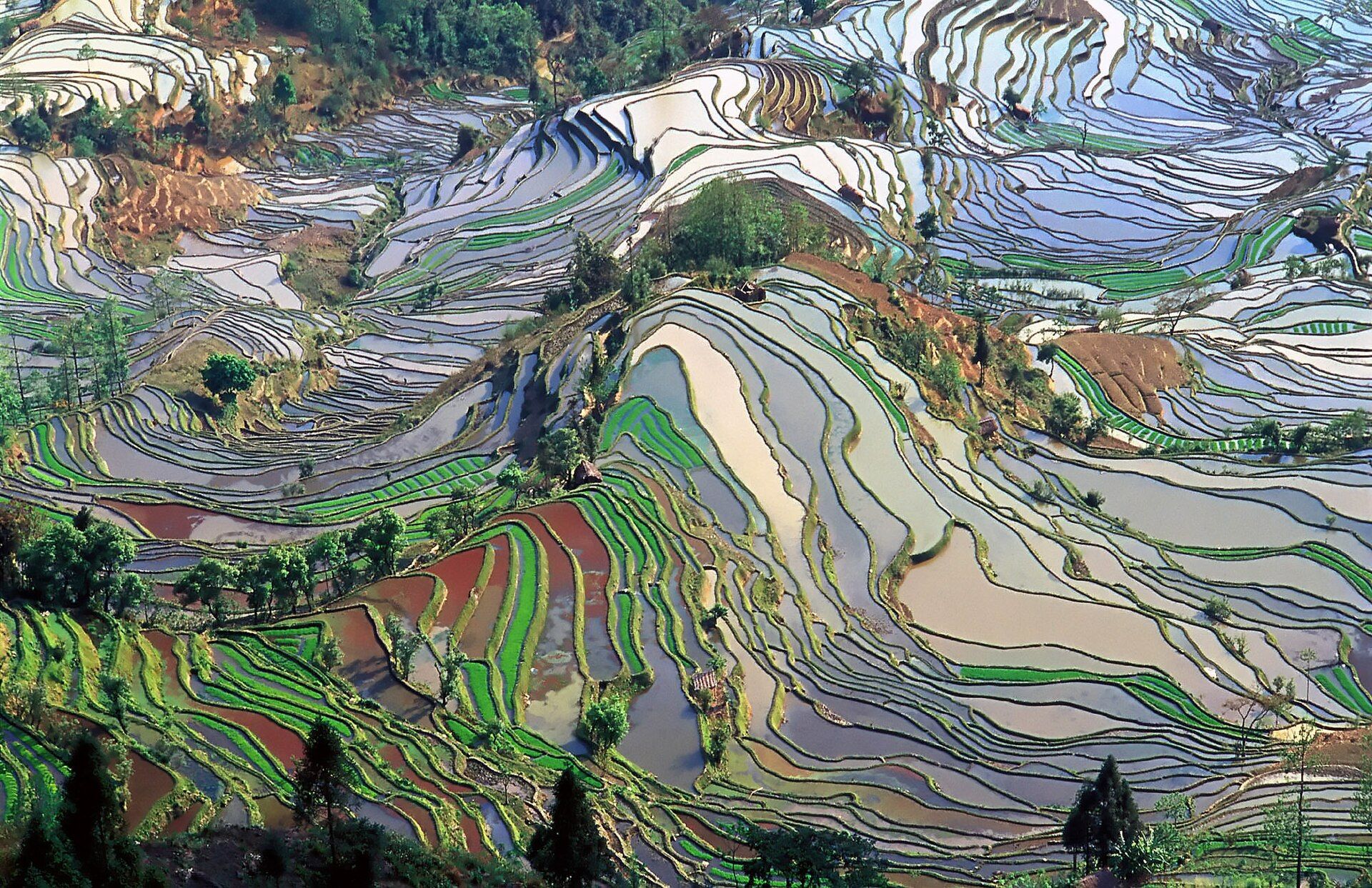
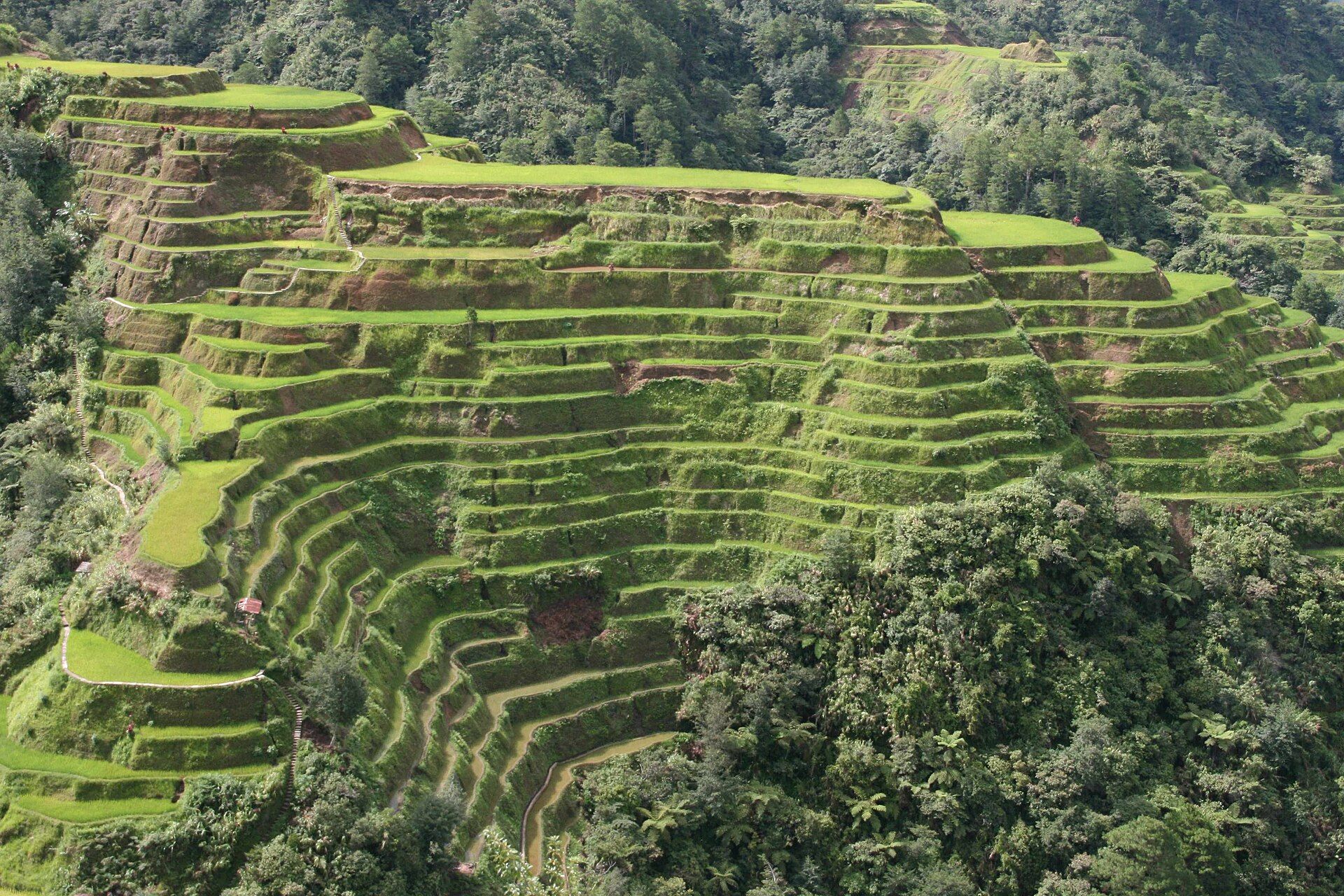
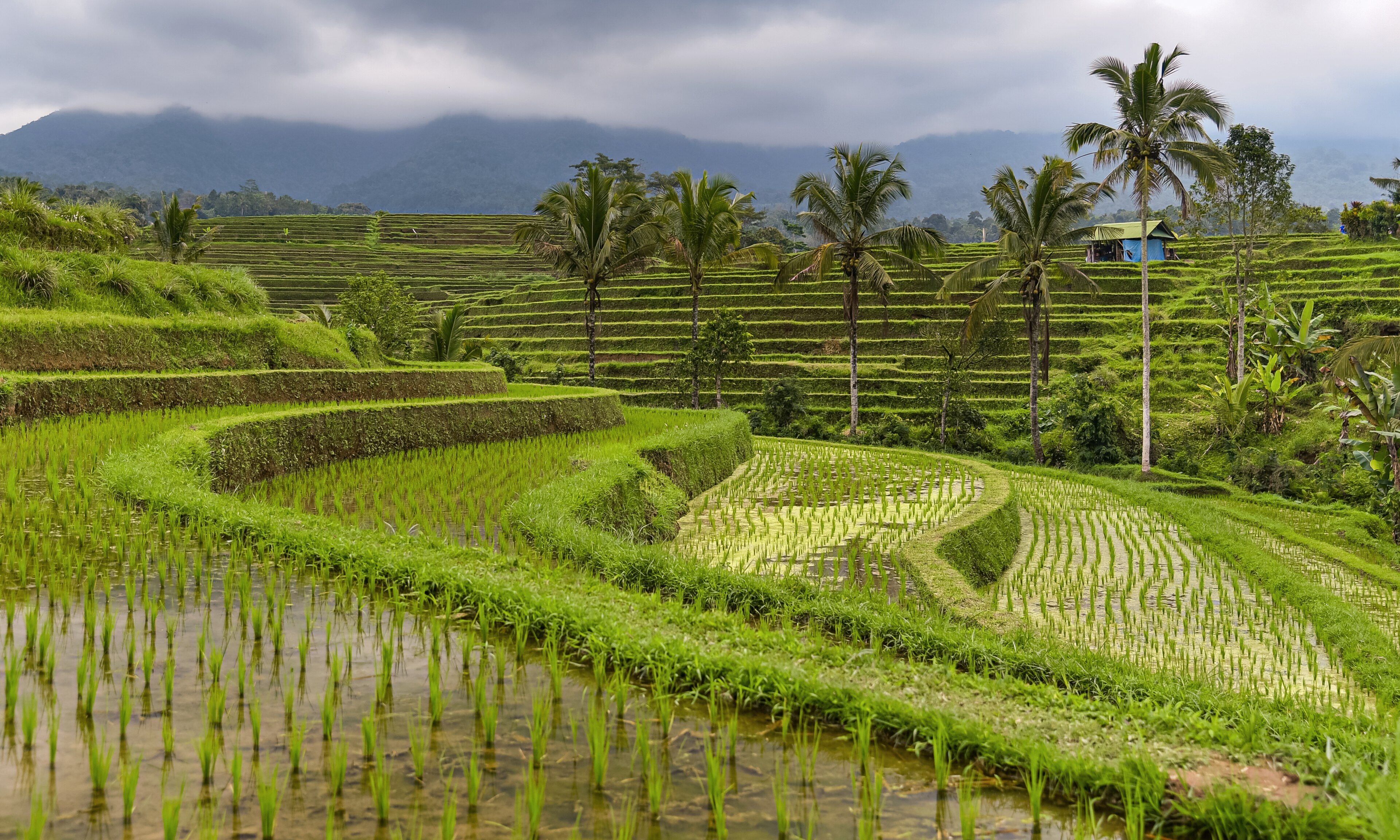
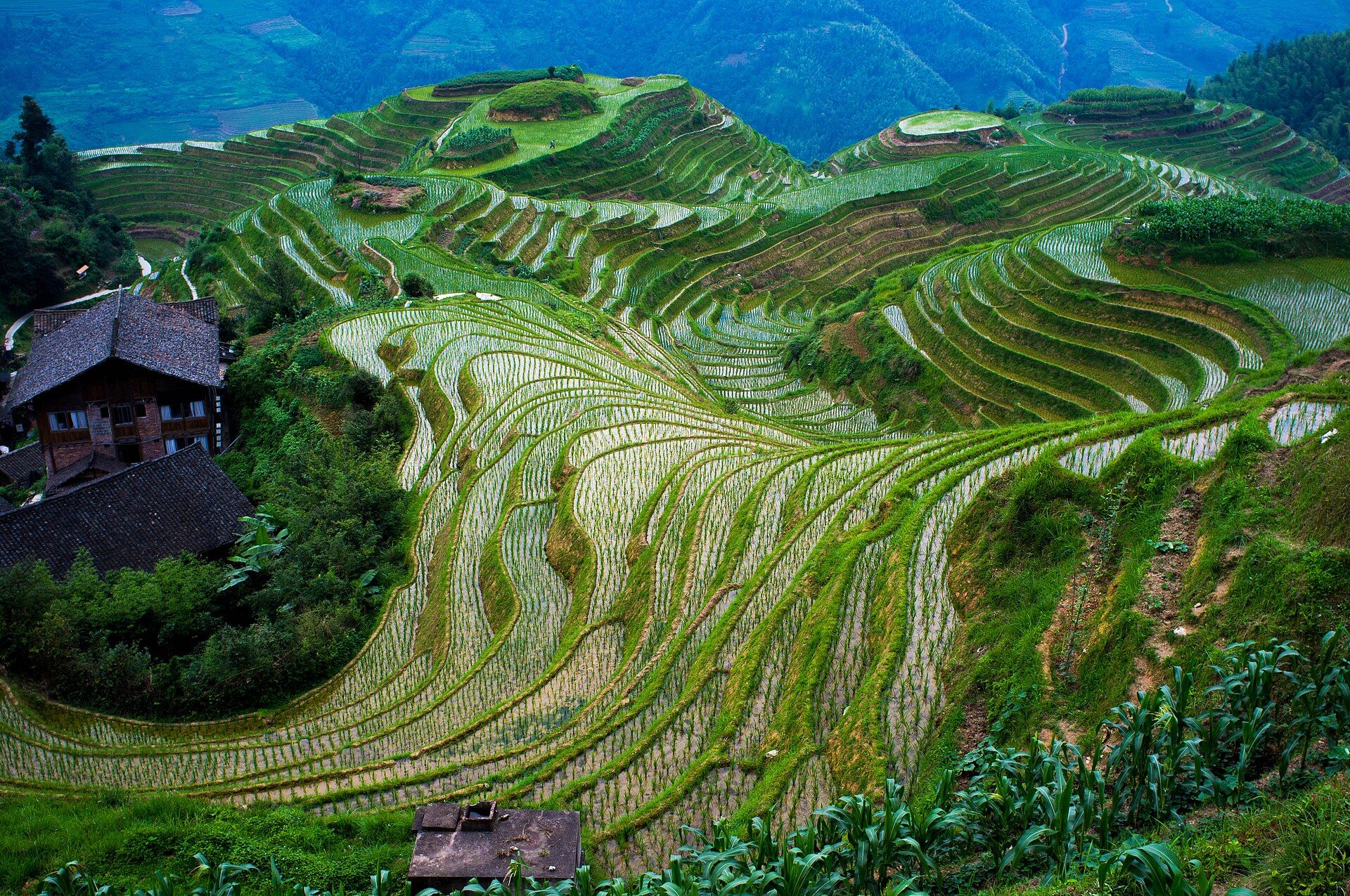
The Longji Rice Terraces — 'Longji' means dragon's backbone — wrap the ridges of Longsheng County in tier upon tier of paddy fields cut into the steep mountainsides. Begun under the Yuan dynasty and worked on for centuries into the Qing, they climb from the valley floors at a few hundred metres up to around 800 metres and above, following every curve of the land so that the mountains seem scaled like a dragon's back. There is no flat ground here to farm, so generations of the Zhuang and Yao minority peoples built the land they needed, terrace by terrace, each held by a low earth bank and fed by channels that carry mountain water down through the whole system. The look of the terraces turns with the year: flooded and mirror-bright in spring when the water is let in, deep green through summer as the rice grows, and a shining gold in autumn before the harvest, with the villages of Ping'an and the Jinkeng valley set among them. It is a landscape shaped entirely by hand, and still farmed, one of the most beautiful terraced systems on Earth.
Why visit
Longji is the classic Chinese rice-terrace landscape at its grandest and most walkable — a network of viewpoints and trails linking mountaintop lookouts, terraced valleys, and the wooden villages of the Zhuang and Yao. A short trip from Guilin, it rewards those who climb to the high points at dawn, when mist lifts off the flooded or golden tiers.
Still deciding?
Longji Rice Terraces comes up most often against these — each one weighs cost, effort, season and crowds side by side.
What to know before you go
🗓️ Best time
Best in spring (roughly April to June) when the terraces are flooded and reflect the sky, and in autumn (roughly September to early November) when the rice ripens gold before harvest; summer is lush green, and winter occasionally dusts the terraces with snow.
🧭 Getting there & access
Longsheng lies about 2–3 hours by road north of Guilin. Buses and cars run from Guilin to the terrace scenic area, where a ticket covers the villages and viewpoints; from the village car parks the terraces are reached on foot or, in Ping'an, by local porters and short trails.
Good to know
- Climb to the high viewpoints above Ping'an or the Jinkeng (Dazhai) valley early, before the mist and crowds.
- Stay a night in a village guesthouse to catch the terraces at dawn and dusk light.
- Time a spring visit for the mirror-like flooded fields, or autumn for the golden harvest.
Plan your visit
Moderate🧭 Getting there
From Guilin (KWL), Guangxi, China
- Fly or take the train into Guilin
- Travel about 2–3 hours by bus or car to the Longji terrace scenic area
- Enter at Ping'an or the Jinkeng (Dazhai) valley village
- Walk up the marked trails to the ridge viewpoints
- Total travel
- A long day trip from Guilin, or better as an overnight stay
- Time at site
- A half to full day of walking; a night to see dawn and dusk
- Access
- A scenic-area ticket covers the villages and viewpoints. The terraces are reached on foot up stone paths; in Ping'an, local porters can carry bags to guesthouses. Paths can be steep and slippery when wet.
🎒 What to bring & consider
- Shoes with grip for stone paths that are steep and slick after rain
- Layers, as the ridge tops are cooler and often misty
- Cash for village guesthouses, tickets, and porters
- Time for the climbs, which are the whole point — the best views are up top
👁️ What to expect
- Crowds
- Ping'an and the main viewpoints are busy midday; early mornings and the further Jinkeng valley are quieter.
- Conditions
- Steep stone stairways and trails between villages and lookouts; misty and cool on the ridges.
- Facilities
- Village guesthouses, cafes, and shops in Ping'an and Dazhai; nothing on the higher trails.
- The view
- The flooded spring terraces catching the sky, or the golden autumn tiers coiling around a ridge at dawn.
Times and requirements are approximate and change with season, weather, and local rules — confirm permits, fares, and schedules with operators before you travel.
Natural riches of the area
- Steep mountain ridges terraced by hand over many centuries
- Spring-fed channels carrying mountain water through the whole paddy system
- Rice, the crop the terraces were built to grow, still farmed today
- Forested peaks and valleys around the Zhuang and Yao villages
Local food
- Bamboo-tube rice
- Rice from the terraces cooked inside a length of fresh bamboo over a fire, a local speciality.
- Oil tea (youcha)
- A savoury tea of fried tea leaves, puffed rice, and peanuts served by the local minority peoples.
- Zhuang and Yao mountain fare
- Free-range chicken, river fish, and wild mountain vegetables cooked in the terrace villages.
There is no flat land to farm on the ridges of Longsheng, so the people who live here made their own. The Longji Rice Terraces — the Dragon’s Backbone — are the result of centuries of hand-work, begun under the Yuan dynasty and extended down the generations, cutting the steep mountainsides into tier after tier of paddy fields that follow every fold of the land. From a high viewpoint the terraces coil around the ridges like the scales of a sleeping dragon, which is how they earned their name.
The landscape changes with the farming year. In spring the fields are flooded and lie mirror-bright, doubling the sky and the passing clouds; in summer they run deep green as the rice grows; and in autumn they turn a burnished gold just before the harvest. Among them stand the wooden villages of the Zhuang and Yao peoples, who built and still work the terraces. A few hours from Guilin’s famous karst hills, Longji rewards anyone willing to climb to the ridge lookouts at dawn, when the mist lifts off the water and the whole mountainside seems to glow.
Longji Rice Terraces: common questions
How do you get to Longji Rice Terraces?
From Guilin (KWL), Guangxi, China: Fly or take the train into Guilin; Travel about 2–3 hours by bus or car to the Longji terrace scenic area; Enter at Ping'an or the Jinkeng (Dazhai) valley village; Walk up the marked trails to the ridge viewpoints. Total travel time: A long day trip from Guilin, or better as an overnight stay.
When is the best time to visit Longji Rice Terraces?
Best in spring (roughly April to June) when the terraces are flooded and reflect the sky, and in autumn (roughly September to early November) when the rice ripens gold before harvest; summer is lush green, and winter occasionally dusts the terraces with snow.
How long should you spend at Longji Rice Terraces?
A half to full day of walking; a night to see dawn and dusk. Total travel time: A long day trip from Guilin, or better as an overnight stay.
What should you bring to Longji Rice Terraces?
Shoes with grip for stone paths that are steep and slick after rain Layers, as the ridge tops are cooler and often misty Cash for village guesthouses, tickets, and porters Time for the climbs, which are the whole point — the best views are up top
Do you need a permit or guide for Longji Rice Terraces?
A scenic-area ticket covers the villages and viewpoints. The terraces are reached on foot up stone paths; in Ping'an, local porters can carry bags to guesthouses. Paths can be steep and slippery when wet.
Is Longji Rice Terraces crowded, and what are conditions like?
Ping'an and the main viewpoints are busy midday; early mornings and the further Jinkeng valley are quieter. Steep stone stairways and trails between villages and lookouts; misty and cool on the ridges. Facilities: Village guesthouses, cafes, and shops in Ping'an and Dazhai; nothing on the higher trails.
Added
More wonders to explore