Head to head · Guangxi's Dragon's Backbone vs Yunnan's Hani terraces
Longji vs Yuanyang Rice Terraces: Which Should You See, and When?
China's two most famous rice-terrace landscapes peak at opposite times of year, so the first question is when you are going. Longji — the Dragon's Backbone in Longsheng County, Guangxi — is at its best flooded in spring (roughly April–June) and golden before harvest in autumn (roughly September to early November). Yuanyang's Hani terraces in southern Yunnan, a UNESCO World Heritage cultural landscape since 2013, are flooded through the winter, roughly November to April, with December to March the classic window.
They are also different kinds of trip. Longji is a walking trip: from Ping'an or the Jinkeng (Dazhai) valley you climb steep stone paths to ridge viewpoints, and porters can carry bags to village guesthouses. Yuanyang is a viewpoint trip: platforms strung along mountain roads, reached by car before first light, with two or three nights recommended because fog can hide the terraces for a whole morning.
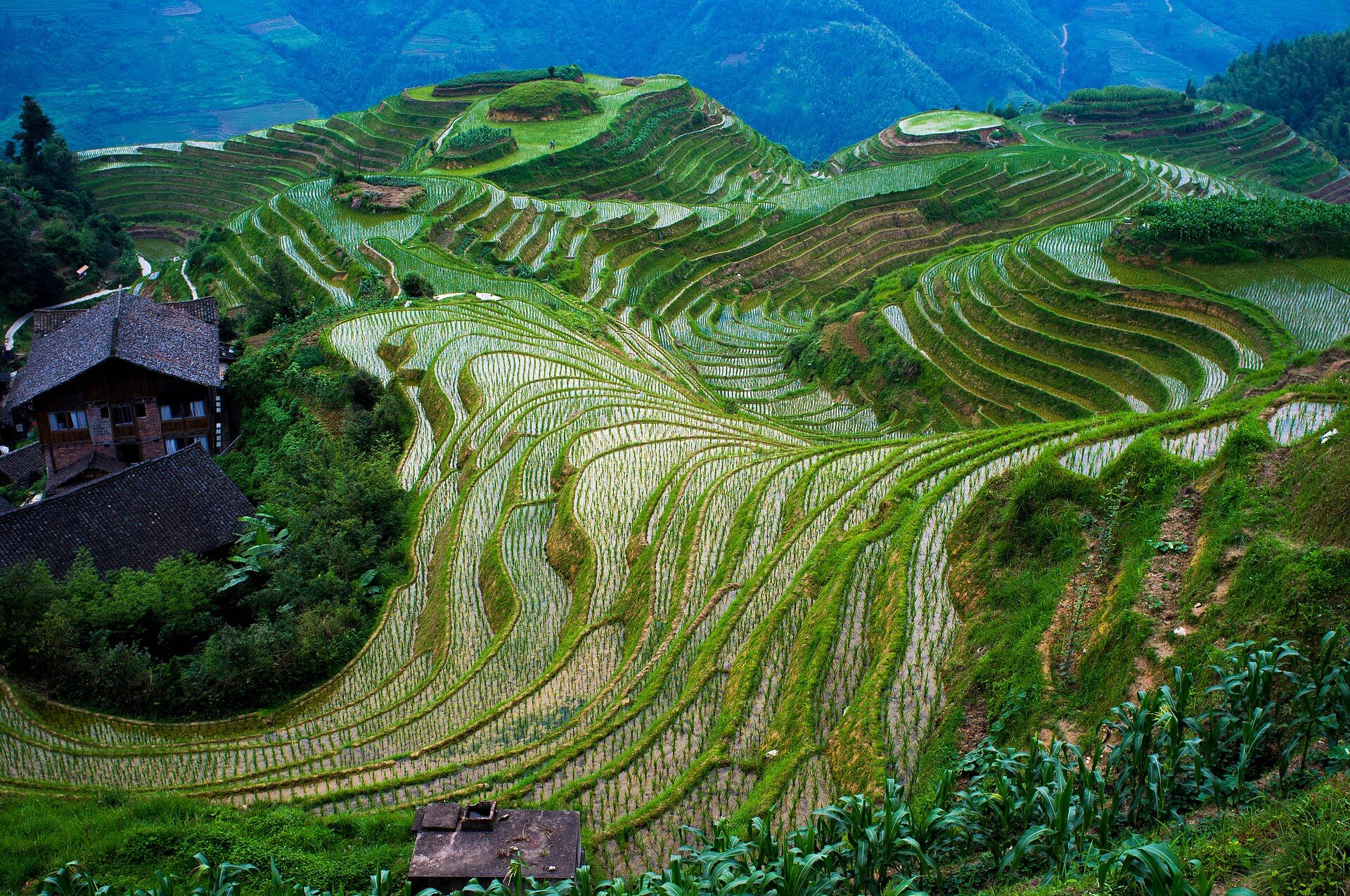
Longji
The Dragon's Backbone above Zhuang and Yao villages
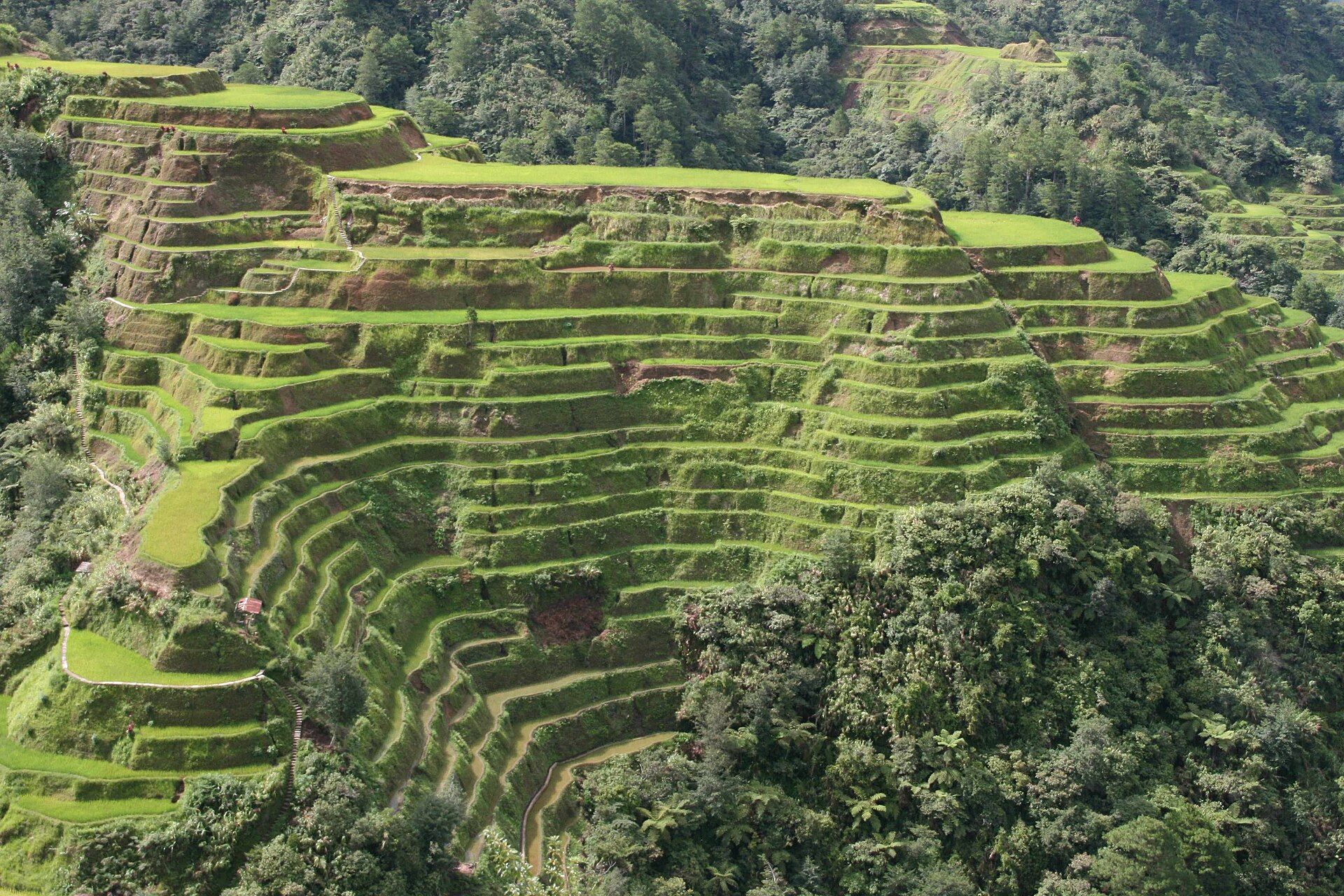
Centuries-old terraces coiling up mountainsides from about 300 m to roughly 800 m and above, about 2–3 hours north of Guilin.
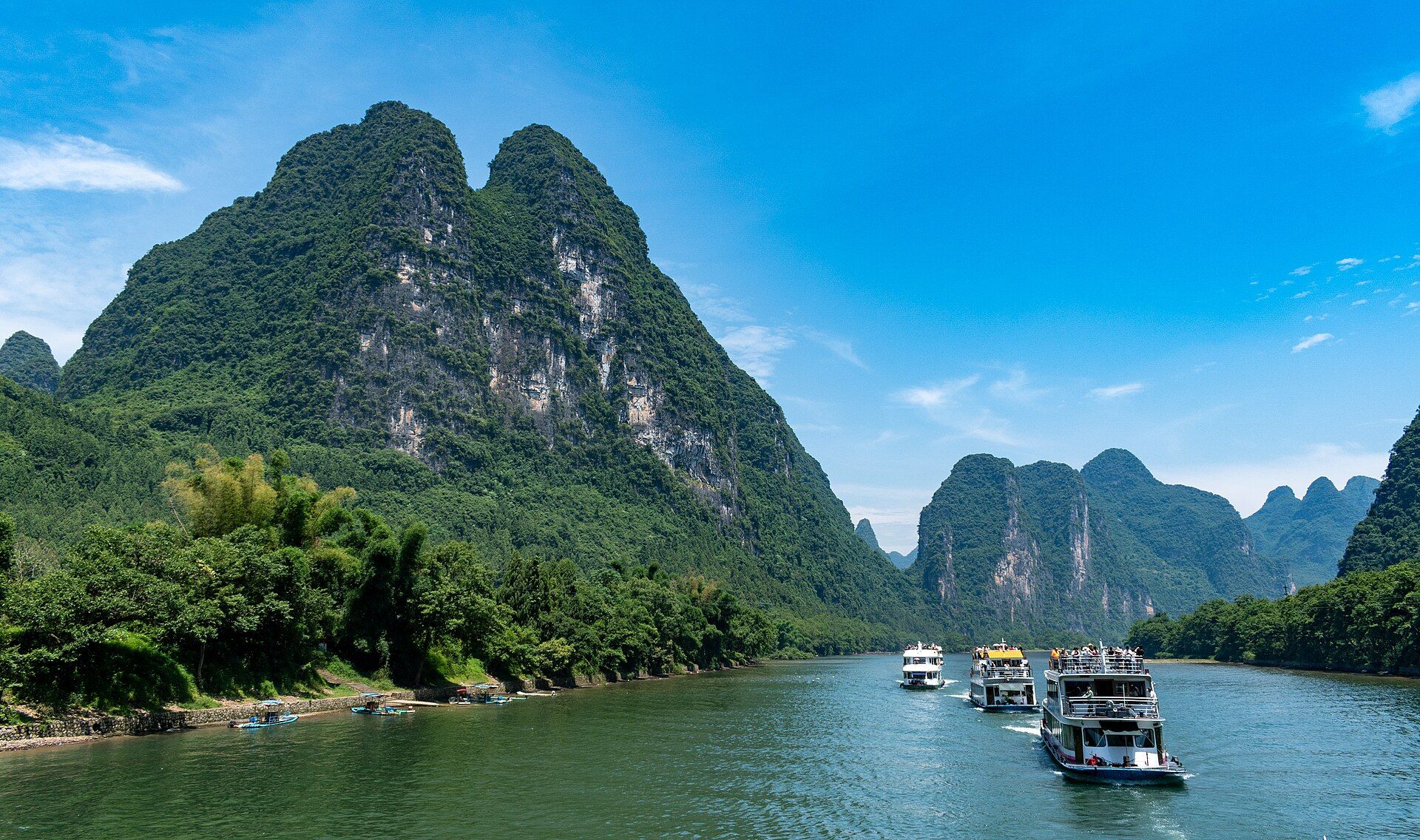
- Close to Guilin and the Li River
- Village-to-village walking on the terraces
- Two peak seasons: flooded spring, golden autumn
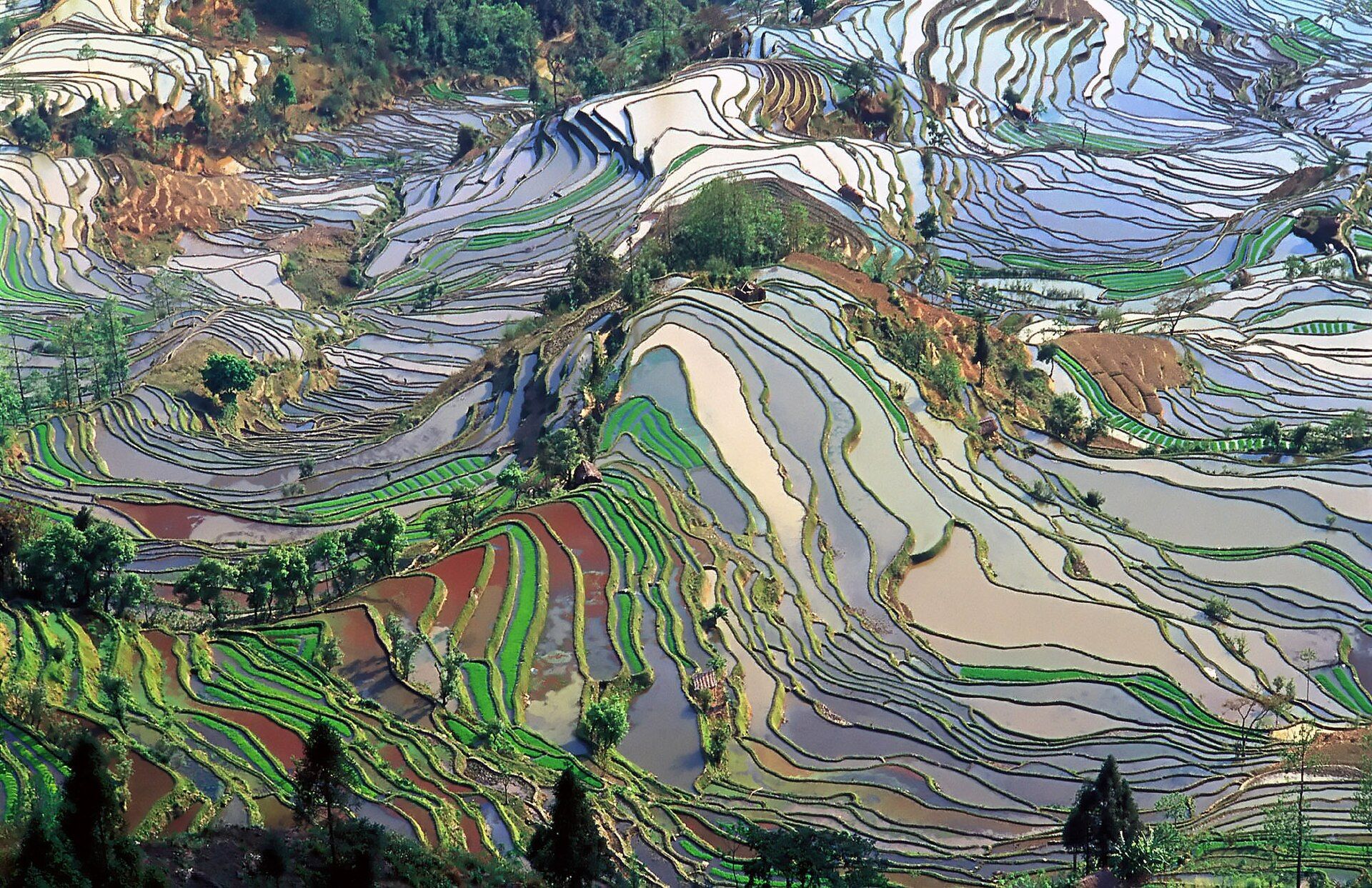
Yuanyang
A staircase of mirrors in the Ailao Mountains
The Honghe Hani terraces — about 16,603 ha inscribed, descending in as many as 3,000 steps — flooded through the winter and lit pink and gold at sunrise.
- UNESCO World Heritage cultural landscape
- Flooded through the winter months
- Easy walking from roadside platforms
Head to head
| What matters | Longji | Yuanyang |
|---|---|---|
| Best season Edge: Toss-up | Spring (about April–June) flooded; autumn (about September–early November) golden; summer green. | About November–April flooded; December–March the classic window; summer green but less photogenic. |
| Gateway Edge: Longji | Guilin — about 2–3 h by bus or car to the scenic area. | Kunming — about 4–5 h by bus or hired car, often via Jianshui, to Xinjie. |
| Time needed Edge: Longji | A long day trip from Guilin, better with one night for dawn and dusk. | At least two nights; two or three to allow for fog spoiling a sunrise. |
| Effort Edge: Yuanyang | Moderate: steep stone stairways between villages and ridge lookouts, slippery when wet. | Easy: roadside platforms, plus muddy field banks if you walk into the terraces. |
| Getting around Edge: Toss-up | On foot from Ping'an or Dazhai; porters can carry bags in Ping'an. | A car or local driver makes the dawn platform circuit realistic. |
| Best light Edge: Toss-up | Dawn and dusk from the ridge viewpoints. | Sunrise and sunset; midday flattens the reflections. Duoyishu at first light is the classic. |
| Crowds Edge: Toss-up | Ping'an and the main viewpoints busy midday; early mornings and the Jinkeng valley quieter. | Photographers crowd the main sunrise platforms in season; ten minutes along the ridge it thins out. |
| Tickets Edge: Toss-up | A scenic-area ticket covers the villages and viewpoints. | A scenic-area ticket covers the main viewpoints, usually valid for several days. |
| Facilities Edge: Longji | Guesthouses, cafes and shops in Ping'an and Dazhai; nothing on the higher trails. | Simple guesthouses and homestays in Xinjie and larger villages; almost nothing at the viewpoints. |
Which should you choose?
Choose Longji if…
…you are travelling in spring or autumn, are already in Guilin, and want to walk the terraces village to village with a night in Ping'an or Dazhai.
Choose Yuanyang if…
…you are travelling between November and April, have two or three nights to spare, and want the flooded-mirror sunrise photographs from Yunnan's roadside platforms.
The honest verdict
Let the calendar decide. Between roughly November and April, Yuanyang's terraces are flooded and Longji's are past their autumn gold; from April to June and again in September–October, Longji is at its best and Yuanyang is green rather than mirrored.
If the timing works for both, Longji is the easier add-on — 2–3 hours from Guilin, the base for the Li River — and the better choice for walking. Yuanyang is the bigger commitment, 4–5 hours from Kunming and two or three nights for fog, and the better choice for photography.
Yuanyang's terraces are working farmland, and so are Longji's village fields: stay on the paths and field banks, and ask before photographing people at work.
Wonders mentioned here
Added