Ilulissat Icefjord
📍 Ilulissat, western Greenland
A fjord choked with colossal icebergs calved from one of the fastest, most productive glaciers on Earth — a roaring, ever-changing cathedral of ice on Greenland's Arctic coast.
What makes it marvelous
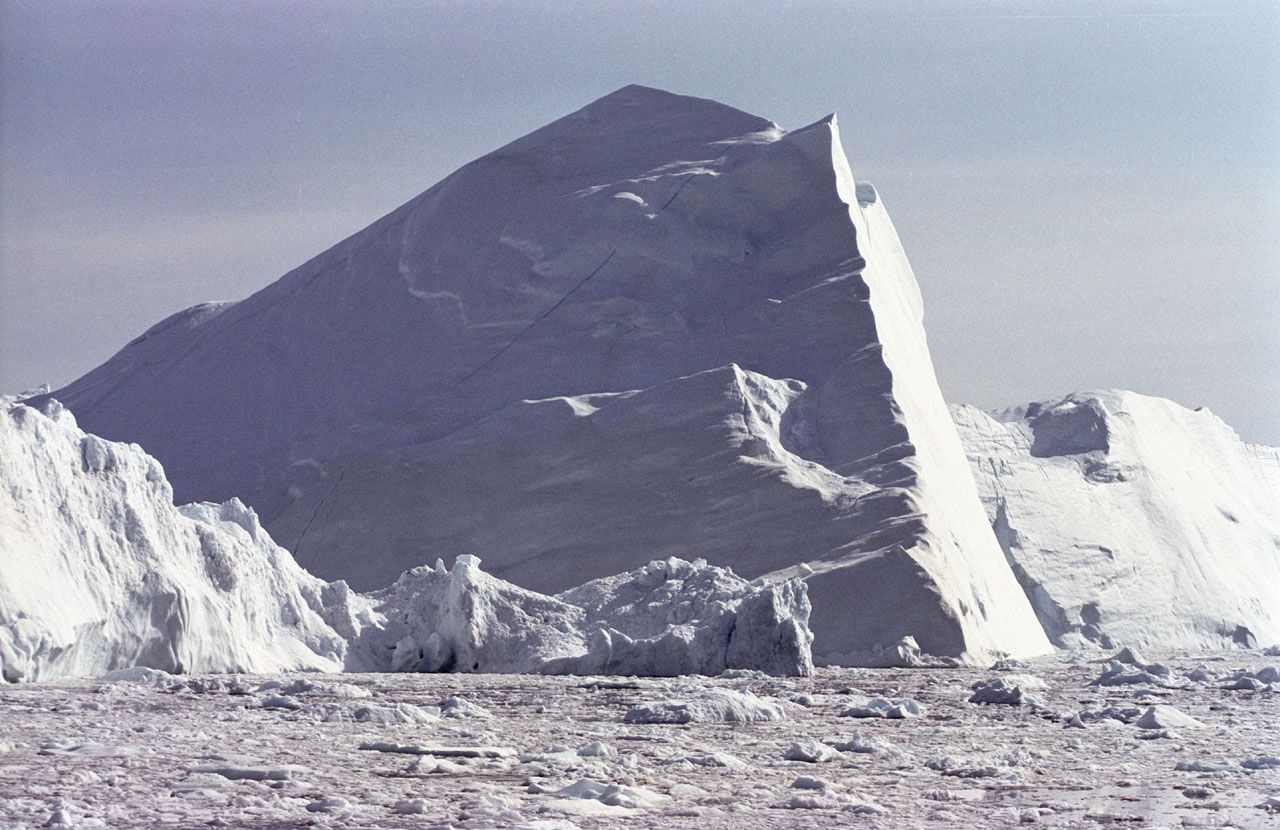
At Ilulissat, on Greenland's west coast, the Sermeq Kujalleq glacier — one of the fastest-moving and most productive glaciers outside Antarctica — pours off the great Greenland Ice Sheet and calves enormous icebergs into a 40-kilometre fjord. It discharges billions of tonnes of ice a year, and the fjord is jammed with icebergs the size of buildings and city blocks, grinding, splitting, and rolling with sounds like thunder until they drift out to sea. Some are so vast they run aground at the fjord mouth, damming the ice behind them. This is one of the few places to witness the ice sheet in dramatic action, a front line of a changing climate, and the scale — luminous white and blue ice stretching to the horizon under the Arctic sky — is simply overwhelming. It is a UNESCO World Heritage Site.
Why visit
Standing beside a fjord packed with skyscraper-sized icebergs, or sailing among them under the midnight sun or the northern lights, is one of the most awe-inspiring encounters with ice anywhere on the planet.
What to know before you go
🗓️ Best time
Summer (roughly June–August) for the midnight sun, boat tours, and mild weather; autumn and winter bring the northern lights and frozen stillness for the hardy.
🧭 Getting there & access
At the town of Ilulissat in western Greenland, reached by air (via Kangerlussuaq or Nuuk); boardwalk trails lead to the icefjord from town, and boat tours sail out among the icebergs.
Good to know
- Come in summer for boat trips and the midnight sun, or winter for auroras.
- Walk the boardwalk trails from town for free icefjord viewpoints.
- Dress warmly for boat trips — it's cold on the water even in summer.
Plan your visit
Easy🧭 Getting there
From Ilulissat (JAV), Greenland
- Fly Copenhagen to Kangerlussuaq or Nuuk, then on to Ilulissat — allow a full day with connections
- Town to the icefjord boardwalk at Sermermiut — about 20–30 minutes on foot
- Boat tours among the icebergs leave from Ilulissat harbour
- Total travel
- A full travel day from Copenhagen, and flights are weather-dependent
- Time at site
- 3–4 days, with slack for cancelled flights and boats
- Access
- The icefjord is a UNESCO site with open access along maintained boardwalks; the Sermermiut valley asks you to stay on the path, as the ground holds fragile archaeology. Boat tours and helicopter flights are operator-run and cancel freely for weather and ice.
🎒 What to bring & consider
- Serious warm layers plus a windproof shell, even in July — air coming off the ice sheet is cold regardless of the calendar
- Waterproof boots with grip for boardwalks, rock and snow
- Mosquito repellent and a head net for the brief but intense summer bug season inland
- Real schedule slack — flights in and out of Greenland cancel for weather often enough that a tight connection is a bad plan
- Sun protection; reflected light off ice and water burns quickly
👁️ What to expect
- Crowds
- Modest. The boardwalks see a steady trickle and the town is small; you are rarely in a queue.
- Conditions
- Flat, well-built boardwalks near town, with rougher rocky routes beyond. The cold and the wind are what you plan around.
- Facilities
- Ilulissat has hotels, restaurants and shops. Nothing along the fjord itself.
- The view
- The icebergs are enormous and constantly rearranged by calving and current — what you see is different week to week. Midnight sun in summer gives hours of low golden light rather than a brief window.
Times and requirements are approximate and change with season, weather, and local rules — confirm permits, fares, and schedules with operators before you travel.
Natural riches of the area
- One of the fastest, most productive glaciers outside Antarctica
- A 40 km fjord jammed with giant icebergs
- A dramatic outlet of the Greenland Ice Sheet
- Arctic wildlife: whales, seals, and seabirds
Local food
- Greenlandic seafood
- Halibut, cod, and shrimp from the cold Arctic waters.
- Suaasat
- A traditional Greenlandic soup of seal, whale, or reindeer.
- Arctic game & berries
- Reindeer, musk ox, and foraged crowberries in the Inuit tradition.
At Ilulissat, on Greenland’s Arctic coast, you can watch the ice sheet in action. Here the Sermeq Kujalleq glacier — one of the fastest-moving and most productive glaciers outside Antarctica — pours off the vast Greenland Ice Sheet and calves enormous icebergs into a 40-kilometre fjord, discharging billions of tonnes of ice a year. The fjord is jammed with bergs the size of buildings, grinding, splitting, and rolling with sounds like thunder before they drift out to sea; the largest run aground at the fjord mouth, damming the ice behind.
The scale is overwhelming — luminous white and blue ice stretching to the horizon under the Arctic sky. To walk the boardwalks from town to the fjord’s edge, or to sail among these giants beneath the midnight sun or the northern lights, is one of the most awe-inspiring encounters with ice anywhere on Earth. A UNESCO World Heritage Site, Ilulissat is both a place of raw beauty and a front line of a changing climate.
Ilulissat Icefjord: common questions
How do you get to Ilulissat Icefjord?
From Ilulissat (JAV), Greenland: Fly Copenhagen to Kangerlussuaq or Nuuk, then on to Ilulissat — allow a full day with connections; Town to the icefjord boardwalk at Sermermiut — about 20–30 minutes on foot; Boat tours among the icebergs leave from Ilulissat harbour. Total travel time: A full travel day from Copenhagen, and flights are weather-dependent.
When is the best time to visit Ilulissat Icefjord?
Summer (roughly June–August) for the midnight sun, boat tours, and mild weather; autumn and winter bring the northern lights and frozen stillness for the hardy.
How long should you spend at Ilulissat Icefjord?
3–4 days, with slack for cancelled flights and boats. Total travel time: A full travel day from Copenhagen, and flights are weather-dependent.
What should you bring to Ilulissat Icefjord?
Serious warm layers plus a windproof shell, even in July — air coming off the ice sheet is cold regardless of the calendar Waterproof boots with grip for boardwalks, rock and snow Mosquito repellent and a head net for the brief but intense summer bug season inland Real schedule slack — flights in and out of Greenland cancel for weather often enough that a tight connection is a bad plan Sun protection; reflected light off ice and water burns quickly
Do you need a permit or guide for Ilulissat Icefjord?
The icefjord is a UNESCO site with open access along maintained boardwalks; the Sermermiut valley asks you to stay on the path, as the ground holds fragile archaeology. Boat tours and helicopter flights are operator-run and cancel freely for weather and ice.
Is Ilulissat Icefjord crowded, and what are conditions like?
Modest. The boardwalks see a steady trickle and the town is small; you are rarely in a queue. Flat, well-built boardwalks near town, with rougher rocky routes beyond. The cold and the wind are what you plan around. Facilities: Ilulissat has hotels, restaurants and shops. Nothing along the fjord itself.
Added
More wonders to explore