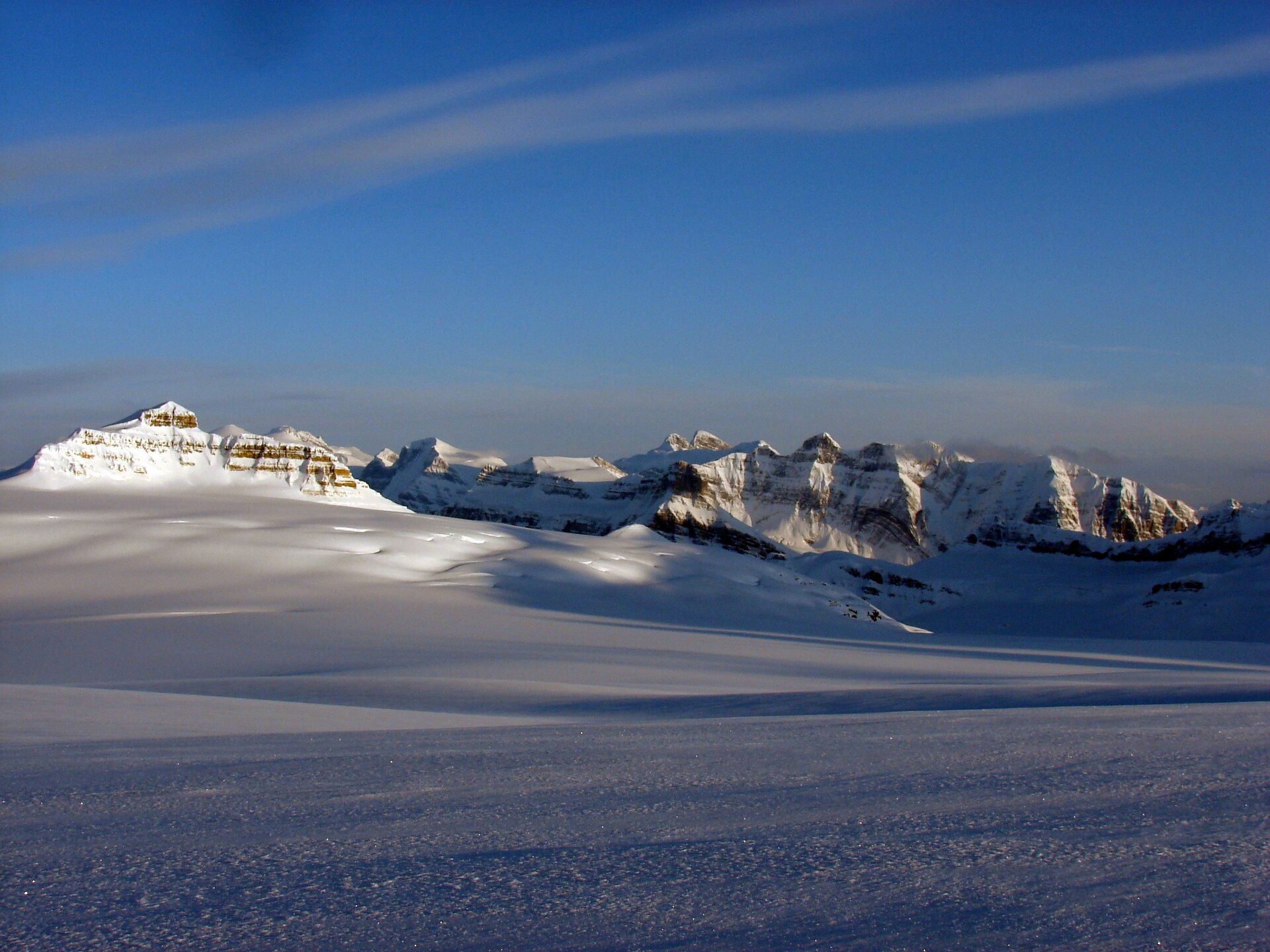
The largest icefield in the Rocky Mountains — a vast frozen plateau feeding glaciers that flow toward three different oceans, reached along one of the world's great mountain highways.
Westland Tai Poutini National Park, South Island, New Zealand
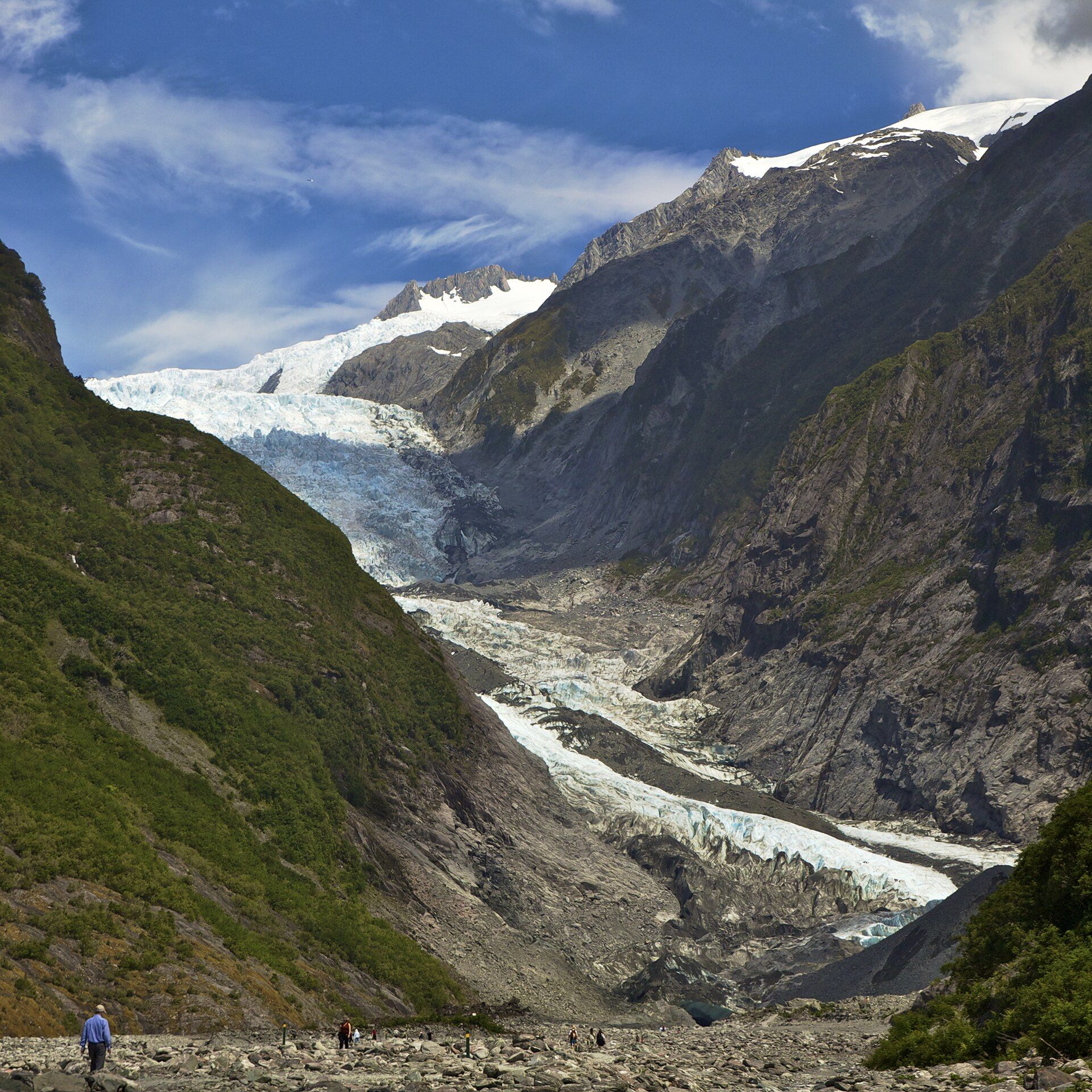
A steep river of blue ice that pours from the Southern Alps almost into rainforest — one of only a handful of glaciers on Earth that descend so close to temperate forest and the sea, and one of the fastest-moving, tumbling from high snowfields to a valley of ferns.
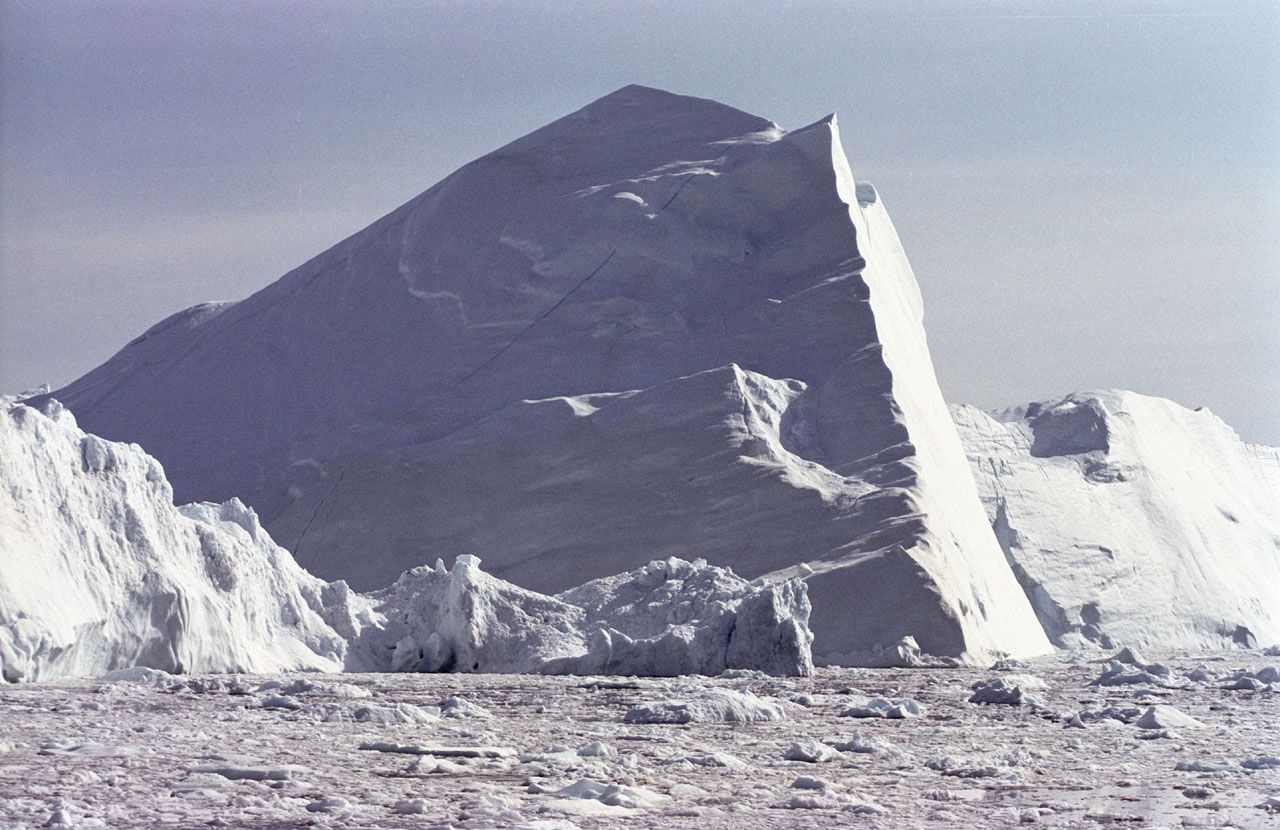
A fjord choked with colossal icebergs calved from one of the fastest, most productive glaciers on Earth — a roaring, ever-changing cathedral of ice on Greenland's Arctic coast.
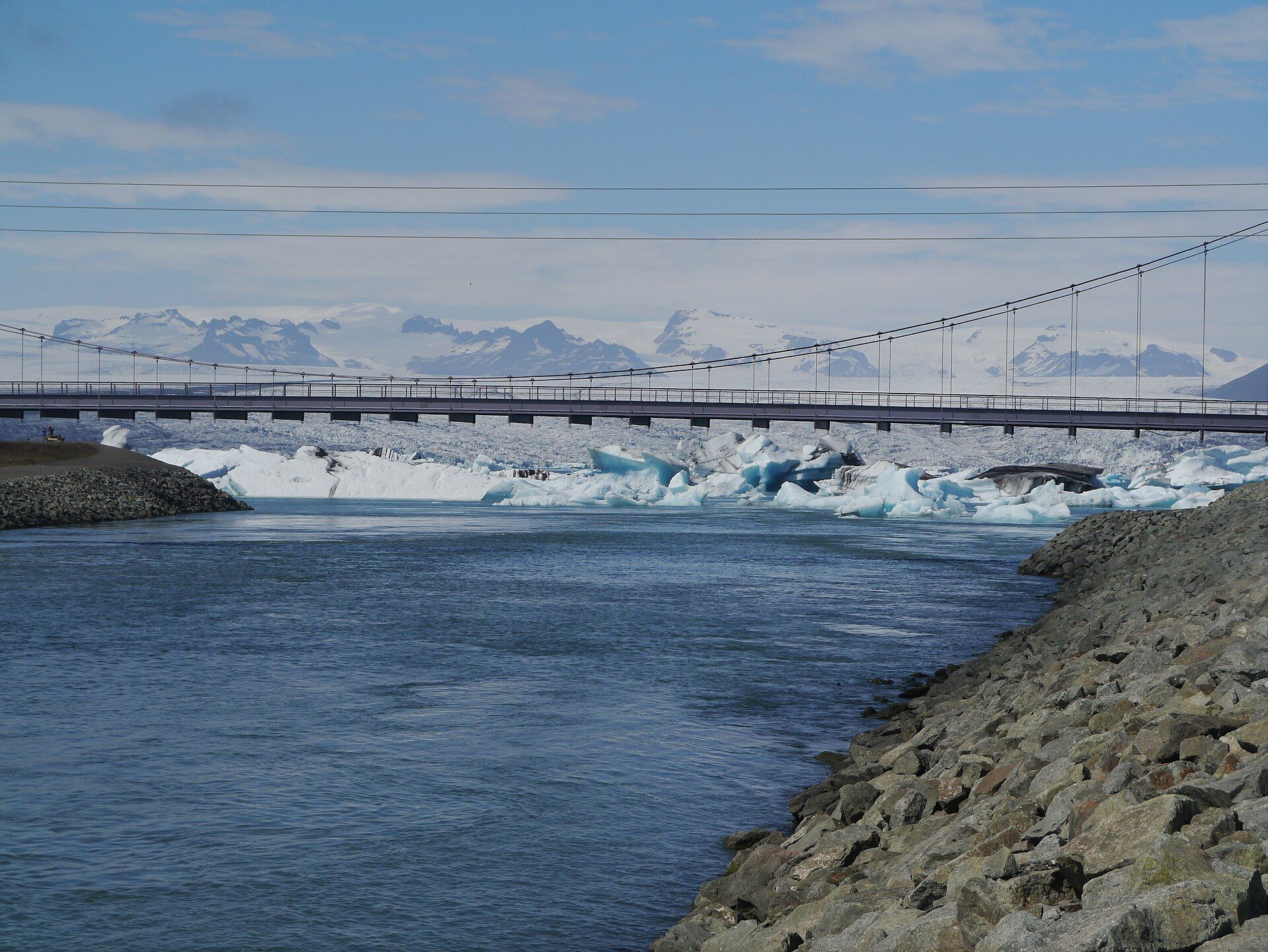
A glacial lagoon where huge icebergs calved from the Vatnajökull ice cap drift in still, deep water before floating out to sea — and wash up as glittering shards on the black-sand 'Diamond Beach'.
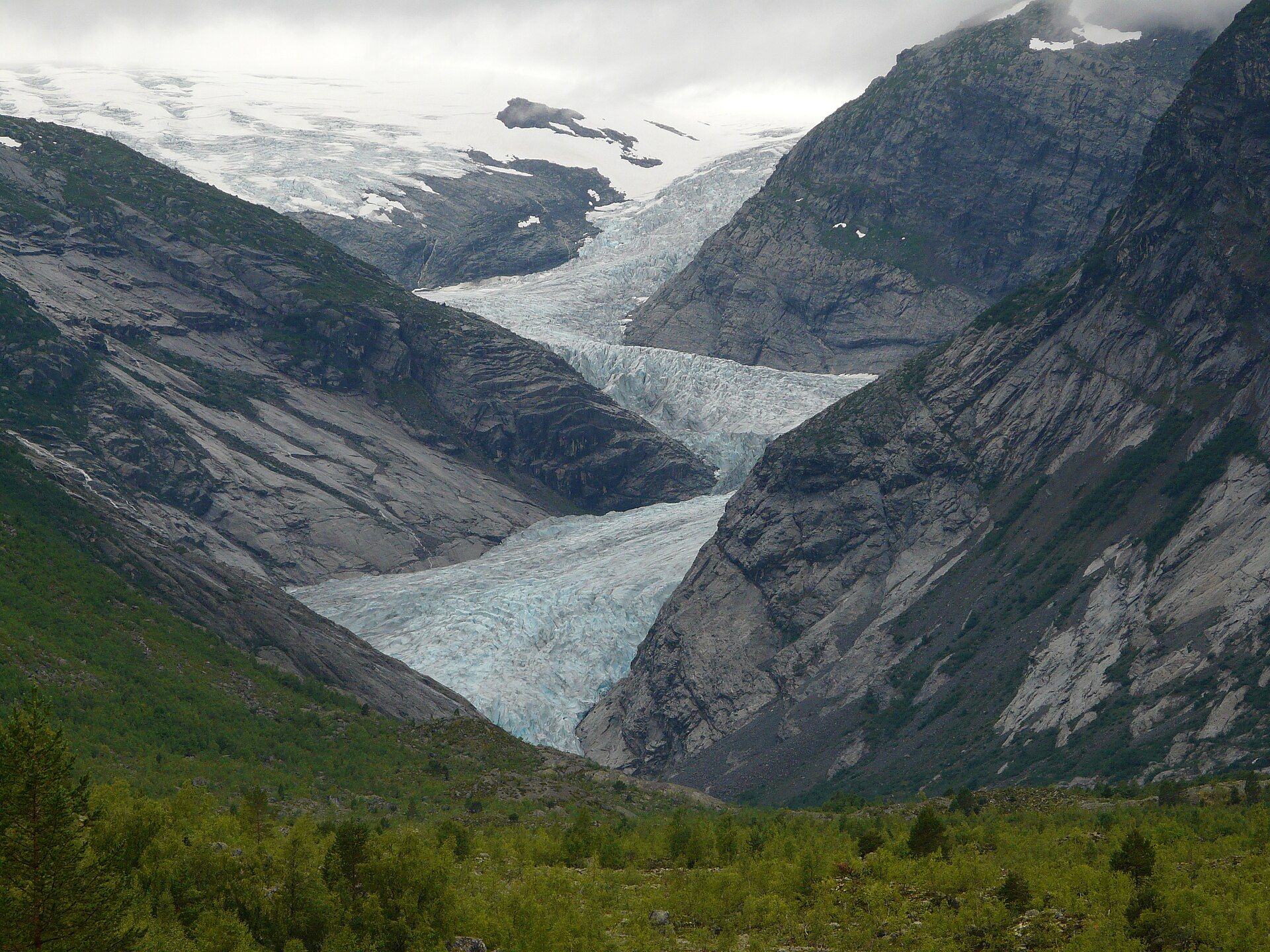
The largest glacier on mainland Europe — a high plateau ice cap that sends blue-tongued arms like Nigardsbreen and Briksdalsbreen spilling down into green valleys and turquoise meltwater lakes.
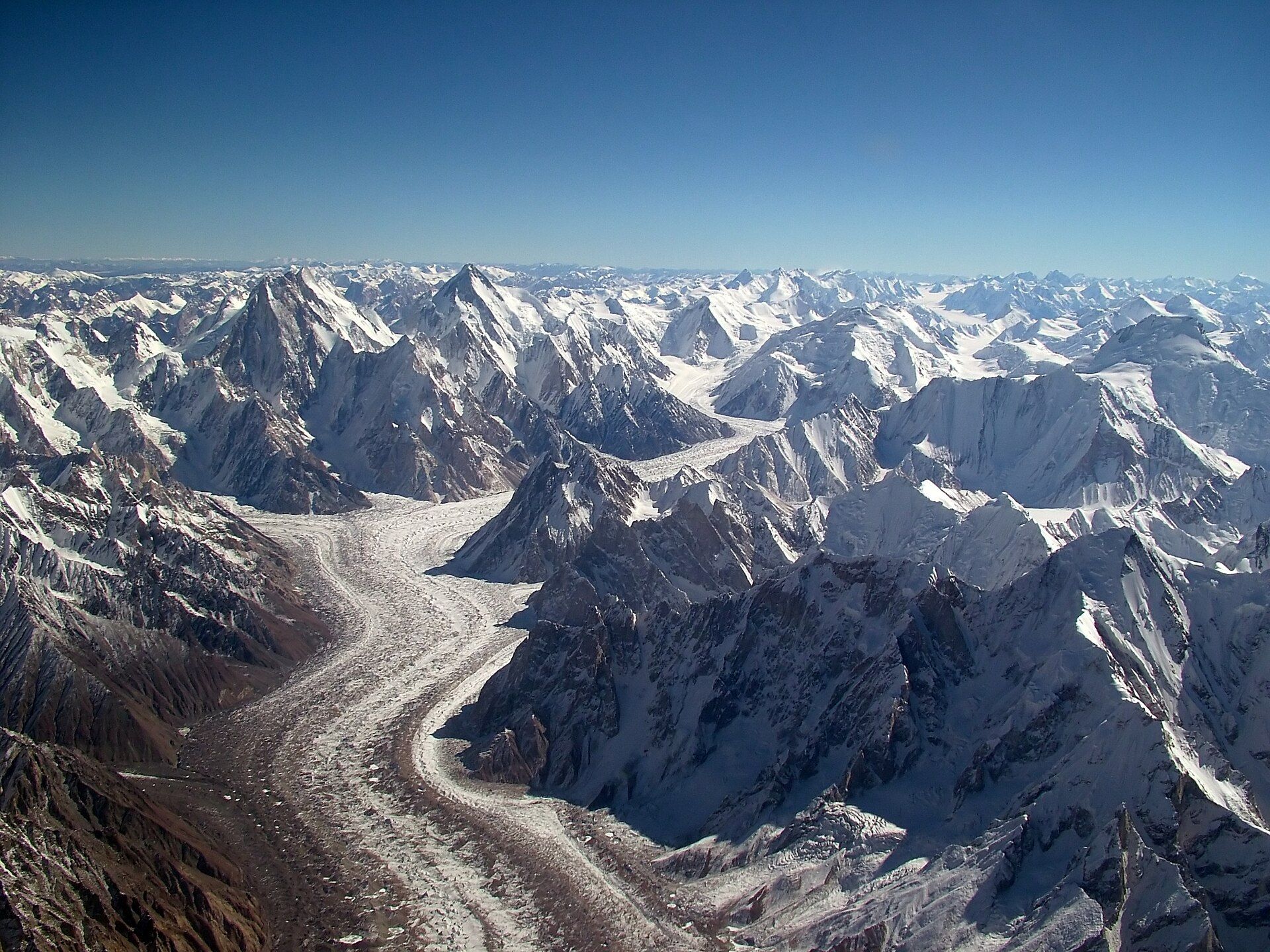
The greatest concentration of high peaks on Earth — a 62-kilometre river of ice leading to K2 and a ring of granite towers, in the most extreme mountain terrain anywhere.
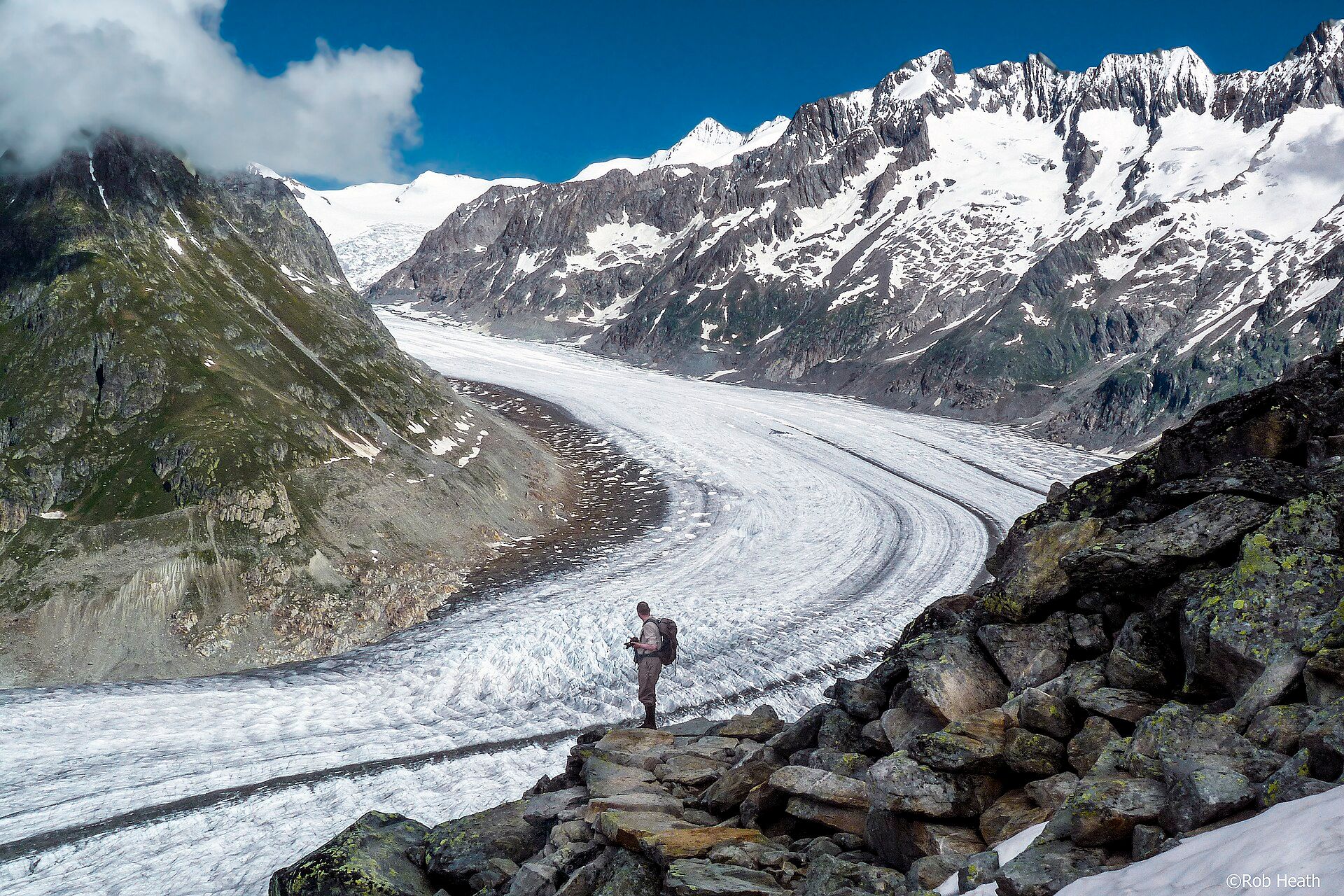
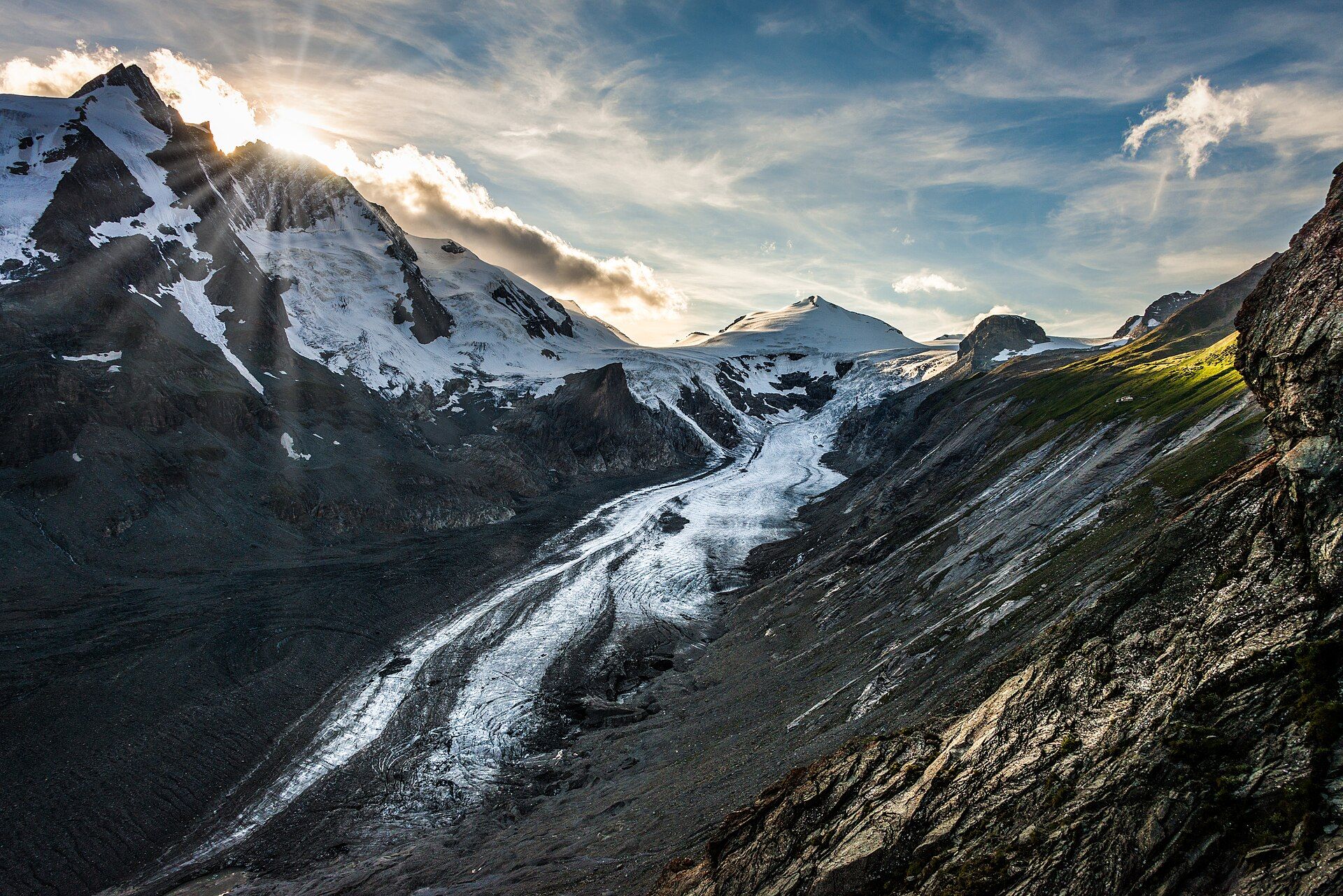
Austria's longest glacier, curling beneath the country's highest peak, the Grossglockner — a great river of ice reached by the famous alpine road, and a stark, moving record of a warming climate.
Los Glaciares National Park, Santa Cruz, Argentina
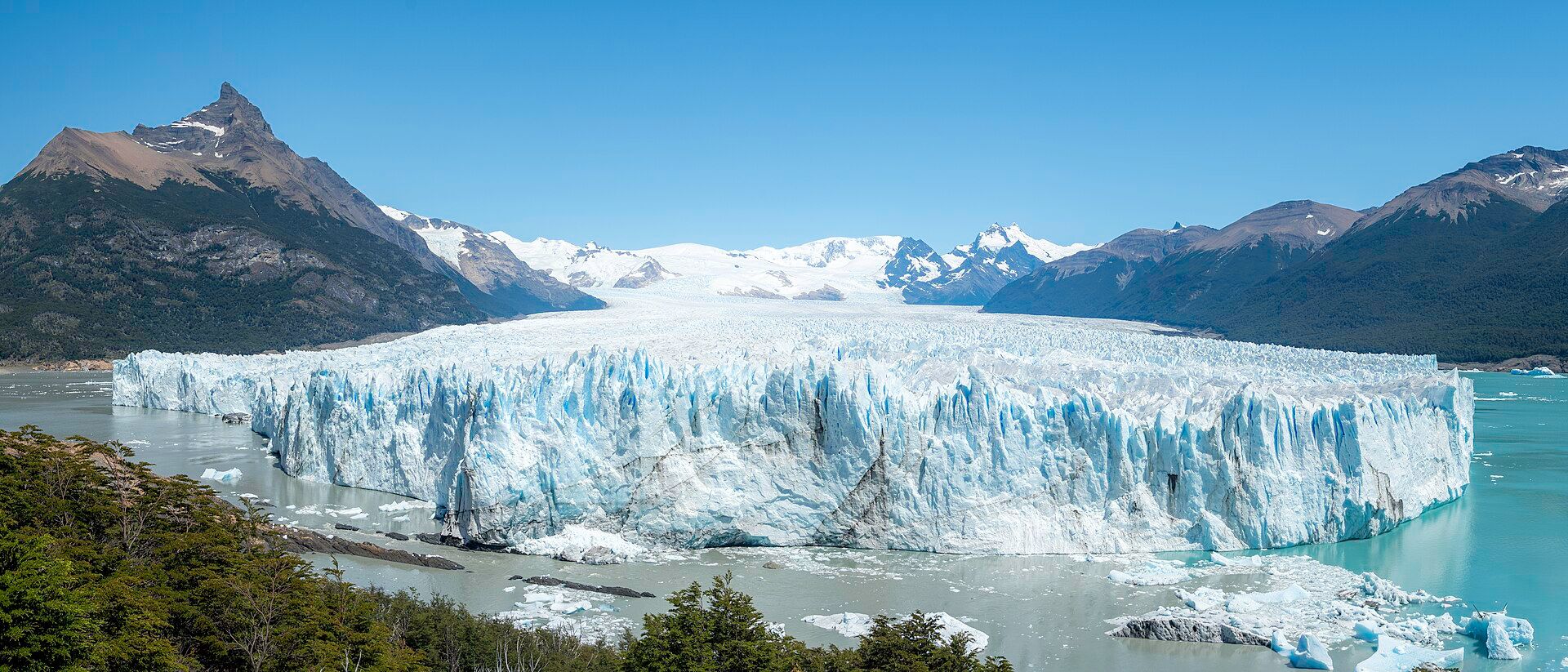
A vast, active glacier in Argentine Patagonia whose towering blue ice face calves thunderously into a lake — one of the few large glaciers on Earth that has stayed roughly in balance rather than sharply retreating.
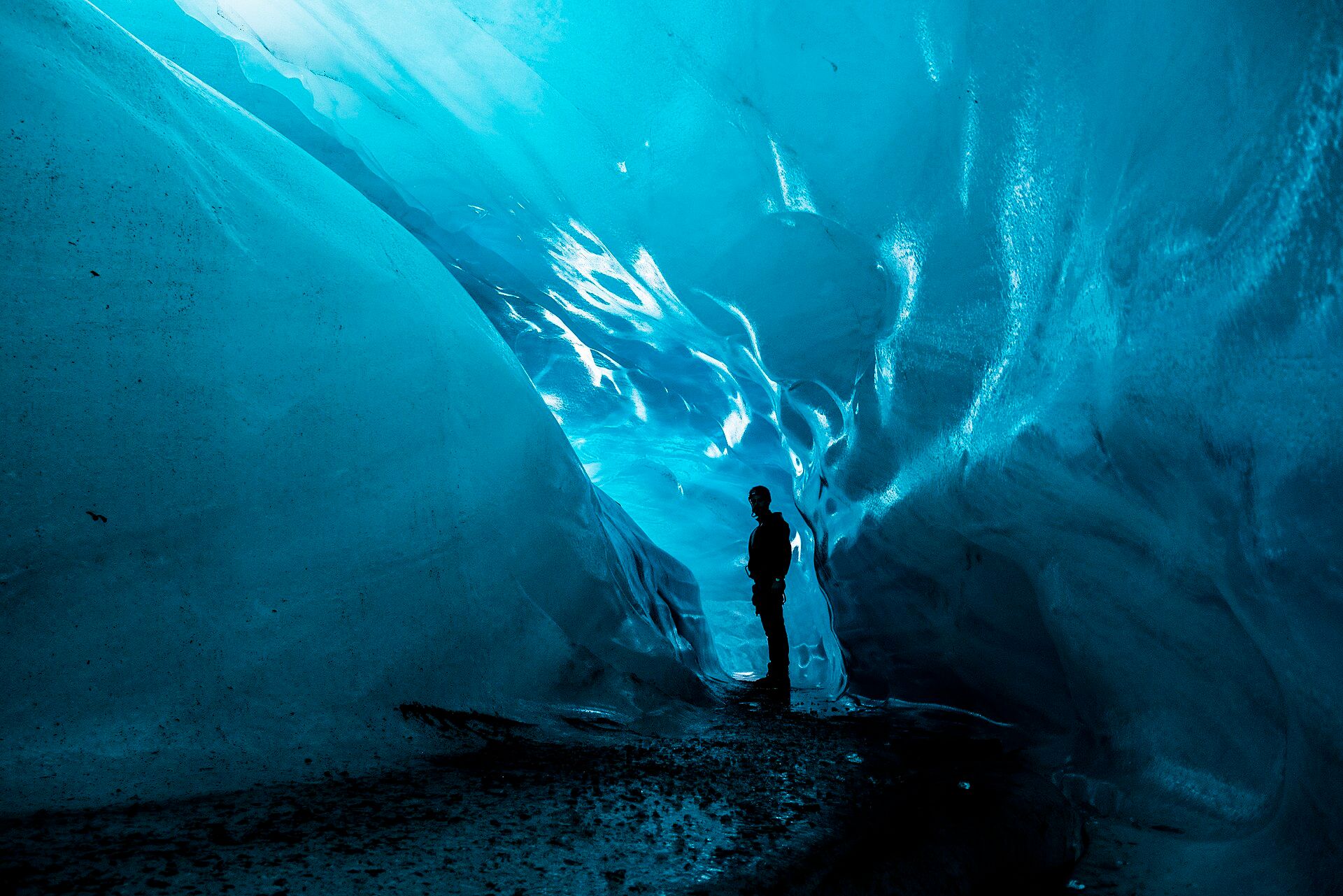
Glowing blue caves melted into the heart of Europe's largest ice cap — crystalline chambers of glacier ice, formed anew each winter beneath a vast frozen dome that hides fire below.