Head to head · the two great peaks of the Alps
Matterhorn vs Mont Blanc: Zermatt or Chamonix?
The Matterhorn and Mont Blanc are the two names that come to mind when people picture the Alps, and an Alps trip often comes down to Zermatt or Chamonix. The Matterhorn, at 4,478 m on the Swiss–Italian border, is the famous shape: a lone, four-faced pyramid. Mont Blanc, on the French–Italian border, is the highest summit in the Alps, a broad snow dome in a huge massif of glaciers and granite spires.
The useful difference is what each one is like to look at and to travel around. The Matterhorn is one peak you frame from lakes and railway viewpoints above a car-free village. Mont Blanc is a whole range you ride into, with the Aiguille du Midi cable car lifting you to 3,842 m from a busy valley town.
Matterhorn
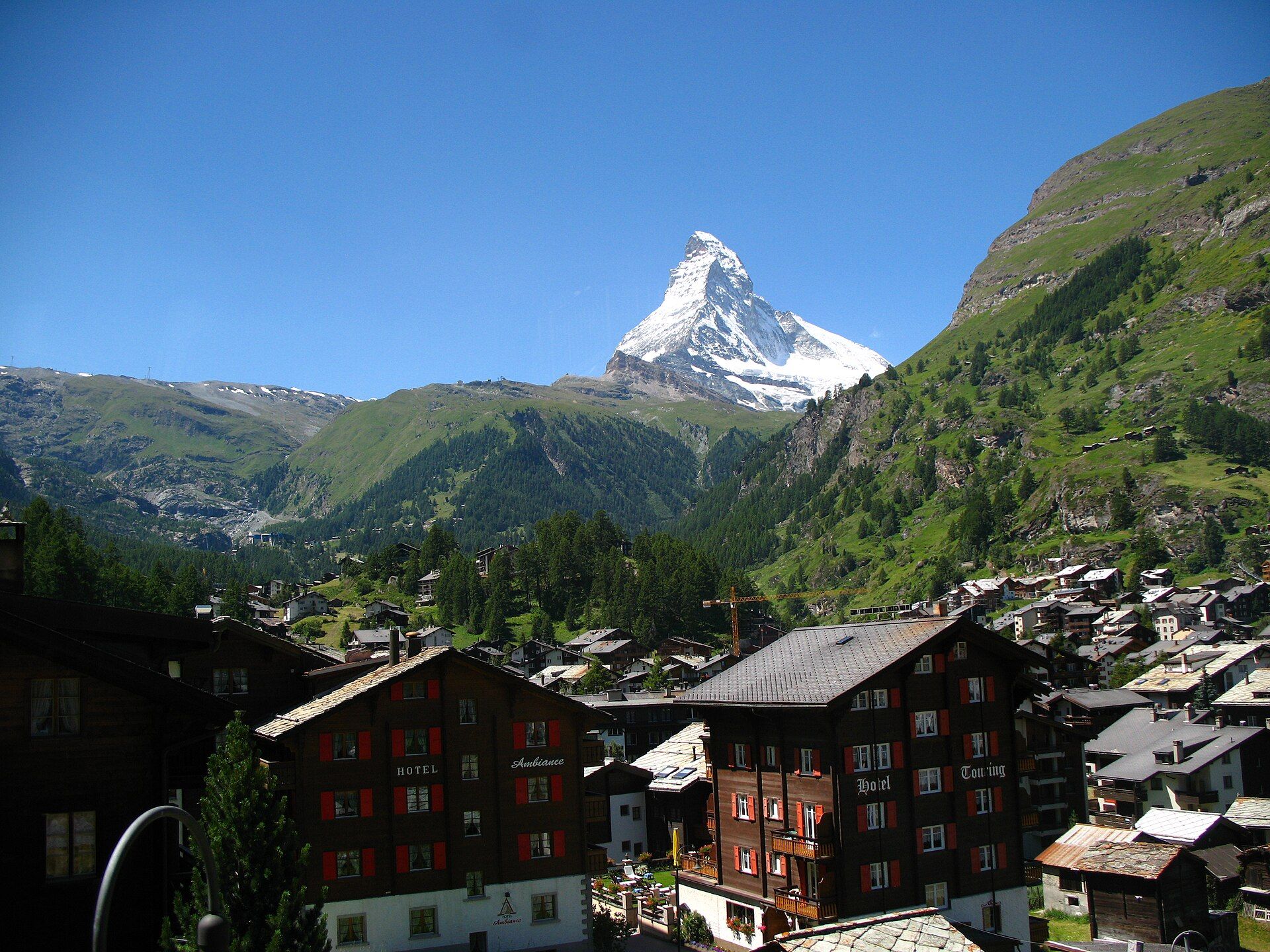
The perfect pyramid above Zermatt
At 4,478 m, the Matterhorn stands apart from its neighbours above Zermatt. Its first ascent, on 14 July 1865 by Edward Whymper's party of seven, is mountaineering's best-known tragedy: four fell to their deaths on the descent. Most visitors never climb it. They see it from the Gornergrat railway, from the Matterhorn Glacier Paradise lifts, or reflected in the Riffelsee at dawn.
- One instantly recognisable peak, visible from the village itself
- Car-free Zermatt, reached on Switzerland's rail network
- Classic reflection shots at the Riffelsee and other lakes above town
Mont Blanc
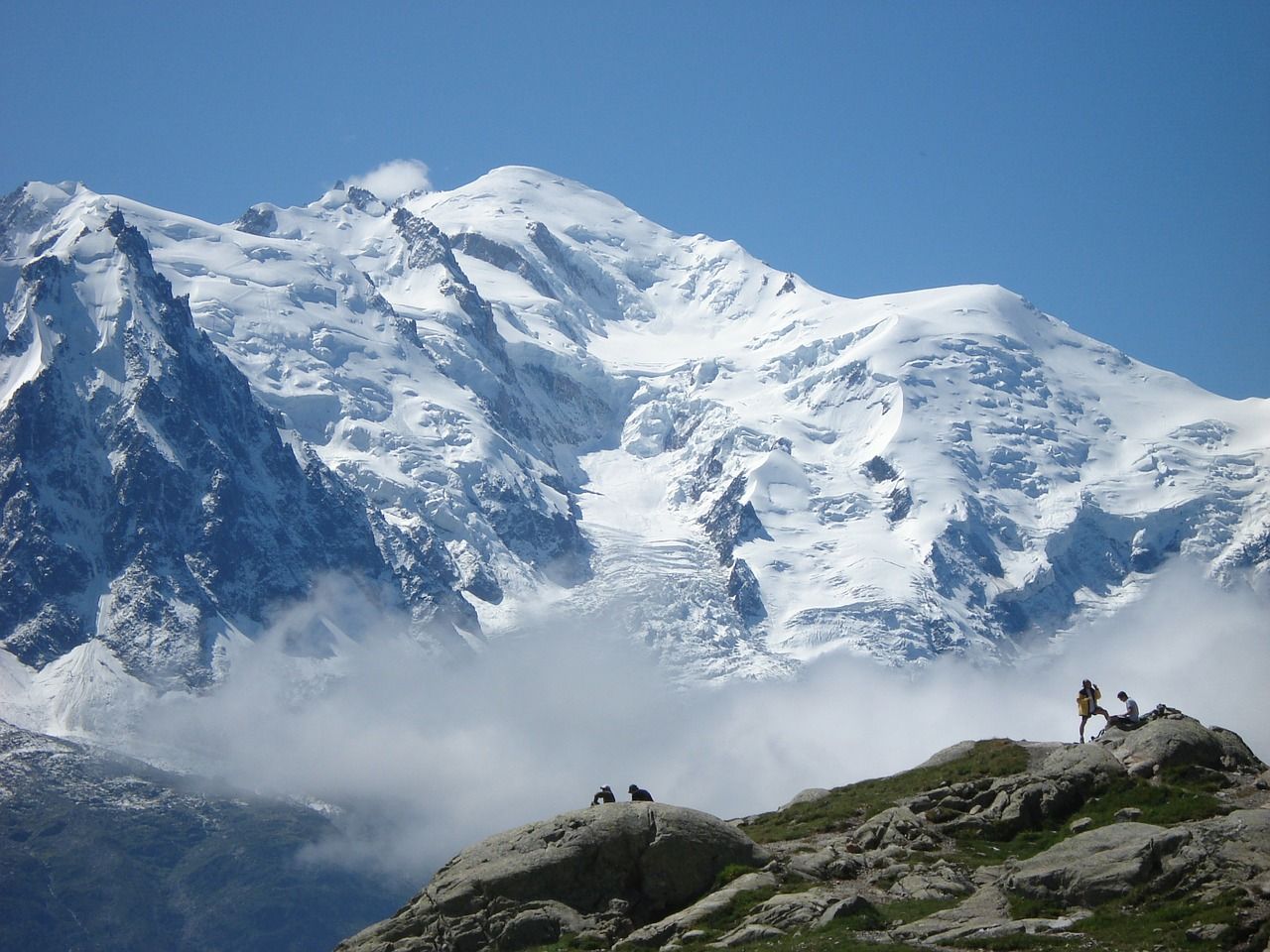
The roof of the Alps above Chamonix
The highest summit in the Alps, first climbed on 8 August 1786 by Michel Gabriel Paccard and Jacques Balmat. Its exact height shifts slightly with each new survey of the summit ice cap. Around it is a massif of granite spires and glaciers, including the Mer de Glace. From Chamonix the Aiguille du Midi cable car rises to 3,842 m, and the Tour du Mont Blanc circles the massif through France, Italy and Switzerland.
- The Aiguille du Midi puts you among high glaciers without any climbing
- A huge range to explore: spires, glaciers and the Tour du Mont Blanc
- Chamonix is about 1h15–1h45 from Geneva airport
Head to head
| What matters | Matterhorn | Mont Blanc |
|---|---|---|
| The view Edge: Matterhorn | One unmistakable pyramid. Arguably the most photogenic single mountain in Europe, but it builds its own cloud and is often hidden by midday. | A broad white dome that is less striking on its own. Its drama comes from the whole massif of needles, ice and glaciers seen from up close. |
| Lifts and viewpoints Edge: Toss-up | The Gornergrat cog railway and the cable cars to Rothorn and Matterhorn Glacier Paradise are all ticketed and run on seasonal timetables. | The Aiguille du Midi (3,842 m) and the Montenvers railway to the Mer de Glace are ticketed and seasonal, with timed queues at busy times. |
| Hiking Edge: Mont Blanc | Excellent day hikes between lift stations, with the Matterhorn in view much of the time. | A bigger network, plus the Tour du Mont Blanc, a multi-day trek of roughly 7–11 days whose refuges book out months ahead. |
| Climbing the summit Edge: Toss-up | A serious technical climb. The Hörnli hut sits at 3,260 m, and the summit push is usually 4–5 hours up from the hut and about as long down. You need a certified guide and real alpine experience. | Less technical but very serious because of altitude, crowding and rockfall on the normal route. Authorities regulate access, so check the current rules with the Haute-Savoie prefecture and hut reservations before planning. |
| The base town Edge: Toss-up | Zermatt is car-free. You take the train in, or park at Täsch and ride the shuttle train, and the village is compact and walkable. | Chamonix is a full valley town with road and rail access, more varied accommodation and a lively climbing and skiing scene. |
| Getting there Edge: Mont Blanc | Train from Zurich or Geneva to Visp (roughly 2h30–3h30), then about 1h15 on the line up to Zermatt. | Roughly 1h15–1h45 by shuttle or train from Geneva, making it easy to reach for a short trip. |
Which should you choose?
Choose Matterhorn if…
…you want the single most iconic mountain view, like the idea of a car-free village, and plan to see the peak from railways, lakes and day hikes.
Choose Mont Blanc if…
…you want to get high into the ice and spires by cable car, plan a longer hike such as the Tour du Mont Blanc, or need a quick trip from Geneva.
The honest verdict
If the goal is the photograph, choose the Matterhorn. No other Alpine peak has such a clean, recognisable shape, and Zermatt's lifts frame it from every side. Go early in the day, before cloud builds on the summit.
If the goal is the high-mountain experience, choose Mont Blanc. The Aiguille du Midi takes you from a valley town to 3,842 m, the massif is far larger, and the trekking is better.
They are close enough to combine. Lifts on both sides run seasonal timetables and close for maintenance, and the summits themselves are only for properly equipped, usually guided alpinists. Check the operators and the local authorities before you fix dates.
Wonders mentioned here
Added