The Verzasca River
📍 Verzasca Valley, Ticino, Southern Switzerland
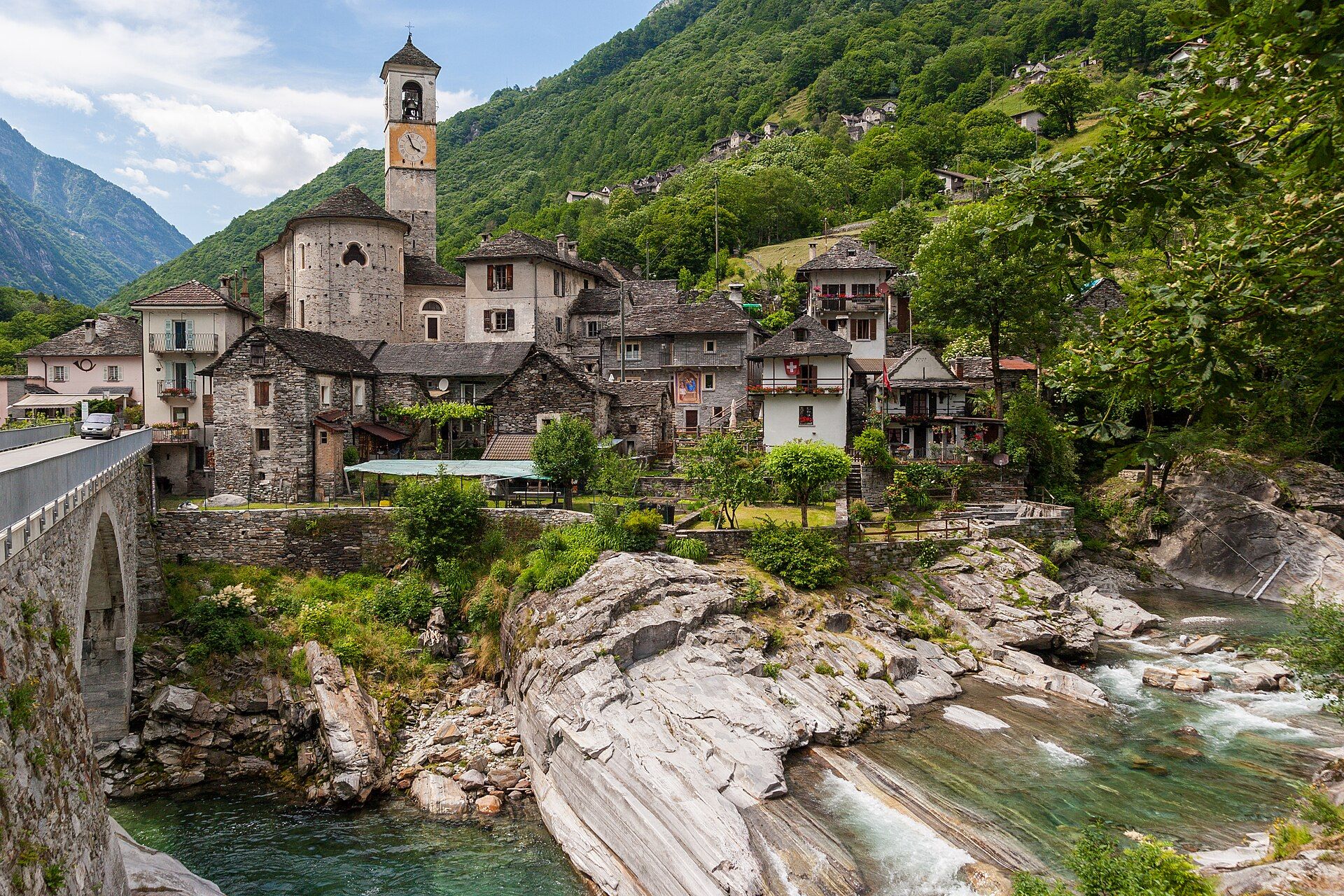
One of the clearest rivers in Europe — an emerald-green mountain stream tumbling through the Verzasca Valley in Italian-speaking Ticino, past smooth sculpted granite and the double-arched stone bridge of Lavertezzo.
What makes it marvelous
The Verzasca runs so clear that from the bridges above it the riverbed looks close enough to touch, the water an intense green over pale granite polished smooth by the current. Rising below the Alpine ridges of Ticino, it drops about 30 kilometres through a steep, wooded valley to Lake Maggiore, carving the grey gneiss into rounded boulders, plunge pools, and slick chutes. Its most famous point is Lavertezzo, where a graceful medieval double-arched stone bridge — the Ponte dei Salti — leaps the gorge above deep emerald pools, one of the most photographed spots in southern Switzerland. The valley's rustic stone hamlets and the water's astonishing clarity make it feel a world away from the northern Alps just over the ridge.
Why visit
The Verzasca offers the sunny, Mediterranean-tinged side of Switzerland — swimming in cold, jewel-clear pools, walking the old stone villages of the valley, and photographing the Roman-looking arches of the Ponte dei Salti above green water. It is a short, spectacular drive from Locarno on Lake Maggiore, and a favourite of hikers, wild swimmers, and freedivers drawn by the river's clarity.
Still deciding?
The Verzasca River comes up most often against one other place — each one weighs cost, effort, season and crowds side by side.
What to know before you go
🗓️ Best time
Best June to September, when the valley is warm and the pools are swimmable; spring brings high, fast snowmelt water (dangerous for swimming), and autumn adds colour with quieter crowds.
🧭 Getting there & access
The Verzasca Valley runs north from Tenero, near Locarno on Lake Maggiore, about 1h30 by car or road from Lugano. A postbus serves the valley from Tenero up to Sonogno at its head, stopping at Lavertezzo and the Ponte dei Salti.
Good to know
- Take great care swimming — the current is strong, the water is cold, and levels can rise fast.
- Go early for the Ponte dei Salti at Lavertezzo; it is small and gets crowded by midday.
- Drive or ride the postbus to Sonogno at the valley head for the quietest stone hamlets.
Plan your visit
Easy🧭 Getting there
From Milan (MXP) or Zürich (ZRH); Locarno, Switzerland
- Reach Locarno/Tenero on Lake Maggiore by train or car
- Drive or take the postbus north up the Verzasca Valley from Tenero
- Stop at Lavertezzo for the Ponte dei Salti and the emerald pools
- Total travel
- About 1h30 by road from Lugano; the valley is a half to full day
- Time at site
- 3–5h for the bridge, pools, and a village walk; longer to hike or reach Sonogno
- Access
- Open year-round by road and postbus; the swimming season is summer. The river can rise quickly with rain or dam releases upstream — heed local warnings and never swim in high, fast water.
🎒 What to bring & consider
- Sturdy shoes with grip — the riverside granite is extremely slippery
- Swimwear and a towel in summer; the water stays cold even in heat
- Sun protection in the open valley
- Cash for the small valley grotti and postbus
👁️ What to expect
- Crowds
- Lavertezzo and the Ponte dei Salti get very busy midday in summer; early or late is calmer.
- Conditions
- Easy road access and short riverside walks; rocks by the water are slick and uneven.
- Facilities
- Cafes, grotti, parking, and postbus stops in Lavertezzo and the valley villages.
- The view
- The double arch of the Ponte dei Salti above the emerald pools, shot from the riverbank downstream in soft light.
Times and requirements are approximate and change with season, weather, and local rules — confirm permits, fares, and schedules with operators before you travel.
Natural riches of the area
- Exceptionally clear snowmelt-fed water over polished granite and gneiss
- Deep green plunge pools and sculpted rock in the river gorge
- Chestnut and mixed woodland cloaking the steep valley sides
- Trout and cold-water river life in the clear pools
Local food
- Polenta e brasato
- Ticinese cornmeal polenta with slow-braised beef, a valley staple.
- Formaggini and Alpine cheese
- Small soft goat cheeses and hard Alpine cheeses from the valley's grotti.
- Chestnut dishes
- Ticino's chestnut woods yield flour, cakes, and roasted chestnuts in autumn.
The Verzasca is often called the clearest river in Europe, and standing on the old stone bridge at Lavertezzo it is easy to believe: the water below runs an intense, glowing green over pale granite scoured smooth by the current, so transparent that the riverbed seems only an arm’s length away. The river rises below the Alpine ridges of Ticino, Switzerland’s Italian-speaking south, and falls some 30 kilometres through a steep, chestnut-wooded valley to Lake Maggiore, carving the grey rock into rounded boulders, chutes, and deep plunge pools along the way.
Its signature is the Ponte dei Salti at Lavertezzo — a slender medieval double-arched stone bridge that vaults the gorge above the deepest emerald pools, looking for all the world like a Roman relic and drawing photographers, swimmers, and freedivers alike. The valley above it is dotted with rustic stone hamlets, terraced slopes, and rustici grotti serving polenta and Alpine cheese, all bathed in a warmer, sunnier light than the Alps just over the ridge. It is a reminder that Switzerland has a Mediterranean side — and that its most beautiful water isn’t only in its lakes and glaciers, but running green through a Ticino valley. Cold, fast, and deceptively powerful, the Verzasca rewards care as much as admiration: its beauty and its currents are two sides of the same clear water.
The Verzasca River: common questions
How do you get to The Verzasca River?
From Milan (MXP) or Zürich (ZRH); Locarno, Switzerland: Reach Locarno/Tenero on Lake Maggiore by train or car; Drive or take the postbus north up the Verzasca Valley from Tenero; Stop at Lavertezzo for the Ponte dei Salti and the emerald pools. Total travel time: About 1h30 by road from Lugano; the valley is a half to full day.
When is the best time to visit The Verzasca River?
Best June to September, when the valley is warm and the pools are swimmable; spring brings high, fast snowmelt water (dangerous for swimming), and autumn adds colour with quieter crowds.
How long should you spend at The Verzasca River?
3–5h for the bridge, pools, and a village walk; longer to hike or reach Sonogno. Total travel time: About 1h30 by road from Lugano; the valley is a half to full day.
What should you bring to The Verzasca River?
Sturdy shoes with grip — the riverside granite is extremely slippery Swimwear and a towel in summer; the water stays cold even in heat Sun protection in the open valley Cash for the small valley grotti and postbus
Do you need a permit or guide for The Verzasca River?
Open year-round by road and postbus; the swimming season is summer. The river can rise quickly with rain or dam releases upstream — heed local warnings and never swim in high, fast water.
Is The Verzasca River crowded, and what are conditions like?
Lavertezzo and the Ponte dei Salti get very busy midday in summer; early or late is calmer. Easy road access and short riverside walks; rocks by the water are slick and uneven. Facilities: Cafes, grotti, parking, and postbus stops in Lavertezzo and the valley villages.
Added
More wonders to explore