Places · Slovenia

Natural Wonders of Slovenia: The 5 Most Beautiful Places to Visit

5 places in the atlas

Slovenia packs astonishing natural variety into a small, remarkably green country — more than half of it is forested. In the northwest, the Julian Alps rise to Triglav, the national peak, above glacial lakes like Bled and Bohinj and the vivid emerald Soča River. To the southwest lies classic karst country — indeed the very region that gave the word 'karst' to science — riddled with dramatic cave systems. Between mountains, caves, forests, and a short Adriatic coast, Slovenia is one of Europe's greenest and most scenic small nations. Below are the 5 natural wonders of Slovenia in the atlas — the most beautiful places to build a trip around, each with what makes it remarkable, when to go, and how to reach it. Best overall time: Late spring to early autumn (roughly May–September) for lakes, hiking, and warm weather; winter brings alpine snow and a quiet calm.
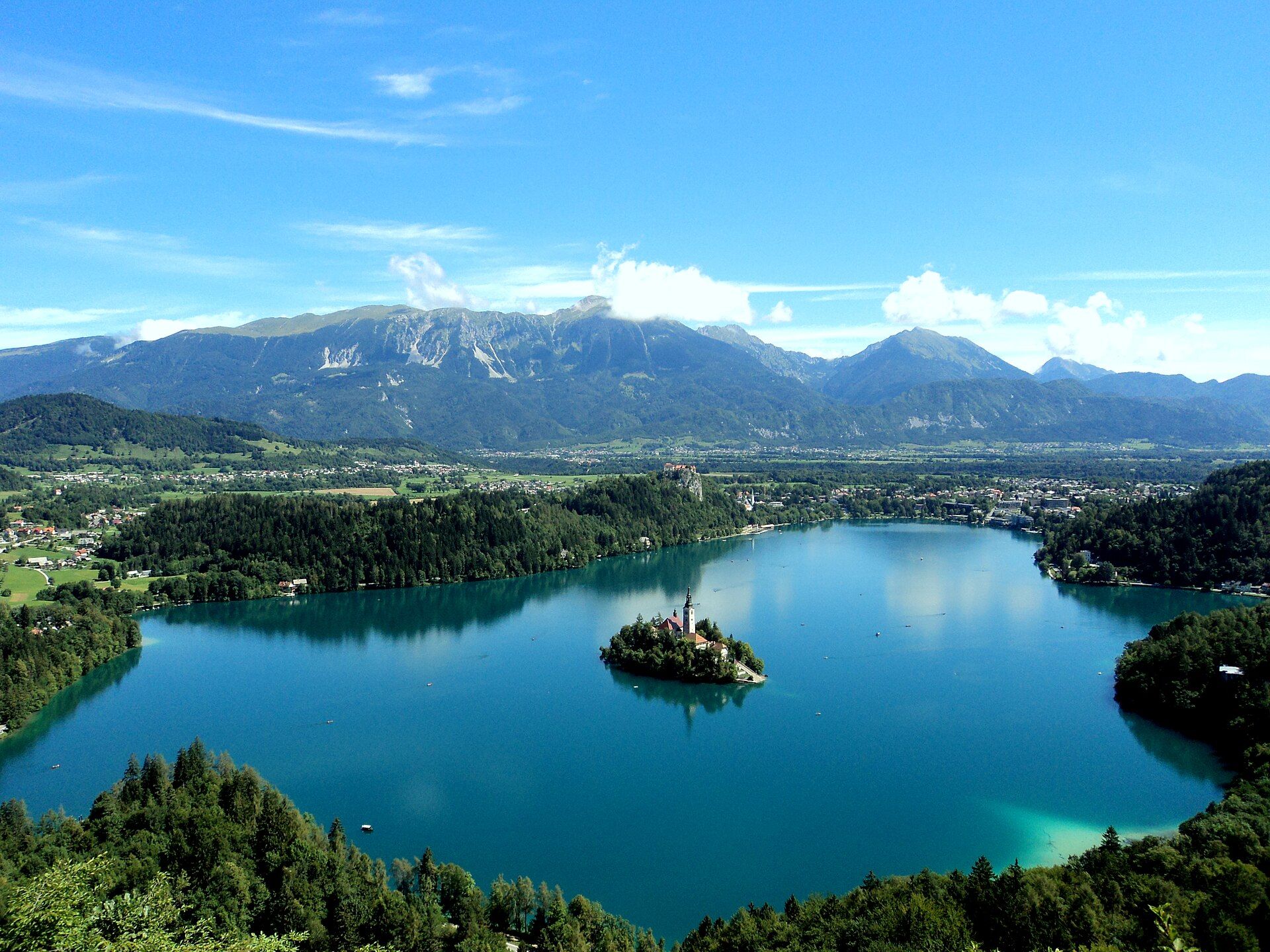
Lake Bled, Upper Carniola, Slovenia

Lake Bled

Upper Carniola, Slovenia

A serene glacial lake with a tiny church-topped island at its heart, cupped beneath a clifftop castle and the peaks of the Julian Alps — one of the most picture-perfect scenes in Europe.

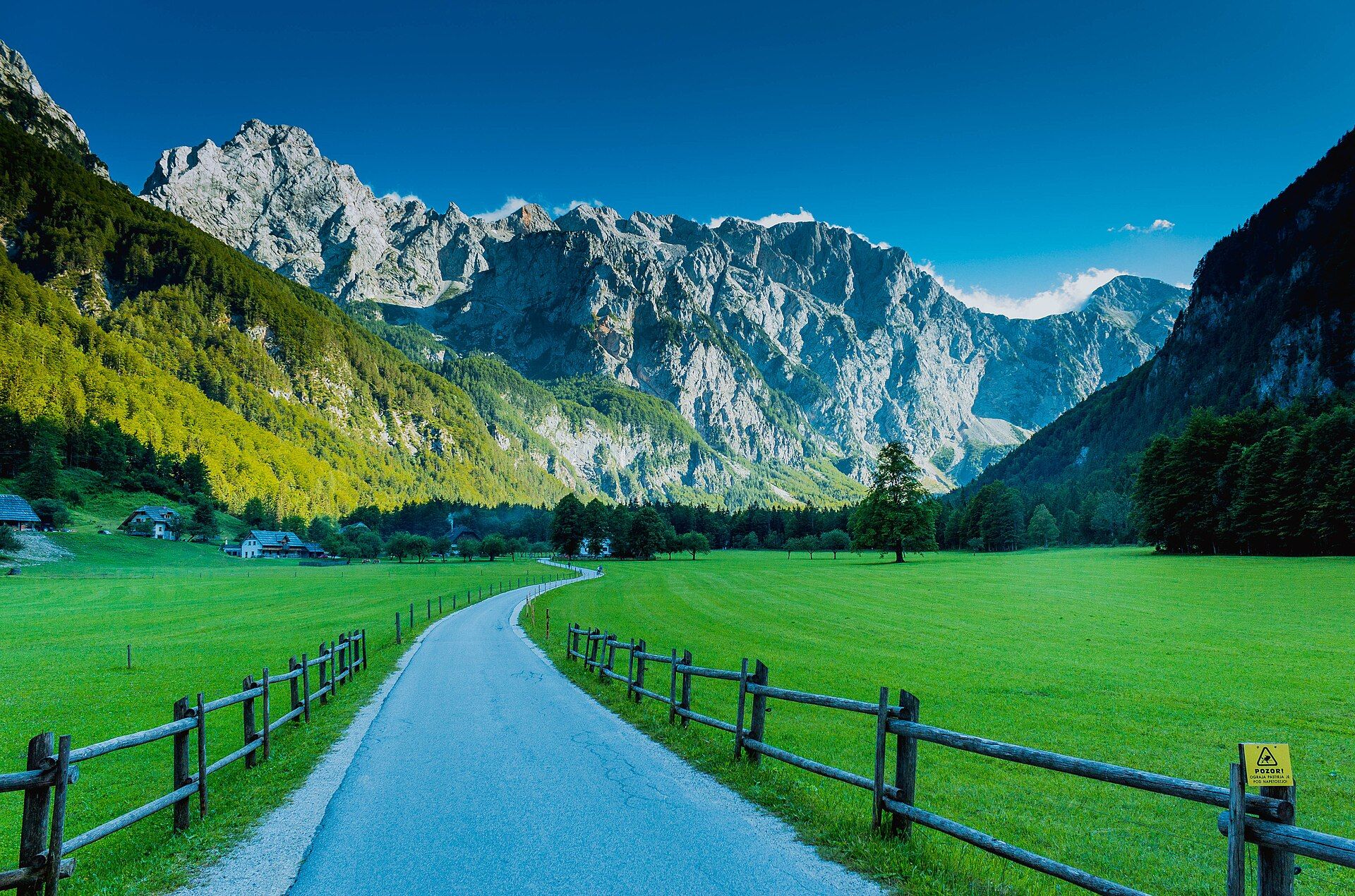
A narrow road between wooden fences running across green meadows and farmhouses toward the sheer grey limestone walls of the Kamnik-Savinja Alps, Logar Valley, Slovenia

Logar Valley

Solčava, Upper Savinja Valley, northern Slovenia, beneath the Kamnik-Savinja Alps
A glacier-carved alpine valley 7 km long in Slovenia's Kamnik-Savinja Alps, ringed by limestone peaks over 2,000 m and closed by the 90-m Rinka waterfall — a landscape park since 1987, with 43 recorded natural features.

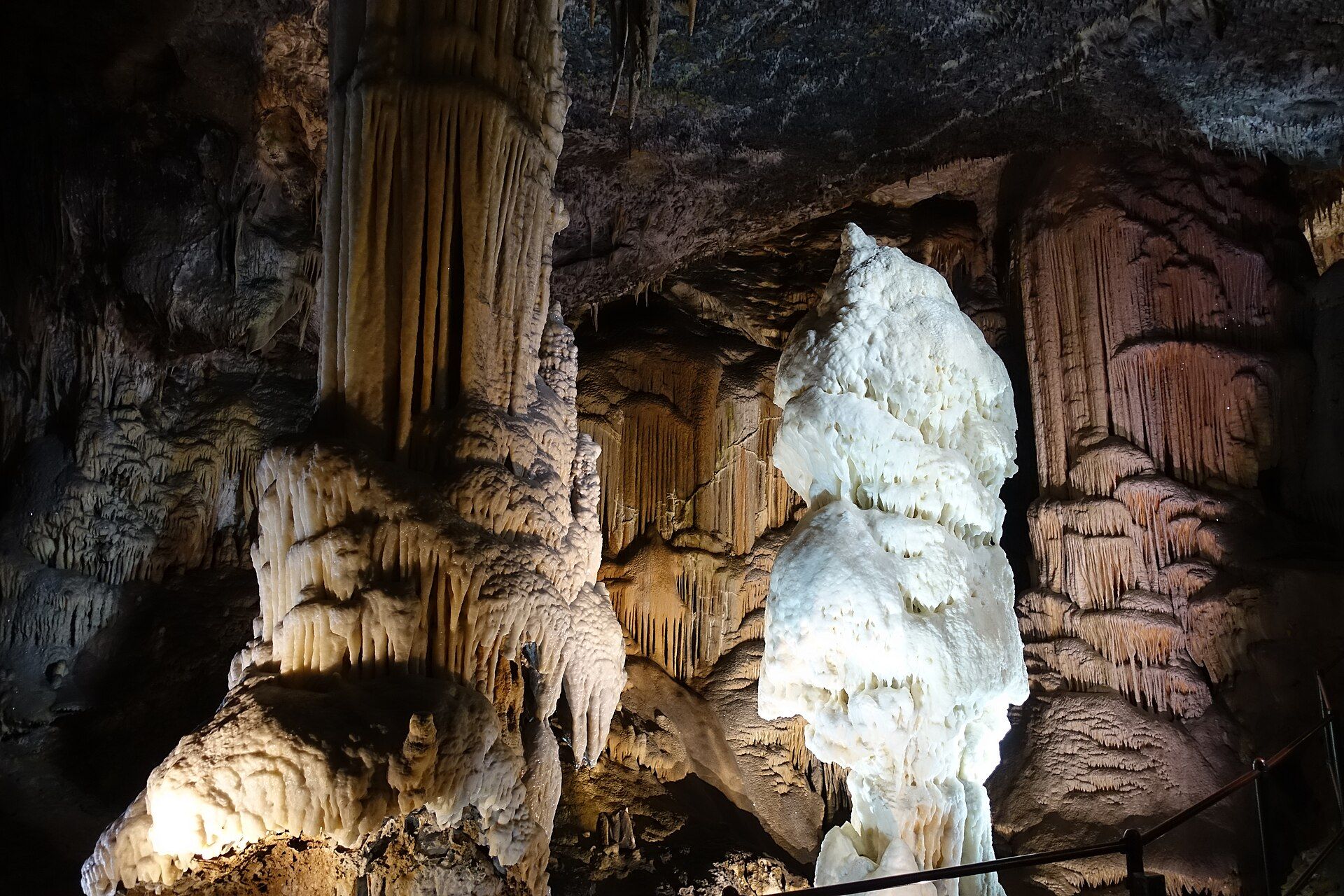
The bright-white Brilliant stalagmite beside a tall, ornate flowstone column, lit inside Postojna Cave, Slovenia

Postojna Cave

Postojna, Inner Carniola, south-western Slovenia, off the A1 Ljubljana–Koper motorway
A 24-km karst cave system beneath Postojna, toured by a double-track underground railway first opened in 1872 — halls of stalagmites including the 16-m Skyscraper and the white Brilliant, and home of the blind cave salamander, the olm.

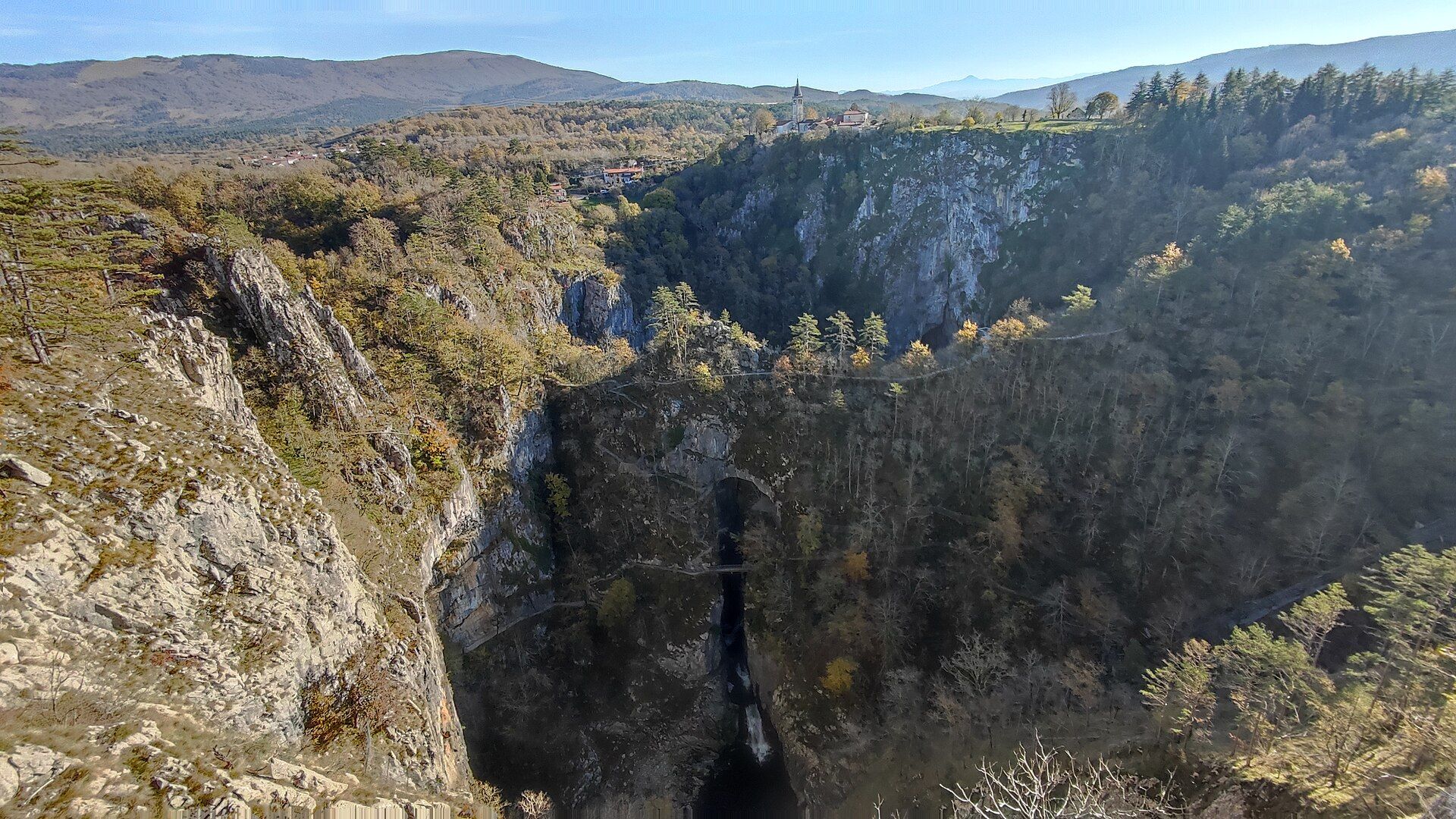
The deep, cliff-walled collapse dolines of Velika and Mala dolina with the Reka River falling into the cave mouth below and the village church of Škocjan on the rim, Slovenia

Škocjan Caves

Škocjan, near Divača, Karst region, south-western Slovenia

A UNESCO-listed river cave on Slovenia's Karst, where the Reka River drops into collapse dolines up to 165 m deep and roars through an underground canyon — about 6 km of passages and one of Europe's largest known cave chambers.

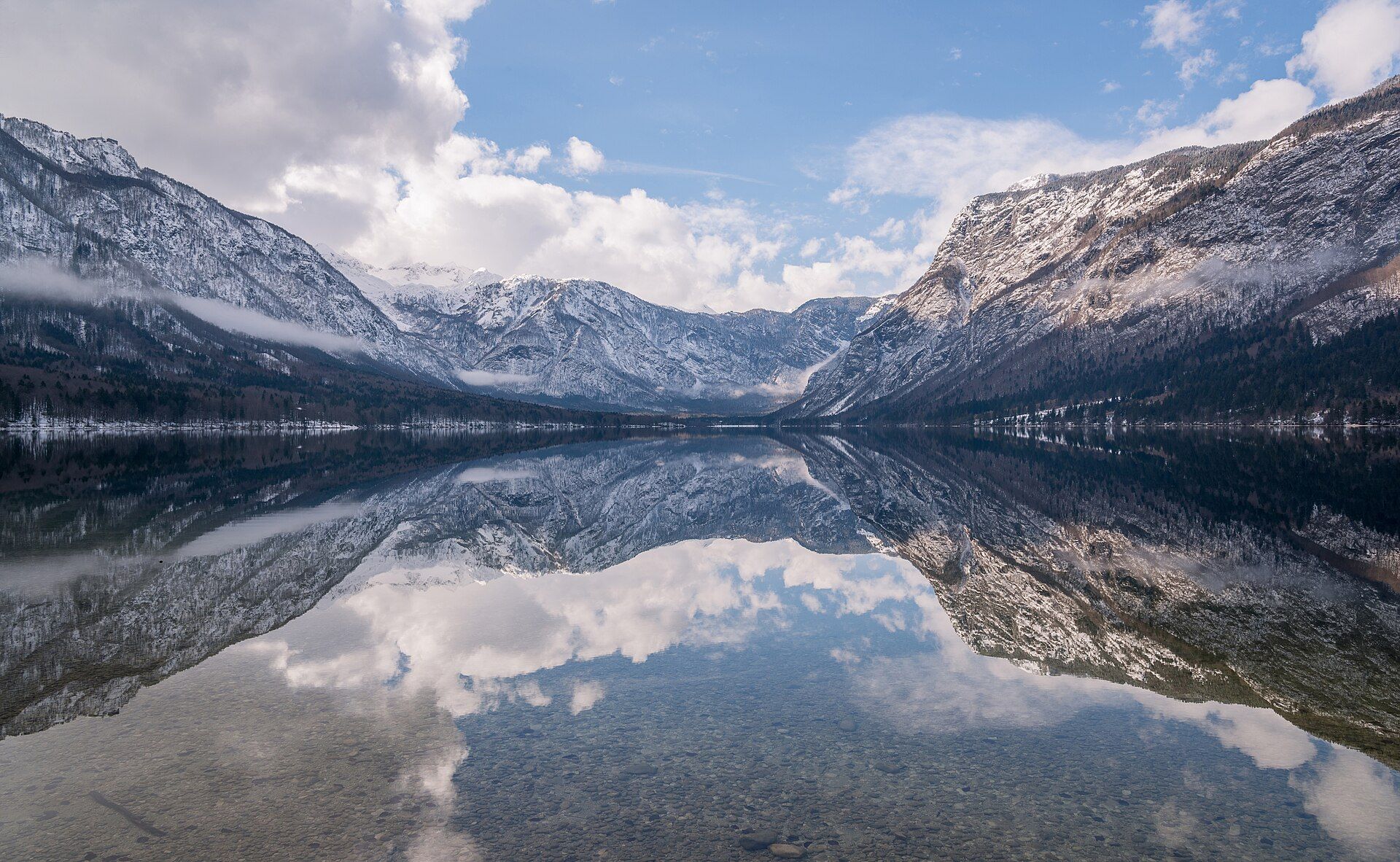
Snow-dusted limestone mountains of the Julian Alps mirrored in the still, clear water of Lake Bohinj under a cloudy sky, Triglav National Park, Slovenia

Triglav National Park

Julian Alps, north-western Slovenia, on the border with Italy and close to Austria

Slovenia's only national park: 840 km² of the eastern Julian Alps around Triglav (2,864 m), the country's highest peak, with Lake Bohinj, the Savica waterfall, glacier-carved valleys and high karst plateaus. Protected since 1924.