Head to head · Slovenia's two great karst caves
Postojna vs Škocjan Caves: Which Slovenian Cave Should You Visit?
Postojna Cave and the Škocjan Caves sit on Slovenia's karst a few exits apart on the same Ljubljana–Koper motorway, and visitors with one free day usually ask which to choose. Both can be seen only on a guided tour, and both are cool inside all year, but they are very different caves.
Postojna is about decoration. It is a 24 km system of halls filled with stalagmites, and you reach the deeper parts by an underground train. Škocjan is about scale. The Reka River drops into collapse dolines and roars through an underground canyon, crossed on a high bridge. That difference, and the fact that you can photograph Postojna but not inside Škocjan, decides it for most people.
Postojna Cave
Stalagmite halls and the cave train
About 24 km of passages, halls and underground river channels under the town of Postojna. Since 1872 visitors have ridden a cave railway into it, now the only double-track cave railway in the world. The tour takes about 1.5 hours and covers about 5 km, mostly by train and just over a kilometre on foot. You pass the 16-metre Skyscraper stalagmite, about 150,000 years old, and the bright-white Brilliant. The cave is also home to the olm, a blind amphibian found only in the Dinaric karst.
- Dense stalagmite and flowstone formations, including the Brilliant and the Skyscraper
- Easy for families: a train ride and just over a kilometre on a paved path suitable for prams
- Photos allowed on regular tours (no flash or tripod)
Škocjan Caves
A river canyon underground
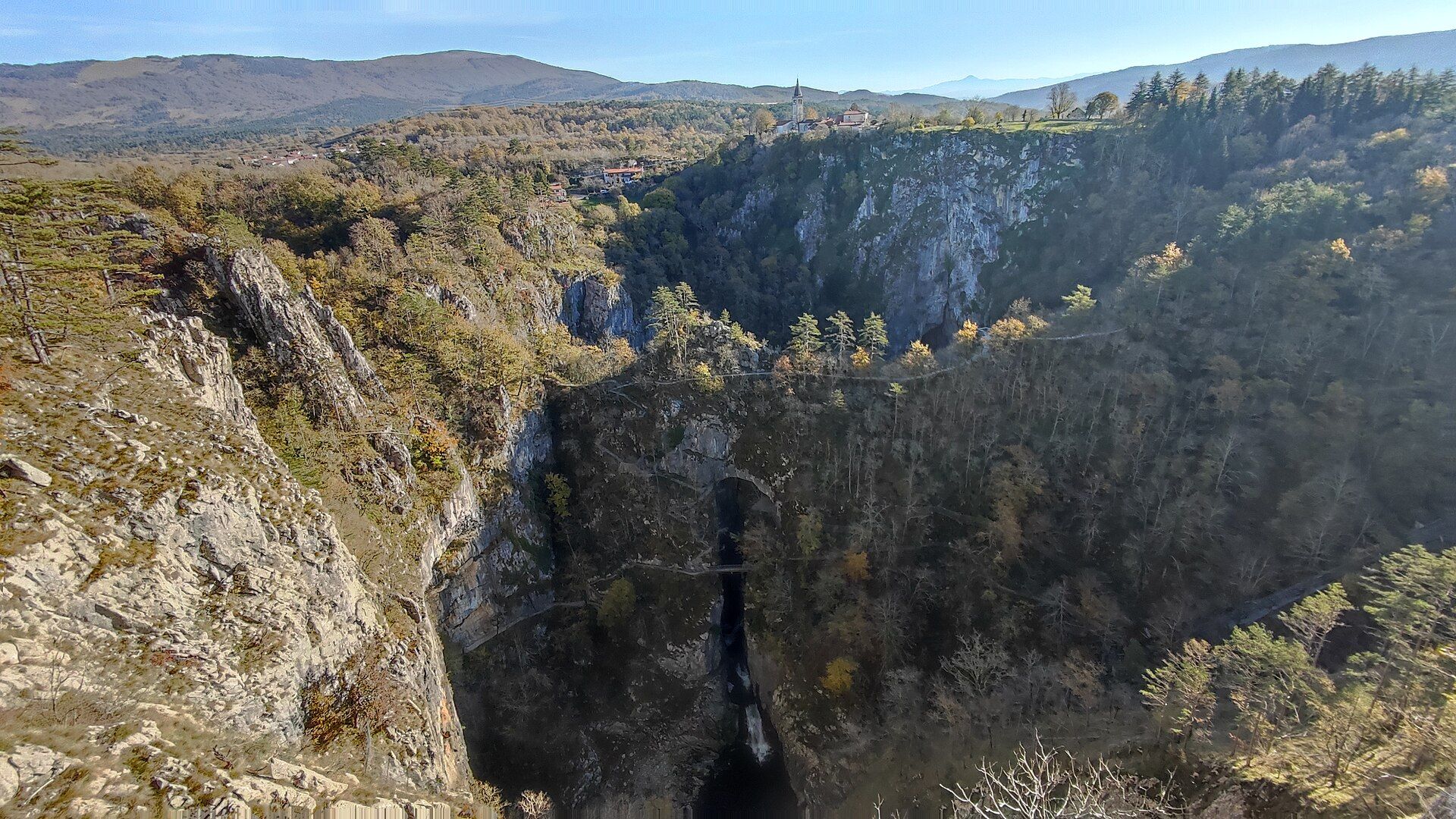
A World Heritage Site since 1986. The Reka River disappears into Velika dolina, a collapse doline up to 165 metres deep, and runs through Murmuring Cave, an underground canyon about 3.5 km long. Beyond it, Martel's Chamber has a volume of 2.2 million cubic metres, the largest underground chamber discovered in Slovenia. The full tour is about 5 km on foot with around 1,000 steps and takes 2.5 to 3 hours. Photography is not allowed inside the cave.
- The underground canyon and the river, crossed on a bridge high above the water
- Huge spaces, including Martel's Chamber at 2.2 million cubic metres
- Collapse dolines and a free education trail with viewpoints, open all year
Head to head
| What matters | Postojna Cave | Škocjan Caves |
|---|---|---|
| What you see Edge: Toss-up | Cave decoration: forests of stalagmites, white flowstone and large halls such as the Calvary. | Raw scale: a river thundering through a canyon 10 to 60 metres wide, and a walk out through the cliff-walled Velika dolina. |
| Effort Edge: Postojna Cave | Easy. The train does most of the distance, with just over a kilometre on foot, including one 200-metre stretch at a 20% gradient up and a similar one down. | Moderate. About 5 km on foot with around 1,000 steps on damp paths, taking 2.5 to 3 hours. The winter route, or the early exit in summer, cuts it to about 3 km. |
| Families and access Edge: Postojna Cave | Prams are fine, and wheelchair users can tour by train only. A full visitor park at the entrance has restaurants and lockers. | Better for older children and fit walkers, given the steps and length. |
| Photography Edge: Postojna Cave | Allowed on regular tours, without flash or tripod. | Not allowed inside the cave. The classic photos are from the education trail, looking down into the dolines. |
| Crowds Edge: Škocjan Caves | One of Europe's most visited caves. Summer tours run in large groups, so pick an early or late tour. | Guided groups at set times, and summer is the busiest. It feels less like a mass attraction than Postojna. |
| Season Edge: Postojna Cave | Open every day of the year at a constant 10 °C, so the experience is the same in any season. | Open all year except 1 January and 25 December, at a steady 12 °C. The full route beyond Velika dolina runs only from May to September. |
| Getting there Edge: Postojna Cave | Exit 41 of the A1, 2 km from the park, and under an hour from Ljubljana. Postojna is also on the railway, about a 25-minute walk or a local bus ride from the park. | The Divača exit of the same motorway, roughly 1–1.5 hours from Ljubljana. By train to Divača, then a marked path of about 4 km (around 50 minutes) to the park. |
Which should you choose?
Choose Postojna Cave if…
…you are travelling with young children or anyone who can't manage lots of steps, want classic cave formations and photos, or are visiting in winter.
Choose Škocjan Caves if…
…you want the more dramatic, less commercial cave, are happy to walk 2.5 to 3 hours with around 1,000 steps, and can visit between May and September for the full route.
The honest verdict
If you can only do one and are reasonably fit, Škocjan is the more memorable experience. An underground river canyon on this scale is rarer than a decorated show cave, and the walk out through the collapse dolines finishes it off. It is the UNESCO-listed one for a reason.
Postojna is the better choice for families, for anyone with limited mobility, and for people who want photos. Its formations are beautiful, and the train makes it easy, but it is busier and feels more like a big attraction.
They are close enough to do both in one day, Postojna in the morning and Škocjan in the afternoon. Book tours directly with Postojna Cave Park and Park Škocjanske jame, and confirm current times and prices there. Bring a warm layer for either cave.
Wonders mentioned here
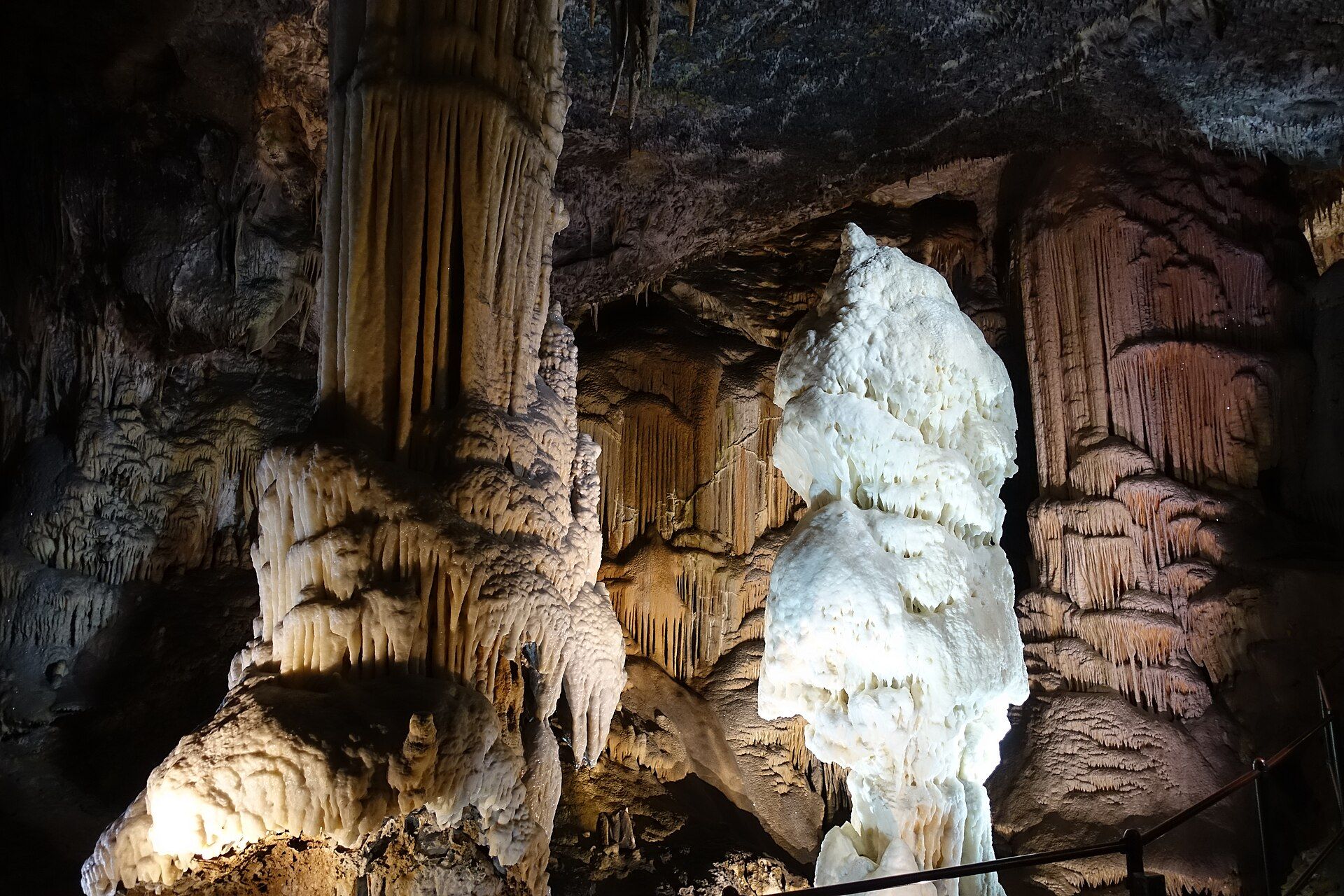
Postojna Cave
Postojna, Inner Carniola, south-western Slovenia, off the A1 Ljubljana–Koper motorway
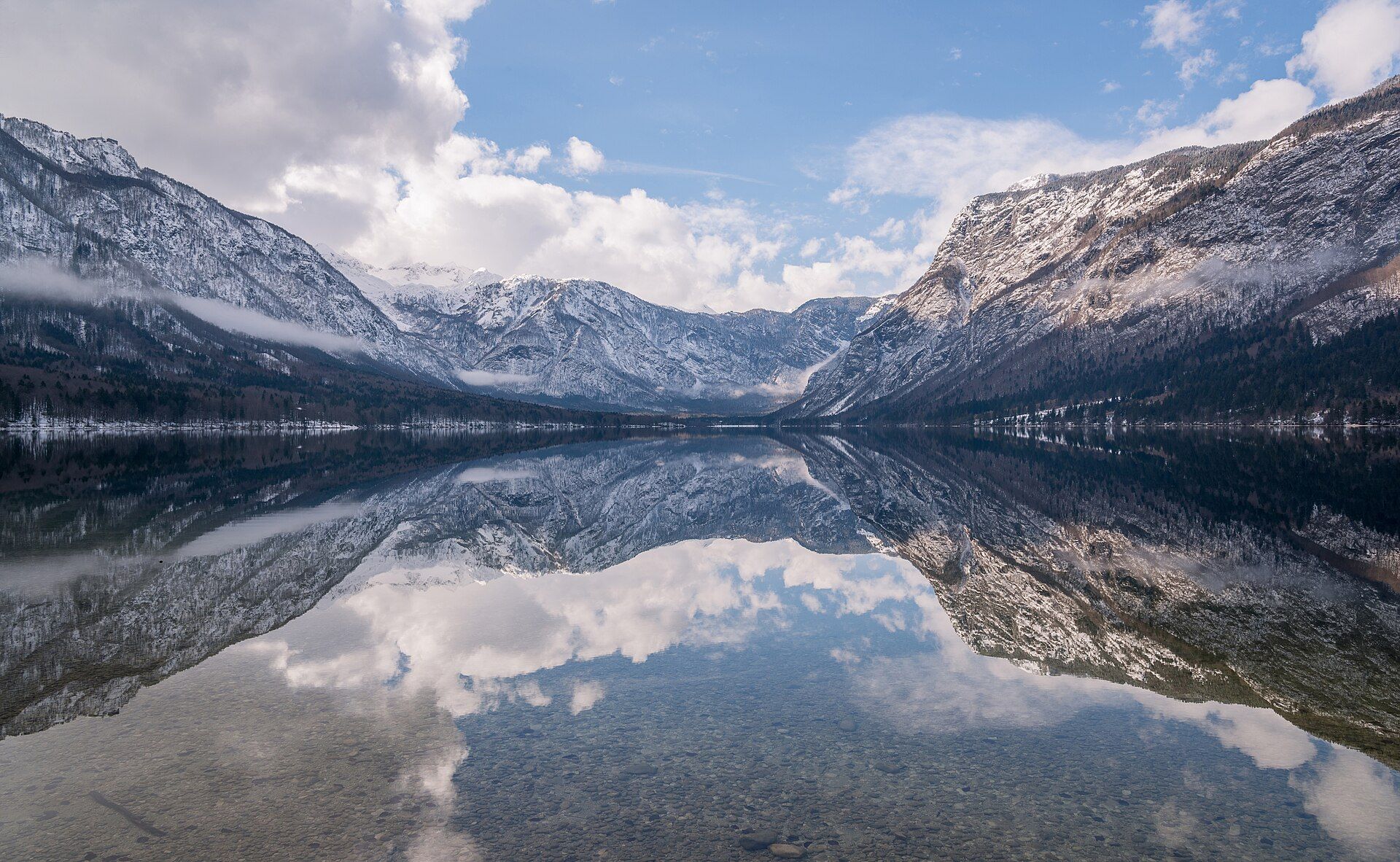
Triglav National Park
Julian Alps, north-western Slovenia, on the border with Italy and close to Austria
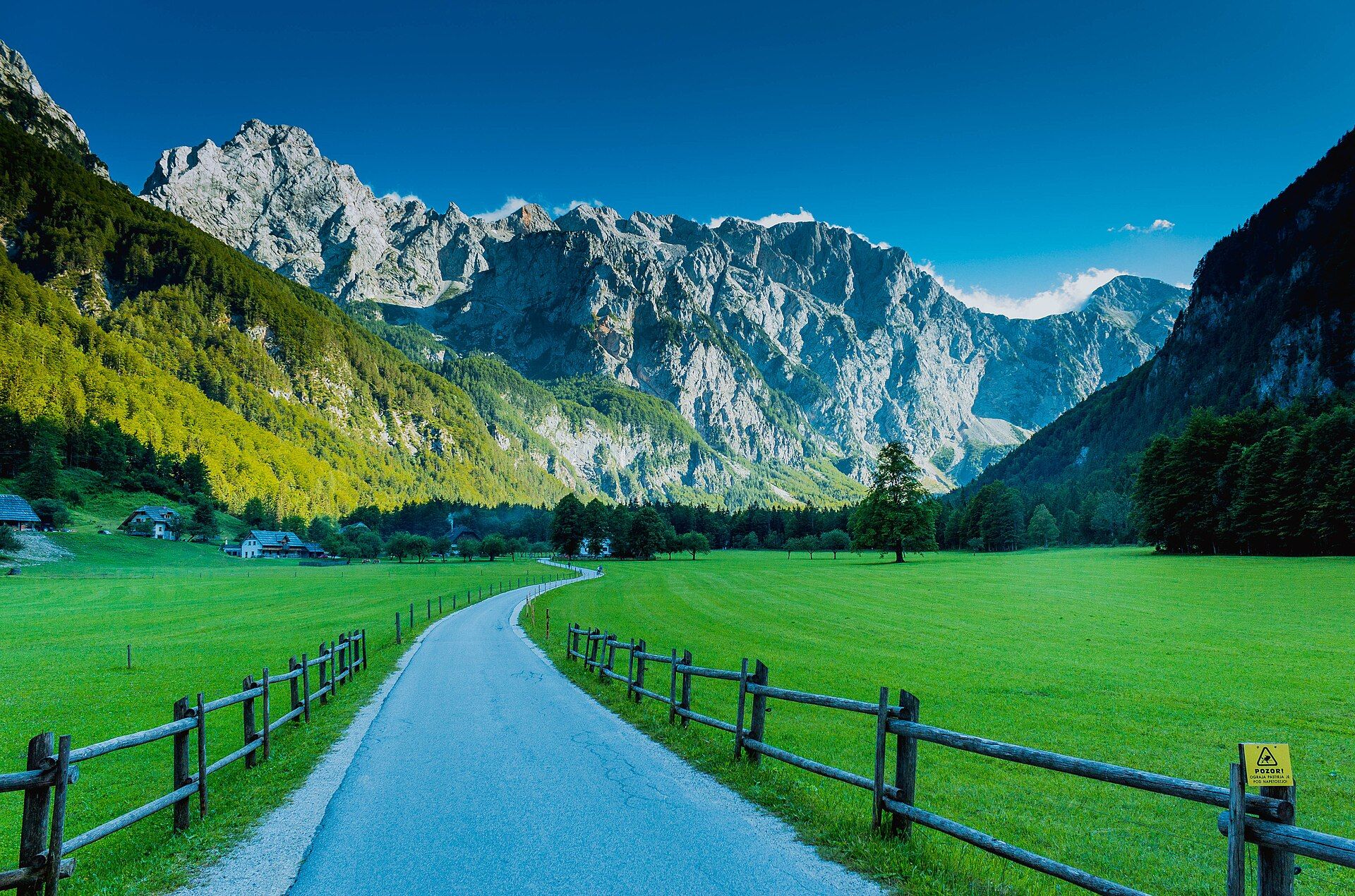
Logar Valley
Solčava, Upper Savinja Valley, northern Slovenia, beneath the Kamnik-Savinja Alps
Added