Nature route · A week
Slovenia: Alpine Valleys, Lakes & Karst Caves
A glacier-cut valley in the Kamnik-Savinja Alps, Lake Bled and Lake Bohinj under the Julian Alps, then down to the Karst for Postojna and the river canyon of Škocjan — Slovenia's nature in eight days.
An eight-day driving loop from Ljubljana: two nights in the Logar Valley, a night at Lake Bled, two at Lake Bohinj in Triglav National Park, then Postojna Cave and the UNESCO-listed Škocjan Caves on the Karst before flying out.
- Length 8 days (loop)
- Stops 5 wonders
- Budget €600–1,800 pp
- Region Upper Savinja Valley, the Julian Alps & the Karst, Slovenia
Trip map
The route
Stops in travel order — tap any one for the full wonder guide.
-
Logar Valley 2 nights
Solčava, Upper Savinja Valley, northern Slovenia, beneath the Kamnik-Savinja Alps
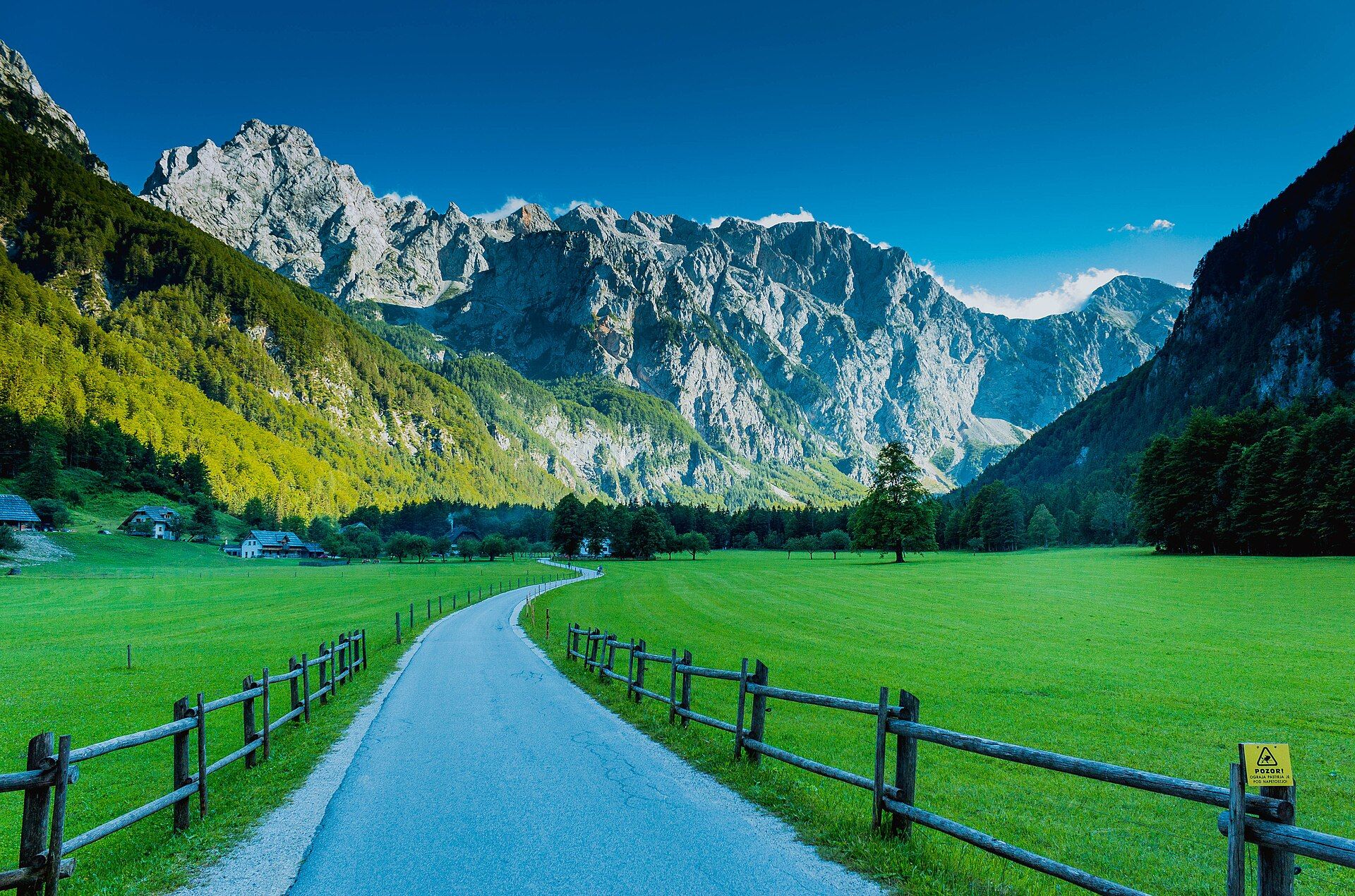
A 7-km glacial valley walled by peaks over 2,000 m, with the 90-m Rinka waterfall at its head — about two hours' walk up the valley trail.
-
Lake Bled 1 night
Upper Carniola, Slovenia
The island church, the clifftop castle and the 6-km shoreline loop — free to walk, with pletna boats out to the island.
-
Triglav National Park 2 nights
Julian Alps, north-western Slovenia, on the border with Italy and close to Austria
Lake Bohinj, the 78-m Savica waterfall and day hikes into Slovenia's only national park.
-
Postojna Cave 1 night
Postojna, Inner Carniola, south-western Slovenia, off the A1 Ljubljana–Koper motorway
A guided tour of about 1.5 hours, by underground railway and on foot, through halls of stalagmites — 2 km from exit 41 of the A1.
-
Škocjan Caves
Škocjan, near Divača, Karst region, south-western Slovenia
The Reka River's underground canyon and the collapse dolines of Velika and Mala dolina, off the Divača exit of the same motorway.
Day by day
-
Into the Kamnik-Savinja Alps
Base Logar Valley or Solčava
- Ljubljana east on the A1 motorway to the Logarska dolina exit, then road 225 past Mozirje and road 428 up the Upper Savinja Valley — roughly 1.5–2 hours
Arrive in Ljubljana, pick up a car and drive to the Logar Valley. Settle into a tourist farm or hotel and walk the meadows of the lower valley in the evening.
-
The Logar Valley Trail and Rinka
Base Logar Valley or Solčava
Walk or cycle the Logar Valley Trail to the Rinka waterfall, about two hours one way, where the water falls 90 m in an arc into a rock amphitheatre. Entry is free on foot or by bike; drivers pay a vehicle fee, collected from April.
-
Across to Lake Bled
Base Bled
- Logar Valley back toward Ljubljana, then north-west to Bled — allow around three hours
An afternoon at the lake: walk the flat, roughly 6-km shoreline loop, take a pletna boat out to the island and climb the 99 steps to the church, or go up to the castle. Climb to the Ojstrica or Mala Osojnica viewpoints for the classic view at sunrise.
-
Lake Bohinj and Triglav National Park
Base Bohinj
- Bled to Bohinj through the Soteska gorge — a short drive
Two days on the southern side of Triglav National Park. Swim in Lake Bohinj — the high mountain lakes are off-limits for swimming — and climb the 553 steps to the Savica waterfall, about 20–25 minutes from the car park. Use the second day for a hike matched to your fitness; climbing Triglav itself takes two or three days with hut nights, and the park advises a guide if you are not used to exposed high-alpine ground.
-
Down to the Karst: Postojna Cave
Base Postojna
- Bohinj back to Ljubljana — roughly 1–1.5 hours
- Ljubljana south-west on the A1 to exit 41 (Postojna) — under an hour
Take a guided tour of Postojna Cave: a ride on the cave railway, then just over a kilometre on foot among stalagmites including the 16-m Skyscraper and the white Brilliant. The cave stays at 10 °C all year, so bring a warm layer, and arrive about 30 minutes before your tour time.
-
Škocjan Caves
Base Ljubljana, or near Trieste for an Italian flight
- Postojna south-west on the A1 toward Koper to the Divača exit, then follow the signs to the caves
- Back to Ljubljana — roughly 1–1.5 hours
Join a guided tour through the underground canyon of the Reka River and Martel's Chamber. From May to September the full route is about 5 km with around 1,000 steps and takes 2.5 to 3 hours; in the colder months it ends at the first exit in Velika dolina. Photography is not allowed in the cave, so save the camera for the free education trail around the dolines.
-
Fly home
Base —
- To Ljubljana airport, or to Trieste
Leave a buffer before your flight.
What it costs
Indicative per person, two sharing, 7 nights. Tourist farms and guesthouses with a shared small rental car at the low end; lakeside hotels and a guided Triglav ascent at the high end. Excludes international flights.
| Category | Range (per person) |
|---|---|
| TransportA small rental car, fuel and parking split two ways; cars on Slovenia's motorways need an e-vignette. | €120–400 |
| LodgingTourist farms and guesthouses to hotels at Bled and Bohinj; July and August cost more. | €300–900 |
| Food | €140–350 |
| Fees & guidesThe two guided cave tours, a pletna boat at Bled, the Logar Valley vehicle fee and an optional mountain guide. | €40–150 |
| Estimated total | €600–1,800 |
What moves the number
- Travelling in July and August, when Bled and Bohinj are busiest
- Rental car versus buses and trains
- Hiring a mountain guide for Triglav
Indicative ranges, October 2026; confirm cave tour times and prices with the Postojna Cave Park and Park Škocjanske jame, the vehicle fee with the Logar Valley Landscape Park, and trail conditions with Triglav National Park. Quoted in euros, Slovenia's currency. These are honest ranges, not quotes — real prices swing with season, group size, and how you travel. Always confirm current fares, room rates, permits, and fees with operators before you commit.
Best season & getting around
🗓️ Best time to go
June to September, when the high trails in Triglav National Park are mostly clear of snow, Lake Bohinj is warm enough to swim and the full Škocjan route through to the second exit is open (May–September). Both caves run tours all year, and the Logar Valley's waterfalls are at their best after rain. July and August are the busiest months at Bled and Bohinj.
🧭 Getting around
A rental car is by far the easiest way to link the Logar Valley, the Julian Alps and the Karst. Without one: buses run from Ljubljana via Bled to Bohinj, infrequent buses run from Celje to the Logar Valley, and Postojna and Divača are both on the railway — a marked footpath of about 4 km links Divača station to the Škocjan Caves.
Know before you go
- Both caves are seen only on guided tours at set times; book ahead in summer.
- Postojna Cave stays at 10 °C and Škocjan at 12 °C all year — bring a warm layer even in August.
- Photography is not allowed inside the Škocjan Caves; at Postojna, photos are allowed without flash or tripod.
- Storms can build fast in the Julian Alps even in summer; check the mountain forecast before any high hike.
- All distances, times and prices are approximate.
Slovenia packs Alpine valleys, glacial lakes and some of Europe’s great karst caves into a country you can cross in a few hours, and this eight-day loop from Ljubljana takes in five of its finest natural places. It starts in the Logar Valley, a glacier-carved trough in the Kamnik-Savinja Alps only about 250 metres wide, where a flat valley trail leads between limestone walls to the 90-metre Rinka waterfall.
From there it crosses to the Julian Alps: a night at Lake Bled, with its island church and clifftop castle, then two at Lake Bohinj inside Triglav National Park, the country’s only national park, for swimming, the Savica waterfall and a day in the mountains. The finale drops south to the Karst, with the underground railway and stalagmite halls of Postojna Cave and the Škocjan Caves, where the Reka River thunders through one of Europe’s largest cave canyons. Come between June and September for the high trails, and book the cave tours ahead.
Slovenia: Alpine Valleys, Lakes & Karst Caves: common questions
How many days is the Slovenia: Alpine Valleys, Lakes & Karst Caves?
8 days (loop) — the plan is built around 7 nights. A driving loop from Ljubljana — the A1 motorway east to the Upper Savinja Valley, north-west to the Julian Alps, then the A1 south-west to the Karst; no single leg is much over two to three hours
When is the best time to do the Slovenia: Alpine Valleys, Lakes & Karst Caves?
June to September, when the high trails in Triglav National Park are mostly clear of snow, Lake Bohinj is warm enough to swim and the full Škocjan route through to the second exit is open (May–September). Both caves run tours all year, and the Logar Valley's waterfalls are at their best after rain. July and August are the busiest months at Bled and Bohinj.
How much does the Slovenia: Alpine Valleys, Lakes & Karst Caves cost?
A rough guide is €600–1,800 per person (Indicative per person, two sharing, 7 nights. Tourist farms and guesthouses with a shared small rental car at the low end; lakeside hotels and a guided Triglav ascent at the high end. Excludes international flights.). Indicative ranges, October 2026; confirm cave tour times and prices with the Postojna Cave Park and Park Škocjanske jame, the vehicle fee with the Logar Valley Landscape Park, and trail conditions with Triglav National Park. Main cost variables: Travelling in July and August, when Bled and Bohinj are busiest; Rental car versus buses and trains; Hiring a mountain guide for Triglav.
How do you get around on the Slovenia: Alpine Valleys, Lakes & Karst Caves?
A rental car is by far the easiest way to link the Logar Valley, the Julian Alps and the Karst. Without one: buses run from Ljubljana via Bled to Bohinj, infrequent buses run from Celje to the Logar Valley, and Postojna and Divača are both on the railway — a marked footpath of about 4 km links Divača station to the Škocjan Caves.
Which natural wonders does the Slovenia: Alpine Valleys, Lakes & Karst Caves include?
Logar Valley, Lake Bled, Triglav National Park, Postojna Cave, Škocjan Caves.
Added