Kawah Ijen
📍 East Java, Indonesia
A volcano famous for two rare sights: electric-blue flames that flicker across its crater in the dark as sulphurous gas ignites, and the world's largest highly acidic crater lake — a vast turquoise pool with the acidity of battery acid.
What makes it marvelous
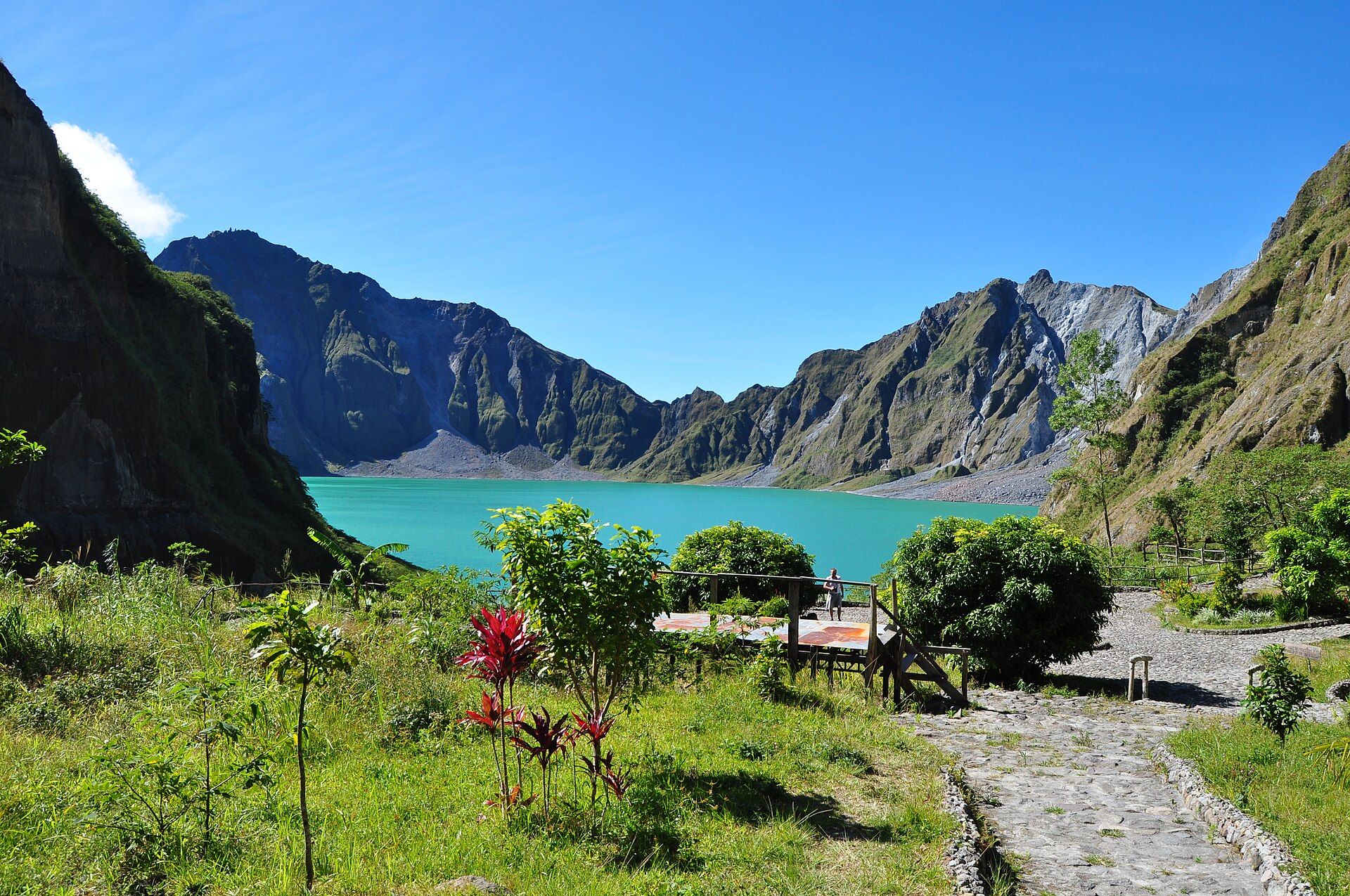
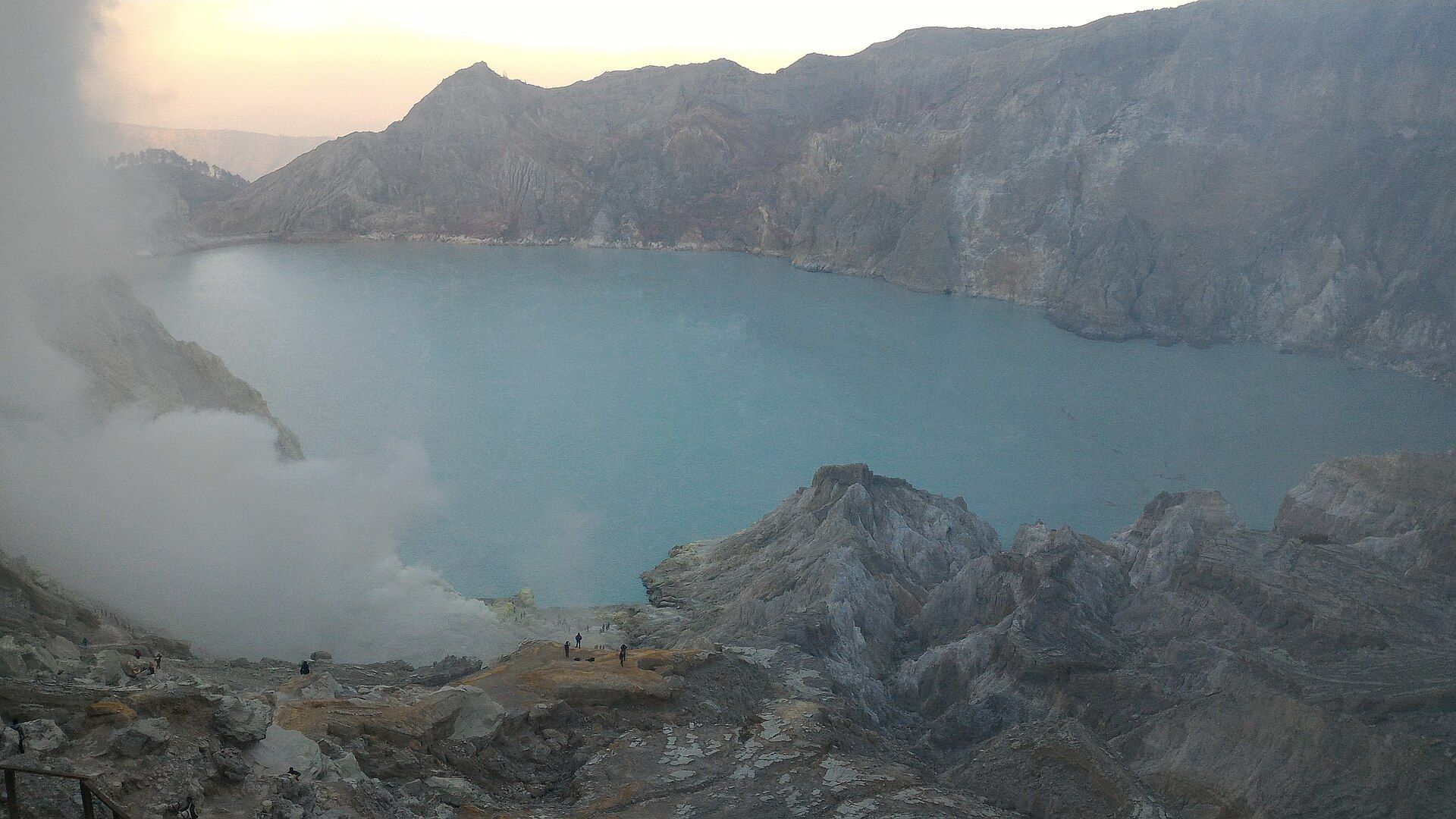
Kawah Ijen ('Ijen crater') sits within a huge caldera in the highlands of East Java. Its crater cradles the largest highly acidic lake on Earth: a turquoise expanse roughly 700 m across and up to about 200 m deep, so charged with sulphuric and hydrochloric acid that its pH sits below 0.5 — corrosive enough to dissolve metal. The colour comes from that dissolved mineral load. At the lake's edge, superheated volcanic gas escapes through vents; where it meets the air at temperatures around 600 °C it ignites, and burning sulphur produces flames of an eerie electric blue, visible only in darkness. Molten sulphur also drips from the vents and hardens to bright yellow, and here, in one of the last places on Earth to do so, miners still cut it by hand and haul 70–90 kg loads up out of the crater. The site was recognised as a UNESCO Global Geopark in 2023.
Why visit
Hiking into the crater before dawn to watch the blue fire glimmer over black rock, then staying as sunrise turns the acid lake a brilliant turquoise below smoking vents, is one of the most otherworldly experiences in Indonesia. Meeting the sulphur miners who work this hostile place by hand adds a humbling human dimension few landscapes can match.
Still deciding?
Kawah Ijen comes up most often against one other place — each one weighs cost, effort, season and crowds side by side.
More views of Kawah Ijen
Additional photographs of the actual site — each freely licensed, with its photographer and licence credited.
What to know before you go
🗓️ Best time
Dry season (April–October) for safer trails and clear views; the blue flames are seen only in darkness, so climbs start around 1–2 a.m. to reach the crater before first light.
🧭 Getting there & access
From Banyuwangi in East Java (near the Bali ferry) or from Bondowoso, drive to the Paltuding trailhead, then hike up on foot. A guide and gas mask are strongly advised for the descent to the vents.
Good to know
- Start around 1–2 a.m. with a guide to catch the blue fire before dawn.
- Wear a proper gas mask near the vents — the sulphur fumes are genuinely hazardous.
- Keep well clear of the miners' loads and the vent edges; the gas can shift with the wind.
Plan your visit
Strenuous🧭 Getting there
From Banyuwangi (BWX) or via Bali and the ferry
- Reach Banyuwangi by air, train, or the ferry from Bali — timings vary
- Drive to the Paltuding trailhead — roughly 1–1.5 hours
- Hike up to the crater rim — about 1.5–2 hours on foot
- Total travel
- A pre-dawn start; the crater is a night hike from Paltuding
- Time at site
- A single pre-dawn-to-sunrise climb, 5–7 hours round trip
- Access
- The climb starts at Paltuding and is on foot only. The reserve sets opening hours and sometimes closes the crater floor when gas levels are dangerous — always follow current guidance and go with a local guide.
🎒 What to bring & consider
- A genuine gas mask with sulphur-rated filters, not a cloth or surgical mask
- A head torch and warm layers — the pre-dawn rim is cold and dark
- Sturdy hiking shoes for loose rock and the steep vent descent
- A licensed guide, strongly advised for timing and the gas hazard
- Water and a plan to turn back if the wind pushes fumes your way
👁️ What to expect
- Crowds
- A popular pre-dawn climb; the narrow blue-fire viewpoint by the vents can get congested.
- Conditions
- A steep night ascent, then a hazardous, fume-filled scramble to the crater floor.
- Facilities
- Basic at Paltuding — parking, simple warungs, mask hire; nothing above.
- The view
- The blue flames need full darkness; the turquoise lake needs the light that ends them — you choose.
Times and requirements are approximate and change with season, weather, and local rules — confirm permits, fares, and schedules with operators before you travel.
Natural riches of the area
- The world's largest highly acidic crater lake
- Electric-blue flames from burning sulphurous gas
- Actively deposited, hand-mined native sulphur
- A broad volcanic caldera in the East Java highlands
Local food
- Sego tempong
- A Banyuwangi rice plate with vegetables and a fiery chilli sambal.
- Rujak soto
- An East Javanese hybrid of vegetable salad and beef-tripe soup.
- Kopi Ijen
- Coffee grown on the volcano's fertile lower slopes.
Kawah Ijen keeps two of the strangest sights in the volcanic world, and to see the first you have to arrive in the dark. Hidden in the highlands of East Java, its crater holds vents where superheated gas — laced with sulphur — escapes and, on meeting the air at around 600 °C, bursts into flame. Because the burning sulphur glows an eerie electric blue, and because that colour is only visible against total darkness, hikers set out around one or two in the morning to reach the rim before dawn and watch the fire flicker over the black rock below.
Then the light comes, and reveals the second marvel. Filling the crater is the largest highly acidic lake on Earth: a turquoise pool some 700 metres wide and up to 200 metres deep, so saturated with sulphuric and hydrochloric acid that its pH sits below that of battery acid. The colour is beautiful and the water is lethal — corrosive enough to eat metal. Its vivid blue-green comes from all that dissolved mineral.
And in this hostile place, people work. Kawah Ijen is one of the last spots on Earth where sulphur is still mined by hand: labourers break the bright yellow deposits from the vents and carry loads of seventy to ninety kilograms up out of the crater and down the mountain, day after day, often with little more than a scarf against the fumes. Recognised as a UNESCO Global Geopark in 2023, Ijen is a place of rare natural spectacle and rare human endurance, met best in the cold hours before sunrise.
Kawah Ijen: common questions
How do you get to Kawah Ijen?
From Banyuwangi (BWX) or via Bali and the ferry: Reach Banyuwangi by air, train, or the ferry from Bali — timings vary; Drive to the Paltuding trailhead — roughly 1–1.5 hours; Hike up to the crater rim — about 1.5–2 hours on foot. Total travel time: A pre-dawn start; the crater is a night hike from Paltuding.
When is the best time to visit Kawah Ijen?
Dry season (April–October) for safer trails and clear views; the blue flames are seen only in darkness, so climbs start around 1–2 a.m. to reach the crater before first light.
How long should you spend at Kawah Ijen?
A single pre-dawn-to-sunrise climb, 5–7 hours round trip. Total travel time: A pre-dawn start; the crater is a night hike from Paltuding.
What should you bring to Kawah Ijen?
A genuine gas mask with sulphur-rated filters, not a cloth or surgical mask A head torch and warm layers — the pre-dawn rim is cold and dark Sturdy hiking shoes for loose rock and the steep vent descent A licensed guide, strongly advised for timing and the gas hazard Water and a plan to turn back if the wind pushes fumes your way
Do you need a permit or guide for Kawah Ijen?
The climb starts at Paltuding and is on foot only. The reserve sets opening hours and sometimes closes the crater floor when gas levels are dangerous — always follow current guidance and go with a local guide.
Is Kawah Ijen crowded, and what are conditions like?
A popular pre-dawn climb; the narrow blue-fire viewpoint by the vents can get congested. A steep night ascent, then a hazardous, fume-filled scramble to the crater floor. Facilities: Basic at Paltuding — parking, simple warungs, mask hire; nothing above.
Added
More wonders to explore