Head to head · Flores' three crater lakes vs East Java's blue-flame crater
Kelimutu vs Kawah Ijen: Which Indonesian Crater Lake Sunrise Is Worth It?
Both are Indonesian volcano sunrises built around coloured water, and both start in the dark. Kelimutu, on Flores, holds three summit crater lakes side by side that each change colour independently — turquoise, green, black, brown or red — as volcanic gases and mineral-rich fluid alter their chemistry; the road climbs most of the way and a flight of steps leads to the viewpoint. Kawah Ijen, in East Java, holds the world's largest highly acidic crater lake, roughly 700 m across with a pH below 0.5, and at night electric-blue flames flicker where sulphurous gas ignites at the vents.
The difference is effort and risk. Kelimutu is a sunrise visit of 2–3 hours on easy paths from the village of Moni. Ijen is a 5–7-hour round trip on foot from the Paltuding trailhead, starting around 1–2 a.m., with a steep, fume-filled descent to the vents for which a sulphur-rated gas mask and a licensed guide are strongly advised.
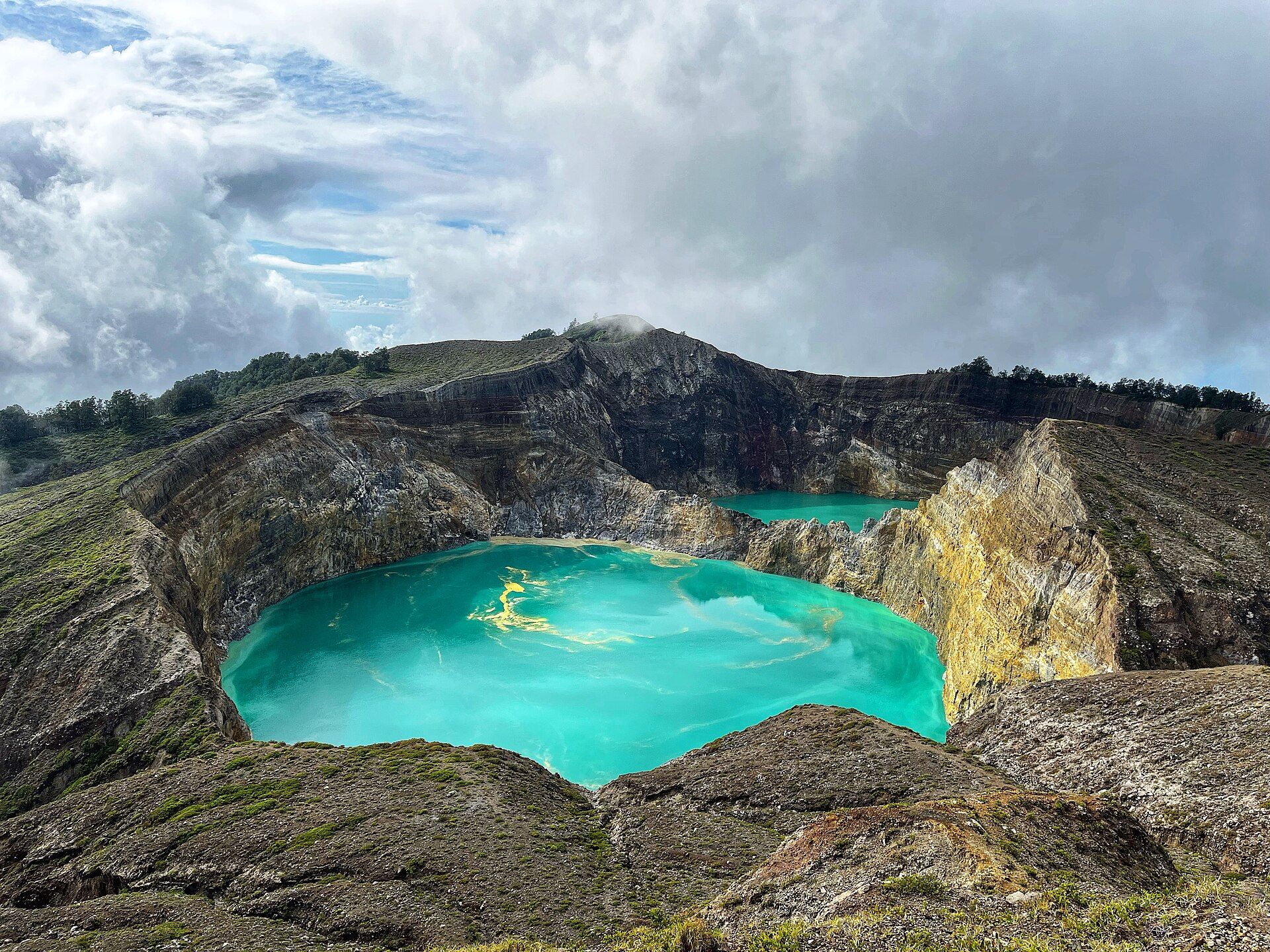
Kelimutu
Three lakes, three colours, no guarantee which
A ~1,639 m volcano in Kelimutu National Park whose three crater lakes shift colour on their own schedules over months or years.
- Easy walk on steps and paths
- Unique: lakes that change colour independently
- Modest sunrise crowd; quiet side trails
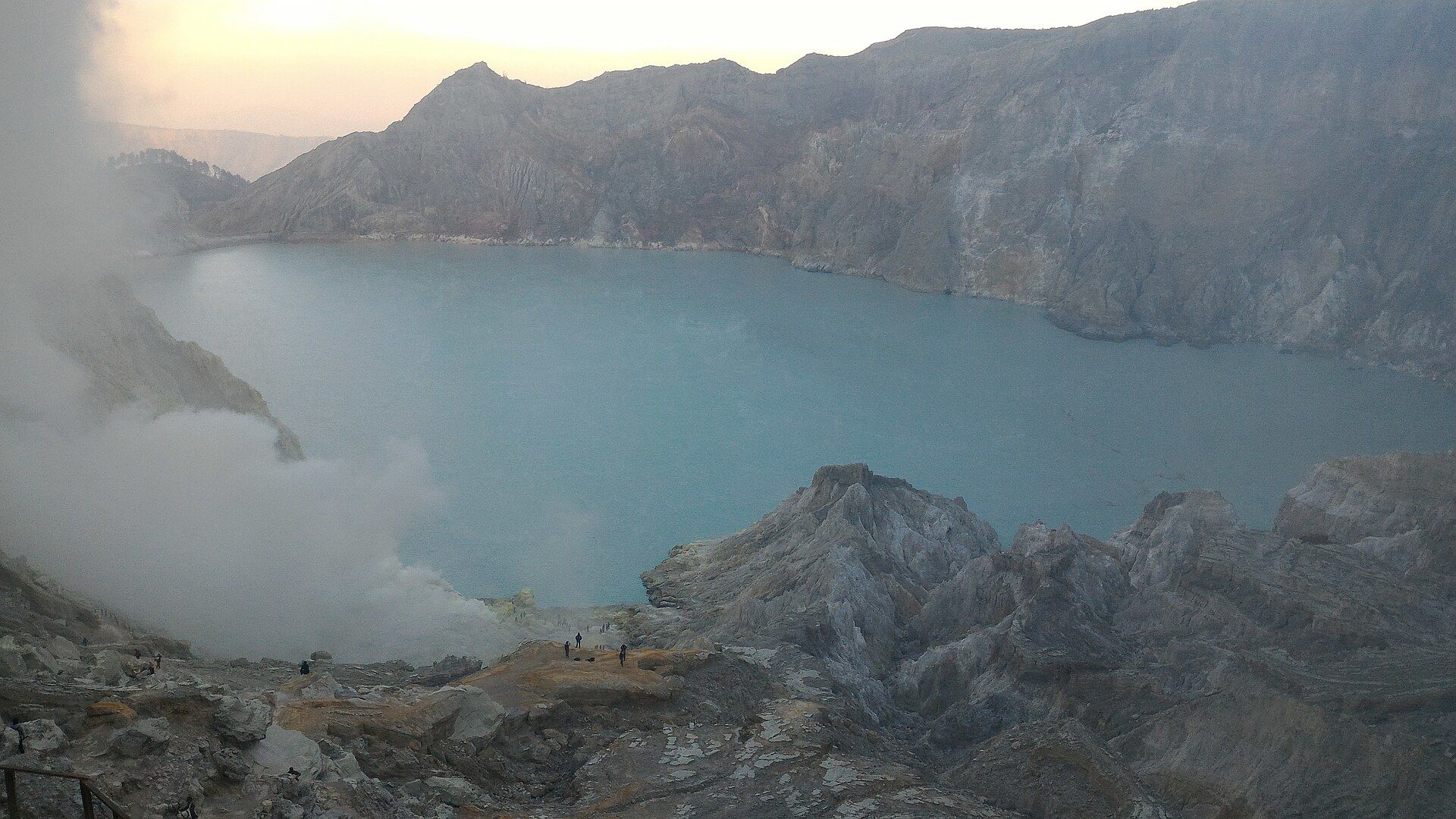
Kawah Ijen
Blue fire, then a turquoise acid lake
A ~2,799 m crater in the Ijen UNESCO Global Geopark with burning-sulphur blue flames in darkness and the world's largest highly acidic lake.
- The blue flames — visible only in darkness
- Turquoise acid lake at first light
- Easy to pair with Bali via Banyuwangi
Head to head
| What matters | Kelimutu | Kawah Ijen |
|---|---|---|
| What you see Edge: Toss-up | Three crater lakes side by side, often different colours, separated by thin rock walls. | Electric-blue flames at the vents in darkness, then a turquoise lake ~700 m across at first light. |
| Effort Edge: Kelimutu | Easy: a short walk on steps to the viewpoint; 2–3 hours for a sunrise visit. | Strenuous: about 1.5–2 h up to the rim, then a steep, loose scramble to the vents; 5–7 hours round trip. |
| Hazards Edge: Kelimutu | Loose, sheer crater rims — stay behind the marked barriers. | Toxic fumes at the vents; a sulphur-rated gas mask and a licensed guide strongly advised; the crater floor closes when gas levels are dangerous. |
| Start time Edge: Kelimutu | A pre-dawn drive from Moni to the summit car park. | Climbs start around 1–2 a.m. to reach the crater before first light. |
| Getting there Edge: Kawah Ijen | Fly to Ende or Maumere on Flores, 1.5–2.5 h to Moni, overnight there. | Banyuwangi by air, train or the ferry from Bali, then 1–1.5 h to Paltuding. |
| Best months Edge: Toss-up | Dry season, roughly May–September; cloud often closes in later in the morning. | Dry season, April–October, for safer trails and clear views. |
| Crowds Edge: Kelimutu | A modest crowd at the main viewpoint at sunrise. | Popular; the narrow blue-fire viewpoint by the vents gets congested. |
| Facilities Edge: Toss-up | Basic: parking, ticket booth, small stalls; guesthouses and food in Moni. | Basic at Paltuding: parking, warungs, mask hire; nothing above. |
Which should you choose?
Choose Kelimutu if…
…you are travelling through Flores, want a gentle sunrise with something you can't see anywhere else, and don't want a night climb through volcanic gas.
Choose Kawah Ijen if…
…you are fit, are passing between Java and Bali, and want the blue flames — and you will take the gas mask and the guide seriously.
The honest verdict
Kelimutu is the easy, safe sunrise: a short walk to three lakes that might be any colour when you arrive. Get there early — cloud often veils them later in the morning.
Ijen is the harder and riskier trip, and the more dramatic one. The blue flames exist only in darkness, so it is a 1–2 a.m. start, a steep descent into fumes and a turn back if the wind blows them your way. Go with a guide and a real gas mask, and check whether the crater floor is open.
Geography usually decides: Ijen sits near the Bali ferry at the eastern tip of Java, Kelimutu in the middle of Flores between Ende and Maumere.
Wonders mentioned here
Added