Jeju Island
📍 Jeju Province, South Korea
A volcanic island crowned by South Korea's highest peak, riddled with the world's finest lava-tube caves and edged by a sunrise crater rising straight from the sea.
What makes it marvelous
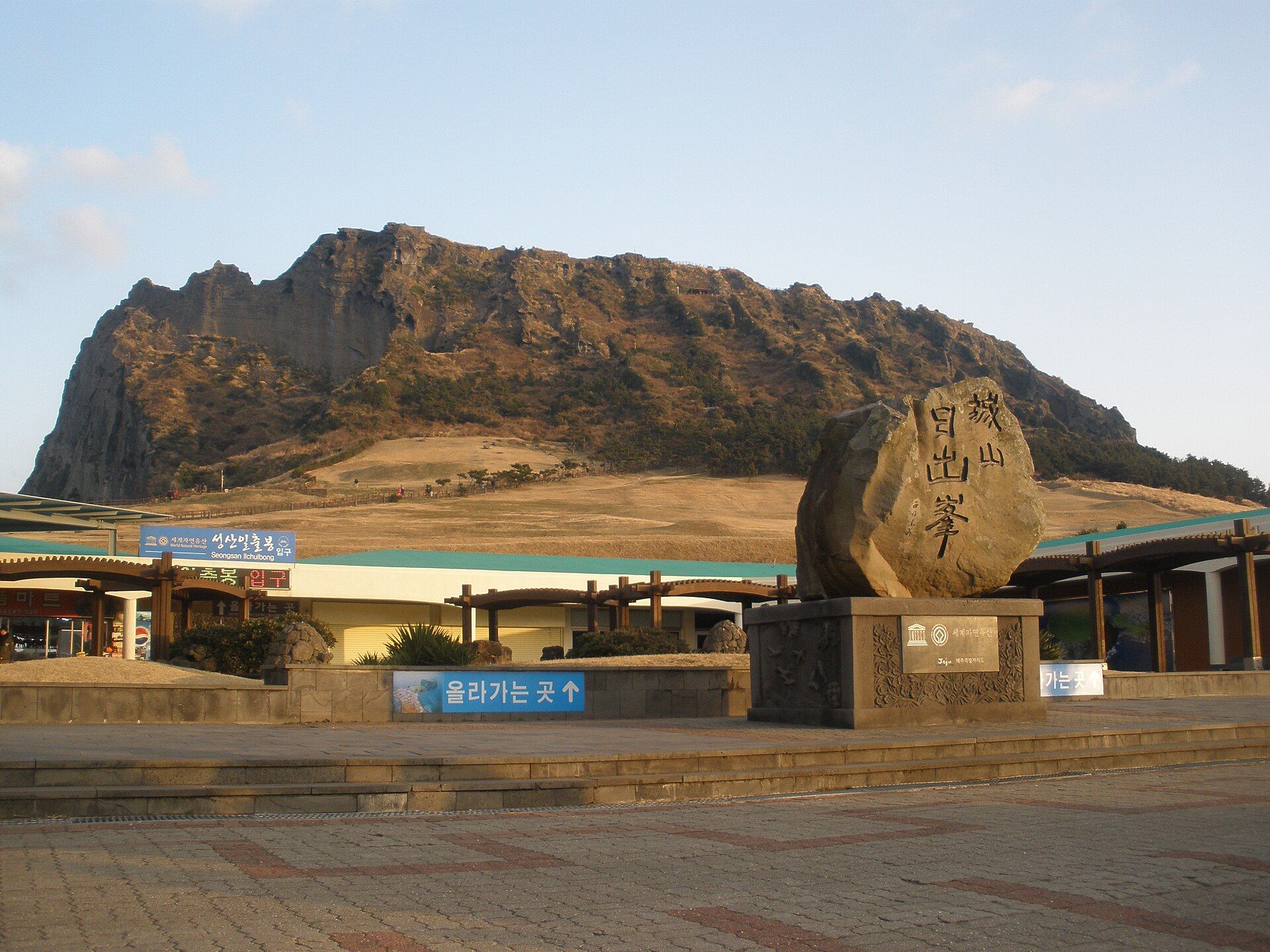
Jeju is a shield volcano risen from the sea, and volcanism shapes everything about it. At its centre stands Hallasan, at 1,947 metres South Korea's highest mountain, holding a crater lake at its summit. Scattered across the island are some 360 smaller cones, and none is more dramatic than Seongsan Ilchulbong — 'Sunrise Peak' — a tuff cone that erupted underwater and now rises abruptly from the ocean as a great bowl-shaped crater ringed with cliffs. Underground lies Jeju's greatest treasure: the Geomunoreum lava-tube system, including Manjanggul, regarded as among the finest lava caves on Earth, with lava stalactites, flow ledges, and a towering lava column. The island also holds a living cultural tradition in the haenyeo, the free-diving women who harvest shellfish without breathing equipment. It is a UNESCO World Heritage Site.
Why visit
Climbing Sunrise Peak at dawn, hiking Hallasan's crater, and walking through a vast lava tube make Jeju an extraordinary concentration of volcanic wonders — with warm seas, waterfalls, and superb food alongside.
Still deciding?
Jeju Island comes up most often against one other place — each one weighs cost, effort, season and crowds side by side.
What to know before you go
🗓️ Best time
Spring and autumn (roughly April–June and September–November) for mild weather, wildflowers or autumn colour, and clear hiking; summer is hot, humid, and brings typhoon risk.
🧭 Getting there & access
An island province off the southern coast of South Korea, reached by frequent short flights from Seoul and Busan or by ferry; a ring road and buses connect the main sites, best explored by car.
Good to know
- Climb Seongsan Ilchulbong for sunrise — it's short but steep and popular.
- Book the Hallasan summit trails early; daily numbers are limited.
- Visit Manjanggul lava tube — bring a jacket, it's cold underground.
Plan your visit
Moderate🧭 Getting there
From Jeju (CJU)
- Fly Seoul → Jeju — about 1h10, on one of the busiest air routes in the world
- Or ferry from the mainland — roughly 4–8h
- Hire car or bus around the island; the Hallasan trailheads are 30–60 minutes from Jeju City
- Total travel
- Half a day from Seoul
- Time at site
- 3–4 days; a week if you want to walk the Olle coastal trails
- Access
- Mostly open access. The Hallasan summit trails run a reservation system with daily caps to control erosion, booked online in advance — arriving at Seongpanak or Gwaneumsa without one will not work. The trails have strict cut-off times and rangers turn back late walkers. Manjanggul lava tube and several other sites are separately ticketed with seasonal closures.
🎒 What to bring & consider
- A booked summit reservation before you fly, if you intend to climb Hallasan at all
- Layers — the summit at just under 2,000m is far colder and windier than the coast, and can be snowbound while the shore is mild
- Traction devices in winter, which the upper trail commonly requires
- Wind and sun protection for exposed coastal walking
- More time than you think for the summit walk, because the enforced turnaround times are not negotiable
👁️ What to expect
- Crowds
- Heavy Korean domestic tourism, especially in holiday periods and autumn colour. The Olle trails disperse people very effectively.
- Conditions
- A long but non-technical stair-and-boardwalk climb on Hallasan; easy walking elsewhere. Wind is the constant.
- Facilities
- Excellent throughout — this is a thoroughly developed resort island.
- The view
- Seongsan Ilchulbong at sunrise is the classic and genuinely worth the early start. Hallasan's crater is often in cloud, and the weather changes fast between coast and summit.
Times and requirements are approximate and change with season, weather, and local rules — confirm permits, fares, and schedules with operators before you travel.
Natural riches of the area
- Hallasan (1,947 m), South Korea's highest peak, with a crater lake
- Around 360 volcanic cones, including sea-born Seongsan Ilchulbong
- The Geomunoreum lava-tube system, among Earth's finest lava caves
- Coastal waters harvested by the haenyeo free-diving women
Local food
- Jeju black pork
- The island's prized native pig, grilled over charcoal.
- Haenyeo seafood
- Abalone, sea urchin, and conch harvested by the free-diving women.
- Hallabong citrus
- A sweet Jeju tangerine grown on the volcanic slopes.
Jeju is a volcano that became an island, and fire shapes everything about it. At its centre rises Hallasan, at 1,947 metres South Korea’s highest mountain, cupping a crater lake at its summit. Around it stand some 360 smaller cones — none more startling than Seongsan Ilchulbong, ‘Sunrise Peak,’ a tuff cone born of an underwater eruption that now lifts straight out of the ocean as a vast cliff-ringed bowl, famously climbed at dawn.
The island’s underground is just as remarkable. The Geomunoreum lava-tube system, including the great tunnel of Manjanggul, is considered among the finest lava caves anywhere on Earth, hung with lava stalactites and flow ledges. And Jeju holds a living human wonder too: the haenyeo, generations of women who free-dive for shellfish without breathing equipment. A UNESCO World Heritage Site, it packs volcanic drama, warm seas, and superb food into one island.
Jeju Island: common questions
How do you get to Jeju Island?
From Jeju (CJU): Fly Seoul → Jeju — about 1h10, on one of the busiest air routes in the world; Or ferry from the mainland — roughly 4–8h; Hire car or bus around the island; the Hallasan trailheads are 30–60 minutes from Jeju City. Total travel time: Half a day from Seoul.
When is the best time to visit Jeju Island?
Spring and autumn (roughly April–June and September–November) for mild weather, wildflowers or autumn colour, and clear hiking; summer is hot, humid, and brings typhoon risk.
How long should you spend at Jeju Island?
3–4 days; a week if you want to walk the Olle coastal trails. Total travel time: Half a day from Seoul.
What should you bring to Jeju Island?
A booked summit reservation before you fly, if you intend to climb Hallasan at all Layers — the summit at just under 2,000m is far colder and windier than the coast, and can be snowbound while the shore is mild Traction devices in winter, which the upper trail commonly requires Wind and sun protection for exposed coastal walking More time than you think for the summit walk, because the enforced turnaround times are not negotiable
Do you need a permit or guide for Jeju Island?
Mostly open access. The Hallasan summit trails run a reservation system with daily caps to control erosion, booked online in advance — arriving at Seongpanak or Gwaneumsa without one will not work. The trails have strict cut-off times and rangers turn back late walkers. Manjanggul lava tube and several other sites are separately ticketed with seasonal closures.
Is Jeju Island crowded, and what are conditions like?
Heavy Korean domestic tourism, especially in holiday periods and autumn colour. The Olle trails disperse people very effectively. A long but non-technical stair-and-boardwalk climb on Hallasan; easy walking elsewhere. Wind is the constant. Facilities: Excellent throughout — this is a thoroughly developed resort island.
Added