Nature route · A week
South Korea: Granite Peaks, the Great Ridge & Jeju
Seoul's own granite mountain, the towers of Seoraksan, two days on Jirisan's high ridge and a volcanic island to finish — South Korea's mountains in ten days.
A ten-day route from Seoul: a day hike on Bukhansan inside the city, two nights in Sokcho for Seoraksan, a two-day traverse of Jirisan's main ridge with a night in a mountain shelter, and two nights on Jeju to finish.
- Length 10 days
- Stops 4 wonders
- Budget $900–2,800 pp
- Region Seoul, Sokcho, Gurye & Jeju, South Korea
Trip map
The route
Stops in travel order — tap any one for the full wonder guide.
-
Bukhansan National Park 2 nights
Northern edge of Seoul and Gyeonggi Province, South Korea
Granite domes inside Seoul's city limits — the Baegundae round trip is a full day, reached by subway and bus.
-
Seoraksan 2 nights
Taebaek Mountains, Gangwon Province, South Korea, inland from Sokcho
Ulsanbawi's granite cliffs, the cable car and, in October, some of Korea's most celebrated autumn colour, based in Sokcho.
-
Jirisan National Park 3 nights
Sobaek Mountains, spanning South Jeolla, North Jeolla and South Gyeongsang provinces, South Korea, near Gurye, Namwon and Hamyang
The mainland's highest peak and Korea's great ridge walk, with one night in a booked mountain shelter.
-
Jeju Island 2 nights
Jeju Province, South Korea
A volcanic island of craters and lava tubes, crowned by Hallasan — finish with the coast or a booked summit climb.
Day by day
-
Arrive in Seoul
Base Seoul
Arrive, rest and get a T-money card for the subway and buses. Check the weather for tomorrow's hike.
-
Bukhansan
Base Seoul
- Subway Line 3 to Gupabal Station, then bus 34 or 704 to the Bukhansanseong trailhead — about 1–1.5 hours from central Seoul
Hike to Baegundae, the 836.5-m summit — around five to six hours round trip, ending in an exposed granite scramble with fixed ropes. Start early on weekends, when the summit queues get long.
-
To the east coast
Base Sokcho
- Express bus from Seoul's Gangnam or Dong Seoul terminal to Sokcho
Settle in Sokcho, the port town at the foot of Seoraksan, and try ojingeo-sundae, the local stuffed squid.
-
Seoraksan
Base Sokcho
- City bus 7 to the Seorak-dong (Sogongwon) entrance
Climb Ulsanbawi — about 3.8 km each way and around two hours up, with steep stairs near the top — or ride the Gwongeumseong cable car to a rocky summit in about ten minutes.
-
Across the country
Base Gurye
- Express bus from Sokcho back to Seoul
- KTX from Seoul Yongsan to Guryegu Station — around two and a half hours
A long travel day from the east coast to the south. Stay in Gurye, at the western foot of Jirisan, and pick up supplies for the ridge.
-
Jirisan's main ridge
Base Mountain shelter on the ridge (booked), then Gurye or the eastern side
- Local bus or taxi from Gurye to the Seongsamjae or Hwaeomsa trailheads
Climb onto the main ridge and walk east past Nogodan and Banyabong, sleeping in a ridge shelter booked in advance with the Korea National Park Service. Fit, well-prepared hikers can push on toward Cheonwangbong, 1,915 m; otherwise descend after one night.
-
Jeju
Base Jeju
- Travel to an airport with flights to Jeju — there are frequent short flights from Seoul and Busan
Two nights on the volcanic island: craters, lava tubes and the coast, or Hallasan's summit if you booked a trail reservation before you flew. Fly home via Seoul.
What it costs
Indicative per person, two sharing, 9 nights. Guesthouses, buses and trains at the low end; hotels, a hire car on Jeju and guided hikes at the high end. Includes the domestic flight to Jeju; excludes international flights.
| Category | Range (per person) |
|---|---|
| TransportSubway, express buses, KTX and the flight to Jeju; a hire car on Jeju at the high end. | $150–550 |
| LodgingGuesthouses and a mountain shelter to mid-range hotels; October weekends cost more. | $400–1,400 |
| Food | $250–600 |
| Fees & guidesShelter booking, the Seoraksan cable car and paid sites on Jeju; an optional guide for Jirisan's ridge. | $100–250 |
| Estimated total | $900–2,800 |
What moves the number
- Travelling in October, when prices and demand peak
- Hotels versus guesthouses and shelters
- A hire car on Jeju
Indicative ranges, October 2026; confirm shelter bookings and trail status with the Korea National Park Service, Hallasan reservations with Jeju's official site, and current fares with the operators. Shown in US dollars for convenience; the local currency is the South Korean won. These are honest ranges, not quotes — real prices swing with season, group size, and how you travel. Always confirm current fares, room rates, permits, and fees with operators before you commit.
Best season & getting around
🗓️ Best time to go
October, for autumn colour on Seoraksan and Jirisan — but it is also the busiest month, so book shelters, KTX and Sokcho rooms early. Late April to early June is greener and quieter.
🧭 Getting around
No car needed on the mainland: Seoul's subway reaches Bukhansan, express buses run from Seoul to Sokcho, and KTX trains run from Seoul Yongsan to Guryegu for Jirisan. Taxis or local buses cover the last stretch to trailheads. On Jeju, a hire car or the island buses.
Know before you go
- Jirisan's ridge shelters must be booked in advance with the Korea National Park Service; walk-ins are not accepted.
- Hallasan's summit trails on Jeju need an online reservation booked in advance.
- Trails on Jirisan and other parks close seasonally for wildfire prevention — check before you go.
- All distances, times and prices are approximate.
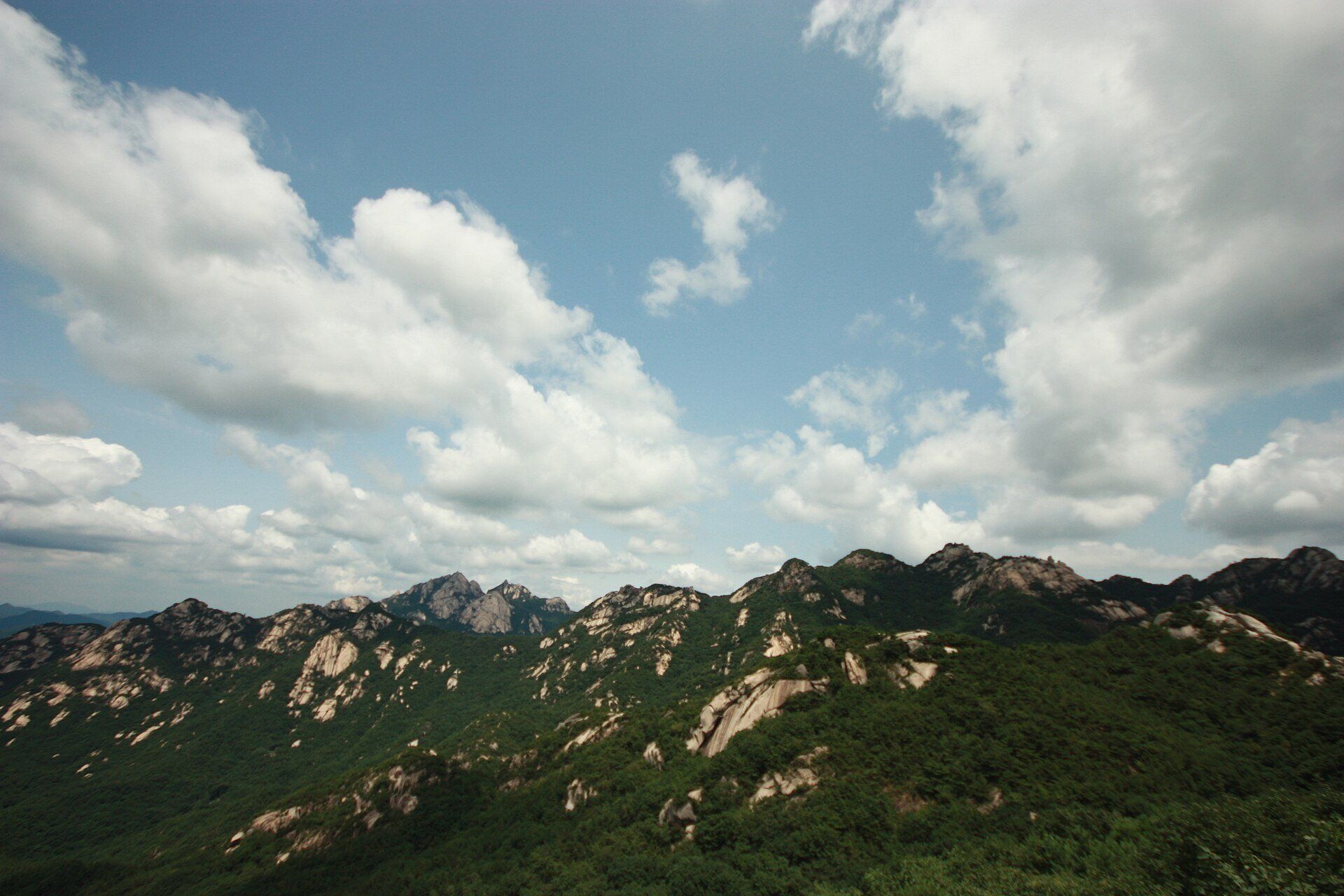
South Korea is a country of mountains, and this ten-day route strings together four of its finest without needing a car on the mainland. It starts inside Seoul itself on Bukhansan, where bare granite domes rise above the city’s northern suburbs and the summit, Baegundae, is a day’s hike from the subway. From there it crosses to the east coast at Sokcho for Seoraksan, the country’s granite showpiece, with the cliffs of Ulsanbawi and some of Korea’s most celebrated autumn colour.
The heart of the trip is Jirisan in the south — South Korea’s first national park and the highest ground on the mainland — walked the classic way, along its main ridge with a night in a mountain shelter. The finale is Jeju, the volcanic island crowned by Hallasan. Go in October for colour or late spring for quiet, and book the shelters, trains and Hallasan reservation well ahead.
South Korea: Granite Peaks, the Great Ridge & Jeju: common questions
How many days is the South Korea: Granite Peaks, the Great Ridge & Jeju?
10 days — the plan is built around 9 nights. Mostly by express bus and KTX train on the mainland, with one short flight to Jeju
When is the best time to do the South Korea: Granite Peaks, the Great Ridge & Jeju?
October, for autumn colour on Seoraksan and Jirisan — but it is also the busiest month, so book shelters, KTX and Sokcho rooms early. Late April to early June is greener and quieter.
How much does the South Korea: Granite Peaks, the Great Ridge & Jeju cost?
A rough guide is $900–2,800 per person (Indicative per person, two sharing, 9 nights. Guesthouses, buses and trains at the low end; hotels, a hire car on Jeju and guided hikes at the high end. Includes the domestic flight to Jeju; excludes international flights.). Indicative ranges, October 2026; confirm shelter bookings and trail status with the Korea National Park Service, Hallasan reservations with Jeju's official site, and current fares with the operators. Main cost variables: Travelling in October, when prices and demand peak; Hotels versus guesthouses and shelters; A hire car on Jeju.
How do you get around on the South Korea: Granite Peaks, the Great Ridge & Jeju?
No car needed on the mainland: Seoul's subway reaches Bukhansan, express buses run from Seoul to Sokcho, and KTX trains run from Seoul Yongsan to Guryegu for Jirisan. Taxis or local buses cover the last stretch to trailheads. On Jeju, a hire car or the island buses.
Which natural wonders does the South Korea: Granite Peaks, the Great Ridge & Jeju include?
Bukhansan National Park, Seoraksan, Jirisan National Park, Jeju Island.
Added