🇰🇷 Natural wonders of South Korea
A mountainous peninsula of forested ranges and rocky coasts, with a volcanic island in the south crowned by the country's highest peak and world-class lava caves.
🗓️ Best time for nature: Spring and autumn (roughly April–June and September–November) for mild weather, blossom or autumn colour, and the clearest hiking conditions.
The lay of the land
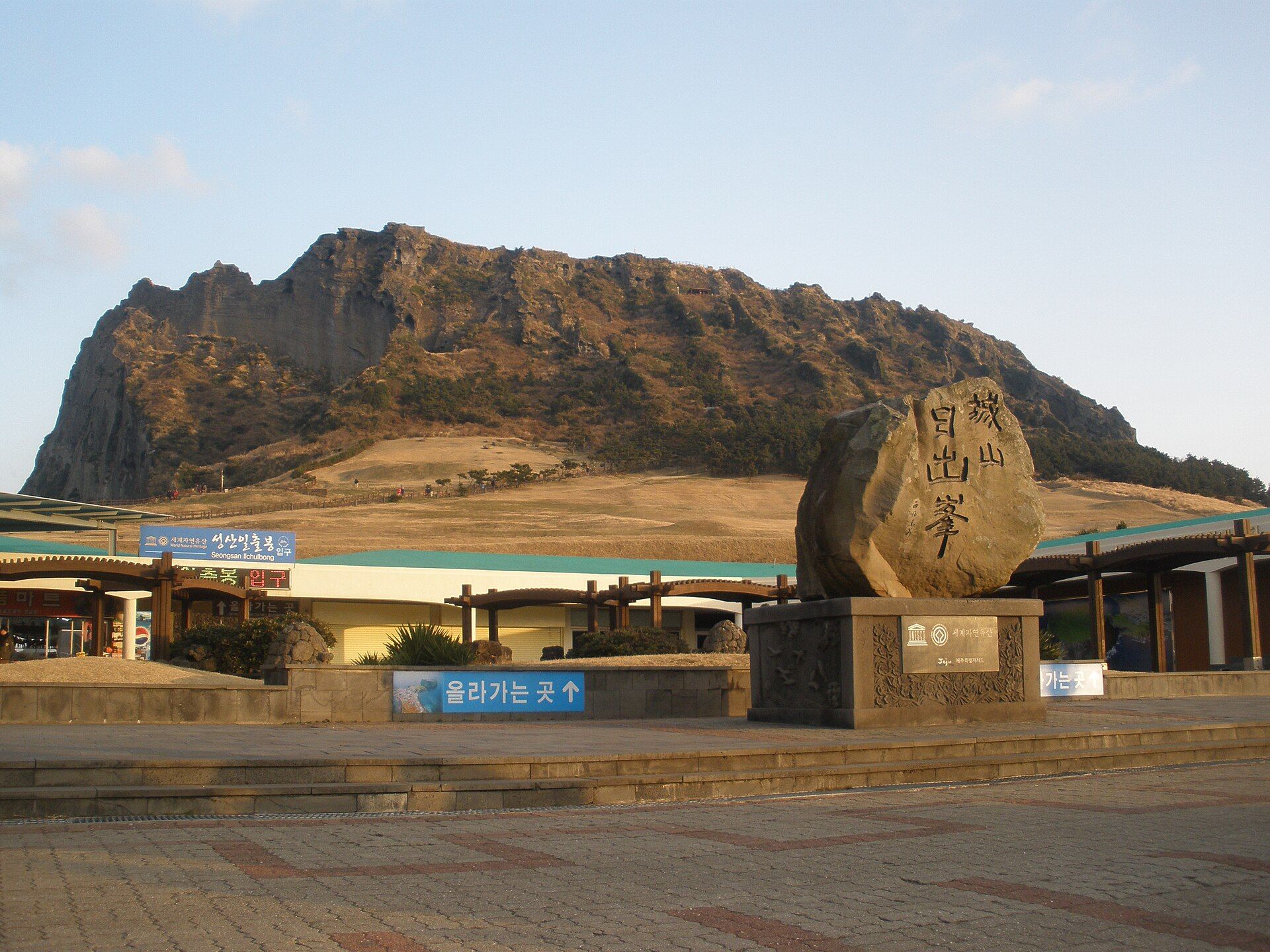
South Korea is overwhelmingly mountainous — forested ranges cover most of the peninsula, laced with national parks, granite peaks, and temple valleys that blaze with colour each autumn. Its coasts are deeply indented, scattered with thousands of small islands. The most singular natural landscape lies offshore to the south: Jeju, a shield volcano risen from the sea, crowned by Hallasan, the country's highest peak, studded with some 360 smaller cones, and undercut by the Geomunoreum lava-tube system, among the finest lava caves on Earth.
Where to begin
-
Jeju Island
A volcanic island of craters, lava tubes, and South Korea's highest peak.
-
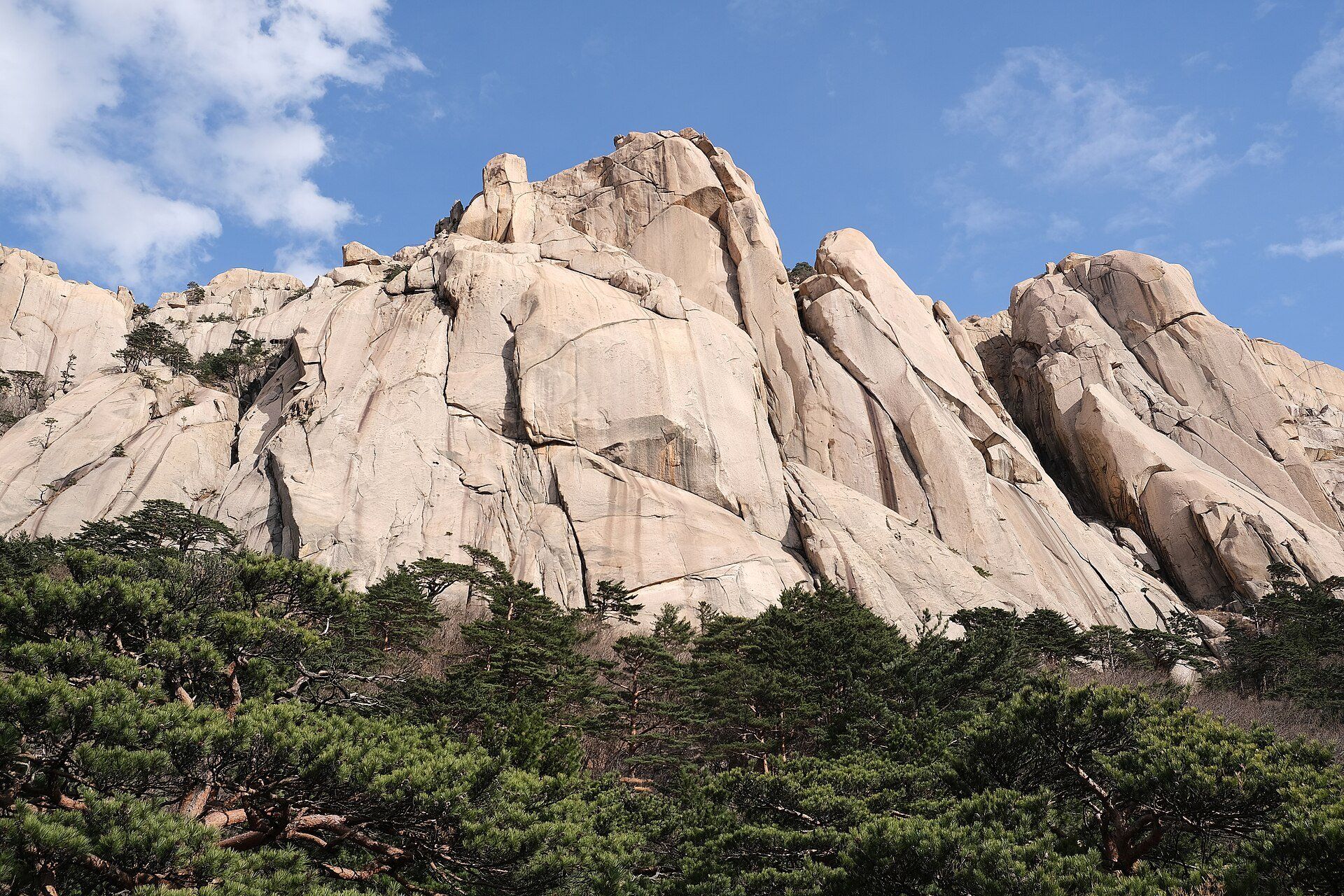
Seoraksan
Granite peaks up to 1,708 m and some of Korea's most celebrated autumn colour.
-
Jirisan National Park
Korea's first national park, crowned by Cheonwangbong, the mainland's highest peak at 1,915 m.
-
Bukhansan National Park
Granite domes and peaks inside Seoul, topped by Baegundae at 836.5 m and reachable by subway.
A taste of the place
Korean food is built on rice, fermentation, and bold seasoning — kimchi above all, alongside stews, grilled meats, and superb seafood; Jeju adds its own black pork, hallabong citrus, and shellfish harvested by free-diving haenyeo women.
Traveling responsibly
- Reach Jeju by frequent short flights from Seoul or Busan.
- Visit in spring or autumn; summer is hot, humid, and brings typhoons.
- Book Hallasan summit trails and popular sites in advance.
South Korea is a country of mountains — forested ranges cover most of the peninsula, threaded with national parks, granite peaks, and temple valleys that turn brilliant each autumn, while a deeply indented coast scatters into thousands of small islands. Its most extraordinary natural landscape, though, lies offshore in the south. Jeju is a shield volcano risen from the sea, crowned by Hallasan, the nation’s highest peak, studded with some 360 smaller cones, and hollowed beneath by lava tubes counted among the finest on Earth. On the mainland, Seoraksan near the east coast shows the other face of the country: about thirty peaks of pale granite, the sheer dome of Ulsanbawi, and forested valleys that blaze red and gold each October. In the south, Jirisan — designated the country’s first national park in 1967 — is a vast massif of forested ridges rising to Cheonwangbong at 1,915 metres, the highest point on the Korean mainland, and home to the Asiatic black bears restored to the wild there since 2004. And at the edge of Seoul itself, Bukhansan National Park lifts bare granite domes and peaks above the city’s northern suburbs, topped by Baegundae at 836.5 metres and reached by subway.
Added
All wonders in South Korea
4 places
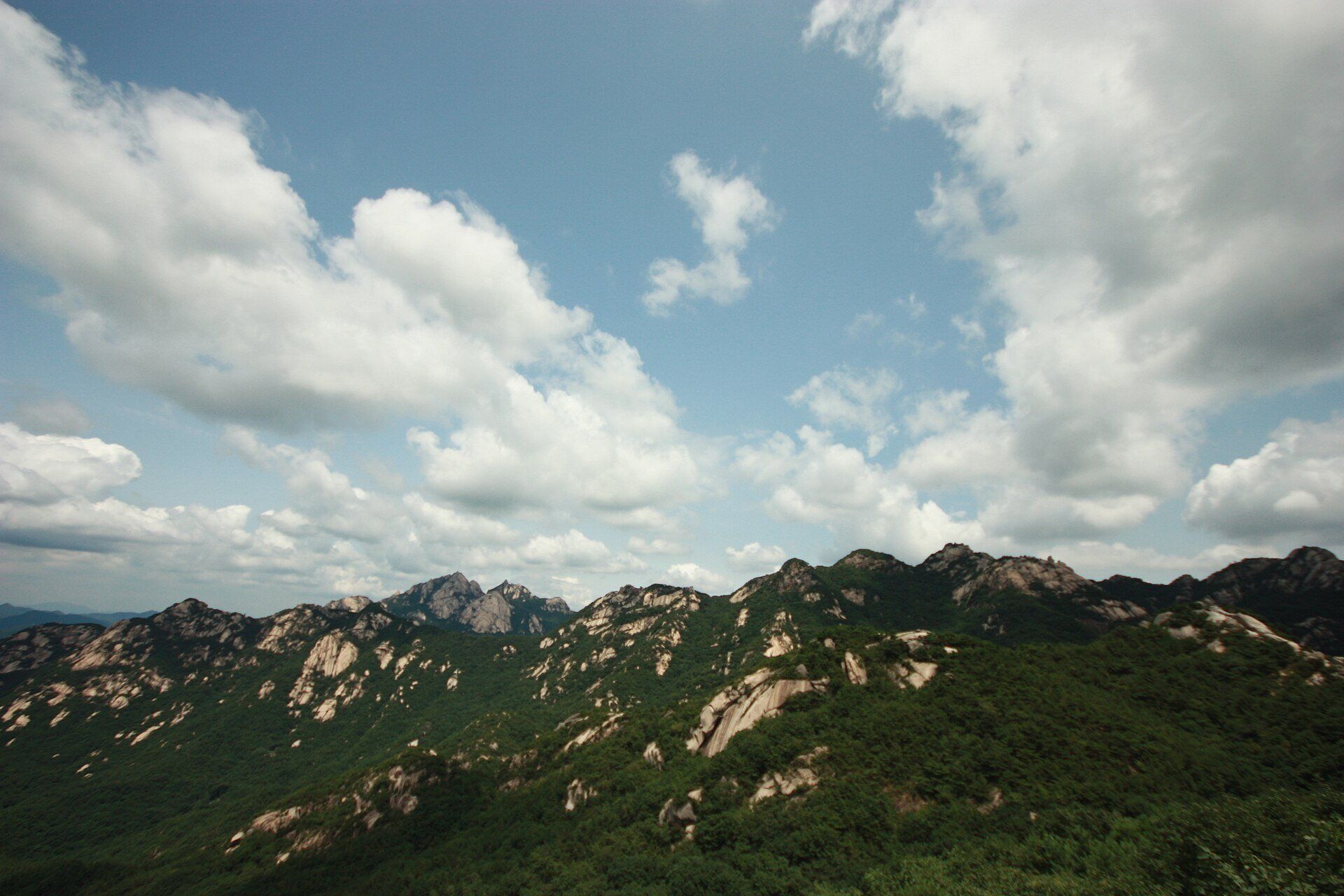
Bukhansan National Park
Northern edge of Seoul and Gyeonggi Province, South Korea
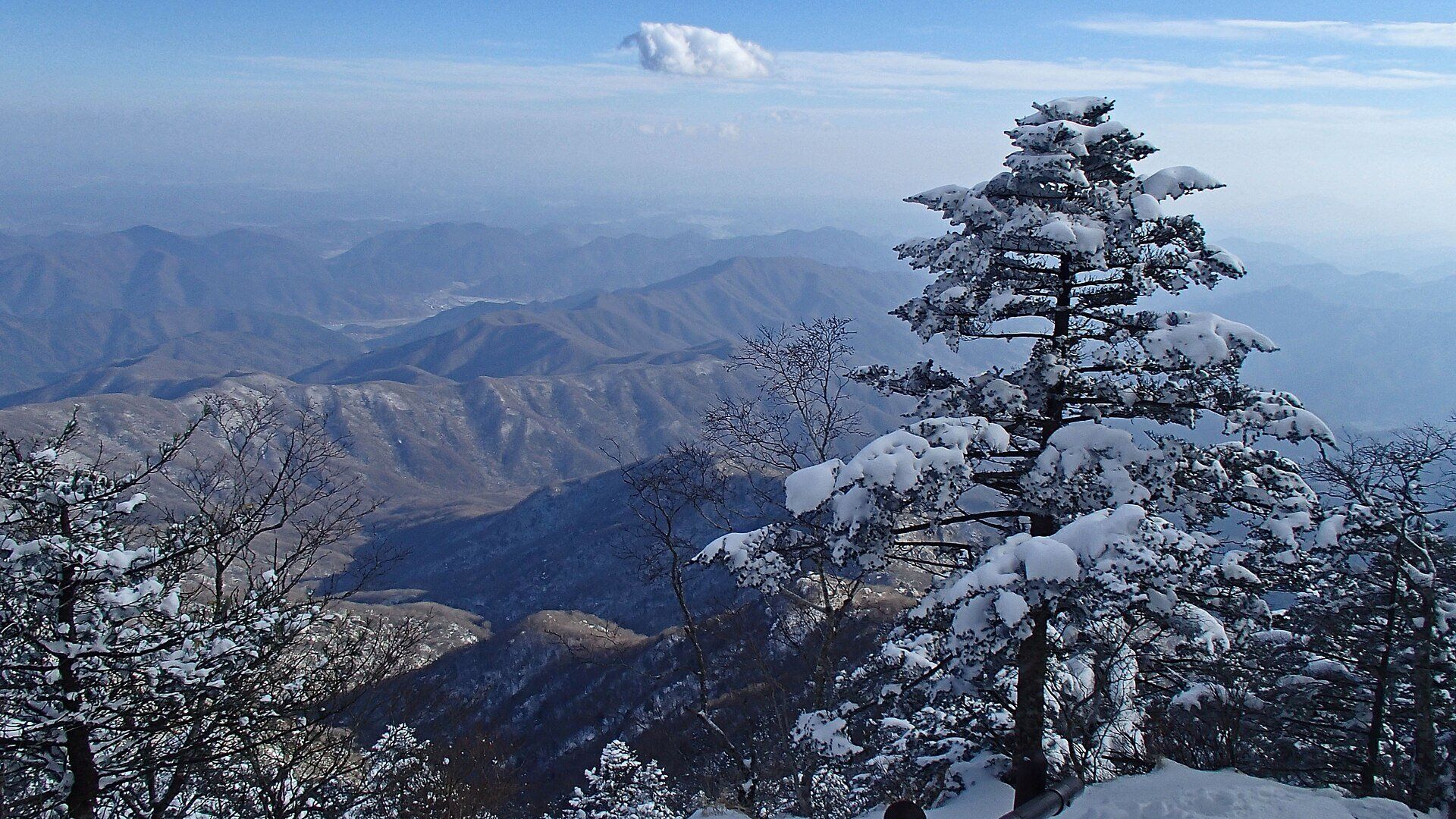
Jirisan National Park
Sobaek Mountains, spanning South Jeolla, North Jeolla and South Gyeongsang provinces, South Korea, near Gurye, Namwon and Hamyang