Places · South Korea

Natural Wonders of South Korea: The 4 Most Beautiful Places to Visit

4 places in the atlas

South Korea is overwhelmingly mountainous — forested ranges cover most of the peninsula, laced with national parks, granite peaks, and temple valleys that blaze with colour each autumn. Its coasts are deeply indented, scattered with thousands of small islands. The most singular natural landscape lies offshore to the south: Jeju, a shield volcano risen from the sea, crowned by Hallasan, the country's highest peak, studded with some 360 smaller cones, and undercut by the Geomunoreum lava-tube system, among the finest lava caves on Earth. Below are the 4 natural wonders of South Korea in the atlas — the most beautiful places to build a trip around, each with what makes it remarkable, when to go, and how to reach it. Best overall time: Spring and autumn (roughly April–June and September–November) for mild weather, blossom or autumn colour, and the clearest hiking conditions.
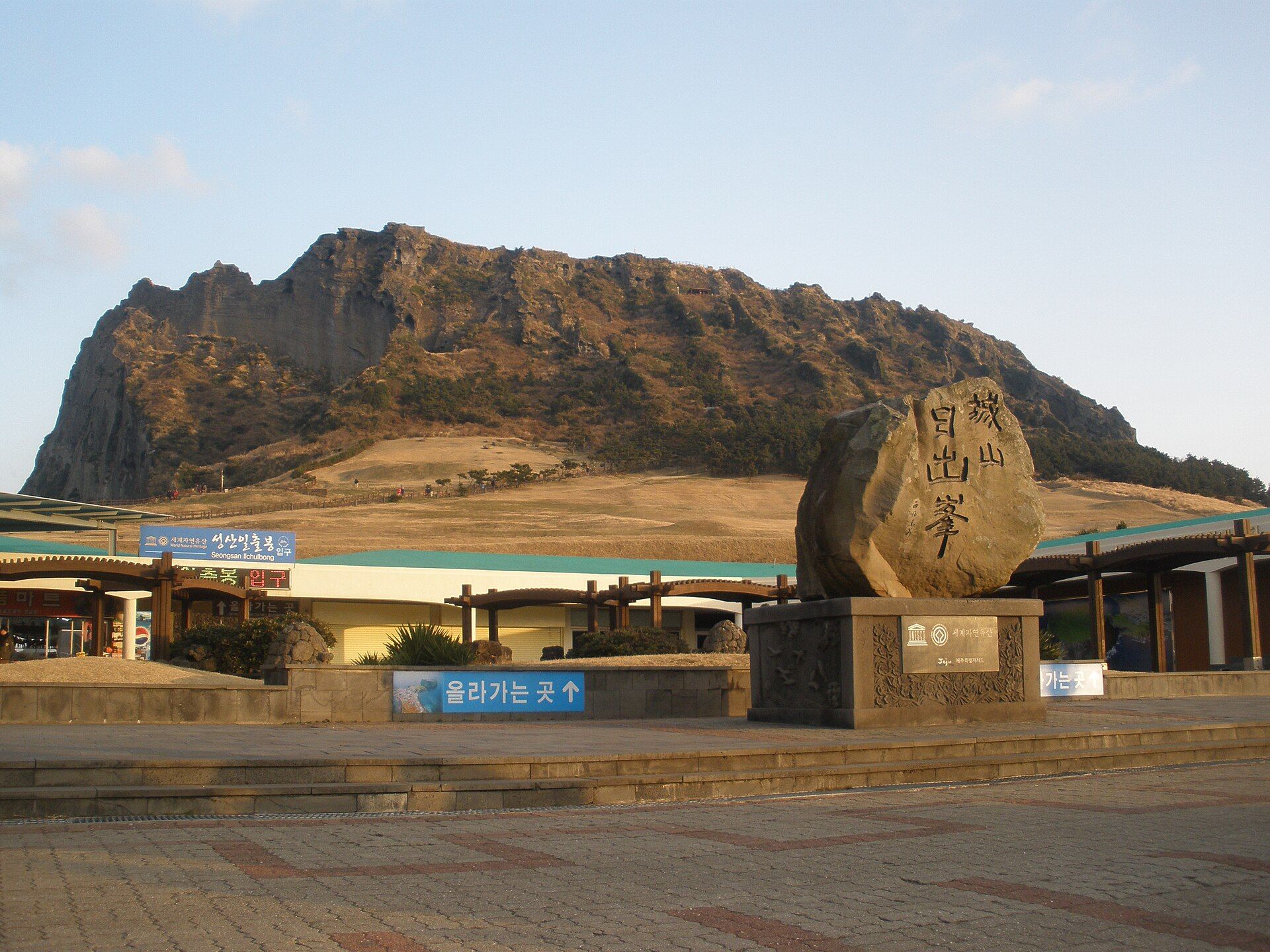
Jeju Island, Jeju Province, South Korea

Jeju Island

Jeju Province, South Korea

A volcanic island crowned by South Korea's highest peak, riddled with the world's finest lava-tube caves and edged by a sunrise crater rising straight from the sea.

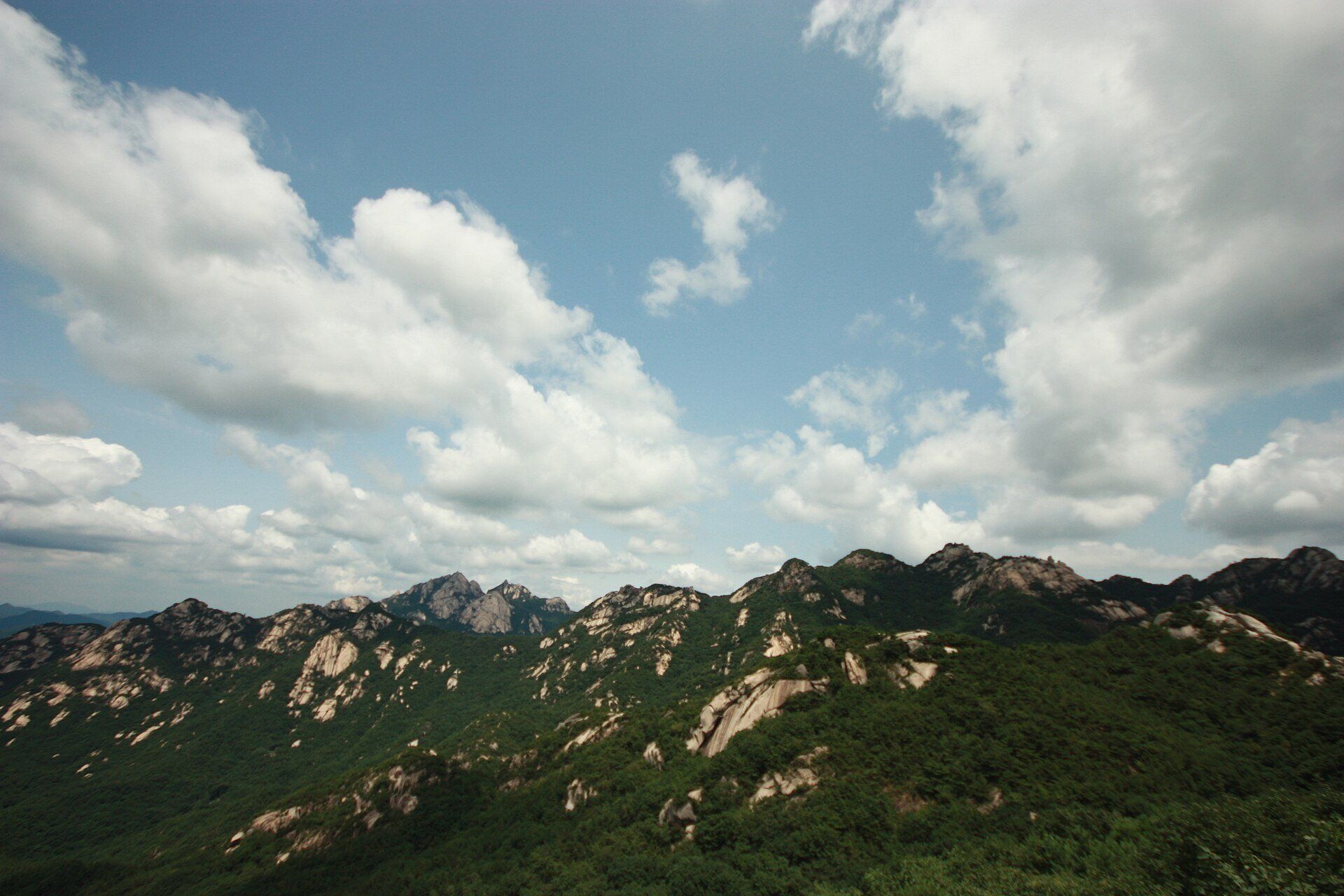
Forested ridges of Bukhansan studded with pale granite outcrops, with rocky peaks on the skyline under a blue sky full of cumulus clouds

Bukhansan National Park

Northern edge of Seoul and Gyeonggi Province, South Korea
A national park inside a capital city: bare Jurassic granite domes and knife-edge peaks rising above Seoul's northern suburbs, topped by Baegundae at 836.5 m and the sheer climbing dome of Insubong, all reachable by subway.

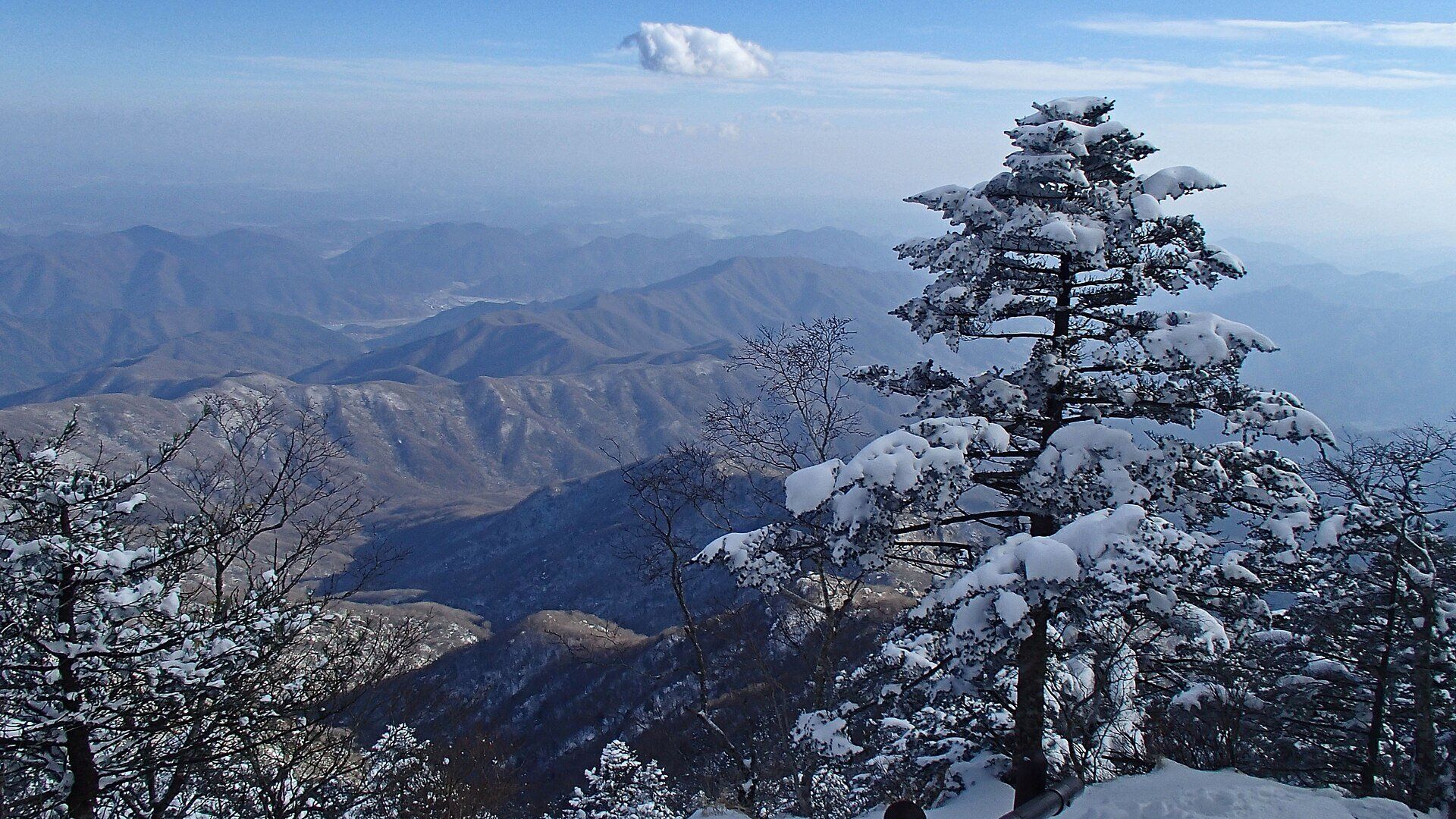
Snow-laden fir tree on a high ridge of Jirisan, looking out over layered blue mountain ridges and a distant valley under a pale sky

Jirisan National Park

Sobaek Mountains, spanning South Jeolla, North Jeolla and South Gyeongsang provinces, South Korea, near Gurye, Namwon and Hamyang
South Korea's first national park and its largest mountain park: a vast massif of long, forested ridges crowned by Cheonwangbong at 1,915 m, the highest peak on the Korean mainland, and home to the country's restored wild Asiatic black bears.

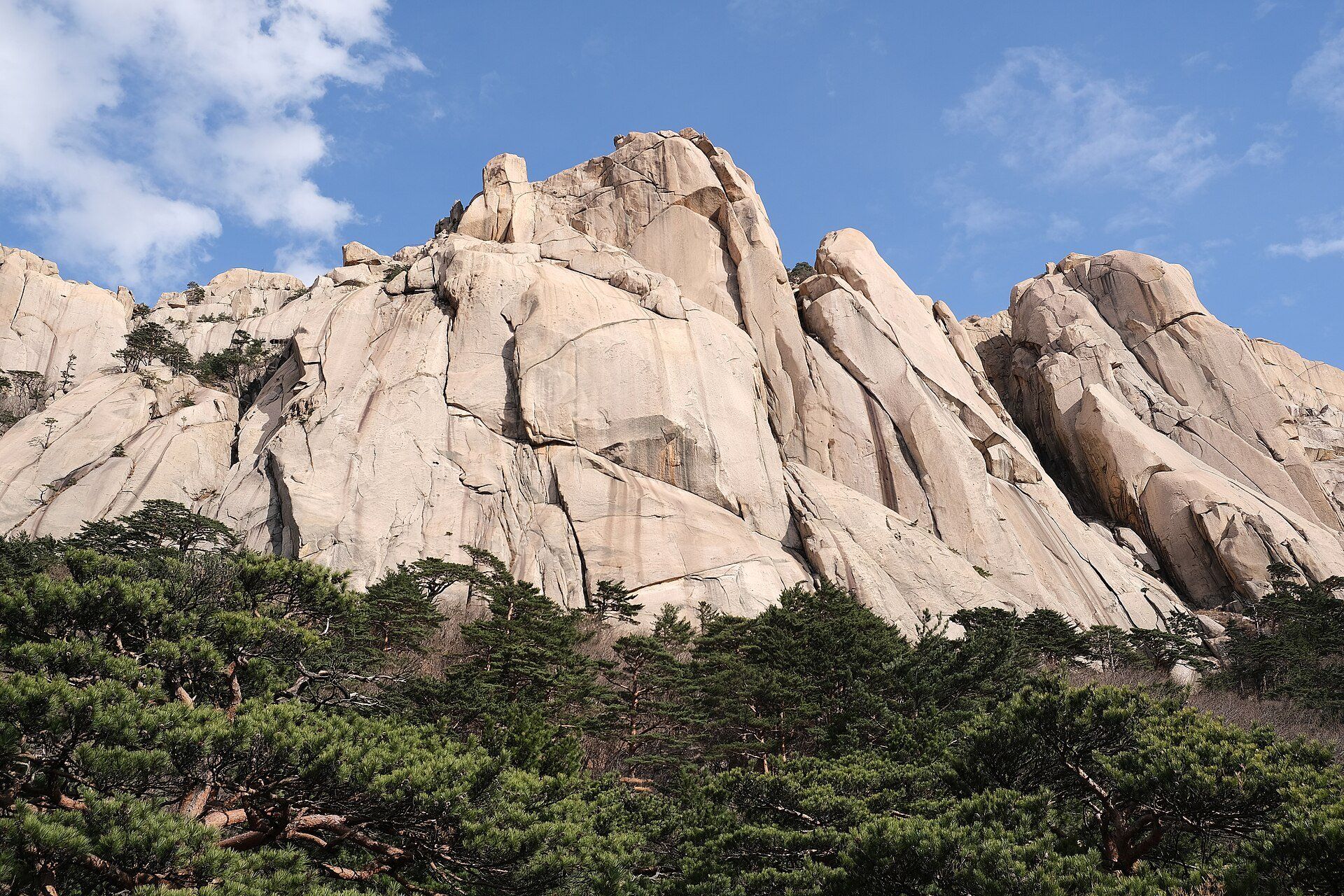
Pale granite towers and slabs rising above dark pine forest under a blue sky, Seoraksan National Park, South Korea

Seoraksan

Taebaek Mountains, Gangwon Province, South Korea, inland from Sokcho

South Korea's most dramatic mountains: about thirty granite peaks rising to Daecheongbong at 1,708 m, with the sheer dome of Ulsanbawi, deep forested valleys, and some of the country's most celebrated autumn colour.