The rock at the summit of Everest formed on a seabed — and it built dozens of other wonders
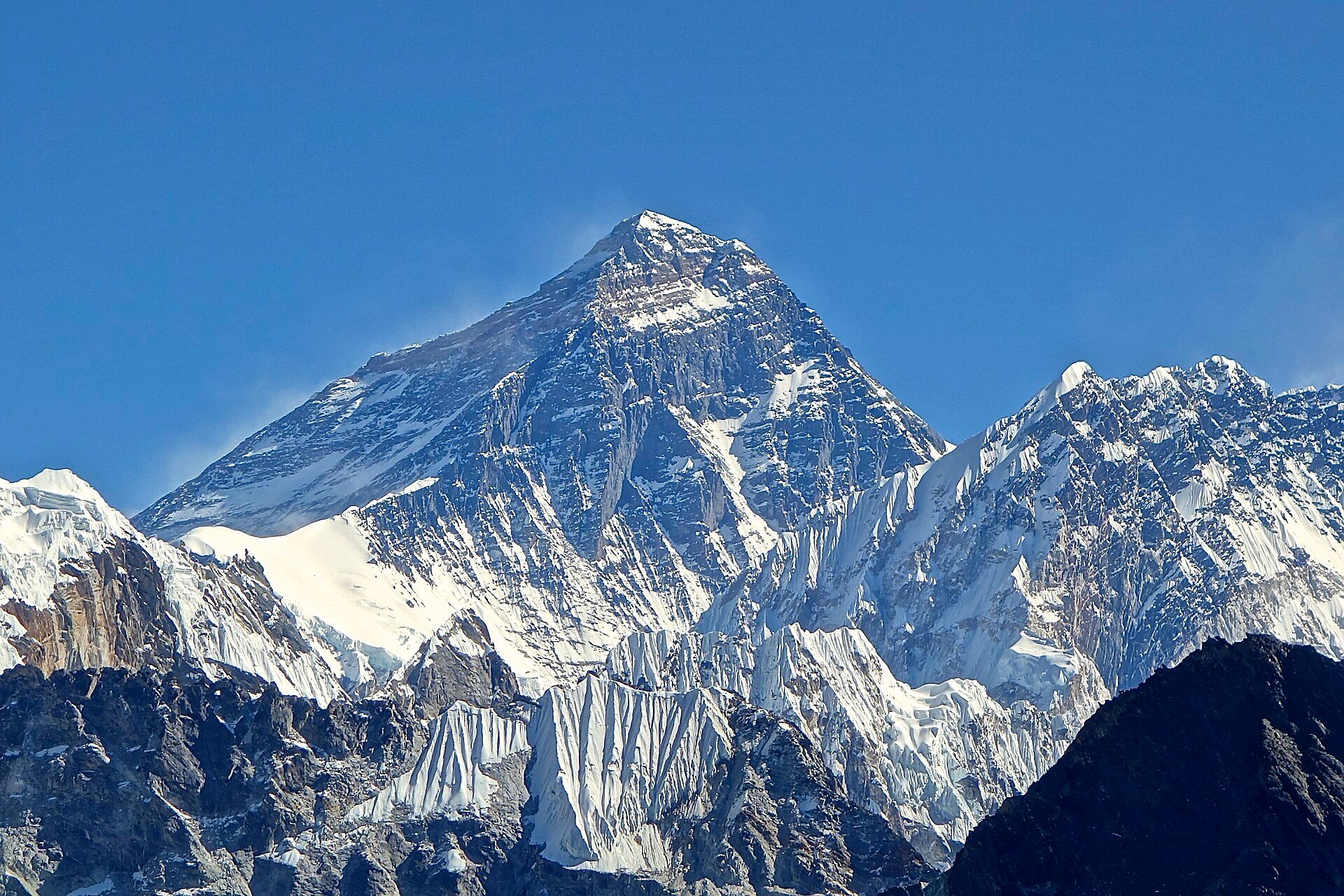
The rock you would be standing on at the summit of Mount Everest is limestone that formed on the floor of a warm, shallow sea about 450 million years ago. Geologists call it the Qomolangma Formation, and samples taken within a few metres of the top contain the broken remains of trilobites, crinoids and other marine animals. The highest point on the planet is compacted seabed, lifted eight and a half kilometres by the collision of India with Asia.
Once you notice that, you start seeing the same rock everywhere in this atlas — and this is the useful part, because limestone is the single most productive rock for making landscapes people travel to see. Roughly a quarter of the wonders we have written up involve it. What varies is not the rock but what water has been allowed to do to it.
Limestone is made of former life
Limestone is mostly calcium carbonate, and most of it was assembled by organisms — corals, shells, algae — that pulled dissolved carbonate out of seawater to build skeletons, died, and settled. Compress that for a few million years and you get rock.
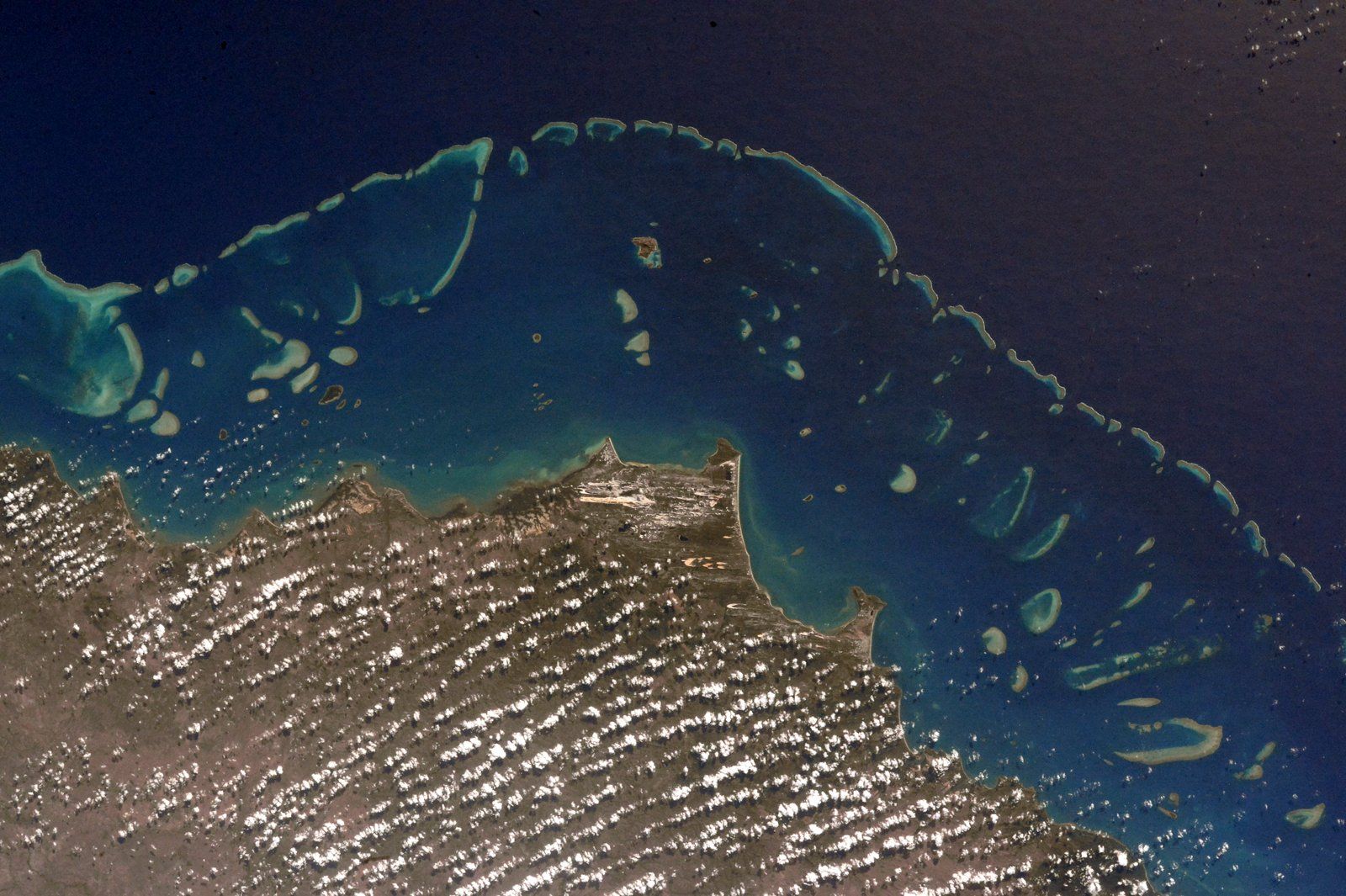
Which means the process is not finished. The Great Barrier Reef is limestone being manufactured right now, by the same mechanism, in the same conditions. A reef and a mountain summit can be the same substance at different points in a very long cycle.
Water dissolves it, and that is the whole trick
Limestone’s defining property is that mildly acidic water — rainwater with a little dissolved carbon dioxide is enough — slowly dissolves it. Nothing dramatic; just relentless. Everything below follows from that one fact.
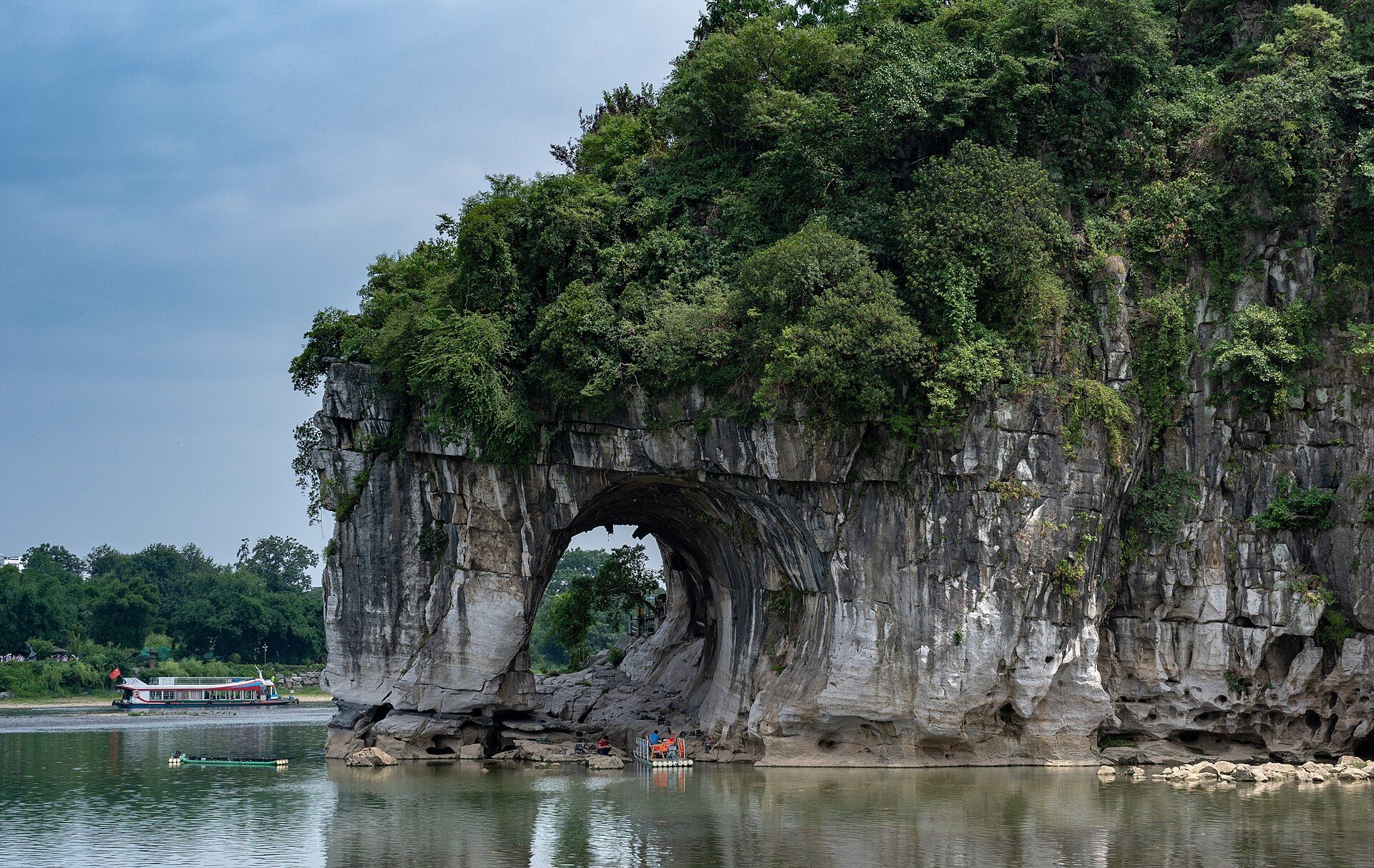
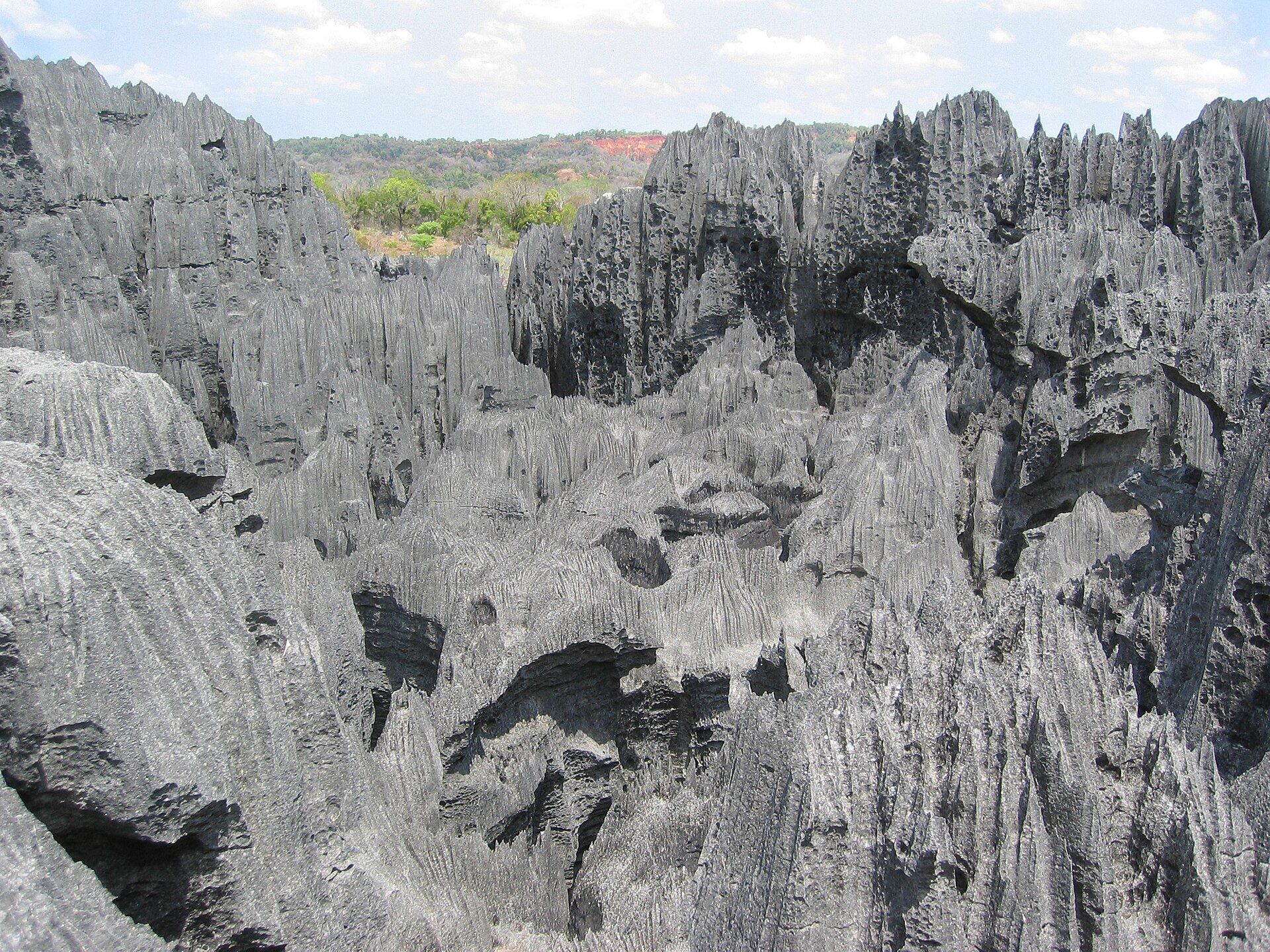
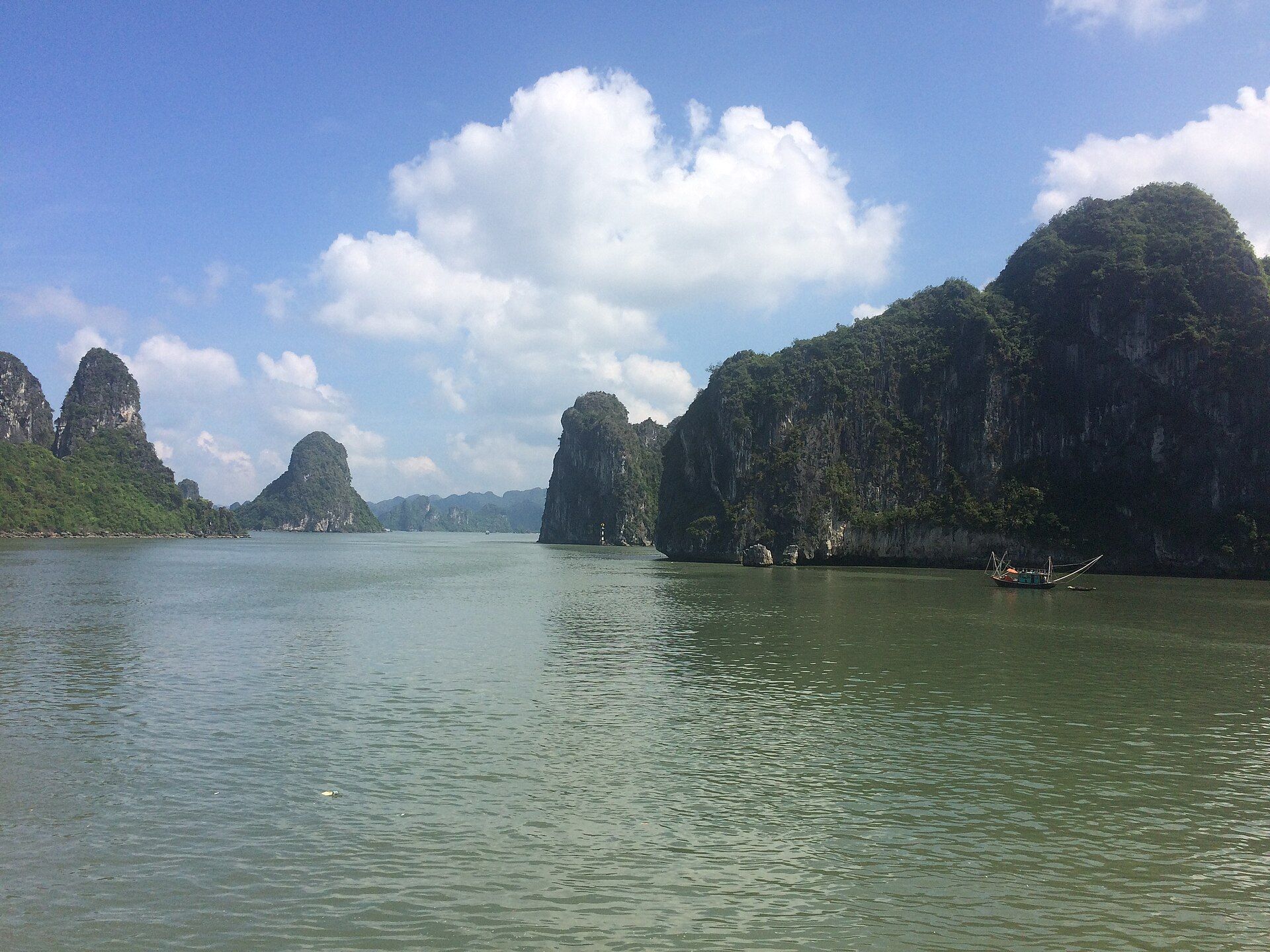
Dissolve it from above, along vertical joints, and you get towers. Water works down the cracks in a limestone block, widening them into corridors and eventually leaving the un-dissolved pillars standing. That is Ha Long Bay, where the sea has since flooded the corridors between the towers, and the same process inland at Guilin. Push it to an extreme and you get Tsingy de Bemaraha in Madagascar, where dissolution has sharpened the surface into a forest of limestone blades.
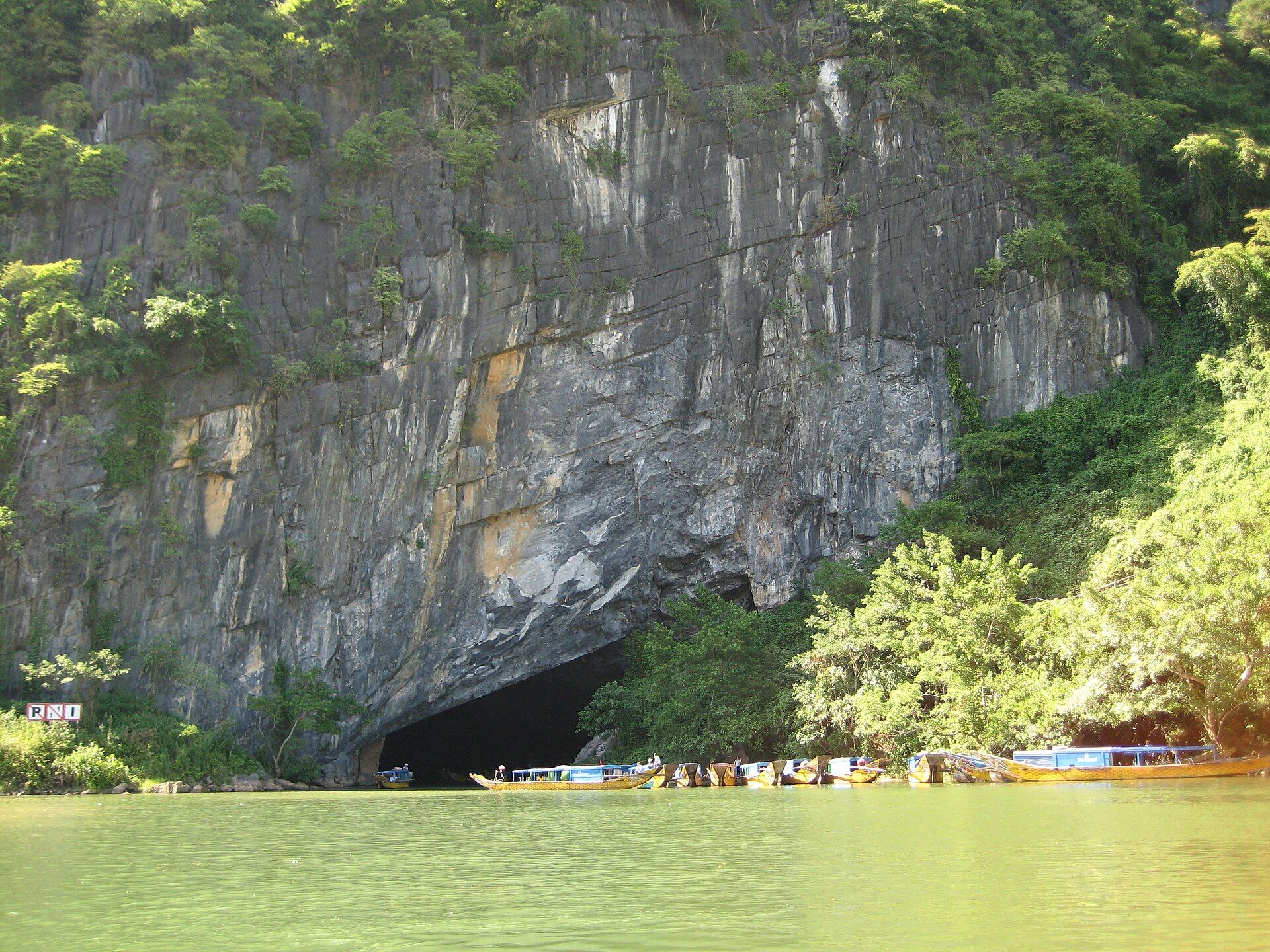
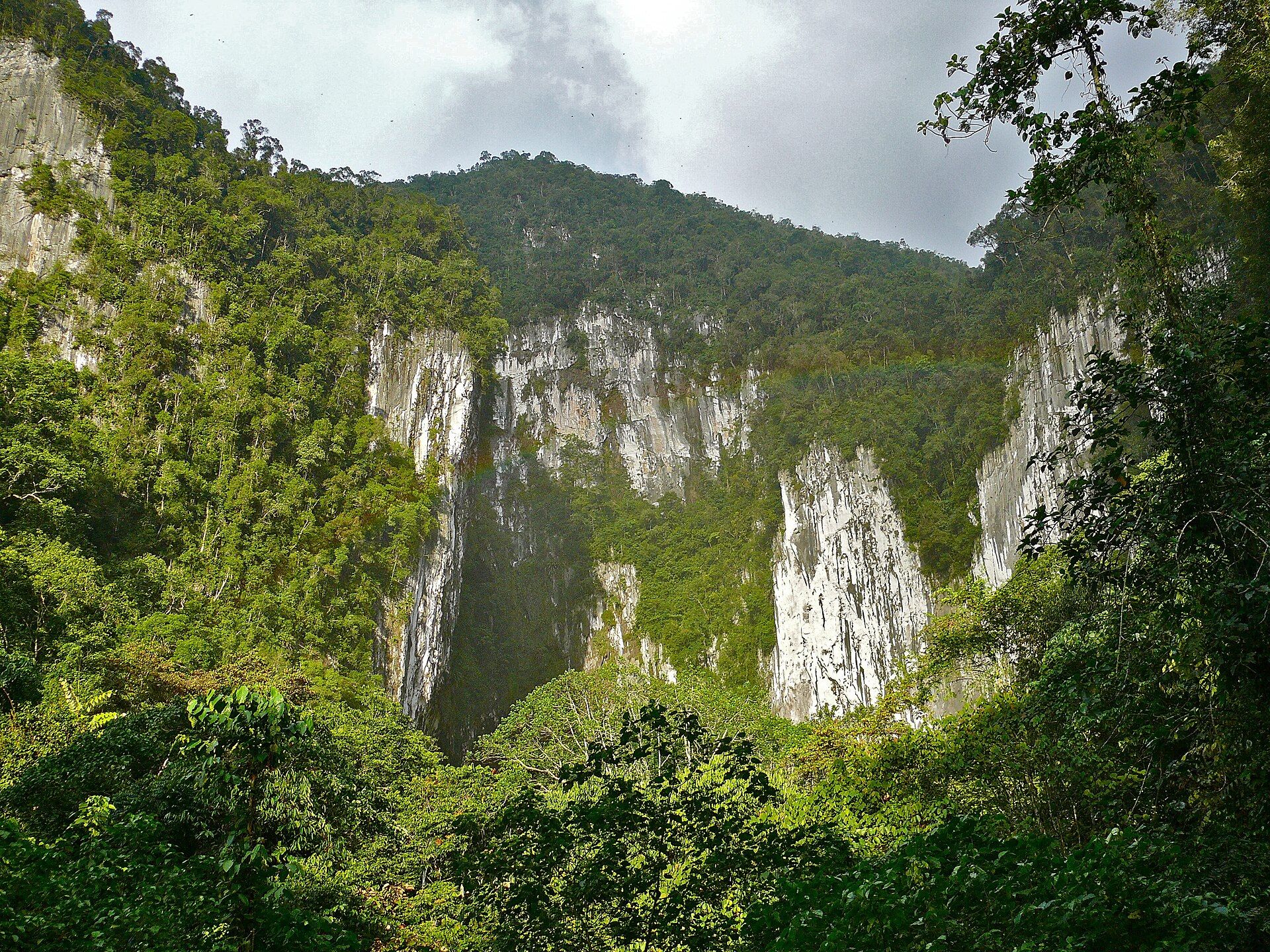
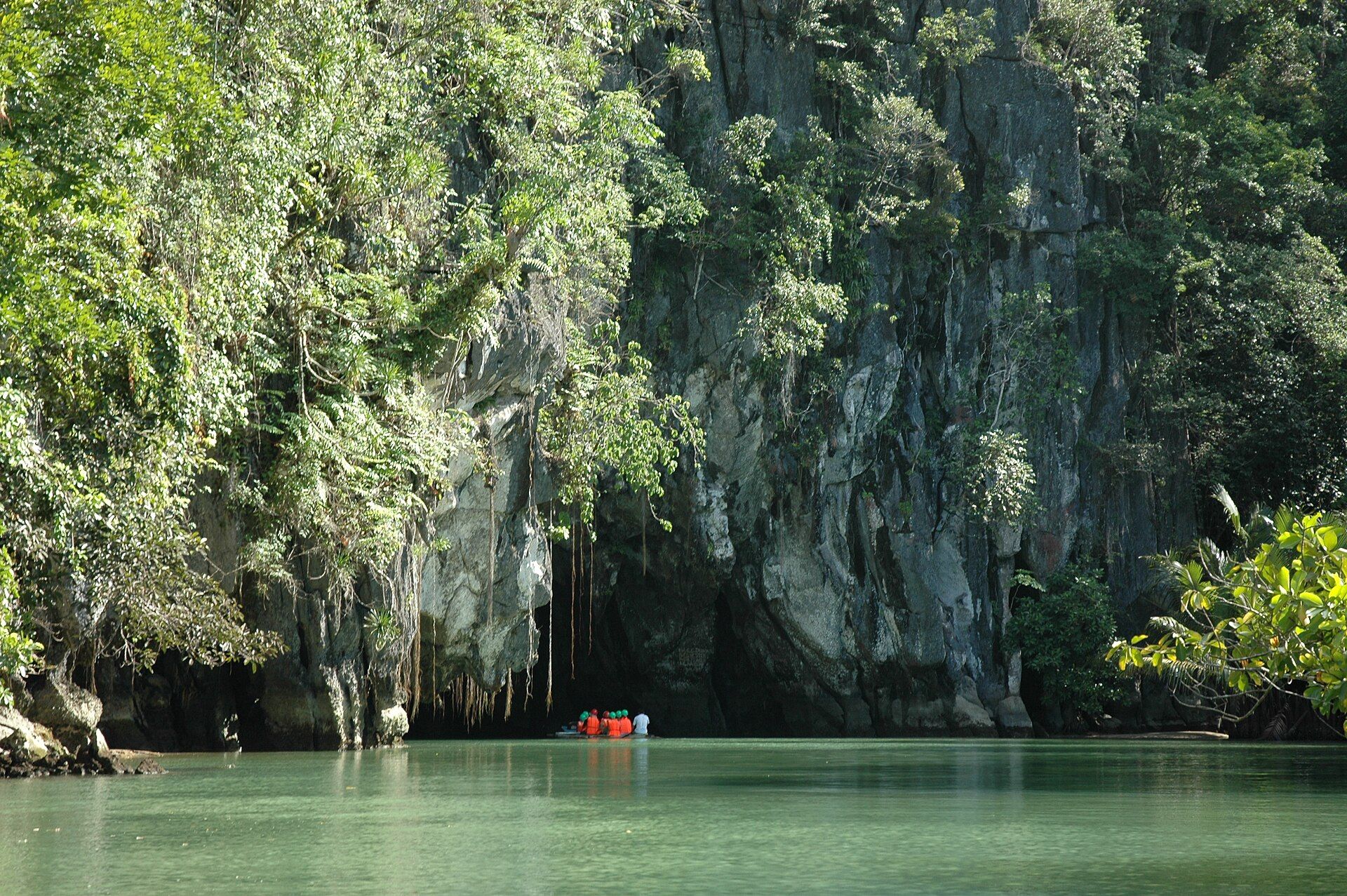
Dissolve it from within and you get caves. Groundwater moving through the rock hollows out passages: Phong Nha in Vietnam, Gunung Mulu in Borneo, and the Puerto Princesa underground river, which is simply a river that found it easier to travel through the rock than over it.
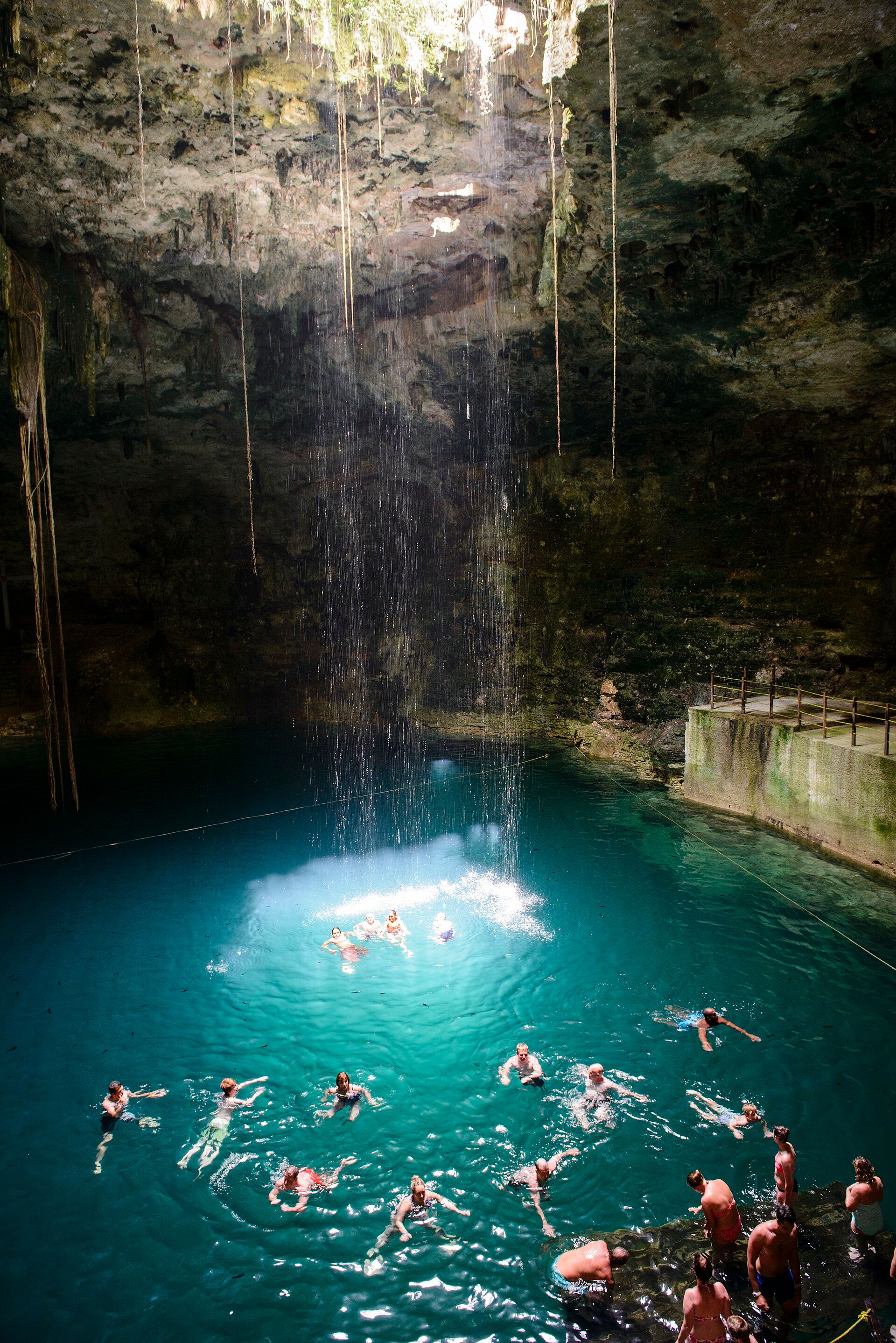
Let a cave roof collapse and you get cenotes. The Yucatán cenotes are the ceilings of a drowned cave system falling in, opening windows into groundwater that has been filtered through limestone until it is startlingly clear.
Then it comes back out of solution
The elegant part is that the reaction runs both ways. Water carrying dissolved carbonate will deposit it again when conditions change — when it warms, loses pressure, or is agitated. The rock rebuilds itself into shapes it never had originally.
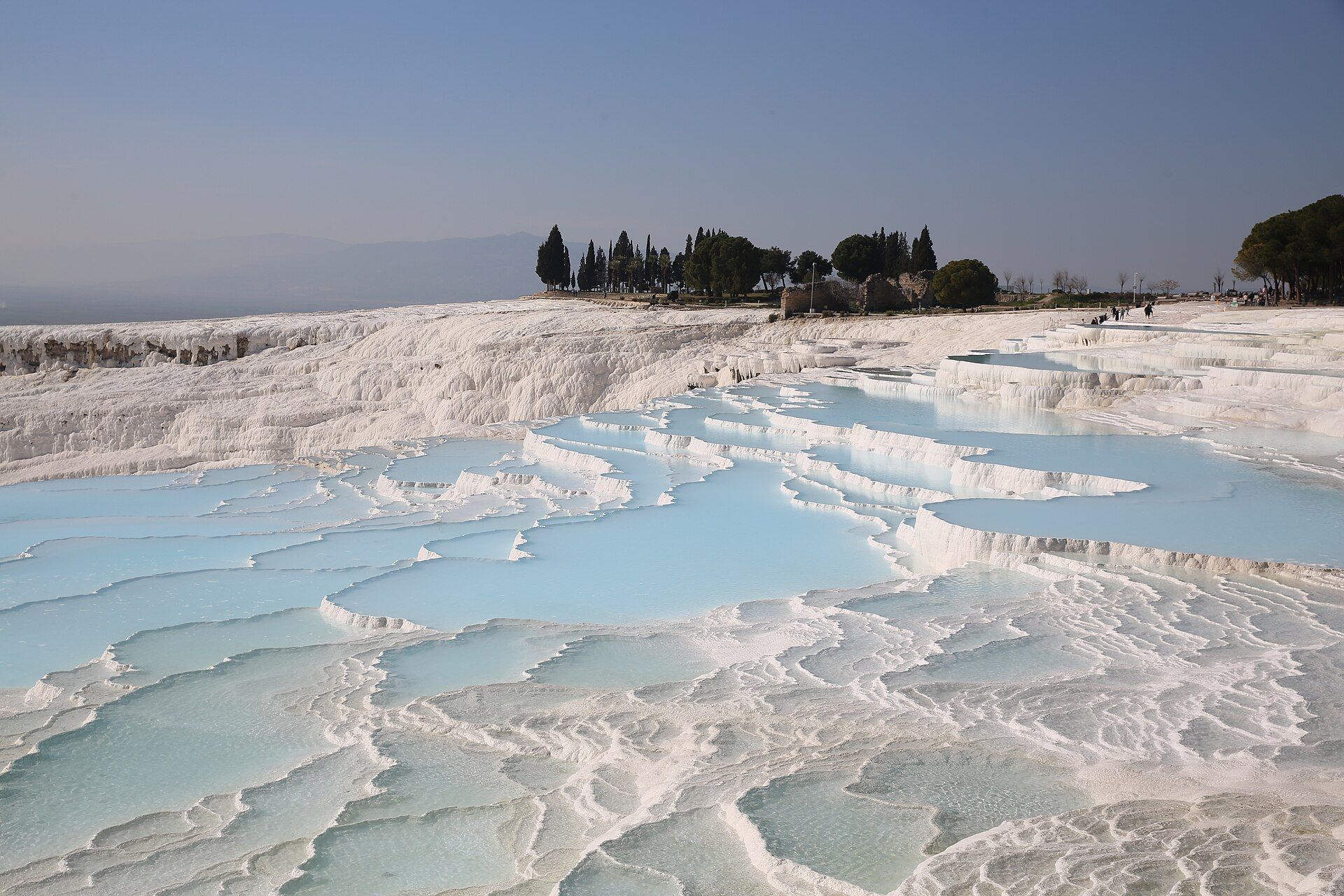
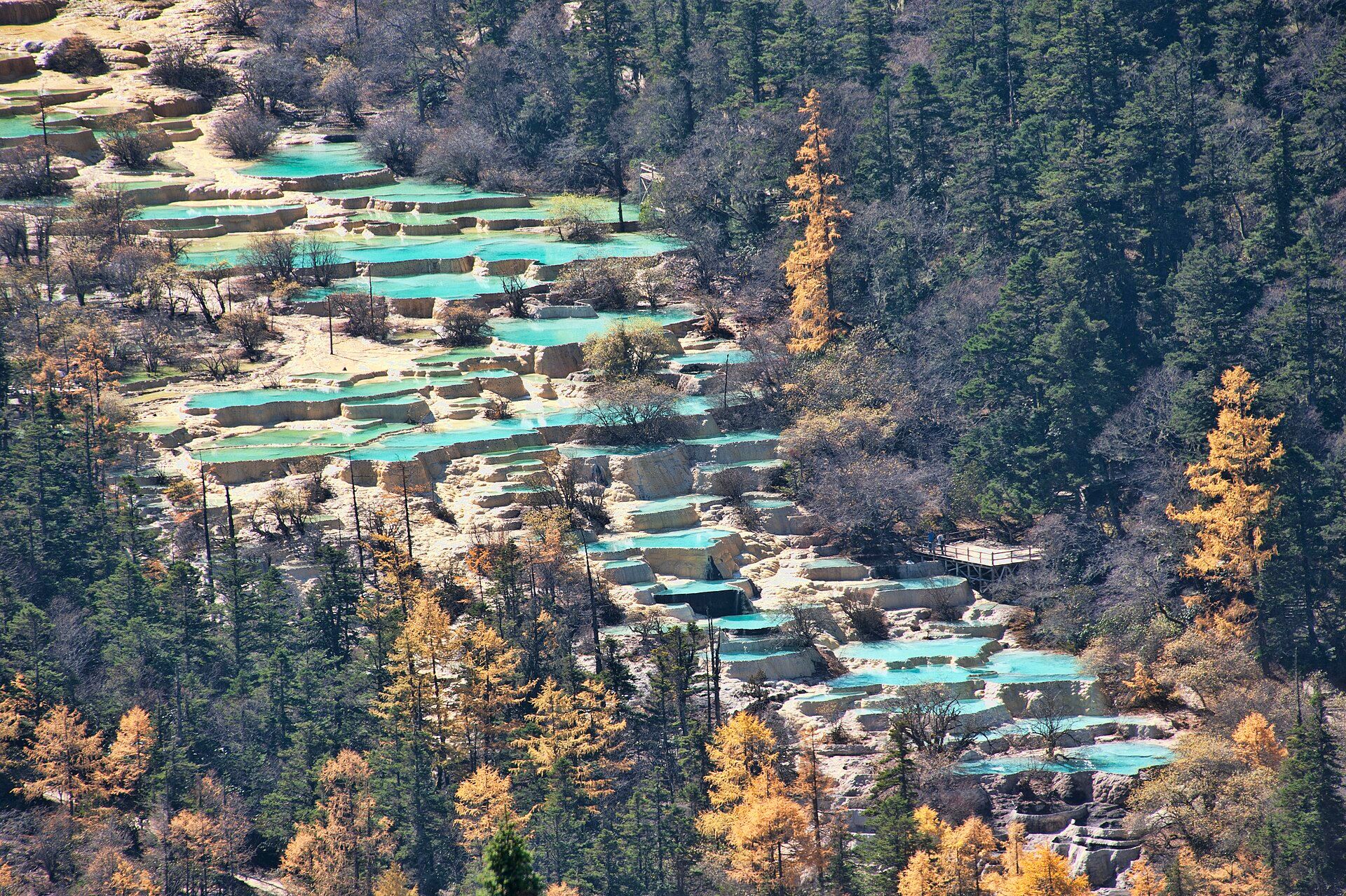
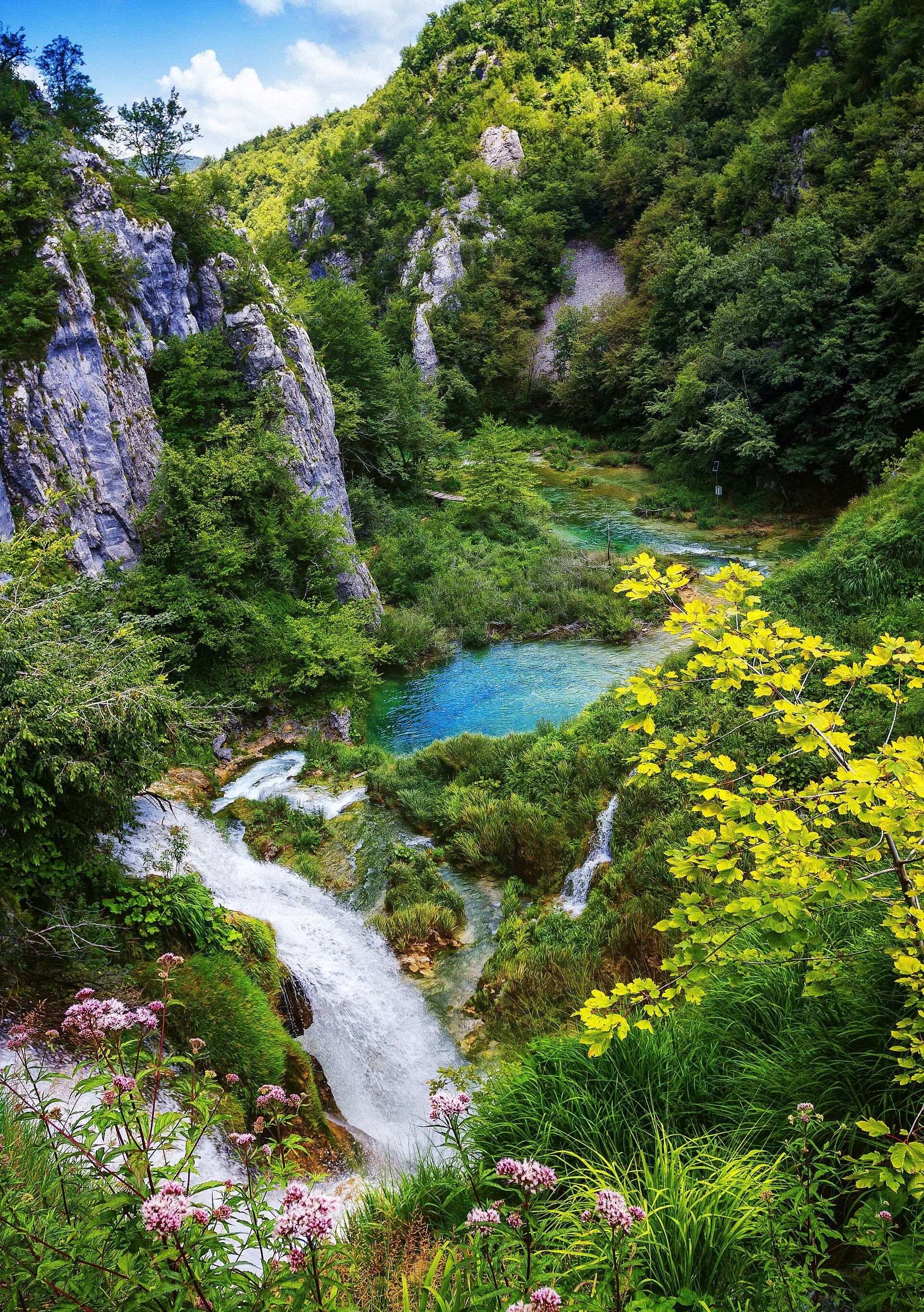
That is the whole of Pamukkale, where hot spring water sheds its minerals as it cools down the hillside into brilliant white terraces, and of Huanglong in Sichuan. It is also, less obviously, Plitvice: the barriers between those famous lakes are travertine dams, still growing, built by carbonate precipitating around mosses and algae in the flowing water. The lakes are not sitting in a valley. They are sitting behind rock the water made.
Carbonate also explains the colour. Water that has passed through limestone carries fine suspended particles and dissolved minerals that scatter light towards the blue-green end, which is why so many limestone landscapes share that improbable turquoise — a colour with a specific cause rather than a coincidence of photography.
One necessary correction
Not every pale, spectacular cliff is doing this. Bryce Canyon is limestone, but its hoodoos are not dissolution features at all — they are carved by frost, which levers cracks apart as water freezes and expands, roughly 170 to 200 times a year at that altitude. Same rock, entirely different tool, completely different landscape. And several formations that look like karst are not limestone at all: Zhangjiajie’s pillars are quartz sandstone, and Antelope Canyon is sandstone cut by flash floods.
The rock sets what is possible. Water, temperature and time decide which of those possibilities you actually get to stand in front of — and the reason a Vietnamese bay, a Turkish hillside, a Mexican sinkhole and the top of the highest mountain on Earth belong in the same sentence is that they are all the same ancient seabed, handled differently.
If you want to see the family resemblance in one place, our guide to the world’s most beautiful karst landscapes collects the best of them.
Wonders in this article