When geology looks designed: nature's improbable geometry
Every so often a landscape turns up that looks like it was built rather than formed, and people reach for explanations to match. Giants, gods, lost civilisations. The real answers are usually more satisfying, because they come down to ordinary physics repeated at enormous scale.
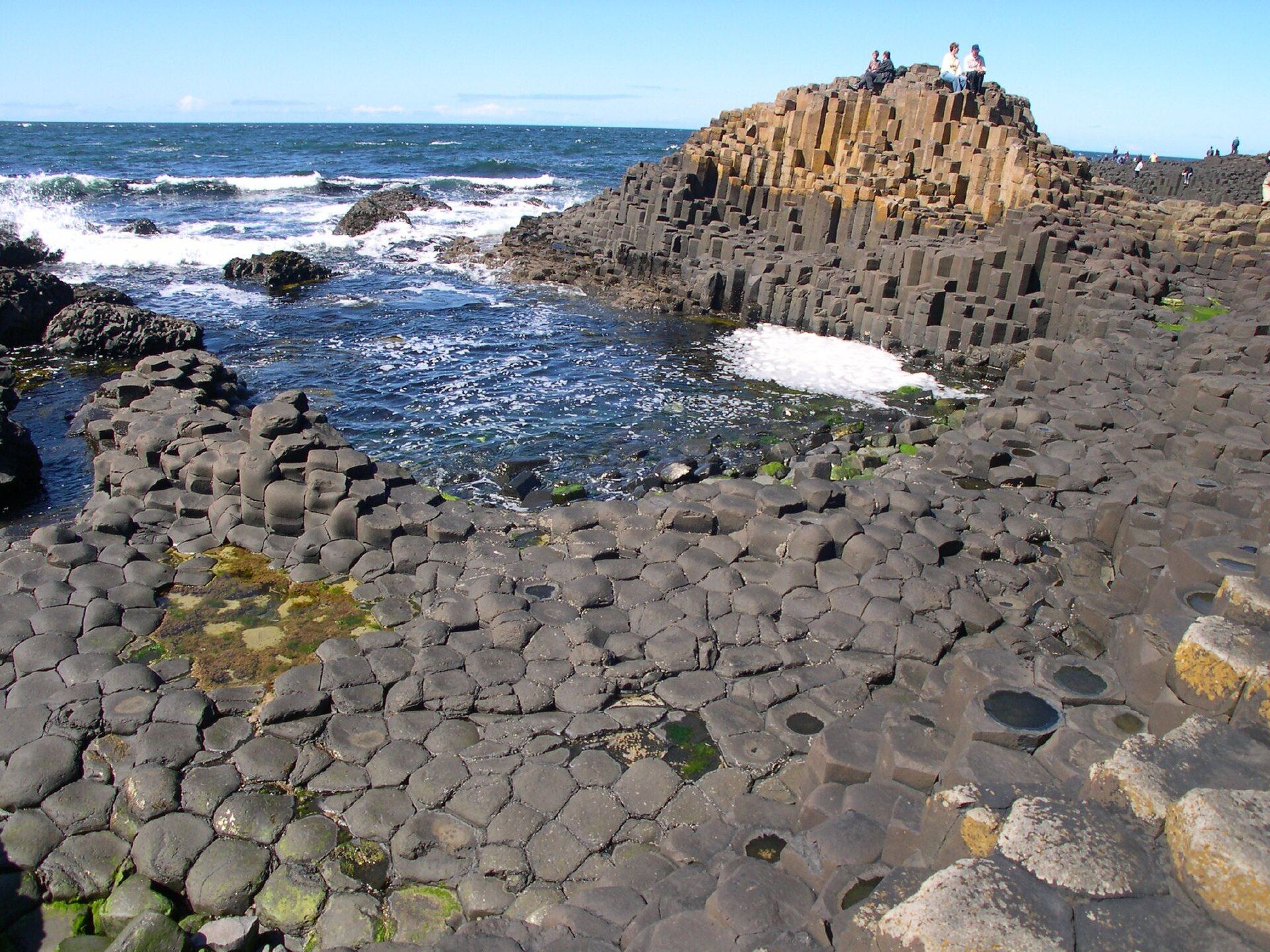
The clearest case is the Giant’s Causeway in Northern Ireland: roughly 40,000 basalt columns, mostly near-perfect hexagons, fitted together like a honeycomb. No craftsmanship involved. Around 60 million years ago thick lava cooled slowly and evenly, and contracting rock had to crack somehow — and across a flat surface, hexagons relieve that tension most efficiently. It is the same geometry that shows up in drying mud and in beehives, for exactly the same reason.
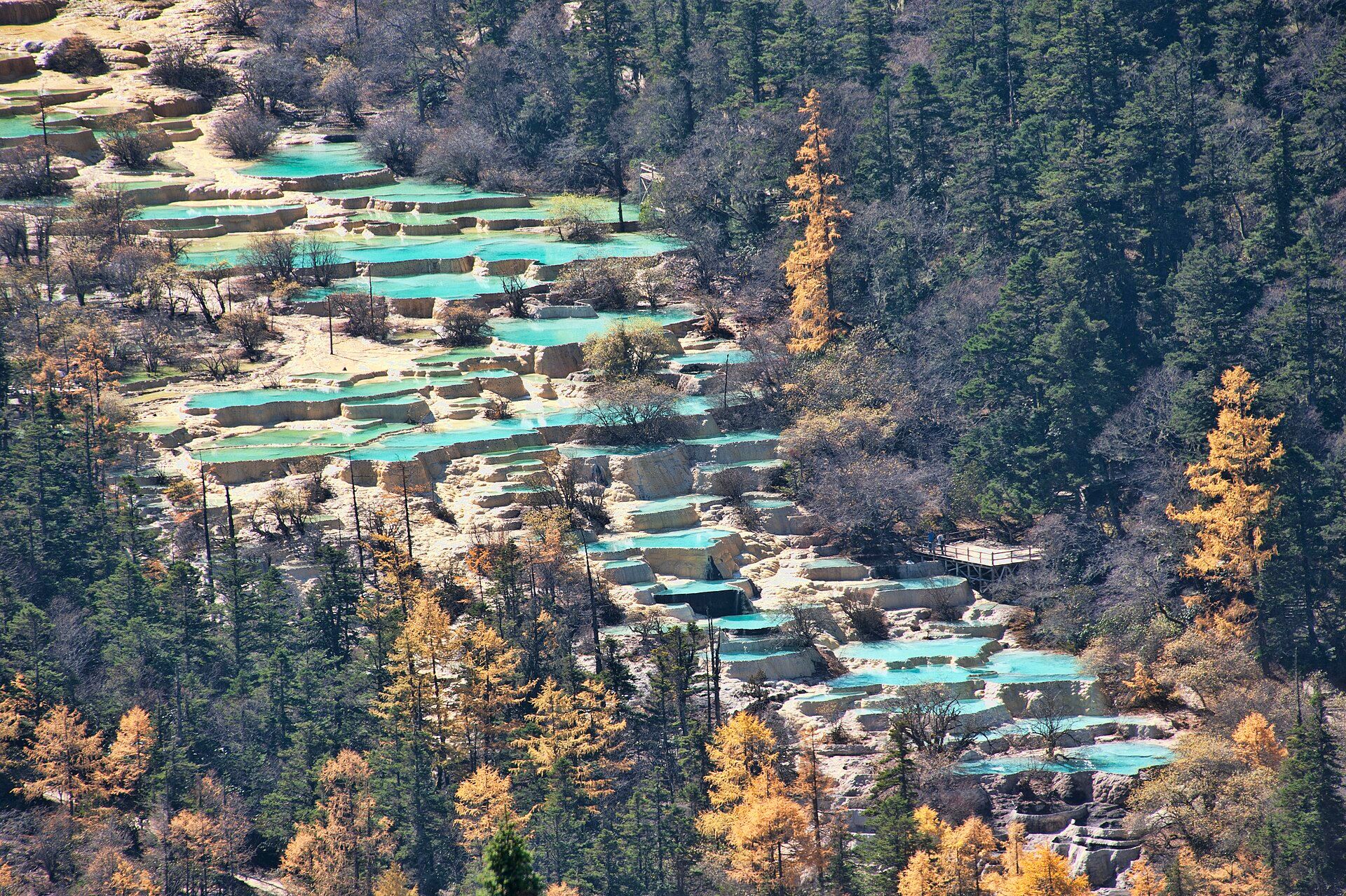
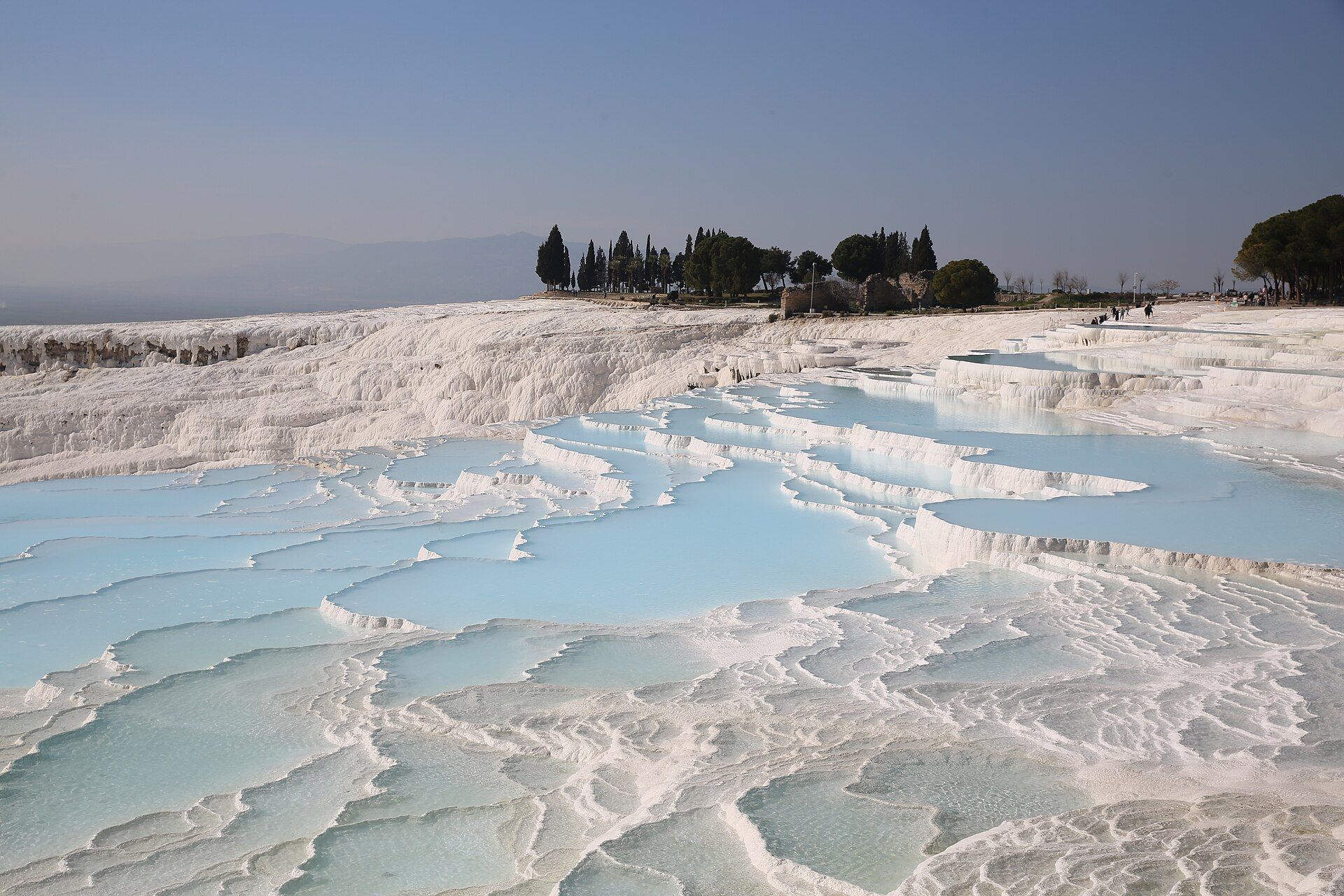
Water does its own patterned work. At Huanglong in Sichuan and Pamukkale in Turkey, calcium-rich water loses carbon dioxide as it flows and cools, dropping calcium carbonate at the rims of its own pools. Each deposit raises the rim slightly, which slows the water further, which deposits more — a feedback loop that over millennia builds thousands of terraced basins stepping up a hillside like a staircase.
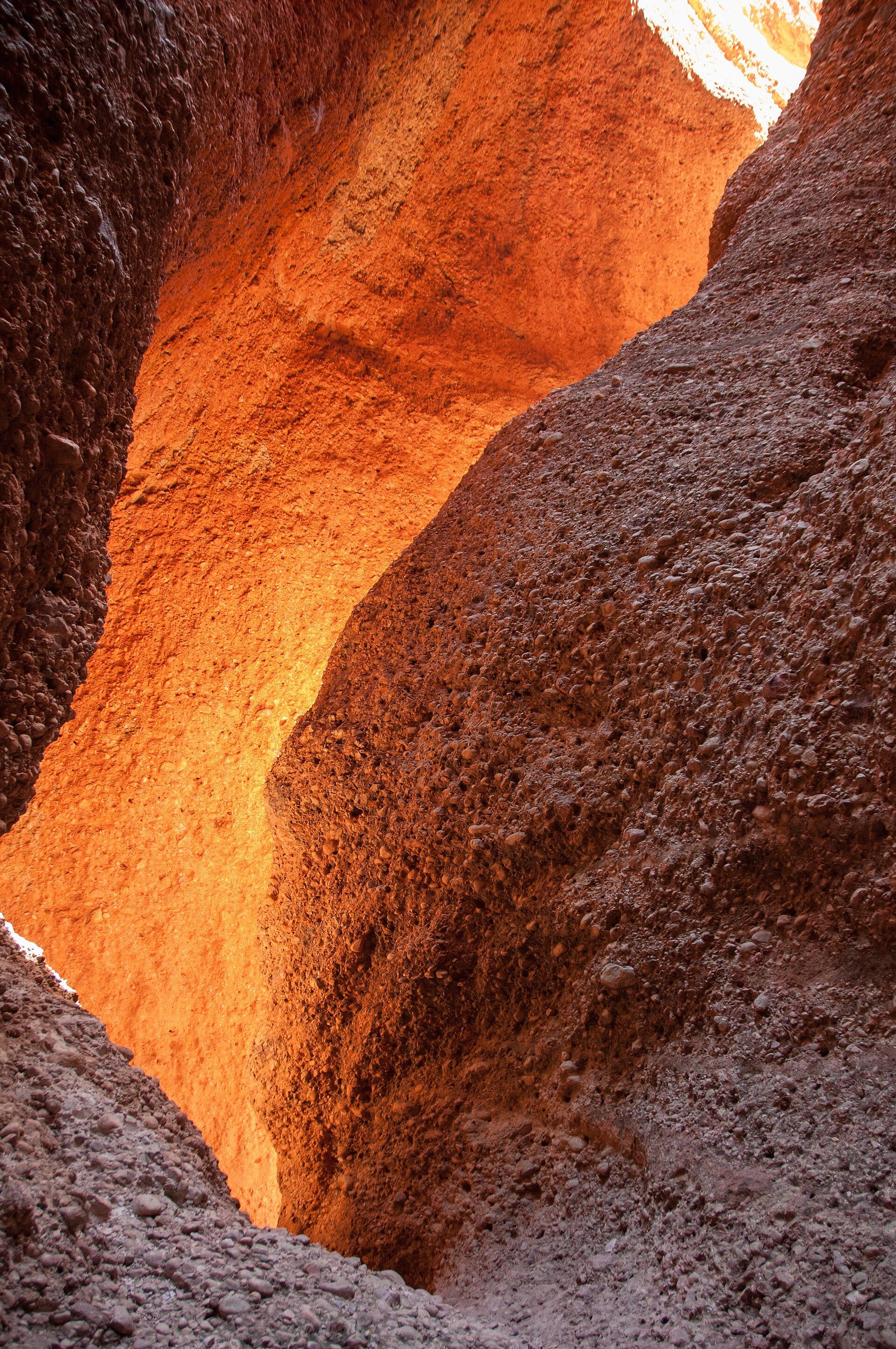
Even stripes have a mechanism. The beehive domes of Australia’s Bungle Bungle Range are banded orange and black because alternating sandstone layers differ in porosity: the permeable bands stain with iron oxide, while the tighter ones hold enough moisture for a thin skin of cyanobacteria. The dark stripes are, quite literally, alive — and that fragile crust is what holds the soft rock together.
What links these places is that regularity in nature almost always signals a simple rule applied relentlessly. That’s the real pleasure of looking at them: not that they seem designed, but that they demonstrate how much structure can emerge from no design at all.
Wonders in this article