Škocjan Caves
📍 Škocjan, near Divača, Karst region, south-western Slovenia
A UNESCO-listed river cave on Slovenia's Karst, where the Reka River drops into collapse dolines up to 165 m deep and roars through an underground canyon — about 6 km of passages and one of Europe's largest known cave chambers.
What makes it marvelous
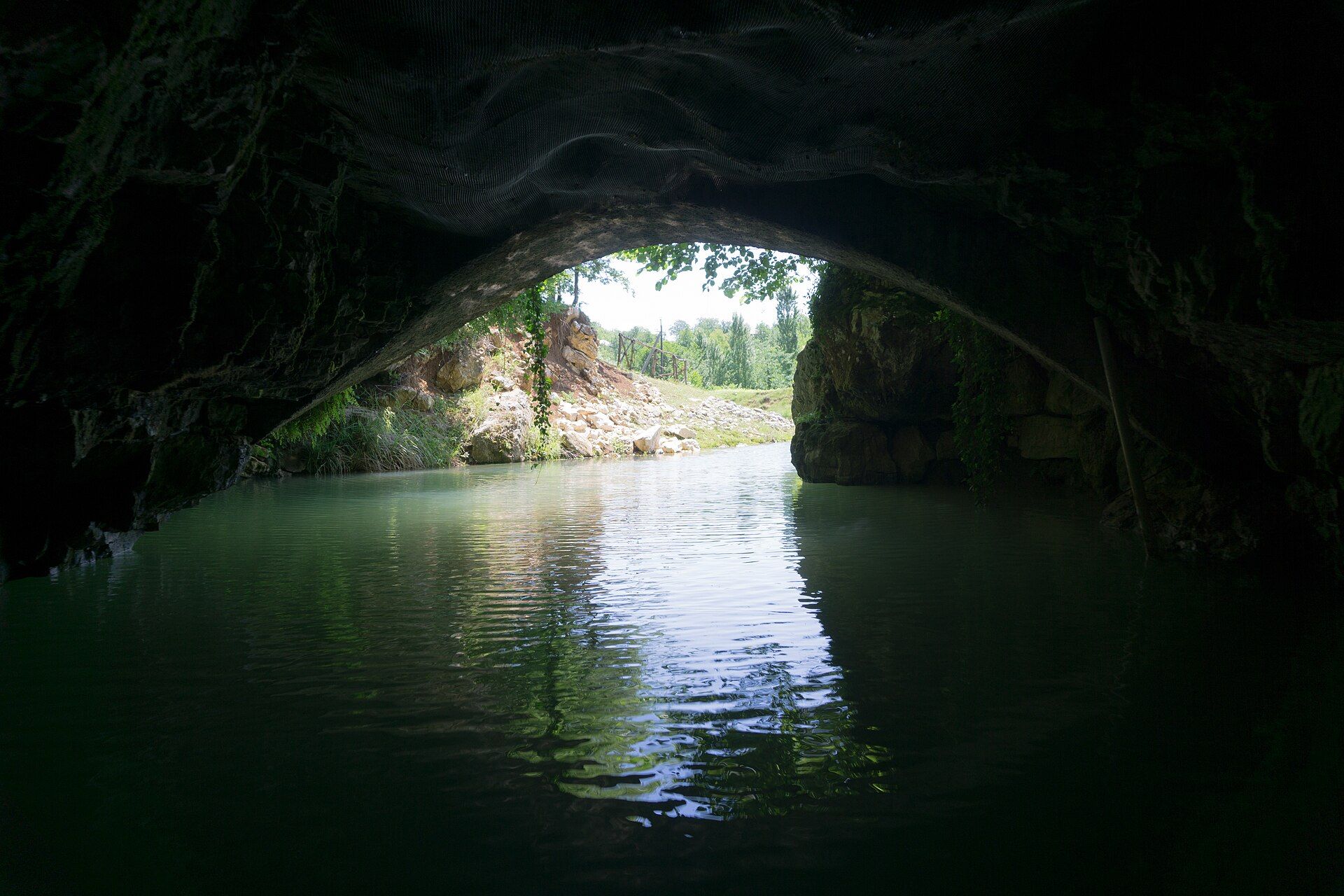
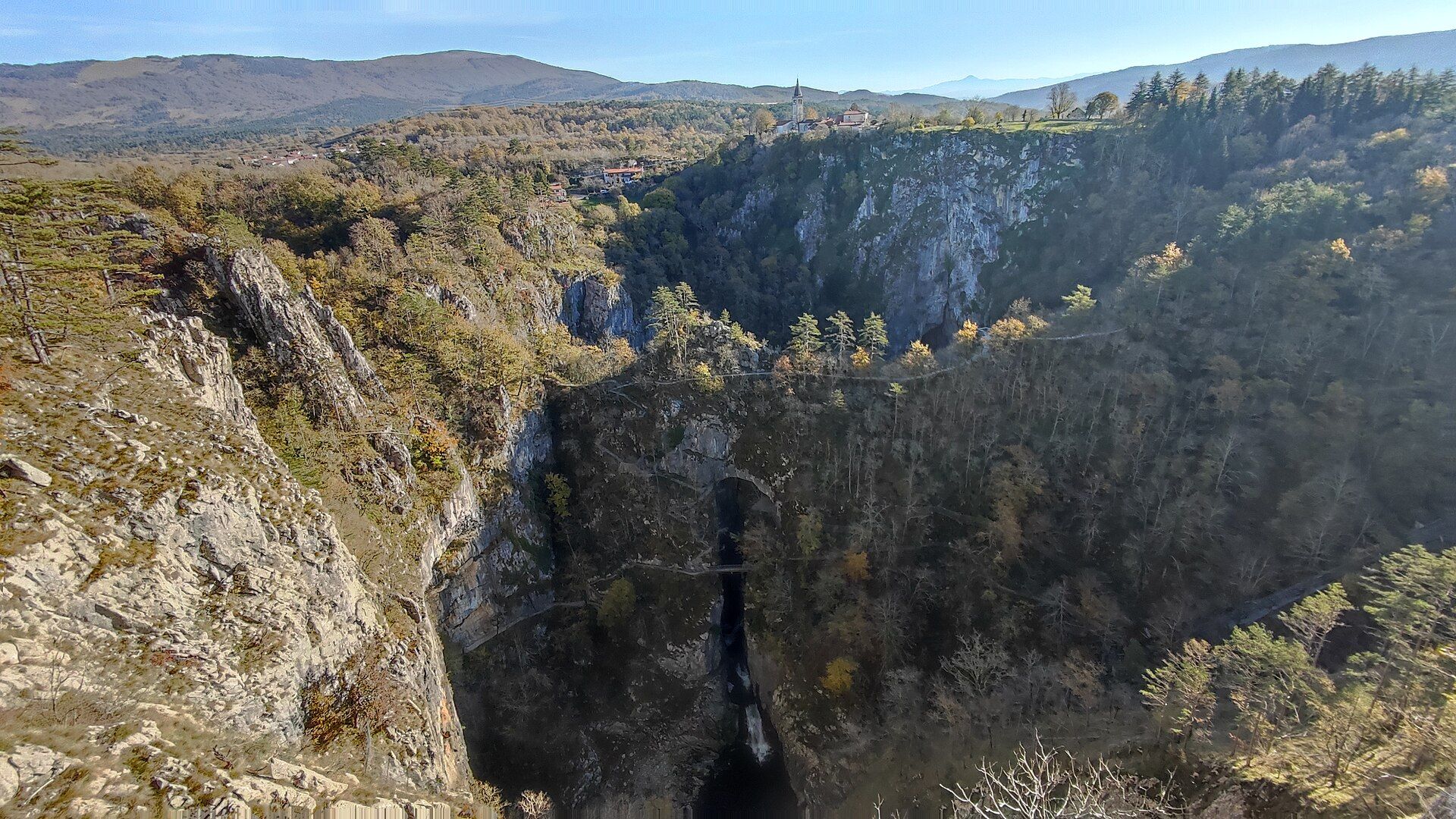
The Reka River flows some 55 km across the surface before it reaches the village of Škocjan, cuts a gorge about 4 km long and then vanishes underground at the bottom of Velika dolina, a collapse doline up to 165 m deep formed when a cave ceiling fell in. Beside it lies Mala dolina, 120 m deep, separated by a natural bridge. Underground, the river runs through Murmuring Cave (Šumeča jama), a canyon about 3.5 km long and 10 to 60 m wide, and on into Martel's Chamber — 308 m long, up to 123 m wide and 106 m high, with a volume of 2.2 million cubic metres, the largest underground chamber discovered in Slovenia. In all the system has about 6 km of passages and a vertical range of more than 200 m, and in heavy-rain floods the water inside can rise by more than one hundred metres. The river reappears at the Timavo springs, 34 km away.
Why visit
Walk a narrow path high above a river thundering through the dark, cross a bridge suspended over the underground canyon, then climb out into the green, cliff-walled bowl of a collapse doline — one of the most dramatic cave walks in Europe.
Still deciding?
Škocjan Caves comes up most often against one other place — each one weighs cost, effort, season and crowds side by side.
What to know before you go
🗓️ Best time
Open all year with guided tours. From May to September the full route continues beyond Velika dolina through the Mahorčič and Marinič Cave; from January to April and October to December the tour ends at the first exit, in Velika dolina. The cave holds a steady 12 °C year-round, so it is also a good escape on a hot day.
🧭 Getting there & access
Leave the Ljubljana–Koper motorway at the Divača exit and follow the signs to the caves. By train, get off at Divača station, where a marked footpath of about 4 km (about 50 minutes on foot) leads to the park. The caves can be visited only on a guided tour, bought from Park Škocjanske jame.
Good to know
- Taking photos inside the cave is not allowed — enjoy the underground canyon with your eyes and save the camera for the dolines and the education trail.
- Bring a warm layer: the cave stays at 12 °C even in summer.
- The full tour is about 5 km with around 1,000 steps and takes 2.5 to 3 hours; wear sturdy, comfortable shoes.
- The circular Škocjan Education Trail around the Big and Little Collapse Dolines is free to walk on your own, all year.
Plan your visit
Moderate🧭 Getting there
From Ljubljana (LJU), Slovenia; or Trieste (TRS), Italy
- Fly into Ljubljana or Trieste
- Drive the Ljubljana–Koper motorway to the Divača exit and follow the signs to the caves — roughly 1–1.5 hours from Ljubljana depending on traffic
- Or take the train to Divača and walk the marked path of about 4 km (around 50 minutes) to the park
- Total travel
- Roughly 1–1.5 hours by road from Ljubljana
- Time at site
- Half a day for the main cave tour plus the education trail around the dolines
- Access
- Entry to the caves is by guided tour only, booked through Park Škocjanske jame (park-skocjanske-jame.si); confirm current tour times and prices with the park before you go. Tours start at the reception centre and walk to the cave entrance in the Globočak doline. The caves close on 1 January and 25 December, and in the colder months (January–April and October–December) the tour ends at Exit 1 in Velika dolina; you can also choose that early exit in summer, which cuts the walk to about 3 km. Pets are not allowed on the tour. The circular education trail around the dolines is free and open all year. A separate, more demanding Hanke Channel caving tour (about 3–4 hours, no children under 15) runs on set dates with equipment provided.
🎒 What to bring & consider
- A warm layer for the constant 12 °C inside the cave
- Comfortable sports shoes with good grip for wet steps and paths
- Water — the full tour takes 2.5 to 3 hours
- An umbrella or rain jacket if it is raining, as the route finishes outdoors
👁️ What to expect
- Crowds
- Guided groups leave at set times; summer departures are the busiest.
- Conditions
- About 5 km on paths and around 1,000 steps on the full route, damp underfoot, ending with a walk back up to Matavun and the reception centre.
- Facilities
- A reception centre where tours start, a park information centre, and museum collections along the education trail.
- The view
- Photography is not allowed inside the cave, so the classic image is from the viewpoints on the education trail, looking down into Velika and Mala dolina with Škocjan village perched on the cliff above.
Times and requirements are approximate and change with season, weather, and local rules — confirm permits, fares, and schedules with operators before you travel.
Natural riches of the area
- The Reka River and its underground canyon
- Velika and Mala dolina, collapse dolines up to 165 m deep
- Martel's Chamber, the largest underground chamber discovered in Slovenia
- One of Europe's longest underground karst wetlands, a Ramsar site since 1999
Local food
- Salt cod with mlinci
- Soaked salt cod cooked and fried in oil with garlic, served with mlinci, roasted flat pasta — a traditional Lenten and Christmas Eve dish of the Škocjan area.
- Polenta with sausage
- Polenta served with sausage or with salt cod, one of the everyday dishes of the villages around the park.
- Prežganka
- A simple soup of browned flour, part of the area's traditional home cooking.
The Reka River flows some 55 kilometres across the surface before it reaches the village of Škocjan on Slovenia’s Karst plateau. There it cuts a gorge about four kilometres long and then disappears underground at the bottom of Velika dolina. This collapse doline, up to 165 metres deep, formed when the roof of a cave fell in. Next to it is Mala dolina, 120 metres deep, and a natural bridge separates the two.
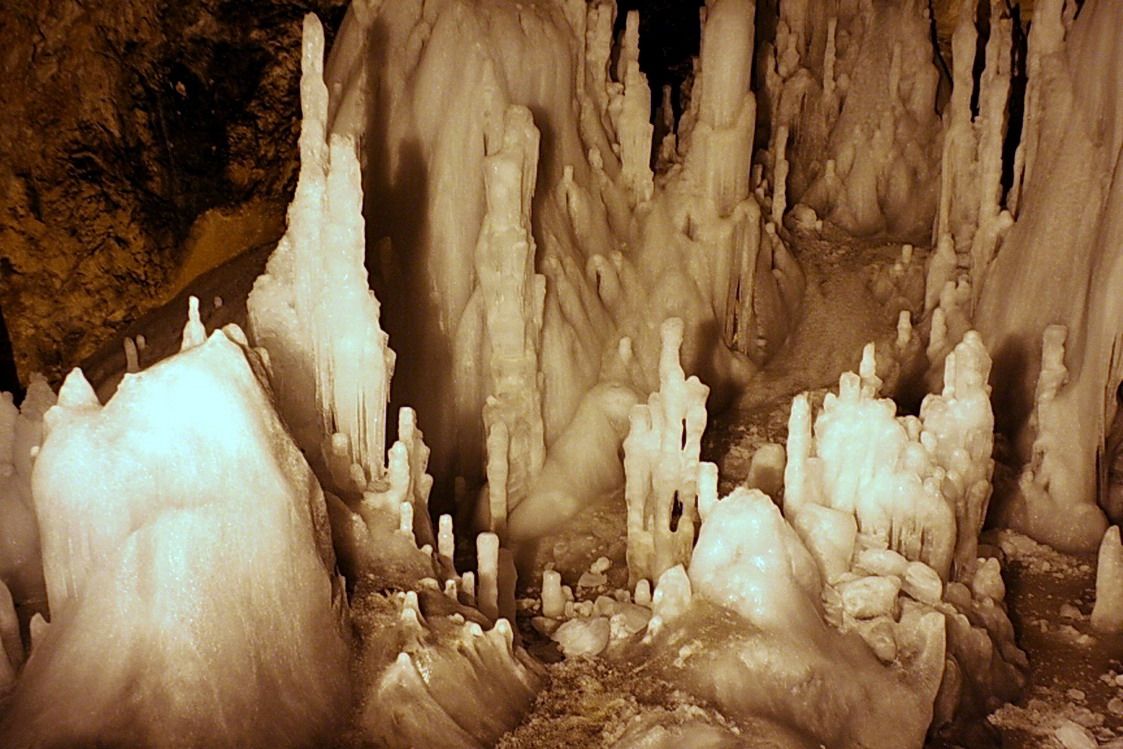
Underground, the river has carved one of the largest cave canyons in Europe. Murmuring Cave, or Šumeča jama, runs about 3.5 kilometres and is 10 to 60 metres wide. Beyond it, Martel’s Chamber is 308 metres long, up to 123 metres wide and 106 metres high, with a volume of 2.2 million cubic metres. It is the largest underground chamber discovered in Slovenia. The whole system has about six kilometres of passages and a vertical range of more than 200 metres. After heavy rain, floodwater inside can rise by more than a hundred metres. The Reka comes back to the surface at the Timavo springs, 34 kilometres away.
The caves were inscribed on the UNESCO World Heritage List in 1986. In 1999 they became a Ramsar wetland, as one of Europe’s longest underground karst wetlands, and since 2004 they have been part of the Karst Biosphere Reserve. You can go in only on a guided tour. The main route covers about five kilometres and around 1,000 steps in 2.5 to 3 hours, at a steady 12 °C. Photography is not allowed inside the cave. The free education trail around the dolines is open all year, and it is where the photographs are taken.
Škocjan Caves: common questions
How do you get to Škocjan Caves?
From Ljubljana (LJU), Slovenia; or Trieste (TRS), Italy: Fly into Ljubljana or Trieste; Drive the Ljubljana–Koper motorway to the Divača exit and follow the signs to the caves — roughly 1–1.5 hours from Ljubljana depending on traffic; Or take the train to Divača and walk the marked path of about 4 km (around 50 minutes) to the park. Total travel time: Roughly 1–1.5 hours by road from Ljubljana.
When is the best time to visit Škocjan Caves?
Open all year with guided tours. From May to September the full route continues beyond Velika dolina through the Mahorčič and Marinič Cave; from January to April and October to December the tour ends at the first exit, in Velika dolina. The cave holds a steady 12 °C year-round, so it is also a good escape on a hot day.
How long should you spend at Škocjan Caves?
Half a day for the main cave tour plus the education trail around the dolines. Total travel time: Roughly 1–1.5 hours by road from Ljubljana.
What should you bring to Škocjan Caves?
A warm layer for the constant 12 °C inside the cave Comfortable sports shoes with good grip for wet steps and paths Water — the full tour takes 2.5 to 3 hours An umbrella or rain jacket if it is raining, as the route finishes outdoors
Do you need a permit or guide for Škocjan Caves?
Entry to the caves is by guided tour only, booked through Park Škocjanske jame (park-skocjanske-jame.si); confirm current tour times and prices with the park before you go. Tours start at the reception centre and walk to the cave entrance in the Globočak doline. The caves close on 1 January and 25 December, and in the colder months (January–April and October–December) the tour ends at Exit 1 in Velika dolina; you can also choose that early exit in summer, which cuts the walk to about 3 km. Pets are not allowed on the tour. The circular education trail around the dolines is free and open all year. A separate, more demanding Hanke Channel caving tour (about 3–4 hours, no children under 15) runs on set dates with equipment provided.
Is Škocjan Caves crowded, and what are conditions like?
Guided groups leave at set times; summer departures are the busiest. About 5 km on paths and around 1,000 steps on the full route, damp underfoot, ending with a walk back up to Matavun and the reception centre. Facilities: A reception centre where tours start, a park information centre, and museum collections along the education trail.
Added
More wonders to explore