Eisriesenwelt
📍 Werfen, Salzburg, Austria
The world's largest ice cave, above Werfen in Salzburg. Open daily 1 May–31 Oct 2026 for 70-minute guided tours: 700 steps up through the ice by lamplight, below 0 °C even in summer. A cable car and two 20-minute walks lead to the 1,641 m entrance. No photos inside.
What makes it marvelous
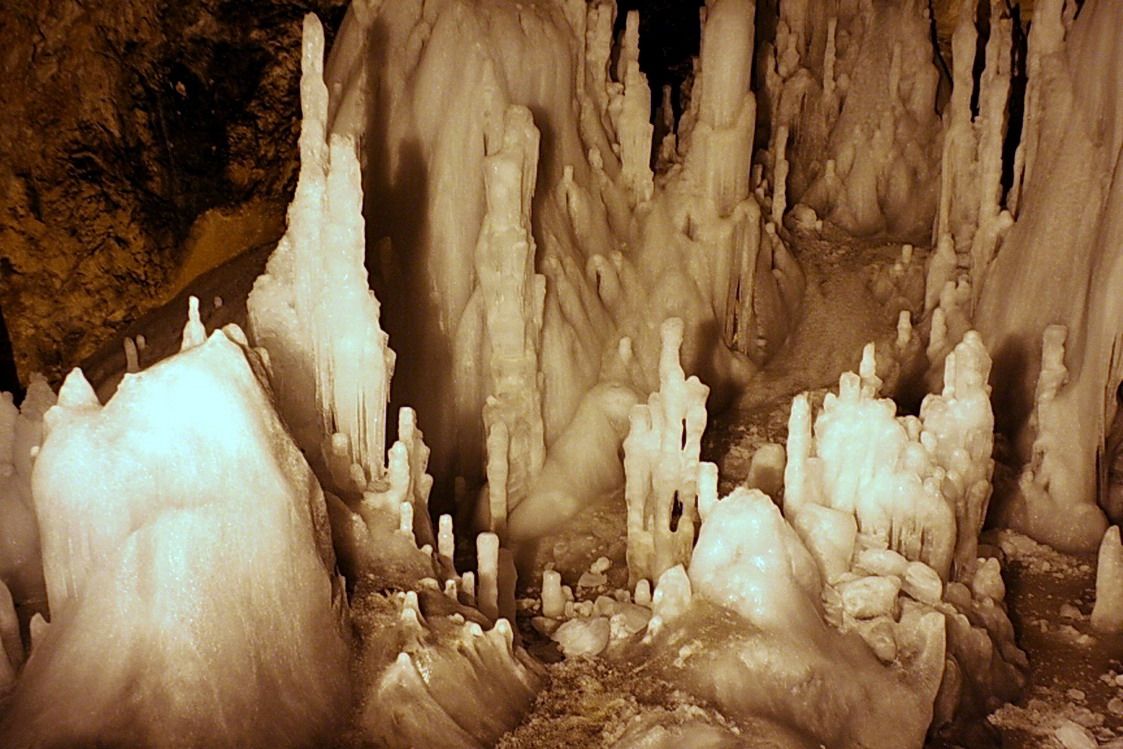
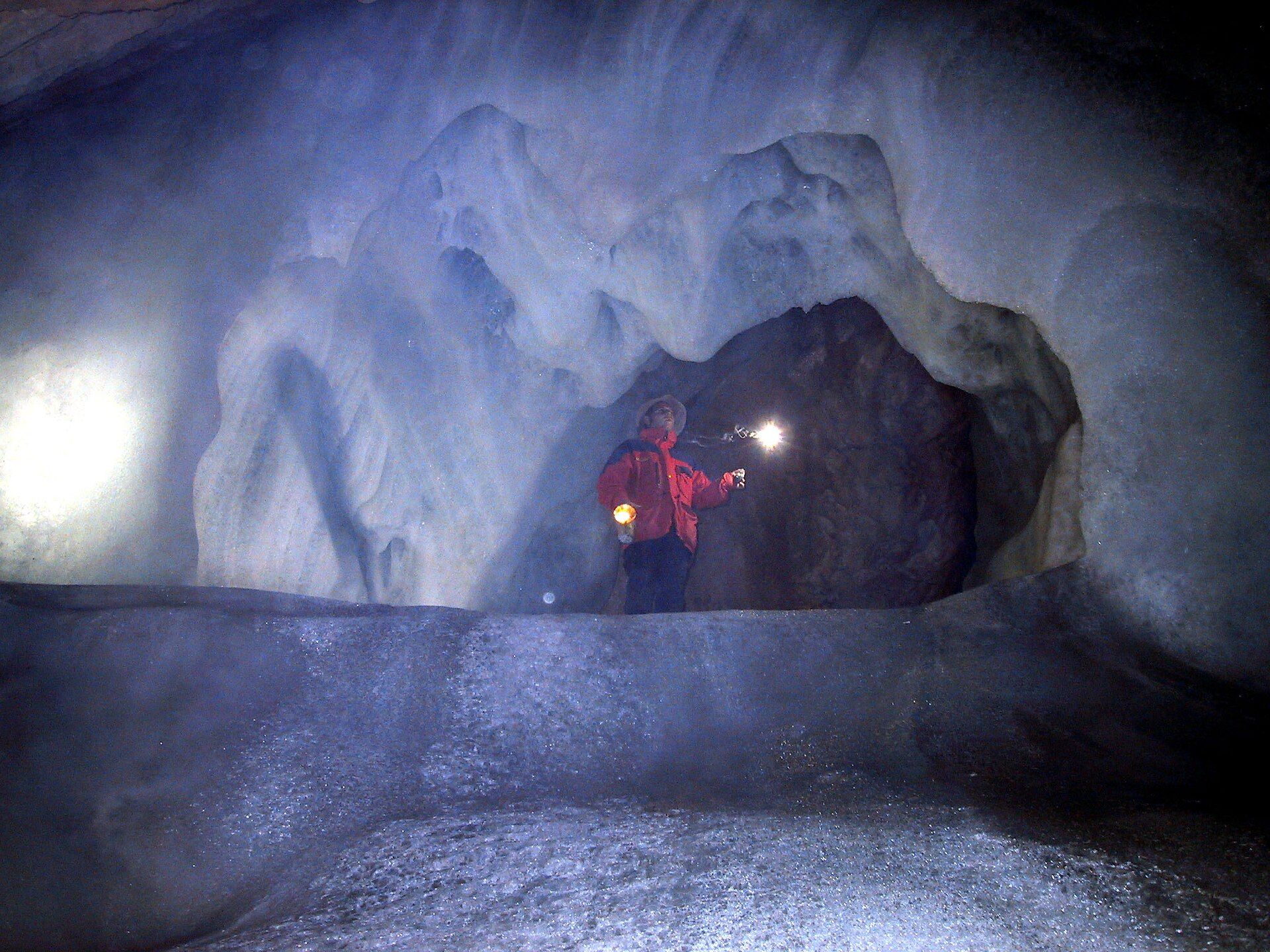
The operator describes Eisriesenwelt as a cave system about 40 kilometres long, high in the Tennengebirge above the Salzach valley, and the largest ice cave in the world. The tour covers only the ice-filled front section, where frozen waterfalls, columns and curtains of ice fill the passages. Ice survives here because of how air moves through the cave. In winter, cold outside air sinks in through the entrance and chills the rock. In spring, meltwater seeping through the limestone freezes on contact with it. Even in summer the temperature inside usually stays below freezing. There is no electric light. Guides lead the way with carbide lamps and flashes of magnesium light, and visitors carry lamps of their own. Inside, the route climbs 134 metres, up 700 steps to a high point of 1,775 metres, and then comes back down.
Why visit
Few places let you walk through ice this large, and the approach is part of the trip. A cable car lifts you to 1,575 metres, then a cliffside path leads to the cave mouth, which looks out over the Salzach valley. Inside, you climb through the ice chambers by lamplight, with no electric lighting and no phones out for photos.
What to know before you go
🗓️ Best time
The cave is open daily from 1 May to 31 October 2026 and closed all winter. Tours run 9:30–15:45, the cable car goes up 8:45–15:20, and the ticket office sells tickets 8:30–15:00. The busiest hours are 10:00 to 14:00, so book an early online time slot to avoid the queues.
🧭 Getting there & access
From Werfen, drive the 5 km toll-free road up to the car park and visitor centre at 1,000 m. A 20-minute walk leads to the cable car, a 3-minute ride to 1,575 m, then another 20-minute walk reaches the cave entrance at 1,641 m. Allow about three hours from arrival to departure. A 2026 combined ticket for cave and cable car costs €45 at the ticket office or €41 online, and online tickets come with a 30-minute entry window.
Good to know
- Bring a hat, gloves and a warm jacket. It is usually below 0 °C inside, even in midsummer, and the tour lasts over an hour.
- Wear sturdy shoes. The tour is 700 steps up and 700 back down, a 134-metre climb inside the cave.
- Buy online. It is cheaper and secures a time slot, since capacity is limited.
- Photography and filming are not permitted in the cave.
Plan your visit
Moderate🧭 Getting there
From Salzburg (SZG), then Werfen
- Fly or take the train to Salzburg, then continue to Werfen
- Werfen → visitor centre (1,000 m) — 5 km by toll-free road, then a 20-minute walk to the cable car
- Cable car, a 3-minute ride to 1,575 m, then a 20-minute walk to the cave entrance at 1,641 m
- Total travel
- Half a day from Salzburg
- Time at site
- About 3 hours from arrival to departure, including the roughly 70-minute tour
- Access
- Guided tours only, daily from 1 May to 31 October 2026. Last cable car up 15:20, last tour 15:45. The cave is closed in winter. 2026 prices for cave plus cable car are €45 for adults at the ticket office (€41 online), €32 (€30) for ages 15–18 and €24 (€22) for ages 5–14. Online tickets reserve a 30-minute entry window.
🎒 What to bring & consider
- Warm clothing including hat and gloves, because it is below freezing inside for the whole tour of more than an hour
- Sturdy shoes for wet, icy steps
- The fitness for 700 steps up and 700 down inside, a 134-metre climb, on top of the walks to and from the cable car
- Patience in the dark, because the only light comes from carbide lamps and visitors' hand lamps
👁️ What to expect
- Crowds
- Busiest between 10:00 and 14:00, with timed groups and queues at the ticket office and the cable car.
- Conditions
- Two 20-minute gravel walks outside, then a long, cold climb and descent on icy steps in near-darkness.
- Facilities
- Visitor centre, restaurants and toilets on the way up. Nothing inside the cave.
- The view
- Photography is not allowed inside, so photograph the cliffside path and the view over the Salzach valley from the cave entrance.
Times and requirements are approximate and change with season, weather, and local rules — confirm permits, fares, and schedules with operators before you travel.
Natural riches of the area
- The world's largest ice cave, about 40 km of passage according to the operator
- Frozen waterfalls, ice columns and ice curtains in the show section
- A winter cold-air trap that keeps the ice frozen through summer
- Limestone karst of the Tennengebirge massif
Local food
- Salzburger Nockerl
- A famous sweet soufflé from the Salzburg region.
- Alpine dumplings & cured meats
- Knödel and speck, hearty staples of the Austrian Alps.
- Mountain cheese
- Cheeses made from summer alpine pasture milk.
Eisriesenwelt sits high in the Tennengebirge above Werfen, in the Austrian state of Salzburg. The operator describes it as a cave system about 40 kilometres long and the largest ice cave in the world. Only the front section is open to visitors, filled with frozen waterfalls, columns and curtains of ice. It is open daily from 1 May to 31 October 2026, by guided tour only, and closed through the winter.
The ice is there because of how air moves through the mountain. In winter, cold air sinks into the cave and chills the rock. In spring, meltwater seeps through the limestone and freezes on contact. Even in summer the cave usually stays below 0 °C. There is no electricity inside. Guides light the way with carbide lamps and magnesium flashes, and visitors carry lamps of their own. The tour lasts about 70 minutes and climbs 700 steps, 134 metres of height, to a high point of 1,775 metres before coming back down. Photography and filming are not permitted.
Reaching the entrance is part of the outing. From Werfen, a 5 km road climbs to the visitor centre at 1,000 metres. From there it is a 20-minute walk to the cable car, a 3-minute ride to 1,575 metres, and another 20-minute walk to the cave mouth at 1,641 metres, which looks out over the Salzach valley. Allow about three hours in total and bring warm layers, a hat and gloves.
Eisriesenwelt: common questions
How do you get to Eisriesenwelt?
From Salzburg (SZG), then Werfen: Fly or take the train to Salzburg, then continue to Werfen; Werfen → visitor centre (1,000 m) — 5 km by toll-free road, then a 20-minute walk to the cable car; Cable car, a 3-minute ride to 1,575 m, then a 20-minute walk to the cave entrance at 1,641 m. Total travel time: Half a day from Salzburg.
When is the best time to visit Eisriesenwelt?
The cave is open daily from 1 May to 31 October 2026 and closed all winter. Tours run 9:30–15:45, the cable car goes up 8:45–15:20, and the ticket office sells tickets 8:30–15:00. The busiest hours are 10:00 to 14:00, so book an early online time slot to avoid the queues.
How long should you spend at Eisriesenwelt?
About 3 hours from arrival to departure, including the roughly 70-minute tour. Total travel time: Half a day from Salzburg.
What should you bring to Eisriesenwelt?
Warm clothing including hat and gloves, because it is below freezing inside for the whole tour of more than an hour Sturdy shoes for wet, icy steps The fitness for 700 steps up and 700 down inside, a 134-metre climb, on top of the walks to and from the cable car Patience in the dark, because the only light comes from carbide lamps and visitors' hand lamps
Do you need a permit or guide for Eisriesenwelt?
Guided tours only, daily from 1 May to 31 October 2026. Last cable car up 15:20, last tour 15:45. The cave is closed in winter. 2026 prices for cave plus cable car are €45 for adults at the ticket office (€41 online), €32 (€30) for ages 15–18 and €24 (€22) for ages 5–14. Online tickets reserve a 30-minute entry window.
Is Eisriesenwelt crowded, and what are conditions like?
Busiest between 10:00 and 14:00, with timed groups and queues at the ticket office and the cable car. Two 20-minute gravel walks outside, then a long, cold climb and descent on icy steps in near-darkness. Facilities: Visitor centre, restaurants and toilets on the way up. Nothing inside the cave.
Added Updated