Melissani Cave
📍 Karavomylos, Kefalonia, Ionian Islands, Greece
An underground lake on the Ionian island of Kefalonia, roofed by a collapsed cavern that lets a shaft of midday sun ignite the brackish water in an unearthly electric blue.
What makes it marvelous
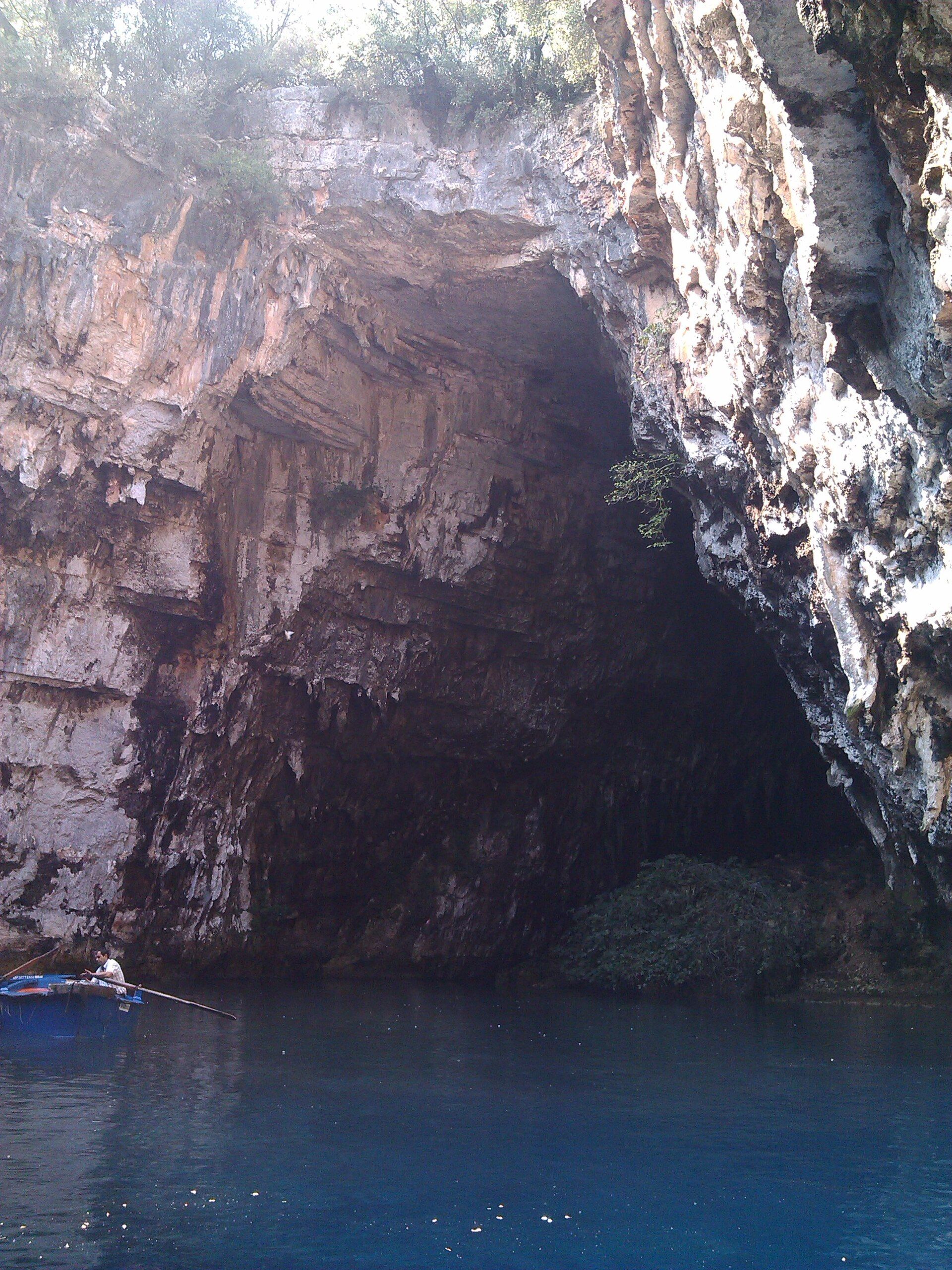
Melissani is a cave lake fed by a strange hydrological loop: seawater sinks at the Katavothres swallow holes near Argostoli, travels underground across the island for about two weeks, and mixes with fresh groundwater before surfacing in this chamber — so the lake is brackish, roughly two parts seawater to one part fresh. Part of the cave roof collapsed, probably in the great earthquake of 1953, opening the chamber to the sky. When the sun climbs high, around midday, its rays pour through the gap and strike the clear water, turning it a luminous blue and making boats appear to float on light. On an islet in the lake, excavations uncovered an ancient sanctuary, and the roof opening means the cave supports algae and plant growth that a fully enclosed cave never could.
Why visit
A short rowing-boat trip carries you out onto the lake and beneath the open roof, where the midday light show is genuinely otherworldly — water so clear the boats seem suspended, walls glowing blue. It is brief, but among the most photogenic natural sights in Greece, and easily paired with Kefalonia's beaches and the nearby show cave of Drogarati.
More views of Melissani Cave
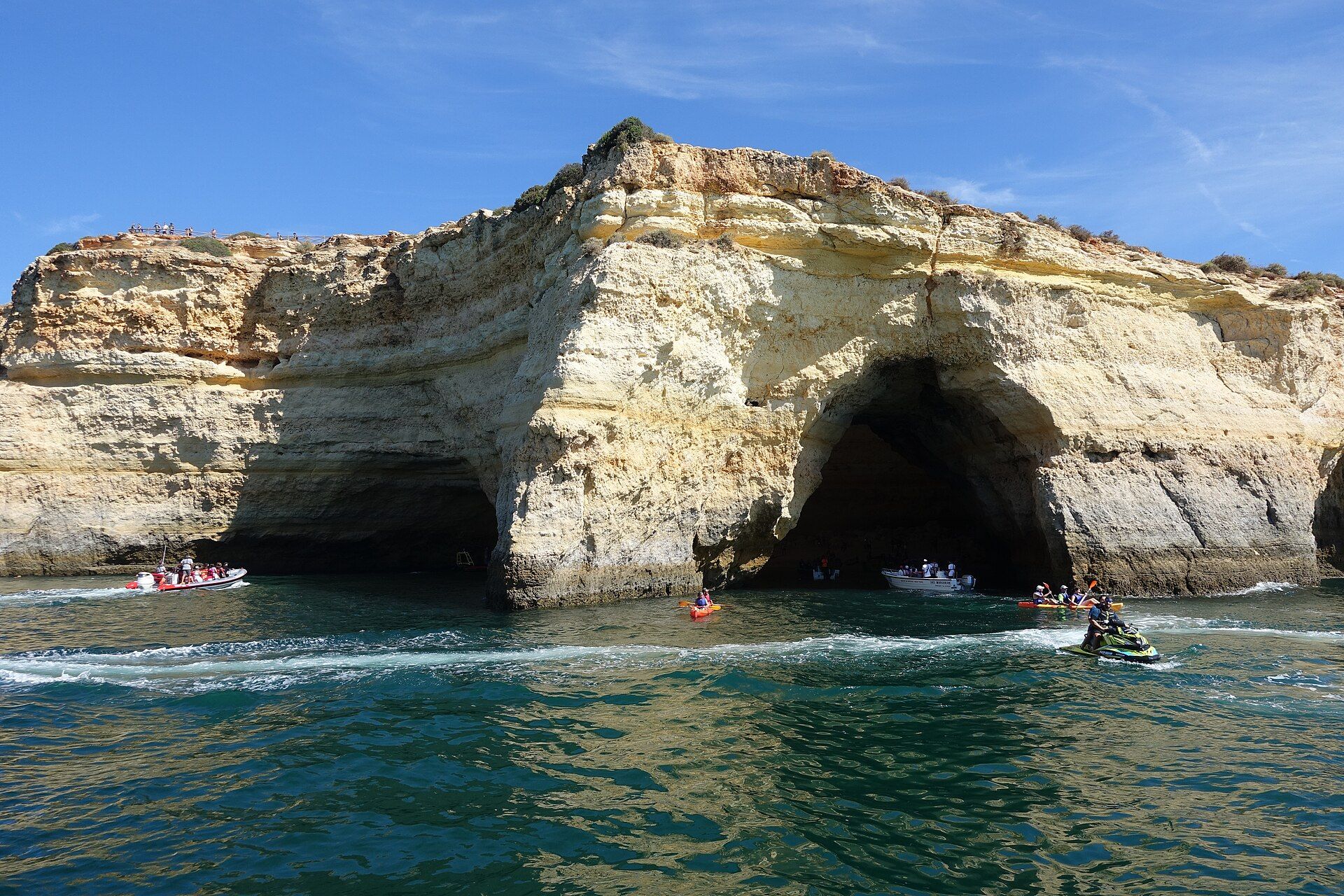
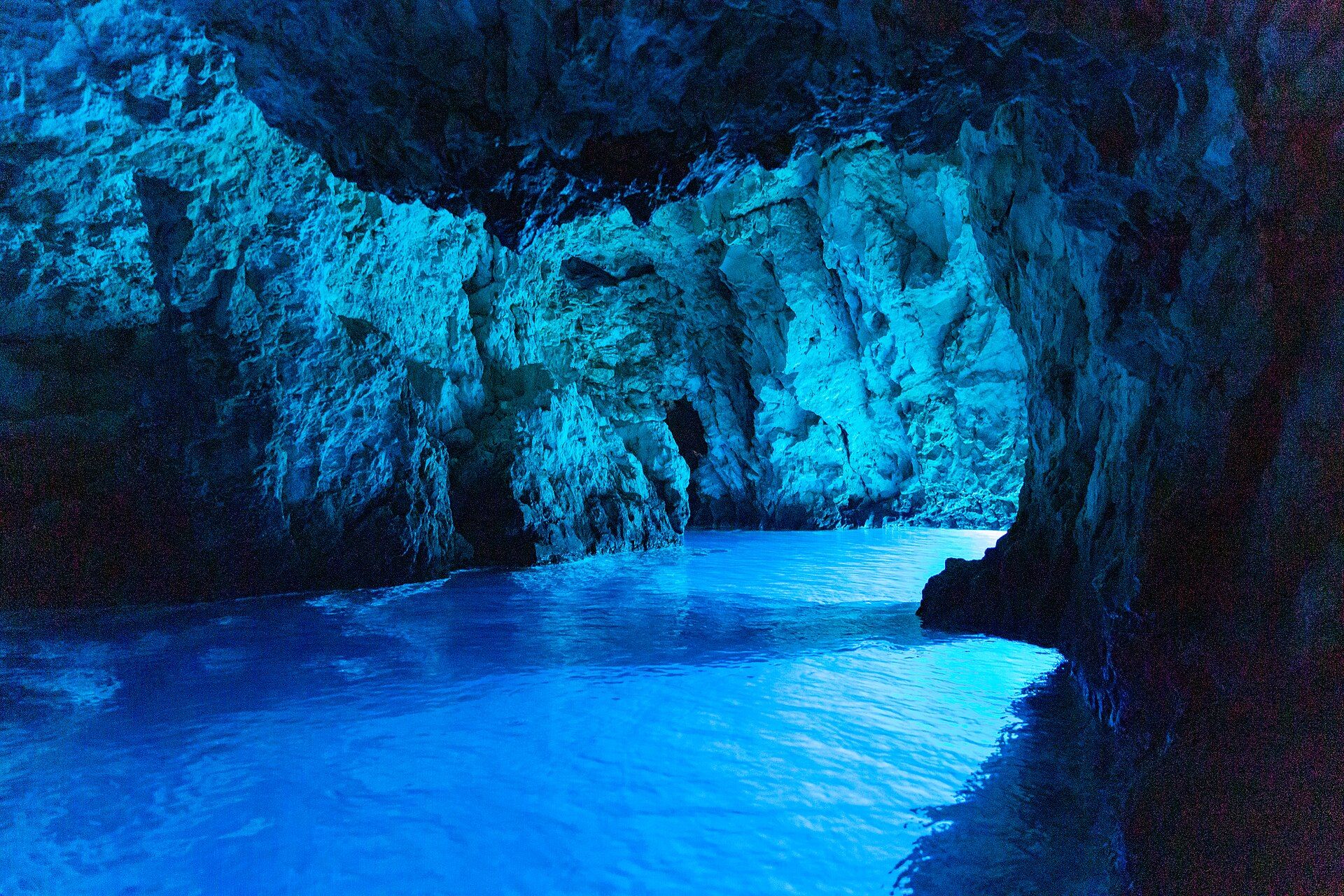
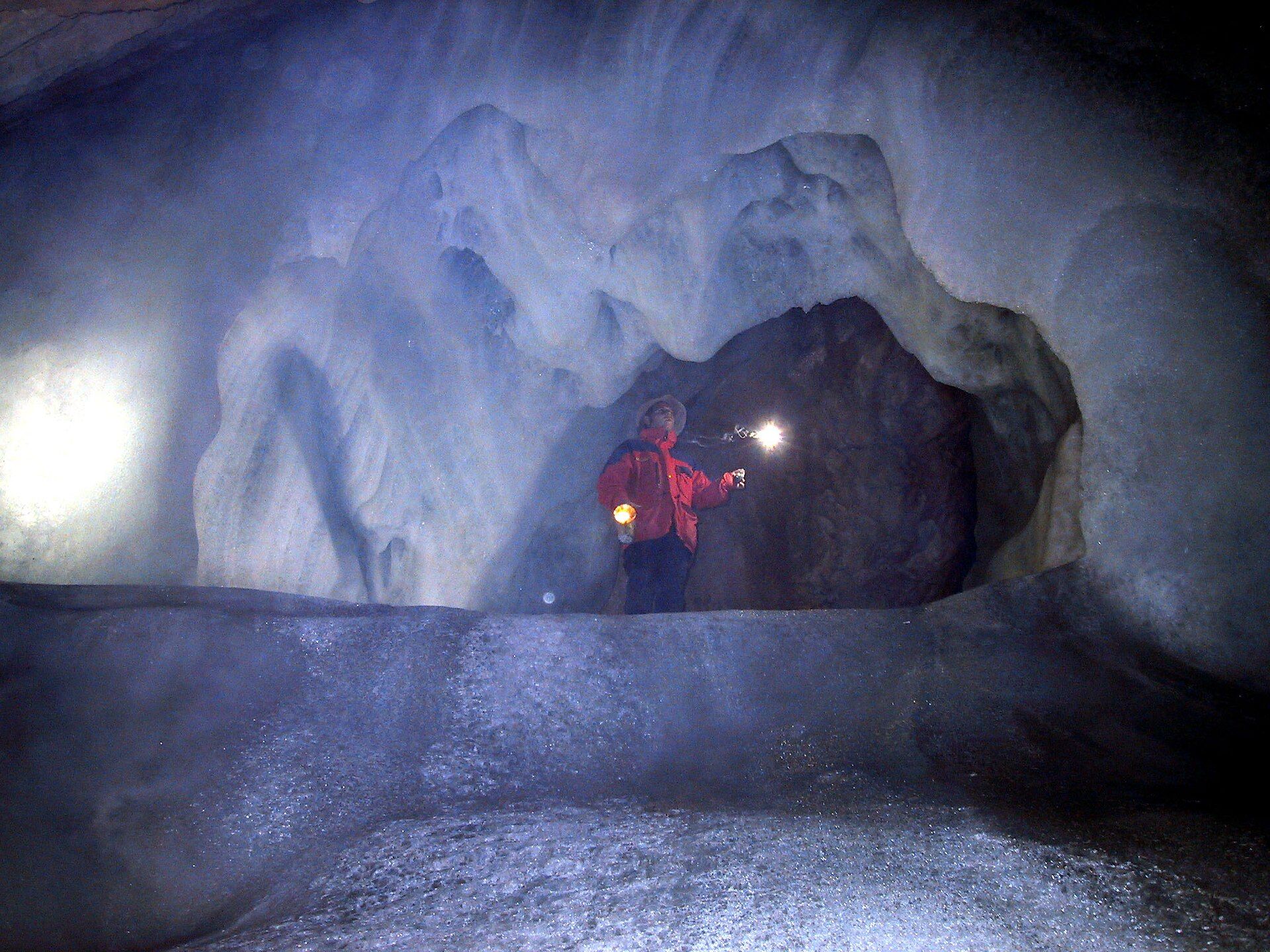
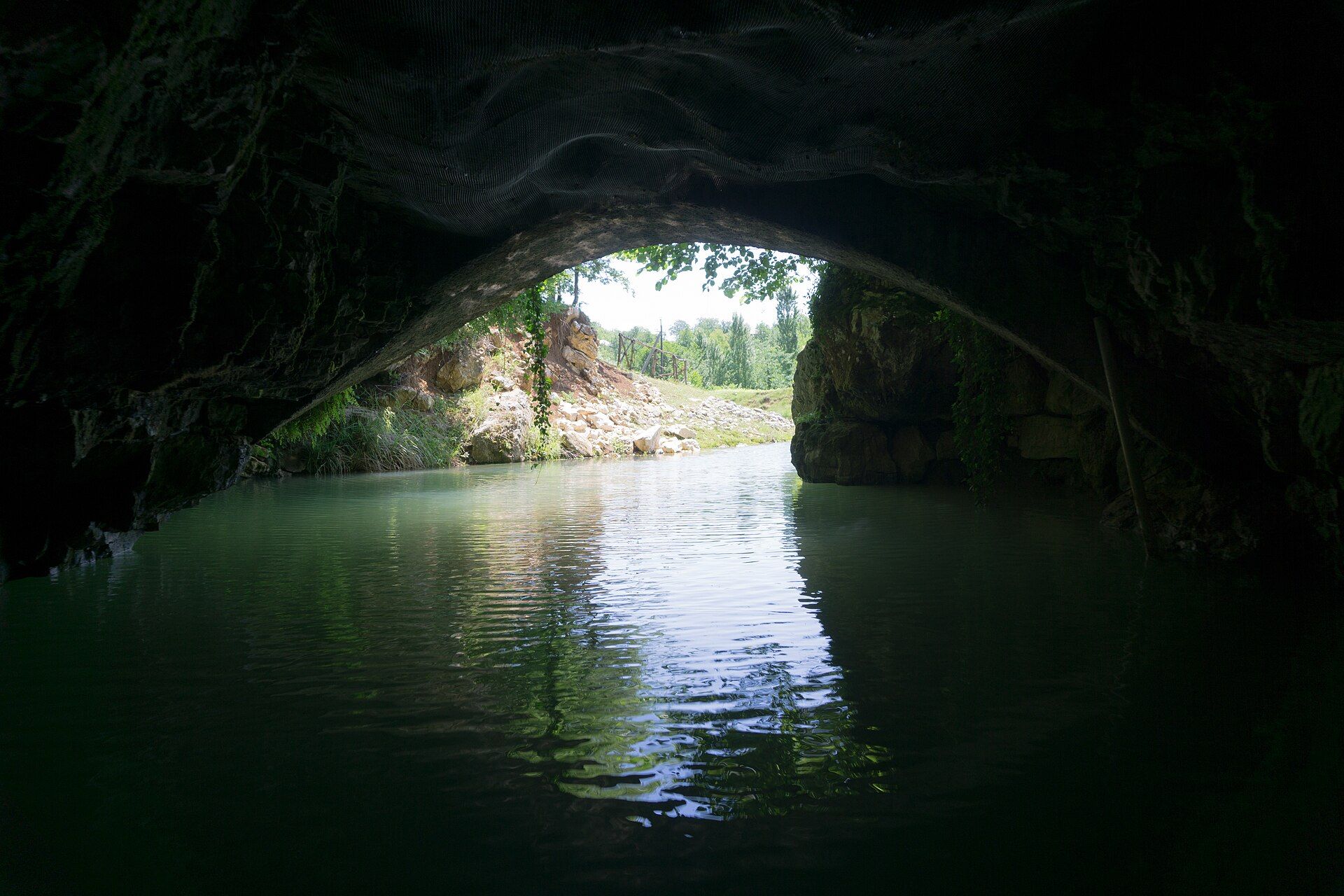
Additional photographs of the actual site — each freely licensed, with its photographer and licence credited.
What to know before you go
🗓️ Best time
Late morning to early afternoon on a sunny day, roughly 11am to 1pm, when the sun is overhead and the blue is at its most intense; the site is best from spring through autumn.
🧭 Getting there & access
A signposted site near the village of Karavomylos, between Sami and Agia Efimia; a stairway leads down to the water where guided rowing boats set off.
Good to know
- Come between about 11am and 1pm on a clear day for the sunbeam and the deepest colour.
- The visit is short — a boat ride of roughly 20 minutes — so combine it with nearby Drogarati cave or Sami's beaches.
- Swimming is not allowed; the experience is by guided boat only.
Plan your visit
Easy🧭 Getting there
From Kefalonia (airport EFL), via Sami
- Reach Kefalonia by ferry or flight, then drive to Karavomylos near Sami
- Descend the stairway to the lake and take the guided rowing boat
- Total travel
- A short excursion; roughly 30–40 minutes on site
- Time at site
- About half an hour, best combined with other Sami-area sights
- Access
- Open with an entrance fee; visits are by guided rowing boat only, and swimming is not permitted.
🎒 What to bring & consider
- A camera ready for fast-changing light
- Sun protection for the wait and the open-roofed chamber
- Cash for the entrance and boat fee
- Timing your visit for the midday sun
👁️ What to expect
- Crowds
- Queues build around the midday peak; arriving right at opening helps.
- Conditions
- A short, easy visit with a stairway down and a calm boat ride.
- Facilities
- Ticket office, parking and cafe at the site.
- The view
- The rowing boat on the glowing blue water beneath the open roof at midday.
Times and requirements are approximate and change with season, weather, and local rules — confirm permits, fares, and schedules with operators before you travel.
Natural riches of the area
- A brackish underground lake fed by sea and fresh water mixing through the island's karst
- A collapsed cavern roof that opens the chamber to daylight
- Clear water up to about 30 m deep in places
- Karst limestone caverns typical of Kefalonia
Local food
- Kefalonian meat pie
- A hearty island pie of spiced meat and rice in pastry (kreatopita).
- Robola wine
- The crisp white wine from Kefalonia's mountain vineyards.
- Aliada
- A garlicky potato purée served with fish and vegetables.
Melissani is Kefalonia’s jewel underground: a lake hidden in a cavern whose roof collapsed — most likely in the catastrophic earthquake of 1953 — leaving an opening to the sky. When the sun climbs to its midday height, a shaft of light pours through the gap and strikes the water, turning it a luminous, electric blue and making the little rowing boats appear to hover on light rather than float on it.
The lake owes its clarity and its faint saltiness to a remarkable journey. Seawater sinks into swallow holes near Argostoli, on the far side of the island, and threads underground for around two weeks before welling up here mixed with fresh groundwater — a natural plumbing system that puzzled scientists until dye tests traced the route.
The water in the cave is brackish, and the reason is remarkable: much of it arrives from the far side of the island. Seawater disappears underground at the Katavothres sinkholes near Argostoli, crosses roughly fifteen kilometres beneath Kefalonia, mixes with fresh groundwater on the way, and surfaces here — a route confirmed by dye-tracing experiments in the 1960s. A guided rowing-boat trip beneath the open roof is brief, but the midday light makes it one of the most beautiful natural sights in Greece.
Melissani Cave: common questions
How do you get to Melissani Cave?
From Kefalonia (airport EFL), via Sami: Reach Kefalonia by ferry or flight, then drive to Karavomylos near Sami; Descend the stairway to the lake and take the guided rowing boat. Total travel time: A short excursion; roughly 30–40 minutes on site.
When is the best time to visit Melissani Cave?
Late morning to early afternoon on a sunny day, roughly 11am to 1pm, when the sun is overhead and the blue is at its most intense; the site is best from spring through autumn.
How long should you spend at Melissani Cave?
About half an hour, best combined with other Sami-area sights. Total travel time: A short excursion; roughly 30–40 minutes on site.
What should you bring to Melissani Cave?
A camera ready for fast-changing light Sun protection for the wait and the open-roofed chamber Cash for the entrance and boat fee Timing your visit for the midday sun
Do you need a permit or guide for Melissani Cave?
Open with an entrance fee; visits are by guided rowing boat only, and swimming is not permitted.
Is Melissani Cave crowded, and what are conditions like?
Queues build around the midday peak; arriving right at opening helps. A short, easy visit with a stairway down and a calm boat ride. Facilities: Ticket office, parking and cafe at the site.
Added Updated
More wonders to explore