Scărișoara Ice Cave
📍 Apuseni Mountains, western Romania
A cave in Romania's Apuseni Mountains that holds one of the largest underground glaciers in the world — a block of ancient ice thousands of years old, deep beneath the forest.
What makes it marvelous
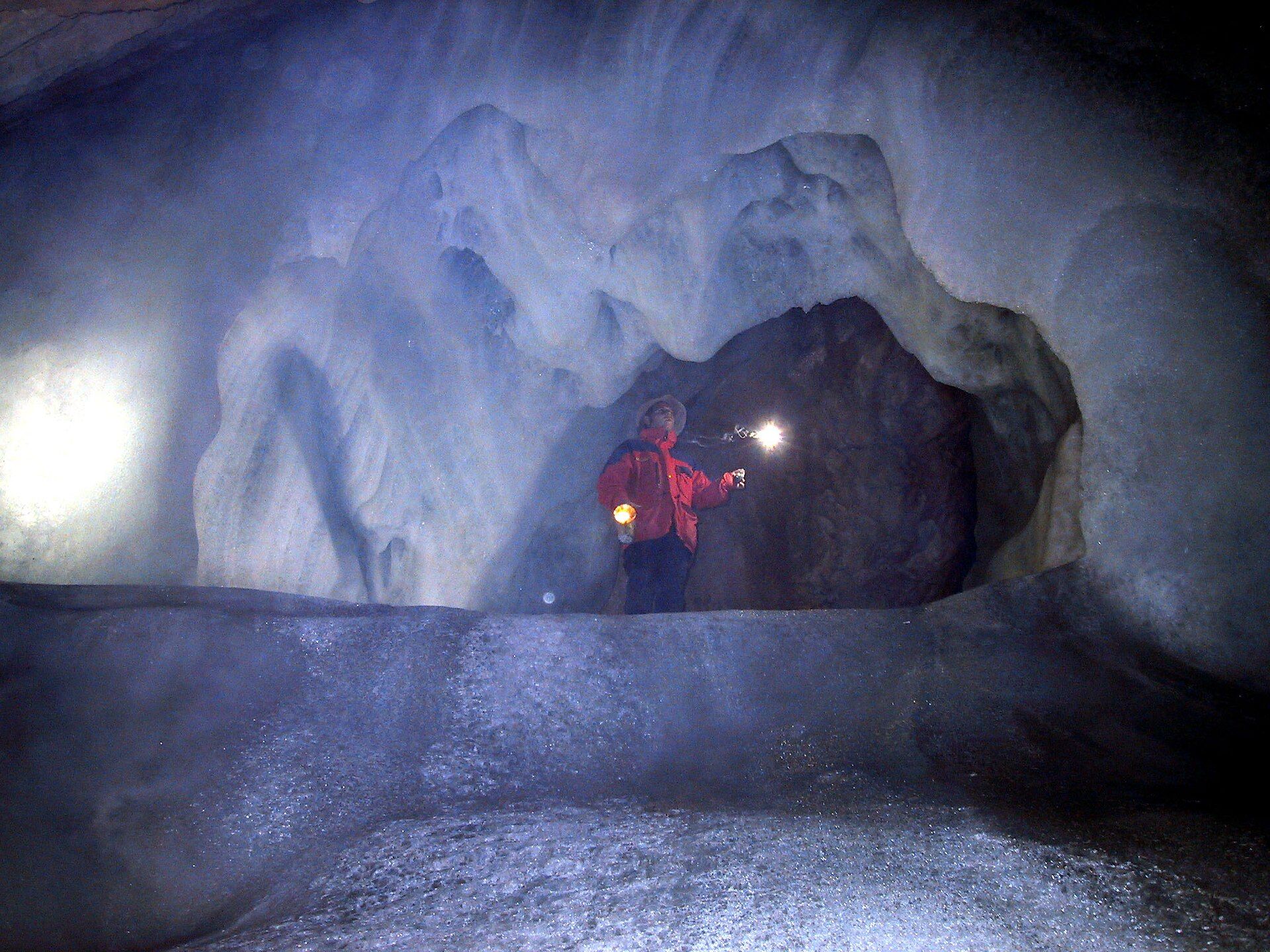
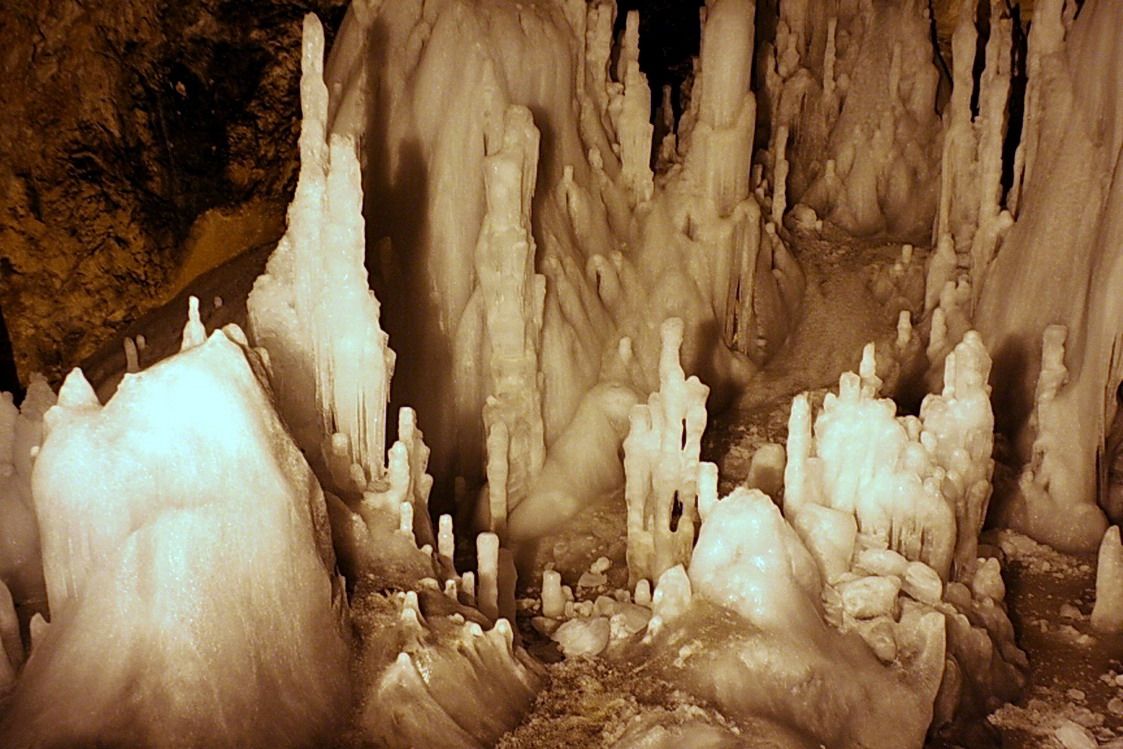
Scărișoara Cave shelters a permanent underground glacier of extraordinary size — tens of thousands of cubic metres of ice, built up over thousands of years and among the largest cave glaciers on Earth. Cold air sinks into the cave's great shaft and pools in the depths, trapping winter's chill year-round so that snow and meltwater freeze layer upon layer, preserving a frozen record of past climates. In the vast, dim Great Hall, the ice forms a gleaming floor and, in season, columns and stalagmites of clear ice.
Why visit
Descending a wooden stairway from the forest into the cave's huge cold chamber, then standing on an ancient glacier deep inside a mountain, is a genuinely otherworldly experience — a pocket of permanent winter beneath the Apuseni's green hills. The surrounding karst plateau of the Apuseni Mountains, with its gorges, springs, and traditional villages, makes the cave the centrepiece of one of Romania's most beautiful and least-known highland regions.
What to know before you go
🗓️ Best time
The cave is cold year-round, so it can be visited in any season; late spring to autumn is best for reaching it, as the mountain roads can be snowbound in winter. The ice formations are often finest in late winter and spring.
🧭 Getting there & access
High in the Apuseni Mountains of western Romania, reached by mountain road from Alba Iulia or Cluj-Napoca to the village near the cave, then a short forest walk. A ticketed show cave with a stairway and platforms; a guide accompanies visits.
Good to know
- Bring warm clothes and sturdy shoes — it is genuinely freezing inside, whatever the season.
- Take care on the wet, sometimes icy stairway and platforms.
- Combine the cave with the gorges and villages of the wider Apuseni Mountains.
Plan your visit
Moderate🧭 Getting there
From Cluj-Napoca (CLJ) or Alba Iulia, western Romania
- Fly to Cluj-Napoca
- Mountain road into the Apuseni toward the cave — a few hours
- Short forest walk to the entrance, then the stairway down to the ice
- Total travel
- A day trip from Cluj or Alba Iulia; better with an Apuseni base
- Time at site
- 1–2 hours at the cave; longer to explore the wider mountains
- Access
- A ticketed show cave visited on a guided descent by wooden stairway and platforms. Mountain access roads are rough and can be snowbound in winter; the cave itself stays cold and open much of the year.
🎒 What to bring & consider
- Warm layers — the cave is below freezing at times, year-round
- Sturdy, grippy shoes for wet and icy steps
- A light source and care on the descent
- A capable vehicle for the mountain roads
👁️ What to expect
- Crowds
- A modest trickle of visitors; busier on summer weekends, quiet otherwise.
- Conditions
- A cold, dim cave reached by a steep wooden stairway; wet, sometimes icy footing.
- Facilities
- Basic at the entrance; villages with services in the wider Apuseni.
- The view
- The gleaming ice floor and columns in the great cold hall, lit by the entrance shaft. A steady hand or long exposure helps in the dim light.
Times and requirements are approximate and change with season, weather, and local rules — confirm permits, fares, and schedules with operators before you travel.
Natural riches of the area
- One of the world's largest underground cave glaciers
- Ancient layered ice preserving past climate records
- The karst plateau, gorges, and springs of the Apuseni
- Highland forest and traditional mountain villages
Local food
- Bulz
- Baked polenta stuffed with sheep’s cheese, a shepherd’s dish of the Apuseni.
- Țuică
- A strong plum brandy, the traditional spirit of rural Romania.
Scărișoara Cave hides one of the world’s great frozen secrets beneath the green hills of Romania’s Apuseni Mountains: a permanent underground glacier, tens of thousands of cubic metres of ice built up over thousands of years, ranking among the largest cave glaciers on Earth. The cave works like a natural cold trap — heavy winter air sinks down its deep entrance shaft and settles in the depths, holding the chill through the year so that snowmelt and seeping water freeze in layer after layer, preserving a frozen archive of ancient climates.
To visit is to step out of a summer forest, descend a wooden stairway into a vast, dim chamber, and stand on ice older than any human memory, deep inside a mountain — a pocket of permanent winter under the highland sun. In season, the Great Hall glitters with columns and stalagmites of clear ice. Set amid the gorges, springs, and traditional villages of the Apuseni karst, the cave is the centrepiece of one of Romania’s most beautiful and least-visited mountain regions.
Scărișoara Ice Cave: common questions
How do you get to Scărișoara Ice Cave?
From Cluj-Napoca (CLJ) or Alba Iulia, western Romania: Fly to Cluj-Napoca; Mountain road into the Apuseni toward the cave — a few hours; Short forest walk to the entrance, then the stairway down to the ice. Total travel time: A day trip from Cluj or Alba Iulia; better with an Apuseni base.
When is the best time to visit Scărișoara Ice Cave?
The cave is cold year-round, so it can be visited in any season; late spring to autumn is best for reaching it, as the mountain roads can be snowbound in winter. The ice formations are often finest in late winter and spring.
How long should you spend at Scărișoara Ice Cave?
1–2 hours at the cave; longer to explore the wider mountains. Total travel time: A day trip from Cluj or Alba Iulia; better with an Apuseni base.
What should you bring to Scărișoara Ice Cave?
Warm layers — the cave is below freezing at times, year-round Sturdy, grippy shoes for wet and icy steps A light source and care on the descent A capable vehicle for the mountain roads
Do you need a permit or guide for Scărișoara Ice Cave?
A ticketed show cave visited on a guided descent by wooden stairway and platforms. Mountain access roads are rough and can be snowbound in winter; the cave itself stays cold and open much of the year.
Is Scărișoara Ice Cave crowded, and what are conditions like?
A modest trickle of visitors; busier on summer weekends, quiet otherwise. A cold, dim cave reached by a steep wooden stairway; wet, sometimes icy footing. Facilities: Basic at the entrance; villages with services in the wider Apuseni.
Added
More wonders to explore