Kenai Fjords National Park
📍 Kenai Peninsula, Alaska, United States
A coast of glacier-carved fjords on the Gulf of Alaska, where tidewater glaciers spilling from the vast Harding Icefield calve straight into the sea among humpback whales, orcas, sea otters, and cliffs of nesting seabirds.
What makes it marvelous
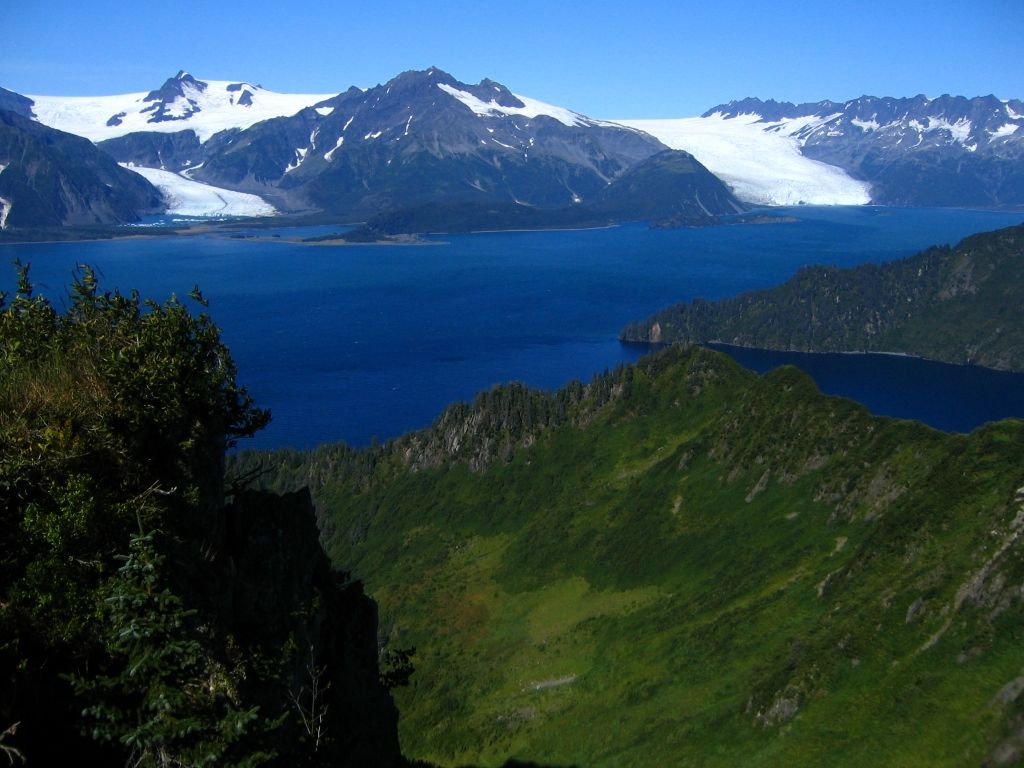
Kenai Fjords protects the drowned, glacier-cut coastline south of Seward, where the ice of the last ages still lingers on the land. At its heart lies the Harding Icefield, a plateau of ice roughly 700 square miles in extent that buries the Kenai Mountains and feeds more than thirty named glaciers over its edges. Several of these are tidewater glaciers — rivers of ice that flow all the way down to the ocean and end in a cliff of ice at the waterline, where blocks the size of buildings break off and crash into the fjord in a process called calving. Aialik, Holgate, and Northwestern glaciers are the famous faces, reached by boat through deep fjords walled by dark rock and hanging forest. The cold, plankton-rich water below is as alive as the ice above: humpback and orca whales, Steller sea lions, sea otters, harbour seals hauled out on drifting ice, and cliffs packed with puffins, kittiwakes, and murres. It is a compact meeting of ice, rock, and ocean that shows, in a single boat day, how glaciers shaped this whole coast.
Why visit
Kenai Fjords is the most accessible place in Alaska to watch a glacier calve into the sea and share the water with whales in the same afternoon. A day cruise from Seward carries you deep into fjords beneath tidewater glaciers and past rafts of sea otters and seabird cliffs, while the Exit Glacier road and the Harding Icefield Trail let you walk right up to the ice from land.
What to know before you go
🗓️ Best time
Best late May to early September, when day cruises run, wildlife is active, and the weather is mildest; June and July bring long daylight and peak calving, while late summer adds salmon runs and their bears and eagles.
🧭 Getting there & access
The park lies just outside Seward, about 2–3 hours by road or rail from Anchorage. Most visitors see the fjords on a half- or full-day boat tour from Seward harbour; Exit Glacier, the one part reachable by car, sits a short drive from town at the end of Exit Glacier Road.
Good to know
- Take a full-day cruise rather than a half-day to reach the big tidewater glaciers like Aialik or Northwestern.
- Dress in warm waterproof layers even in summer — it is cold and often wet on the open water near the ice.
- Walk to Exit Glacier or up the Harding Icefield Trail for a land-based look at the ice the fjords were carved by.
Plan your visit
Easy🧭 Getting there
From Seward or Anchorage (ANC), Alaska
- Fly into Anchorage
- Travel about 2–3 hours south to Seward by road or the Coastal Classic train
- Board a day cruise from Seward harbour into the fjords
- Or drive to Exit Glacier at the end of Exit Glacier Road for a land visit
- Total travel
- A long day from Anchorage, or one to two days based in Seward
- Time at site
- A 6–8 hour full-day boat cruise reaches the tidewater glaciers; Exit Glacier is a half-day
- Access
- The fjords are reachable only by boat (or by air); tours run in the summer season only, roughly mid-May to September. Weather can shorten or cancel sailings, so allow a spare day. Exit Glacier is the only road-accessible part of the park.
🎒 What to bring & consider
- Warm, fully waterproof layers and a windproof outer — it is cold on the water near the ice
- Motion-sickness remedy, as the open Gulf of Alaska can be rough
- Binoculars and a long lens for whales, otters, and seabird cliffs
- Booking cruises ahead in peak summer, when boats fill
👁️ What to expect
- Crowds
- Seward and the cruises are busy in July, but the fjords are vast; land at Exit Glacier is busiest midday.
- Conditions
- Open-water boating in cold, often wet and windy conditions; the Exit Glacier walks are easy, the icefield trail strenuous.
- Facilities
- Seward has full services and the tour docks; the fjords themselves have none. Exit Glacier has a ranger station and trails.
- The view
- A blue tidewater glacier calving into the fjord, or sea otters and a breaching humpback against the ice-walled coast.
Times and requirements are approximate and change with season, weather, and local rules — confirm permits, fares, and schedules with operators before you travel.
Natural riches of the area
- The Harding Icefield and the more than thirty glaciers that flow from it
- Tidewater glaciers calving into deep, glacier-cut fjords
- Cold, plankton-rich Gulf of Alaska waters feeding whales, sea lions, and otters
- Seabird cliffs of puffins, kittiwakes, and murres
Local food
- Alaskan wild salmon
- The surrounding waters run with sockeye, coho, and king salmon, grilled fresh or smoked all along the Kenai coast.
- Halibut and rockfish
- Seward's harbour lands halibut and rockfish, the mainstay of the local fish and chips.
- Spot prawns and Dungeness crab
- Cold Gulf of Alaska shellfish are a prized catch brought in around the fjords.
Kenai Fjords is Alaska’s ice made visible from the sea. Behind the town of Seward, the Harding Icefield lies over the Kenai Mountains like a frozen inland sea, and off its edges more than thirty glaciers pour down toward the coast. Where they reach the ocean they become tidewater glaciers, ending in cliffs of ice that break and thunder into deep, dark fjords — the same fjords that Ice Age glaciers carved when the ice reached far lower than it does today.
A boat is the way in. Cruising out of Seward you pass rafts of sea otters, haul-outs of Steller sea lions, and cliffs loud with puffins and kittiwakes, then round into a fjord where a wall of blue ice stands at the waterline, calving into a slush of floating bergs with harbour seals resting on them. Humpbacks and orcas work the cold, rich water offshore. And for those who would rather walk, the road to Exit Glacier and the steep climb of the Harding Icefield Trail let you stand on the land beside the ice itself. In a single day, Kenai Fjords lays out the whole Alaskan story of ice meeting ocean.
Kenai Fjords National Park: common questions
How do you get to Kenai Fjords National Park?
From Seward or Anchorage (ANC), Alaska: Fly into Anchorage; Travel about 2–3 hours south to Seward by road or the Coastal Classic train; Board a day cruise from Seward harbour into the fjords; Or drive to Exit Glacier at the end of Exit Glacier Road for a land visit. Total travel time: A long day from Anchorage, or one to two days based in Seward.
When is the best time to visit Kenai Fjords National Park?
Best late May to early September, when day cruises run, wildlife is active, and the weather is mildest; June and July bring long daylight and peak calving, while late summer adds salmon runs and their bears and eagles.
How long should you spend at Kenai Fjords National Park?
A 6–8 hour full-day boat cruise reaches the tidewater glaciers; Exit Glacier is a half-day. Total travel time: A long day from Anchorage, or one to two days based in Seward.
What should you bring to Kenai Fjords National Park?
Warm, fully waterproof layers and a windproof outer — it is cold on the water near the ice Motion-sickness remedy, as the open Gulf of Alaska can be rough Binoculars and a long lens for whales, otters, and seabird cliffs Booking cruises ahead in peak summer, when boats fill
Do you need a permit or guide for Kenai Fjords National Park?
The fjords are reachable only by boat (or by air); tours run in the summer season only, roughly mid-May to September. Weather can shorten or cancel sailings, so allow a spare day. Exit Glacier is the only road-accessible part of the park.
Is Kenai Fjords National Park crowded, and what are conditions like?
Seward and the cruises are busy in July, but the fjords are vast; land at Exit Glacier is busiest midday. Open-water boating in cold, often wet and windy conditions; the Exit Glacier walks are easy, the icefield trail strenuous. Facilities: Seward has full services and the tour docks; the fjords themselves have none. Exit Glacier has a ranger station and trails.
Added
More wonders to explore