Mount Fitz Roy
📍 Los Glaciares National Park, Santa Cruz, Argentina
A sheer granite spire on the Argentina–Chile border towering above El Chaltén in Los Glaciares National Park — one of the most dramatic and technically feared peaks on Earth, wreathed in the cloud the first peoples read as smoke.
What makes it marvelous
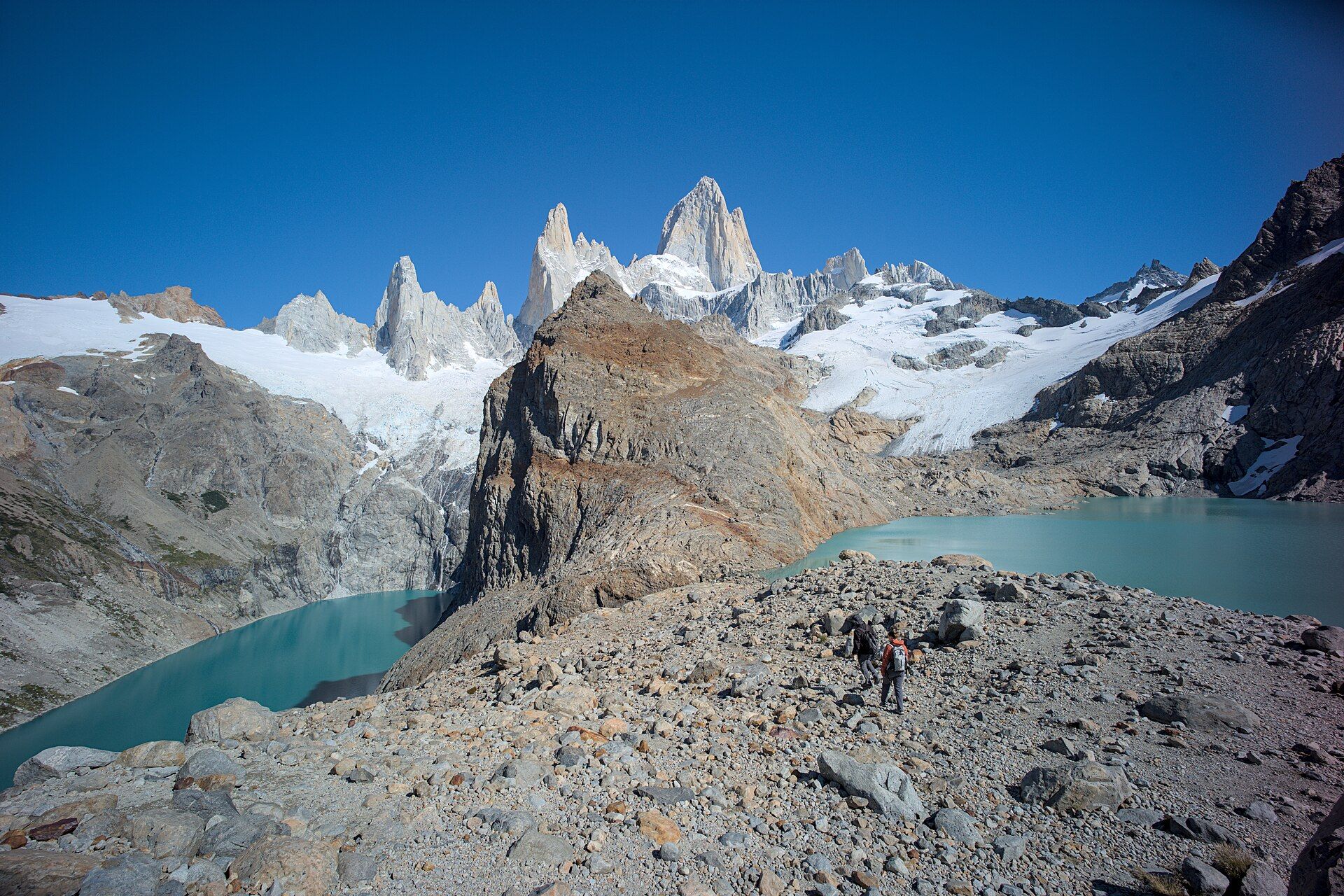
Fitz Roy rises about 3,405 metres as a near-vertical tower of pale granite, the highest of a compact range of needle-like peaks — Cerro Torre, Poincenot, Saint-Exupéry — carved from a Patagonian batholith and then honed by Ice Age glaciers into knife-edged spires. The Tehuelche called it Chaltén, 'the smoking mountain', for the banner of cloud that streams almost permanently from its summit. Its walls are so steep and its weather so violent that, despite its modest height, it ranks among the hardest mountaineering objectives in the world; the summit was not reached until 1952. The massif drains the Southern Patagonian Ice Field, and turquoise glacial lakes sit beneath its base.
Why visit
You do not have to climb it to be floored by it. The Laguna de los Tres trail from El Chaltén walks you to a glacial tarn directly beneath the spire, where at dawn the granite catches fire in deep orange and red — one of the great sunrise sights in the Andes. El Chaltén, Argentina's self-styled trekking capital, puts a network of free, well-marked day hikes at your door.
Still deciding?
Mount Fitz Roy comes up most often against these — each one weighs cost, effort, season and crowds side by side.
More views of Mount Fitz Roy
Additional photographs of the actual site — each freely licensed, with its photographer and licence credited.
What to know before you go
🗓️ Best time
The Patagonian summer, roughly November to March, for the longest days and best chance of clear weather; the peak is famously shy, hidden by cloud for days on end, and the wind blows hard year-round.
🧭 Getting there & access
Reached from El Calafate by road in about three hours to the village of El Chaltén, where the main trails begin on foot; day hiking needs no permit or fee.
Good to know
- Fitz Roy hides in cloud for days — build in flexible time and start the Laguna de los Tres climb before dawn for the alpenglow.
- The last kilometre to Laguna de los Tres is a steep, strenuous scramble; the rest of the trail is moderate.
- Carry layers and windproofs whatever the forecast — Patagonian weather turns in minutes.
Plan your visit
Strenuous🧭 Getting there
From El Calafate (airport FTE), then the village of El Chaltén
- Fly to El Calafate, then drive or take the bus about 3 hours north to El Chaltén
- From El Chaltén, walk the Laguna de los Tres trail — roughly 10 km each way
- Total travel
- About half a day from El Calafate to the trailhead village
- Time at site
- A full day for Laguna de los Tres; several days to explore the wider trail network
- Access
- Trails start free from El Chaltén with no permit for day hikes; the final climb to the laguna is steep and exposed.
🎒 What to bring & consider
- Windproof and waterproof layers in every season
- Sturdy boots for the steep, rocky final ascent
- Plenty of water, food and sun protection — there are no services on the trail
- An early start for sunrise light and to beat afternoon wind
👁️ What to expect
- Crowds
- The trail is popular in summer; an early start finds it quiet and gives the best light.
- Conditions
- Long, exposed mountain walking with a hard final scramble and fast-changing weather.
- Facilities
- Full services in El Chaltén; none once you are on the trail.
- The view
- Fitz Roy glowing red at sunrise above Laguna de los Tres, reflected in the tarn on a still morning.
Times and requirements are approximate and change with season, weather, and local rules — confirm permits, fares, and schedules with operators before you travel.
Natural riches of the area
- A batholith of pale granite eroded by glaciers into vertical spires
- Glacial lakes and hanging glaciers fed by the Southern Patagonian Ice Field
- Lenga and ñire southern-beech forest and Patagonian steppe
- Condors, guanacos and the huemul, an endangered Andean deer
Local food
- Cordero al palo
- Patagonian lamb splayed on an iron cross and slow-roasted over open fire.
- Calafate berry
- A tart wild barberry gathered on the steppe and made into jam and ice cream.
- Mate
- The shared bitter yerba infusion, a daily ritual across Argentina.
Mount Fitz Roy is the granite exclamation point of Argentine Patagonia: a sheer tower rising some 3,405 metres above the trekking village of El Chaltén, in the northern reaches of Los Glaciares National Park. The Tehuelche knew it as Chaltén, the smoking mountain, for the near-permanent plume of cloud torn from its summit by the wind — a banner that fooled early observers into thinking it a volcano.
Though far from the world’s tallest peak, Fitz Roy is one of its most feared. Its walls are almost vertical, its granite superb, and its weather ferocious; the summit went unclimbed until 1952 and still turns back most who try. For everyone else, El Chaltén offers a rare gift — a network of free, well-marked trails leading straight to the foot of the range.
The finest of these, the walk to Laguna de los Tres, ends at a glacial tarn directly beneath the spire. Arrive at dawn and the tower ignites in orange and red as the first light hits the granite — a sight that draws walkers and photographers from around the world to this windswept corner of the Andes.
Mount Fitz Roy: common questions
How do you get to Mount Fitz Roy?
From El Calafate (airport FTE), then the village of El Chaltén: Fly to El Calafate, then drive or take the bus about 3 hours north to El Chaltén; From El Chaltén, walk the Laguna de los Tres trail — roughly 10 km each way. Total travel time: About half a day from El Calafate to the trailhead village.
When is the best time to visit Mount Fitz Roy?
The Patagonian summer, roughly November to March, for the longest days and best chance of clear weather; the peak is famously shy, hidden by cloud for days on end, and the wind blows hard year-round.
How long should you spend at Mount Fitz Roy?
A full day for Laguna de los Tres; several days to explore the wider trail network. Total travel time: About half a day from El Calafate to the trailhead village.
What should you bring to Mount Fitz Roy?
Windproof and waterproof layers in every season Sturdy boots for the steep, rocky final ascent Plenty of water, food and sun protection — there are no services on the trail An early start for sunrise light and to beat afternoon wind
Do you need a permit or guide for Mount Fitz Roy?
Trails start free from El Chaltén with no permit for day hikes; the final climb to the laguna is steep and exposed.
Is Mount Fitz Roy crowded, and what are conditions like?
The trail is popular in summer; an early start finds it quiet and gives the best light. Long, exposed mountain walking with a hard final scramble and fast-changing weather. Facilities: Full services in El Chaltén; none once you are on the trail.
Added Updated
More wonders to explore