Aconcagua
📍 Aconcagua Provincial Park, Mendoza Province, Argentina
The highest mountain in the Americas and the loftiest peak outside Asia — a colossal Andean massif of rock, snow and thin air near Mendoza, and the most accessible of the world's Seven Summits.
What makes it marvelous
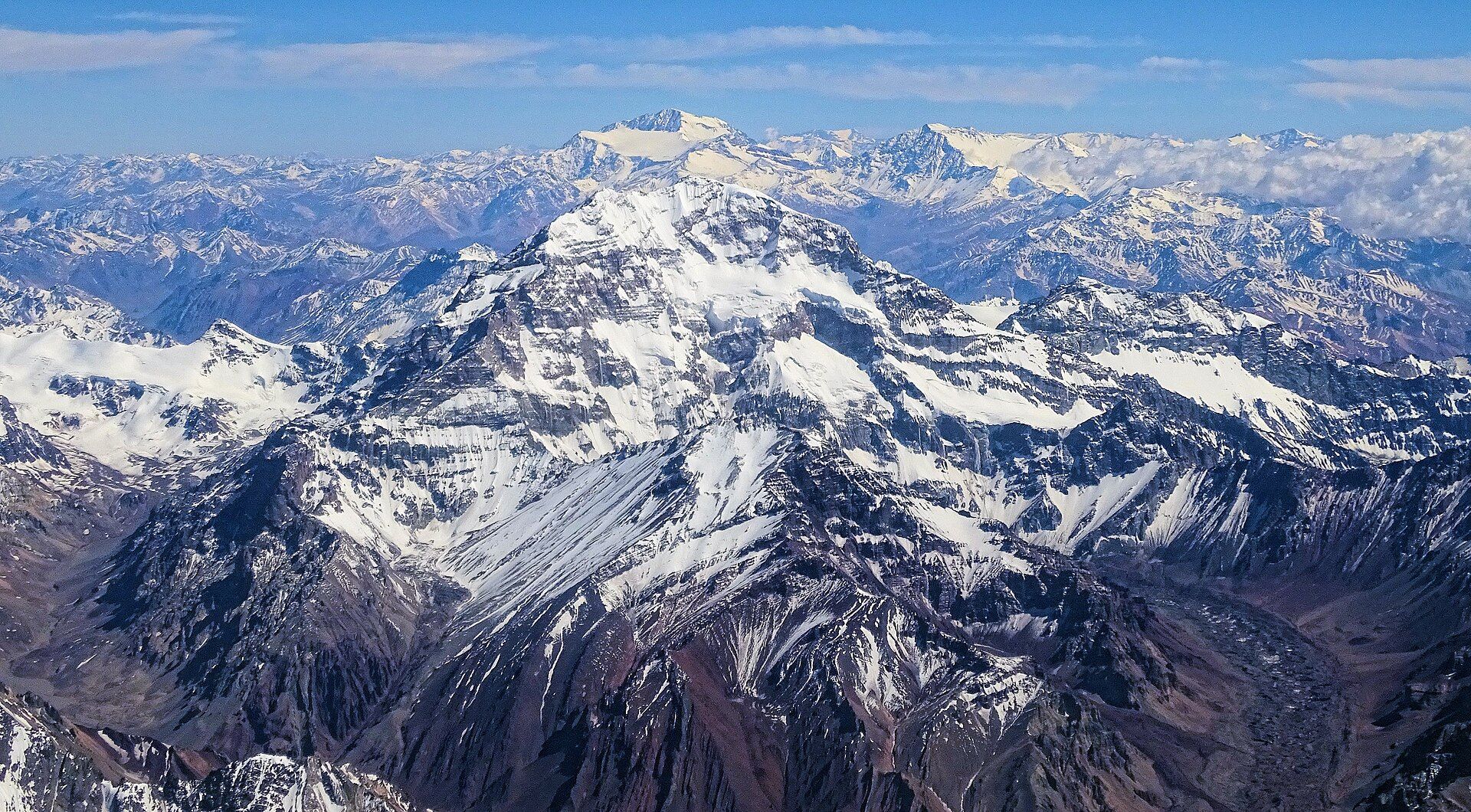
At roughly 6,961 metres, Aconcagua is the tallest peak in both the Western and Southern Hemispheres and the second-most prominent mountain on Earth after Everest. It is not a volcano but a great pile of ancient marine and volcanic rock thrust skyward as the Nazca plate dives beneath South America, its layered strata still legible on the summit walls. The 'normal route' up the northwest side is a non-technical if brutally high walk, which is why Aconcagua is climbed by thousands each season — yet the altitude is deadly serious, with the summit barely half the oxygen of sea level and storms that can pin climbers in camp for days.
Why visit
Even those with no intention of the summit can feel the scale from the park's lower trails, where the sheer south face — one of the biggest walls in the Andes — rears up beyond glacier-fed streams and guanaco-grazed valleys. For mountaineers it is the achievable giant, a 'walk-up' to nearly 7,000 metres that demands fitness, patience and respect for the thin air rather than ropes and technical skill.
Still deciding?
Aconcagua comes up most often against these — each one weighs cost, effort, season and crowds side by side.
More views of Aconcagua
Additional photographs of the actual site — each freely licensed, with its photographer and licence credited.
What to know before you go
🗓️ Best time
The climbing and trekking season runs mid-November to March, the Southern Hemisphere summer; outside it the park is snowbound and the high camps closed.
🧭 Getting there & access
The park entrance sits on Route 7 between Mendoza and the Chilean border, about a three-hour drive; permits, obtained in Mendoza city, are compulsory for trekking and climbing in season.
Good to know
- Altitude is the real hazard — acclimatise slowly and know the signs of altitude sickness before going high.
- Permits must be bought in person in Mendoza; day, trek and full-ascent tiers each cost differently and vary by season.
- Even summer weather at altitude is fierce; carry full cold-weather and wind protection.
Plan your visit
Expedition🧭 Getting there
From Mendoza city (airport MDZ)
- Fly to Mendoza, then drive about 3 hours west on Route 7 toward the Chilean border
- Enter Aconcagua Provincial Park at Horcones for the trailheads and climbing routes
- Total travel
- About half a day from Mendoza to the park gate
- Time at site
- A day for the lower trails; 12–20 days for a full acclimatised summit attempt
- Access
- A park permit, bought in person in Mendoza, is compulsory in season; day, trekking and full-climb tiers are priced separately.
🎒 What to bring & consider
- A staged acclimatisation plan and awareness of altitude sickness
- Full expedition cold-weather kit for any high camp
- A licensed operator or guide for the ascent unless highly experienced
- Strong sun protection — UV is intense at altitude
👁️ What to expect
- Crowds
- The normal route is busy in peak season; the lower valleys stay quiet.
- Conditions
- Extreme altitude, cold and wind; non-technical underfoot but physically punishing.
- Facilities
- Ranger stations and seasonal high camps on the normal route; nothing off it.
- The view
- The immense south face at first light from the Confluencia or Plaza Francia approach.
Times and requirements are approximate and change with season, weather, and local rules — confirm permits, fares, and schedules with operators before you travel.
Natural riches of the area
- Uplifted marine and volcanic strata raised to nearly 7,000 metres by Andean tectonics
- Glaciers and 'penitentes' — blades of hardened snow — on the high slopes
- Meltwater feeding the rivers of the Mendoza wine country below
- Guanacos, Andean condors and high-desert scrub in the valleys
Local food
- Asado
- Argentina's grilled-meat feast, the centre of Mendoza social life.
- Malbec
- The deep red wine of the vineyards on the plains below the mountain.
- Empanadas mendocinas
- Baked pastries filled with spiced beef, olives and egg.
Aconcagua is the roof of the Americas: at about 6,961 metres it is the highest mountain anywhere outside Asia, standing in a stark, thin-aired corner of Mendoza Province near Argentina’s border with Chile. It is not a volcano but a vast stack of ancient seabed and volcanic rock, heaved skyward where the Pacific floor grinds beneath South America — its tilted strata still visible high on the summit ridges.
What makes Aconcagua unusual among the world’s giants is its accessibility. The standard northwest route is a non-technical climb, a long high-altitude walk rather than a roped ascent, and each summer thousands set out to stand on a nearly seven-thousand-metre summit without needing a mountaineer’s skills. The altitude, however, is unforgiving: the top holds barely half the oxygen of sea level, and sudden storms can trap climbers for days.
For travellers who never lace up crampons, the park’s lower valleys still deliver the mountain’s scale — the enormous south face rising beyond guanaco-grazed slopes and glacier-fed streams, with the vineyards of Mendoza spread out on the plains far below.
Aconcagua: common questions
How do you get to Aconcagua?
From Mendoza city (airport MDZ): Fly to Mendoza, then drive about 3 hours west on Route 7 toward the Chilean border; Enter Aconcagua Provincial Park at Horcones for the trailheads and climbing routes. Total travel time: About half a day from Mendoza to the park gate.
When is the best time to visit Aconcagua?
The climbing and trekking season runs mid-November to March, the Southern Hemisphere summer; outside it the park is snowbound and the high camps closed.
How long should you spend at Aconcagua?
A day for the lower trails; 12–20 days for a full acclimatised summit attempt. Total travel time: About half a day from Mendoza to the park gate.
What should you bring to Aconcagua?
A staged acclimatisation plan and awareness of altitude sickness Full expedition cold-weather kit for any high camp A licensed operator or guide for the ascent unless highly experienced Strong sun protection — UV is intense at altitude
Do you need a permit or guide for Aconcagua?
A park permit, bought in person in Mendoza, is compulsory in season; day, trekking and full-climb tiers are priced separately.
Is Aconcagua crowded, and what are conditions like?
The normal route is busy in peak season; the lower valleys stay quiet. Extreme altitude, cold and wind; non-technical underfoot but physically punishing. Facilities: Ranger stations and seasonal high camps on the normal route; nothing off it.
Added
More wonders to explore