Brandberg Mountain
📍 Damaraland, Erongo Region, Northwest Namibia
Namibia's highest mountain — a huge granite dome standing alone above the desert, its 'Fire Mountain' name earned from the glow of sunset on its flanks, and home to the famous 'White Lady' among thousands of ancient rock paintings.
What makes it marvelous
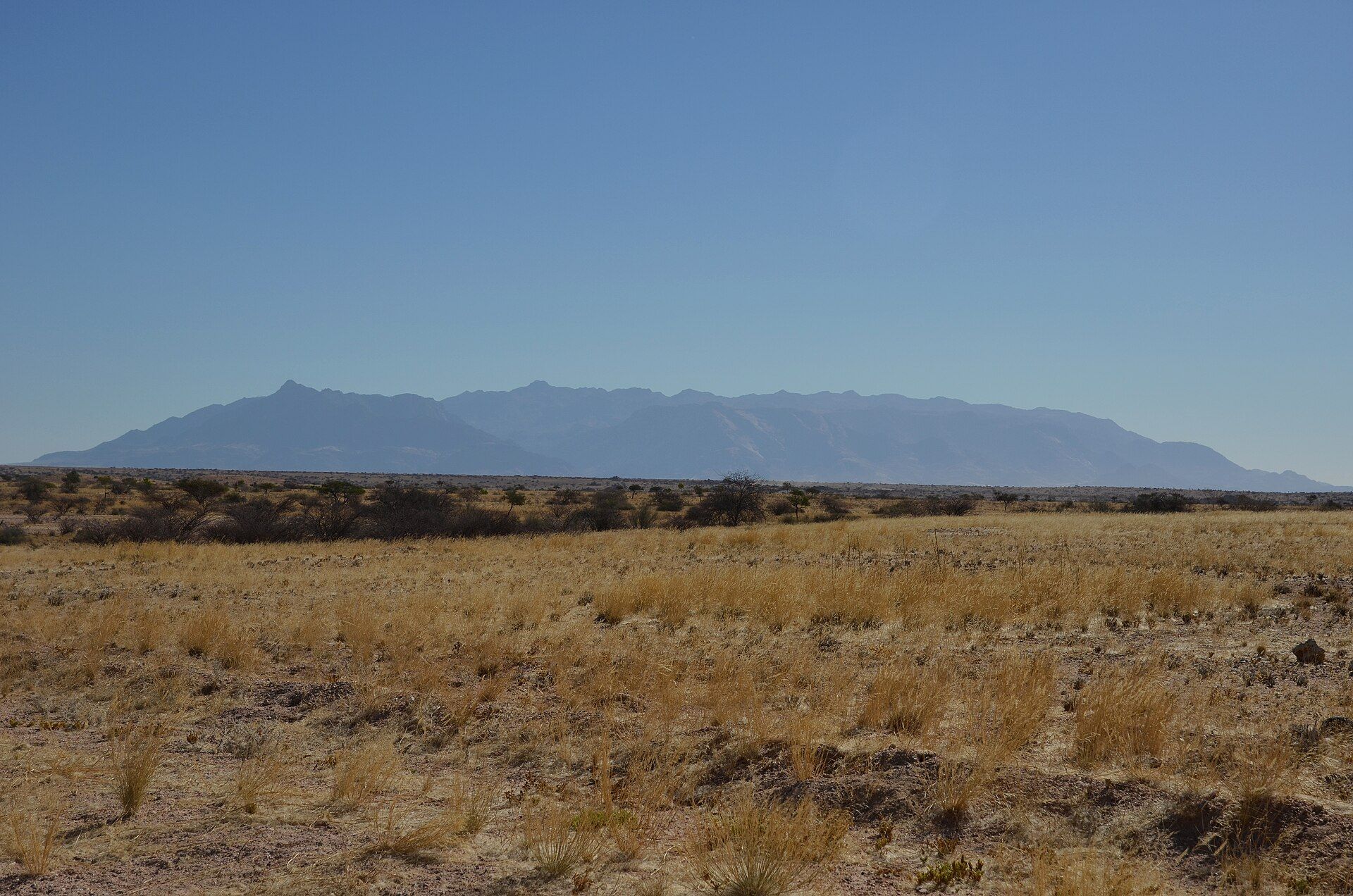
The Brandberg is a single vast mass of granite pushed up more than a hundred million years ago and left isolated as the surrounding land eroded, its summit, Königstein, reaching 2,573 metres — the highest point in Namibia. In the late sun the whole massif can flush a burning orange-red, which gives it its German and local names for 'fire mountain'. Its ravines shelter one of the greatest concentrations of prehistoric rock art in Africa, including the celebrated 'White Lady' figure.
Why visit
It combines a genuine desert mountain with deep human history: a guided walk up the Tsisab Ravine leads to rock paintings thousands of years old, set against raw granite and desert-adapted wildlife. The sheer isolation and scale of the massif, rising from empty plains, are unforgettable.
More views of Brandberg Mountain
Additional photographs of the actual site — each freely licensed, with its photographer and licence credited.
What to know before you go
🗓️ Best time
May to September, the cool dry season, for bearable walking temperatures; the ravine walk is punishing in the summer heat, when very high temperatures are common.
🧭 Getting there & access
In Damaraland, reached by gravel road. The rock-art sites, including the White Lady in the Tsisab Ravine, must be visited with an accredited local guide from the community office at the foot of the mountain.
Good to know
- Start the ravine walk early to beat the heat; it is longer and hotter than it looks.
- A local guide is mandatory for the rock art and adds the meaning behind it.
- Watch for desert-adapted elephants and other wildlife on the approach roads.
Plan your visit
Moderate🧭 Getting there
From Swakopmund or Windhoek (WDH), Namibia
- Fly to Windhoek and drive northwest into Damaraland
- From Swakopmund it is roughly 3–4h via Uis on tar then gravel
- The community guide office sits at the foot of the Tsisab Ravine
- Total travel
- Most of a day's drive from Windhoek
- Time at site
- A half-day for the White Lady walk; longer to explore Damaraland
- Access
- The rock-art sites are reached only with an accredited local guide arranged at the community office at the mountain's base; there is a guiding fee. Roads are gravel and remote, so carry fuel, water and a spare tyre.
🎒 What to bring & consider
- Several litres of water per person for the hot, exposed ravine walk
- A sun hat, high-factor sun cream and sturdy walking shoes
- An early start to avoid the worst of the heat
- A full fuel tank and self-sufficiency for the remote gravel roads
👁️ What to expect
- Crowds
- Low; a steady trickle of visitors to the White Lady, few elsewhere.
- Conditions
- A rocky, uneven walk up the ravine with boulder-hopping near the art.
- Facilities
- A guide office and parking at the base; nothing on the walk itself.
- The view
- The massif glowing red at sunset from the plains, or the rock-art panels in the shaded overhang lit by reflected light.
Times and requirements are approximate and change with season, weather, and local rules — confirm permits, fares, and schedules with operators before you travel.
Natural riches of the area
- A granite massif holding Namibia's highest peak, Königstein (2,573 m)
- Thousands of prehistoric rock-art sites in its ravines
- Desert-adapted wildlife, including elephant and antelope
- Hardy desert flora on the mountain's slopes
Local food
- Game meat (oryx, springbok)
- Desert antelope, fresh or dried into biltong for long drives.
- Mahangu (pearl millet)
- A drought-tolerant grain grown across northern Namibia, cooked as porridge.
- Braai-grilled meat
- Open-fire grilling, the standard way to cook in the Namibian bush.
The Brandberg stands utterly alone, a single dome of granite heaved up more than a hundred million years ago and left marooned above the Damaraland plains as everything softer around it wore away. Its summit, Königstein, reaches 2,573 metres — the highest point in Namibia — and in the last light of the day the whole mountain can flush a deep orange-red, the glow that earned it names meaning ‘fire mountain’.
For all its geological drama, the Brandberg is just as remarkable for what people left on it. Its ravines hold one of the richest concentrations of prehistoric rock art in Africa, painted over thousands of years, and the best known is the so-called White Lady in the Tsisab Ravine — reached on a hot, rocky walk with a local guide who reads the paintings for you. Desert-adapted elephants roam the approaches, and the sense of scale and solitude, a great mountain rising from empty desert, stays with you long after.
Brandberg Mountain: common questions
How do you get to Brandberg Mountain?
From Swakopmund or Windhoek (WDH), Namibia: Fly to Windhoek and drive northwest into Damaraland; From Swakopmund it is roughly 3–4h via Uis on tar then gravel; The community guide office sits at the foot of the Tsisab Ravine. Total travel time: Most of a day's drive from Windhoek.
When is the best time to visit Brandberg Mountain?
May to September, the cool dry season, for bearable walking temperatures; the ravine walk is punishing in the summer heat, when very high temperatures are common.
How long should you spend at Brandberg Mountain?
A half-day for the White Lady walk; longer to explore Damaraland. Total travel time: Most of a day's drive from Windhoek.
What should you bring to Brandberg Mountain?
Several litres of water per person for the hot, exposed ravine walk A sun hat, high-factor sun cream and sturdy walking shoes An early start to avoid the worst of the heat A full fuel tank and self-sufficiency for the remote gravel roads
Do you need a permit or guide for Brandberg Mountain?
The rock-art sites are reached only with an accredited local guide arranged at the community office at the mountain's base; there is a guiding fee. Roads are gravel and remote, so carry fuel, water and a spare tyre.
Is Brandberg Mountain crowded, and what are conditions like?
Low; a steady trickle of visitors to the White Lady, few elsewhere. A rocky, uneven walk up the ravine with boulder-hopping near the art. Facilities: A guide office and parking at the base; nothing on the walk itself.
Added
More wonders to explore