🇳🇦 Natural wonders of Namibia
A vast, empty, staggeringly scenic country built around the ancient Namib Desert — home to some of the tallest dunes on Earth and the surreal dead trees of Deadvlei.
🗓️ Best time for nature: The cooler months of roughly April–October for comfortable dune climbing; dawn gives the dunes their sharpest colour.
The lay of the land
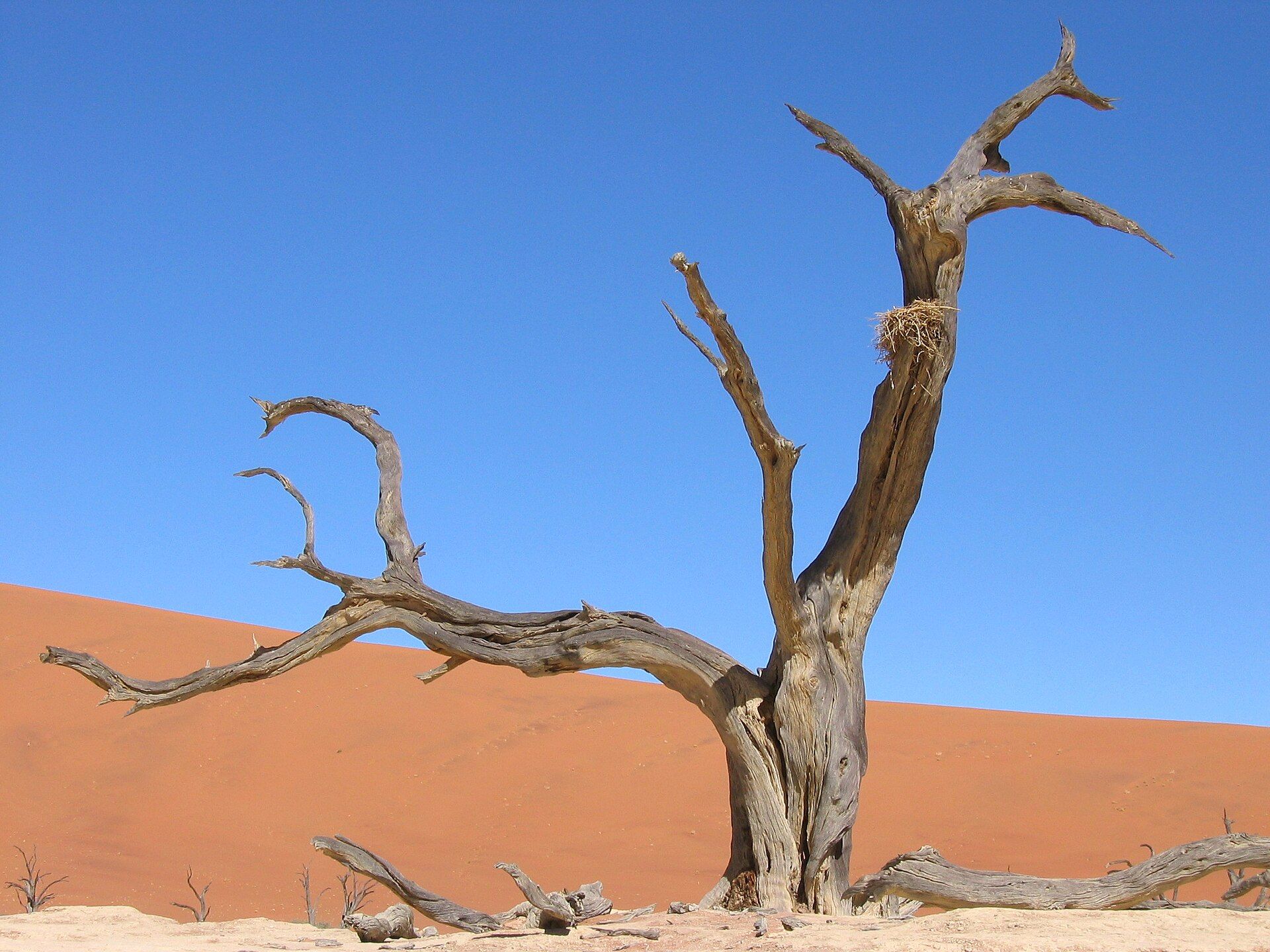
Namibia is dominated by the Namib, one of the oldest deserts in the world, whose iron-rich sand has weathered to a deep rust-red over millions of years. At Sossusvlei the dunes rise to some of the greatest heights anywhere, sheltering the ghostly white clay pan of Deadvlei with its centuries-old dead camelthorn trees. Fed in part by coastal fog, the desert supports specially adapted life, and Namibia's low population leaves its landscapes vast and pristine, under some of the clearest skies on the planet.
Where to begin
-
Sossusvlei & Deadvlei
Towering red dunes around the surreal dead trees of Deadvlei.
A taste of the place
Namibian food leans on desert-adapted game (oryx, kudu), slow-cooked potjiekos stews, biltong, and Southern African staples like pap and vetkoek, with a notable German-influenced baking tradition from its colonial history.
Traveling responsibly
- Enter the dunes at first light for the colour and to beat the heat.
- Carry plenty of water; there is no shade among the dunes.
- Don't touch the ancient Deadvlei trees — they're irreplaceable.
Namibia is one of the emptiest and most scenic countries on Earth, and its soul is the Namib — an ancient desert whose sand has oxidised to a glowing red over millions of years. This atlas begins the country’s chapter at Sossusvlei, where some of the tallest dunes in the world surround the unreal, painterly scene of Deadvlei: black, 900-year-old trees standing on a white pan against orange sand and blue sky.
Added
All wonders in Namibia
7 places