Nature route · Full loop
Namibia: Deserts, Canyon & Coast
The red dunes of Sossusvlei, Fish River Canyon, the Skeleton Coast, granite Spitzkoppe, and the game of Etosha — a grand self-drive loop.
A two-week self-drive loop through Namibia's greatest landscapes — the towering dunes of Sossusvlei, the immense Fish River Canyon, the shipwreck Skeleton Coast, the granite of Spitzkoppe and Brandberg, and the waterholes of Etosha — with an optional push north to the Epupa Falls.
- Length 12–14 days (loop)
- Stops 7 wonders
- Budget $1,500–4,500 pp
- Region Namib, Damaraland & Etosha, Namibia
Trip map
The route
Stops in travel order — tap any one for the full wonder guide.
-
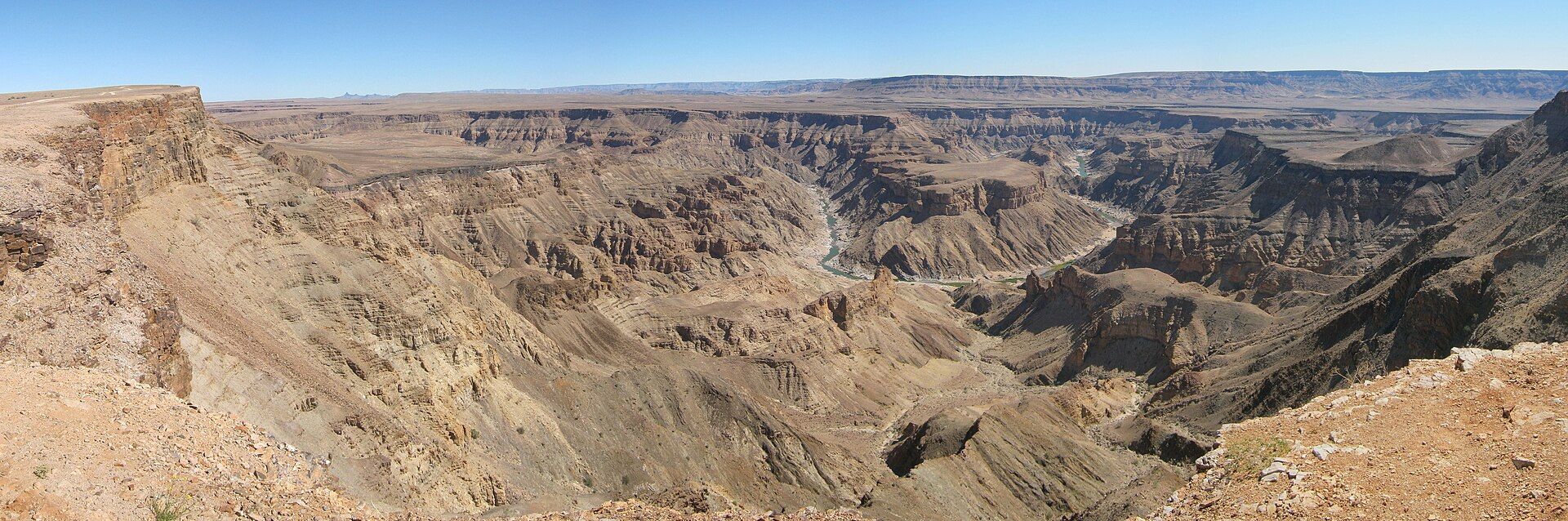
Fish River Canyon 1 night
ǁKaras, southern Namibia
One of the largest canyons on Earth, in Namibia's far south — a vast gash viewed from the rim.
-
Sossusvlei & Deadvlei 2 nights
Namib-Naukluft National Park, Namibia
The Namib's towering rust-red dunes and the white clay pan of Deadvlei, best at sunrise.
-
Skeleton Coast 2 nights
Northwestern Namibia
The fog-bound Atlantic shore of shipwrecks and dunes, based out of Swakopmund.
-
Spitzkoppe 1 night
Erongo Region, Western Namibia
A dramatic granite inselberg — the 'Matterhorn of Namibia' — with rock arches and dark skies.
-
Brandberg Mountain 1 night
Damaraland, Erongo Region, Northwest Namibia
Namibia's highest massif, home to the ancient 'White Lady' rock painting.
-
Etosha Pan 3 nights
Northern Namibia
A giant salt pan whose waterholes draw elephant, rhino, lion, and vast herds in the dry season.
-
Epupa Falls
Kunene Region (Kaokoland), Namibia–Angola border
Optional far-north extension: palm-fringed cascades on the Kunene River in Himba country.
Day by day
-
Windhoek to the south
Base Fish River Canyon area
- Long drive south from Windhoek — a full day, ~700 km
Pick up the hire vehicle and make the long haul south toward the canyon country. An afternoon arrival leaves time for a first rim view.
-
Fish River Canyon rim
Base Fish River Canyon area
- Rim drives and short walks
Take in one of the largest canyons in the world from the viewpoints (the multi-day hike into it needs a permit and the cool season). Then begin the swing north and west.
-
Into the Namib — Sesriem
Base Sesriem / Sossusvlei
- Drive north to the Sesriem gate — a long day on gravel
Cross into the dune sea and overnight near the park gate to be first in at dawn.
-
Sossusvlei & Deadvlei at dawn
Base Sesriem / Sossusvlei
- Early entry to the dunes; climb Big Daddy, walk to Deadvlei
Sunrise on the red dunes and the skeleton-tree clay pan of Deadvlei — the classic Namibia image. Rest through the midday heat.
-
To the coast — Swakopmund
Base Swakopmund
- Drive to the Atlantic via the Kuiseb canyon — a long, scenic day
Descend to the cool, fog-touched coast and the German-colonial town of Swakopmund, base for the Skeleton Coast.
-
The Skeleton Coast
Base Swakopmund
- Coastal drive north to the seal colony and wrecks
Explore the shipwreck coast, the Cape Cross seals, and the eerie meeting of desert and cold ocean.
-
Granite country — Spitzkoppe
Base Spitzkoppe
- Drive inland to the Spitzkoppe inselberg
Camp or lodge beneath the glowing granite, walk to the rock arch, and stay for some of the darkest skies in Africa.
-
Brandberg & Damaraland
Base Brandberg area
- Drive to the Brandberg massif
Walk to the ancient 'White Lady' rock art and watch for desert-adapted elephant in the dry riverbeds of Damaraland.
-
North to Etosha
Base Etosha (Okaukuejo / Halali)
- Drive to an Etosha rest camp
Enter the great game park and settle in near a floodlit waterhole for the first evening of wildlife watching.
-
Etosha game drives
Base Etosha
- Full-day self-drive between waterholes
Work the waterholes rimming the salt pan for elephant, rhino, giraffe, lion, and huge plains-game herds. The dry season concentrates everything at the water.
-
More of Etosha, then decide
Base Etosha or north toward the Kunene
- More game driving; optional long drive north
A final morning in the park, then either begin the loop back or commit to the long push north toward the Epupa Falls and Himba country.
-
Back toward Windhoek
Base Windhoek
- Drive back to the capital — a long day
Return the vehicle, or extend a couple of days for the Epupa detour before flying out.
What it costs
Per person, two sharing, ~12 nights. Excludes international flights; includes 4x4 hire share, fuel, lodging, park fees, and food.
| Category | Range (per person) |
|---|---|
| TransportShare of 4x4 hire and fuel over ~2,500–3,000 km; fly-in safaris cost far more. | $500–1,400 |
| Lodging12 nights from campsites and guesthouses to safari lodges. | $600–2,200 |
| FoodSelf-catering and braais keep it low; lodge dining raises it. | $250–600 |
| Fees & guidesPark entry (Namib-Naukluft, Etosha), and any guided activities. | $150–400 |
| Estimated total | $1,500–4,600 |
What moves the number
- Camping and self-catering vs safari lodges
- Vehicle class (2WD vs fully-equipped 4x4) and total distance
- Whether you add the long Epupa Falls detour
- Season — dry-season lodges and peak dates cost more
Indicative mid-2026 ranges; confirm current vehicle hire, lodge rates, and park fees before booking. Quoted per person in US dollars; local prices are in Namibian dollars (NAD), pegged to the South African rand. These are honest ranges, not quotes — real prices swing with season, group size, and how you travel. Always confirm current fares, room rates, permits, and fees with operators before you commit.
Best season & getting around
🗓️ Best time to go
The dry season, roughly May to October, is prime: wildlife concentrates at Etosha's waterholes, roads are reliable, and the desert light is clean. June–August nights can be genuinely cold in the desert and canyon. The green season (December–March) brings dramatic skies, newborn animals, and lower prices, but dispersed game and the chance of washed-out gravel roads. The multi-day Fish River Canyon hike is only permitted in the cooler months (roughly May–September).
🧭 Getting around
This is a self-drive country — a hired vehicle, ideally a 4x4 or high-clearance bakkie, on long gravel roads between far-apart highlights. Distances are big and fuel stops sparse, so carry water, a spare (or two), and plan tanks. Guided lodge-based safaris and fly-in options exist if you'd rather not drive. Book park accommodation (especially Sossusvlei's Sesriem and Etosha's camps) well ahead.
Know before you go
- Distances are huge and gravel roads demand care — drive slowly on corrugations, avoid night driving (animals on the road), and carry water and a spare tyre or two.
- Book Sesriem (for Sossusvlei) and Etosha's rest camps far in advance; being inside the gates lets you reach the dunes and waterholes at first light.
- The desert and canyon are hot by day and cold at night in winter — pack layers and serious sun protection.
- The Fish River Canyon inner hike is permit-only and seasonal; the rim viewpoints are open year-round.
- All distances, times, and prices are approximate and shift with season, fuel, and demand.
Namibia is a self-drive dream: vast, empty, and stacked with some of the most photogenic landscapes on the planet, all linked by long gravel roads under enormous skies. This loop takes in the atlas’s Namibian wonders — the rust-red dunes of Sossusvlei and the clay pan of Deadvlei, the immense Fish River Canyon, the shipwreck-strewn Skeleton Coast, the granite of Spitzkoppe and Brandberg, and the game-rich waterholes of Etosha — with an optional push north to the palm-fringed Epupa Falls.
It is a trip built on distance and self-reliance, and it rewards an early start every day: dawn on the dunes, first light at the waterholes. Go in the dry season for the wildlife and reliable roads, book the in-park camps early, and treat the long gravel drives as part of the adventure rather than the price of it.
Namibia: Deserts, Canyon & Coast: common questions
How many days is the Namibia: Deserts, Canyon & Coast?
12–14 days (loop) — the plan is built around 12 nights. ~2,500–3,000 km of gravel and tar roads from Windhoek
When is the best time to do the Namibia: Deserts, Canyon & Coast?
The dry season, roughly May to October, is prime: wildlife concentrates at Etosha's waterholes, roads are reliable, and the desert light is clean. June–August nights can be genuinely cold in the desert and canyon. The green season (December–March) brings dramatic skies, newborn animals, and lower prices, but dispersed game and the chance of washed-out gravel roads. The multi-day Fish River Canyon hike is only permitted in the cooler months (roughly May–September).
How much does the Namibia: Deserts, Canyon & Coast cost?
A rough guide is $1,500–4,500 per person (Per person, two sharing, ~12 nights. Excludes international flights; includes 4x4 hire share, fuel, lodging, park fees, and food.). Indicative mid-2026 ranges; confirm current vehicle hire, lodge rates, and park fees before booking. Main cost variables: Camping and self-catering vs safari lodges; Vehicle class (2WD vs fully-equipped 4x4) and total distance; Whether you add the long Epupa Falls detour.
How do you get around on the Namibia: Deserts, Canyon & Coast?
This is a self-drive country — a hired vehicle, ideally a 4x4 or high-clearance bakkie, on long gravel roads between far-apart highlights. Distances are big and fuel stops sparse, so carry water, a spare (or two), and plan tanks. Guided lodge-based safaris and fly-in options exist if you'd rather not drive. Book park accommodation (especially Sossusvlei's Sesriem and Etosha's camps) well ahead.
Which natural wonders does the Namibia: Deserts, Canyon & Coast include?
Fish River Canyon, Sossusvlei & Deadvlei, Skeleton Coast, Spitzkoppe, Brandberg Mountain, Etosha Pan, Epupa Falls.
Added