Bale Mountains
📍 Bale Zone, Oromia Region, southeastern Ethiopia
The largest stretch of Afroalpine habitat anywhere on Earth — a treeless plateau above 4,000 metres holding more than half the world's Ethiopian wolves, with cloud forest falling away down its southern side.
What makes it marvelous
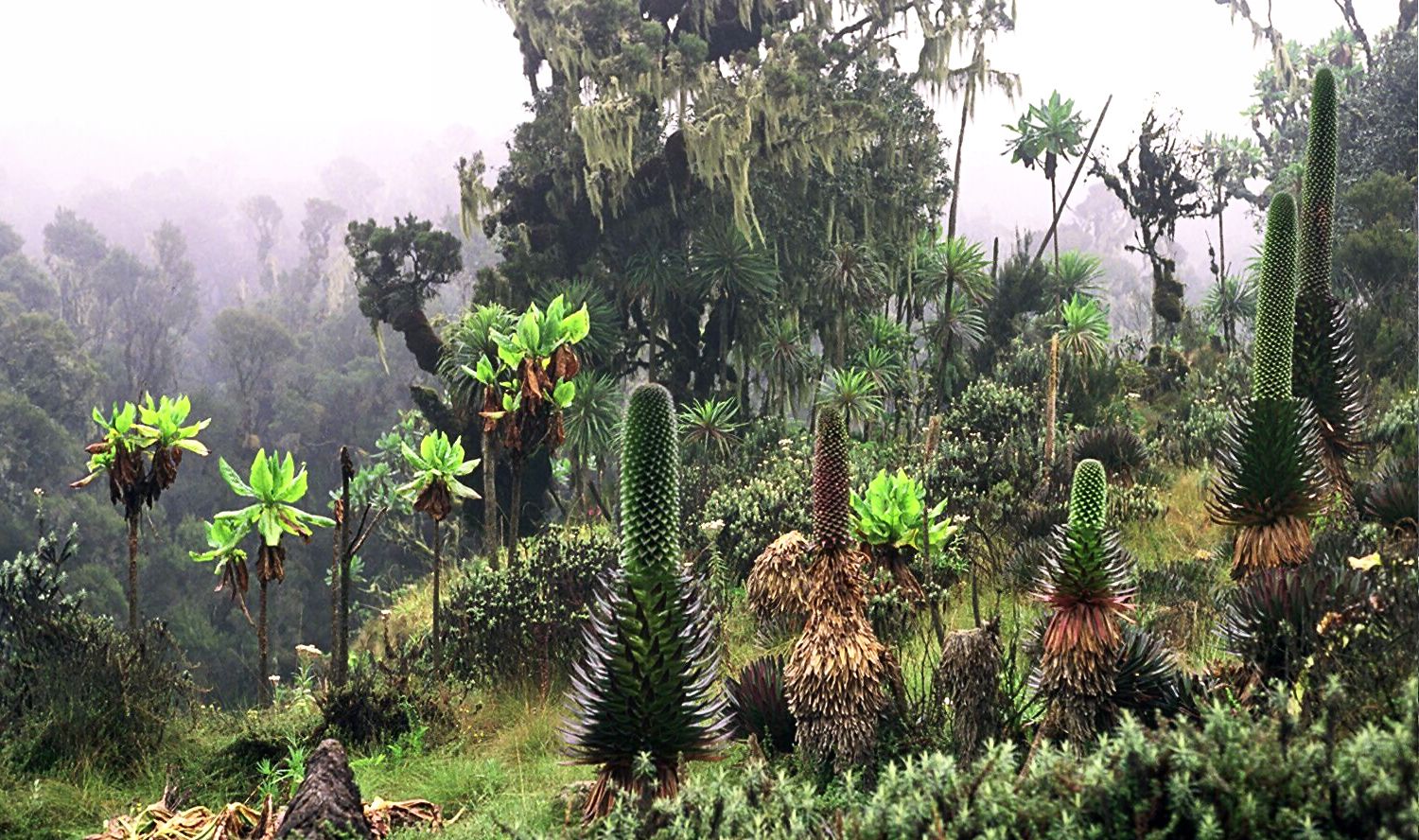
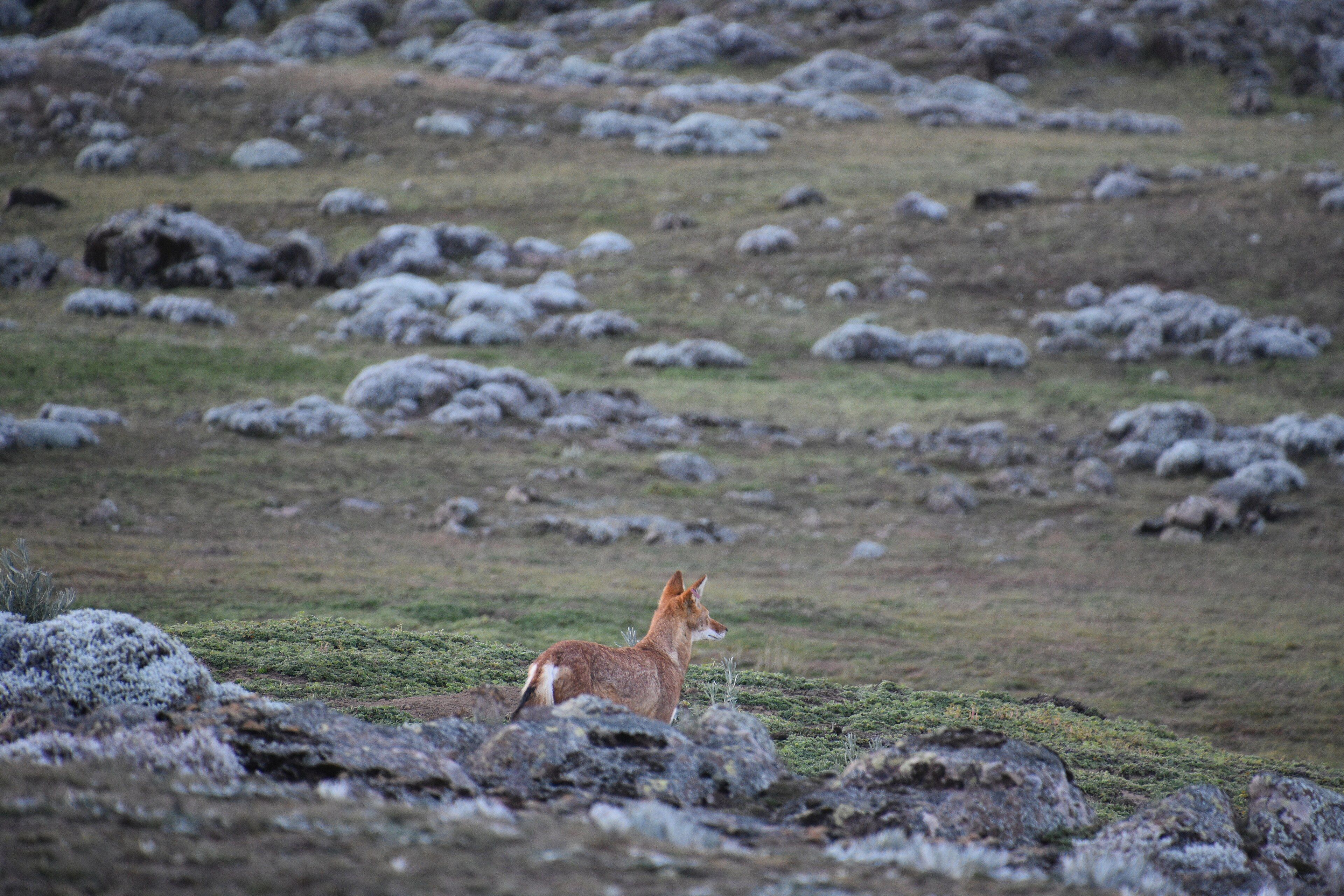
Bale is where Africa's high ground gets strange. The Sanetti Plateau, the highest plateau on the continent, runs for kilometres above 4,000 metres as open moorland studded with lichen-crusted volcanic boulders and giant lobelia — rosette plants that grow for decades before flowering once and dying. This is the largest continuous area of Afroalpine habitat in the world, and the isolation shows in what lives here: the mountain nyala and the Bale monkey occur nowhere else, and the plateau holds an estimated 300 to 350 Ethiopian wolves, more than half the entire global population of the world's rarest canid. The wolf itself is a specialist, built long-muzzled to hunt the giant mole-rats that riddle the moorland. Drop off the southern edge and the terrain changes completely, falling into the Harenna Forest — a cloud forest that is one of Ethiopia's last large tracts of moist montane woodland.
Why visit
It is the single most reliable place on Earth to see an Ethiopian wolf, and unusually, from a road — the Sanetti track crosses the plateau at over 4,000 metres, so the animal most people never see is visible from a vehicle in open ground. The plateau itself is genuinely otherworldly: no trees, frost most nights, giant lobelia standing over frozen tussock, and a horizon that goes on much further than anywhere else in Africa at that altitude.
What to know before you go
🗓️ Best time
The dry months, roughly November to February, give the firmest tracks and the clearest views; October to March is broadly workable. The heavy rains from July to September make the plateau road difficult and the forest side very wet. Wolves are most active in the early morning and late afternoon year-round.
🧭 Getting there & access
Roughly 400 km southeast of Addis Ababa — a full day by road to Dinsho, where the park headquarters sits. The Sanetti Plateau road continues over the top toward Harenna and the south, and is the highest all-weather road in Africa. Park entry and a scout are arranged at headquarters; a high-clearance vehicle is effectively required.
Good to know
- Cross Sanetti early — wolves hunt in the first hours of light, and cloud usually builds by midday.
- Take the plateau road all the way down into the Harenna Forest; the transition is the point.
- Bring far warmer clothing than an Ethiopia trip suggests — it freezes here most nights.
- Keep well back from wolves. The population has been hit repeatedly by disease carried by domestic dogs.
Plan your visit
Moderate🧭 Getting there
From Addis Ababa (ADD), Ethiopia
- Fly into Addis Ababa
- Drive southeast to Dinsho, a long full day on the road
- Register at park headquarters and take a scout
- Cross the Sanetti Plateau at dawn, continuing down into the Harenna Forest
- Total travel
- A full day from Addis Ababa
- Time at site
- 3–4 days to cover the plateau, the forest and the Dinsho woodland
- Access
- Park entry fees are charged per person per day, plus vehicle and scout fees arranged at headquarters in Dinsho. A high-clearance vehicle is effectively required, and the plateau road can become impassable in the heavy rains. Check current regional travel advice for Oromia before planning.
🎒 What to bring & consider
- Genuinely warm layers — the plateau freezes most nights despite the latitude
- Binoculars; wolves are usually seen at distance across open moorland
- A high-clearance vehicle and a driver who knows the plateau road
- Time to acclimatise, since the road tops out well above 4,000 m
- Cash in birr for park, scout and vehicle fees
👁️ What to expect
- Crowds
- Very light. Bale sees a fraction of the visitors of Ethiopia's northern circuit and you will often have the plateau to yourself.
- Conditions
- Cold, bright and exposed on top; humid and green in the forest below. Long hours on rough track.
- Facilities
- Park headquarters and simple lodges around Dinsho, plus a lodge on the Harenna side. Nothing on the plateau itself.
- The view
- A wolf against lichen-grey boulders in low early light, or giant lobelia standing over frosted tussock before the cloud comes in.
Times and requirements are approximate and change with season, weather, and local rules — confirm permits, fares, and schedules with operators before you travel.
Natural riches of the area
- The largest continuous Afroalpine habitat on Earth
- The Sanetti Plateau, the highest plateau in Africa, above 4,000 m
- 300–350 Ethiopian wolves — over half the global population
- Endemic mountain nyala and Bale monkey
- Giant lobelia moorland, and the Harenna cloud forest on the southern fall
Local food
- Injera with wat
- Sour teff flatbread with spiced stews, the foundation of every Ethiopian meal.
- Harenna forest coffee
- Coffee growing semi-wild in the forest understorey on the mountains' southern side.
- Kitfo
- Minced raw or lightly warmed beef with spiced butter, a highland speciality.
- Ayib
- A mild fresh cheese served to cool the heat of the stews.
Most of Africa’s famous wildlife country is warm and low. Bale is neither. The Sanetti Plateau runs for kilometres above 4,000 metres — the highest plateau on the continent — as open, treeless moorland scattered with lichen-crusted volcanic boulders and giant lobelia, rosette plants that grow for decades, flower once and die. It freezes here most nights. This is the largest continuous stretch of Afroalpine habitat anywhere on Earth, and that isolation has produced species found nowhere else: the mountain nyala, the Bale monkey, and the animal the plateau is really known for.
The Ethiopian wolf is the rarest canid in the world, and somewhere between 300 and 350 of them live here — more than half of every one remaining. It is a specialist rather than a generalist: long-muzzled, built for hunting the giant mole-rats that honeycomb the moorland, and hunting them in daylight across open ground, which is why Bale is the one place you can reliably watch a species most people will never see. The population’s great vulnerability is disease carried in by domestic dogs, which has cut it sharply more than once.
Then the ground falls away. Off the southern edge of the plateau the road drops into the Harenna Forest, one of Ethiopia’s last large tracts of moist montane cloud forest, where coffee grows semi-wild in the understorey. Going from frozen lobelia moorland to dripping forest canopy in a single morning’s drive is the most striking thing about the place, and the reason it repays more than a day.
Bale Mountains: common questions
How do you get to Bale Mountains?
From Addis Ababa (ADD), Ethiopia: Fly into Addis Ababa; Drive southeast to Dinsho, a long full day on the road; Register at park headquarters and take a scout; Cross the Sanetti Plateau at dawn, continuing down into the Harenna Forest. Total travel time: A full day from Addis Ababa.
When is the best time to visit Bale Mountains?
The dry months, roughly November to February, give the firmest tracks and the clearest views; October to March is broadly workable. The heavy rains from July to September make the plateau road difficult and the forest side very wet. Wolves are most active in the early morning and late afternoon year-round.
How long should you spend at Bale Mountains?
3–4 days to cover the plateau, the forest and the Dinsho woodland. Total travel time: A full day from Addis Ababa.
What should you bring to Bale Mountains?
Genuinely warm layers — the plateau freezes most nights despite the latitude Binoculars; wolves are usually seen at distance across open moorland A high-clearance vehicle and a driver who knows the plateau road Time to acclimatise, since the road tops out well above 4,000 m Cash in birr for park, scout and vehicle fees
Do you need a permit or guide for Bale Mountains?
Park entry fees are charged per person per day, plus vehicle and scout fees arranged at headquarters in Dinsho. A high-clearance vehicle is effectively required, and the plateau road can become impassable in the heavy rains. Check current regional travel advice for Oromia before planning.
Is Bale Mountains crowded, and what are conditions like?
Very light. Bale sees a fraction of the visitors of Ethiopia's northern circuit and you will often have the plateau to yourself. Cold, bright and exposed on top; humid and green in the forest below. Long hours on rough track. Facilities: Park headquarters and simple lodges around Dinsho, plus a lodge on the Harenna side. Nothing on the plateau itself.
Added
More wonders to explore