Wadi Shab
📍 Ash Sharqiyah coast, northeastern Oman
A palm-fringed canyon on Oman's coast where a hike between sheer cliffs leads to a chain of turquoise pools — and a hidden waterfall tucked inside a cave chamber.
What makes it marvelous
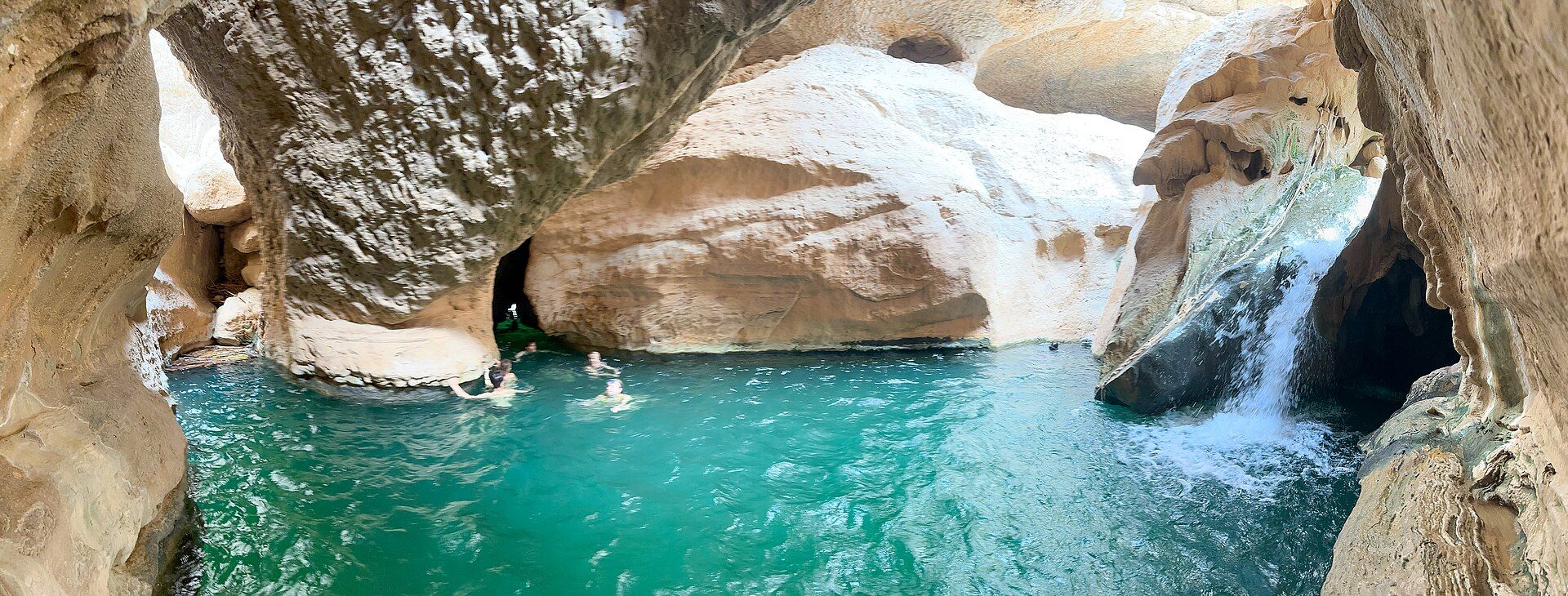
Wadi Shab is a classic Omani wadi: a canyon cut by seasonal floods through the limestone of the Hajar foothills, where a spring-fed stream keeps the gorge green and alive year-round. Between tall rock walls, the water gathers into a series of clear turquoise pools shaded by date palms and reeds, fed by the mountains above. At the head of the accessible gorge, a narrow slot in the rock opens into a partly submerged cave chamber, where a waterfall pours down inside the mountain — reachable only by swimming through the gap.
Why visit
The walk into Wadi Shab is one of Oman's finest adventures: a short boat across the entrance pool, then a trail winding past falaj channels, palm groves, and villages to a string of jewel-coloured pools where you can swim in the desert heat. The reward at the end is the hidden waterfall cave, entered by swimming through a slot in the rock — a genuinely thrilling secret. It is a green, watery counterpoint to Oman's stark mountains and deserts, all within reach of the coast.
More views of Wadi Shab
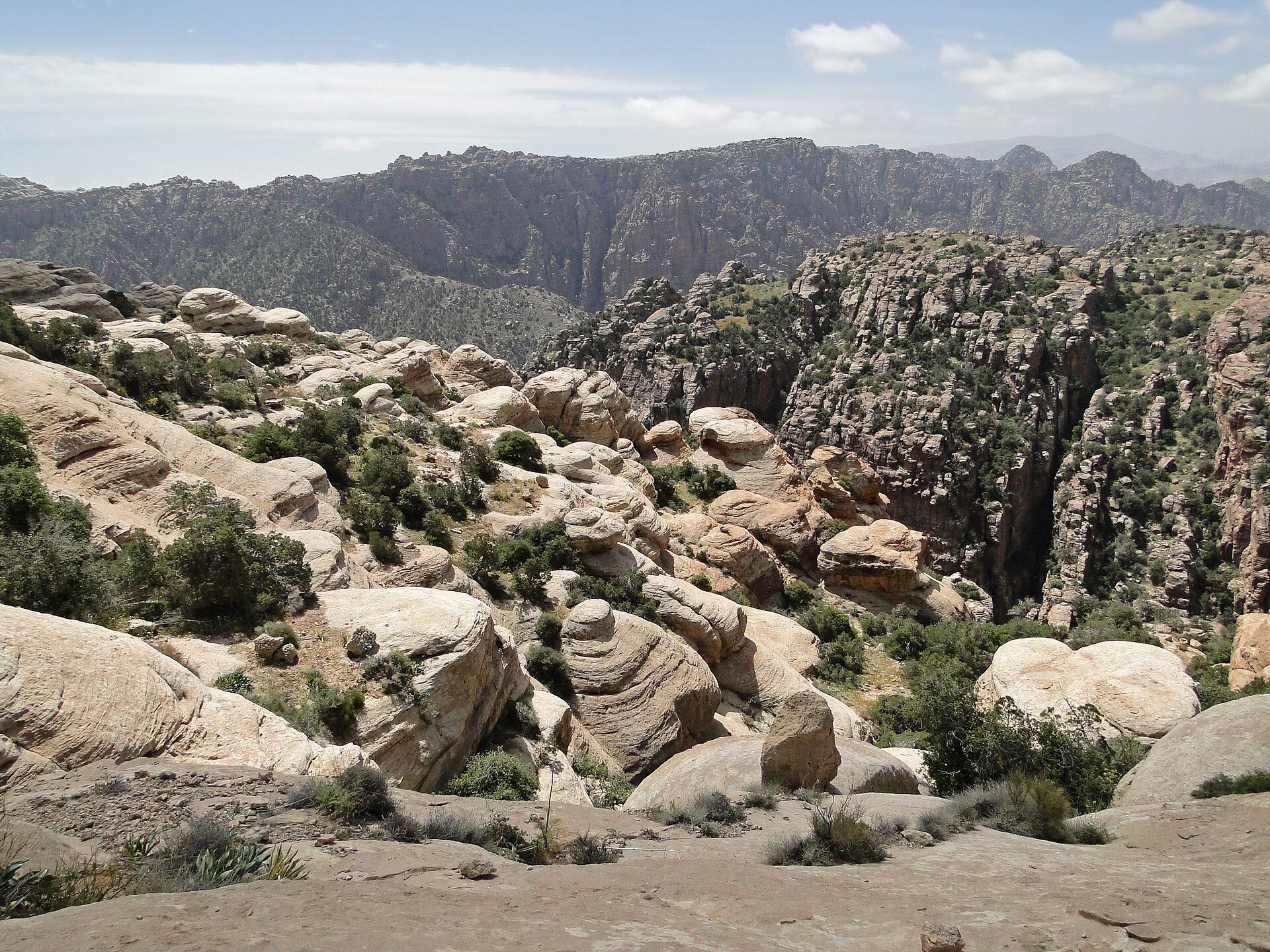
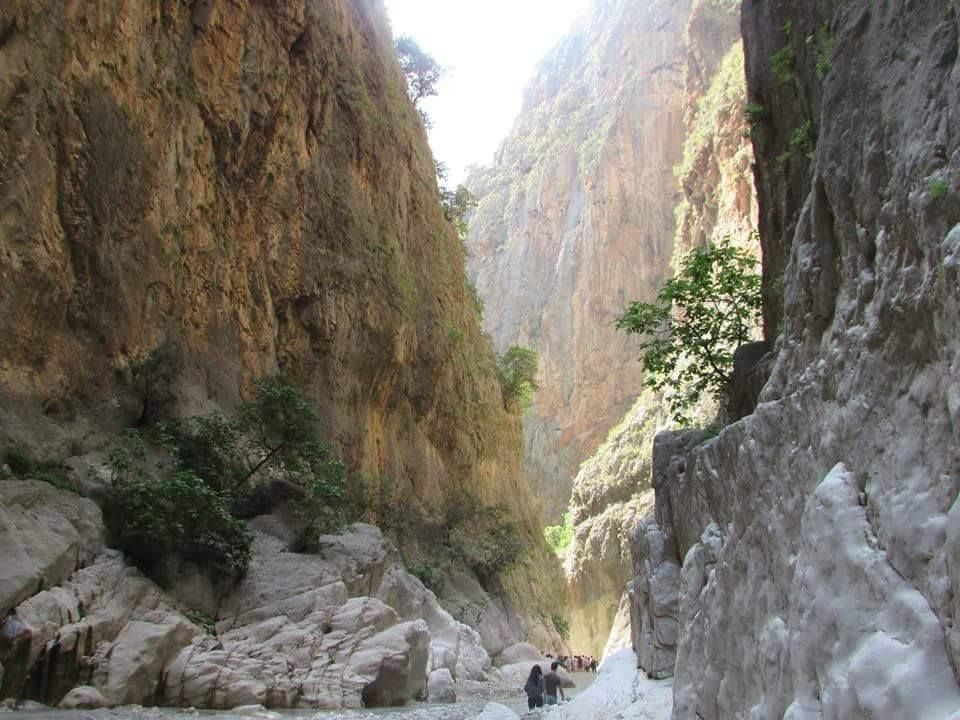
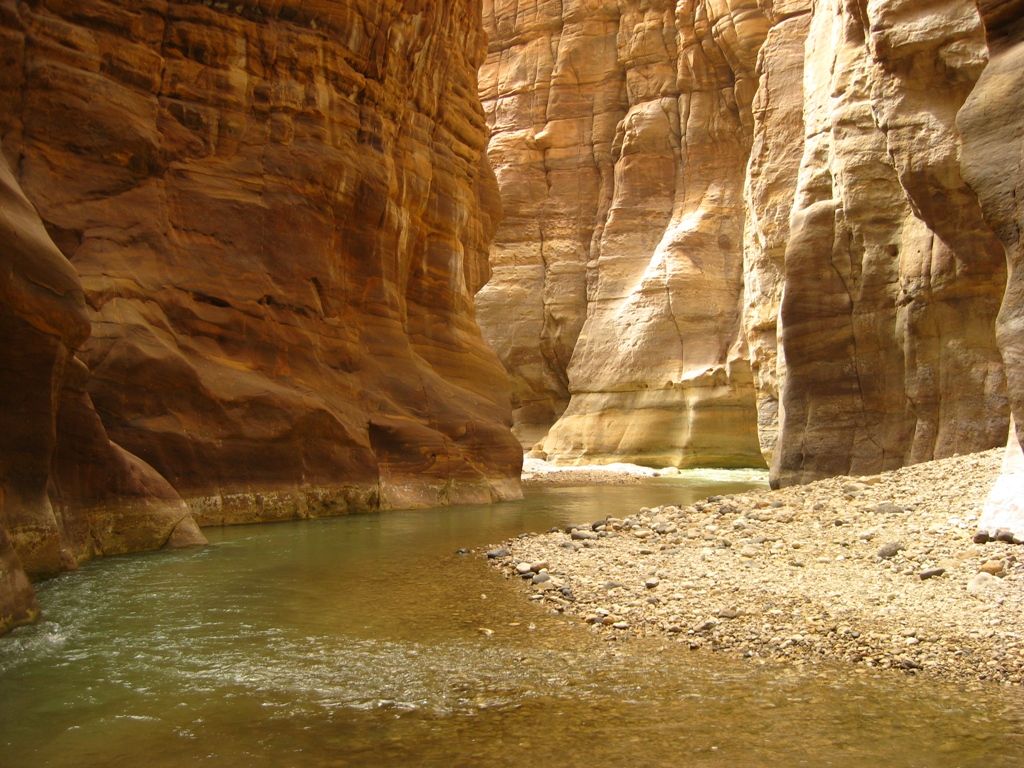
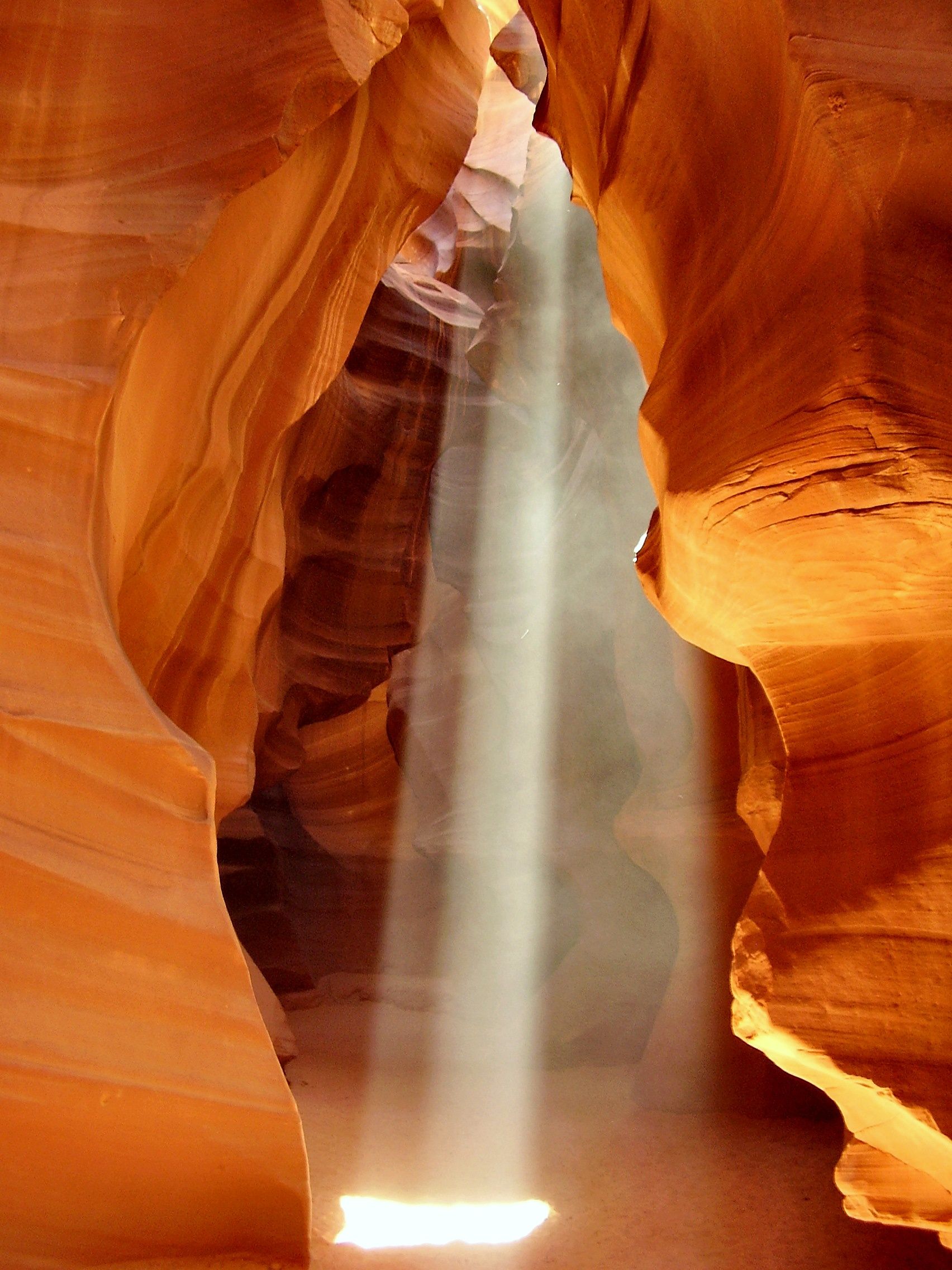
Additional photographs of the actual site — each freely licensed, with its photographer and licence credited.
What to know before you go
🗓️ Best time
The cooler months of roughly October to April for comfortable hiking; avoid visiting during or just after rain, when flash floods can surge through the canyon.
🧭 Getting there & access
On the coast a couple of hours south of Muscat, near Tiwi. A small boat ferries visitors across the entrance pool, then a walking trail (roughly 45 minutes to an hour) leads up the wadi to the pools and the cave.
Good to know
- Wear shoes you can hike and swim in, and pack valuables in a dry bag.
- Never enter the wadi if rain threatens — flash floods are deadly.
- Go early to beat the heat and the midday crowds at the pools.
Plan your visit
Moderate🧭 Getting there
From Muscat (MCT), Oman
- Fly to Muscat
- Coastal road south toward Tiwi — about 2h
- Small boat across the entrance pool, then hike up the wadi to the pools and cave
- Total travel
- A day trip from Muscat
- Time at site
- 3–4 hours for the hike, pools, and cave swim
- Access
- A small fee covers the boat across the entrance pool; the wadi itself is open access. The hike is easy to moderate; reaching the waterfall cave requires swimming and squeezing through a narrow gap. Never enter in wet weather due to flash-flood risk.
🎒 What to bring & consider
- Shoes suitable for both hiking and water
- A dry bag for phone, keys, and cash
- Sun protection, water, and swimwear
- Awareness of the weather and flash-flood danger
👁️ What to expect
- Crowds
- Popular, busiest midday and on weekends; early mornings are far quieter.
- Conditions
- A rocky trail, then swimming through cool pools and a tight cave slot; hot and shadeless in parts.
- Facilities
- The boat and parking at the entrance; nothing up the wadi itself.
- The view
- A turquoise pool between the canyon walls, or the hidden waterfall inside the cave. Morning light and low crowds are best.
Times and requirements are approximate and change with season, weather, and local rules — confirm permits, fares, and schedules with operators before you travel.
Natural riches of the area
- A spring-fed limestone canyon and its stream
- Turquoise pools shaded by date palms
- A hidden waterfall inside a cave chamber
- Traditional falaj irrigation channels and villages
Local food
- Shuwa
- Lamb marinated in spices and slow-roasted underground for an Omani feast.
- Omani halwa
- A rich, fragrant sweet of sugar, rosewater, saffron, and nuts.
Wadi Shab is proof that Oman’s deserts hide pockets of paradise. A canyon carved through the limestone foothills of the Hajar Mountains near the coast, it is kept green all year by a spring-fed stream, so that between its tall rock walls lie strings of clear turquoise pools shaded by date palms and threaded with the ancient falaj channels that villagers still use to water their groves. The contrast — jewel-coloured water and greenery deep in a stark canyon — is what makes it special.
The adventure of reaching it is half the joy: a short boat across the entrance pool, then a trail winding up the wadi past palms and villages to the pools, where swimming in the cool water under the desert sun is bliss. And there is a secret at the end — a narrow slot in the rock that opens, for those willing to swim through, into a hidden cave chamber where a waterfall crashes down inside the mountain. Green, watery, and quietly thrilling, Wadi Shab is one of the most rewarding half-days in all of Oman.
Wadi Shab: common questions
How do you get to Wadi Shab?
From Muscat (MCT), Oman: Fly to Muscat; Coastal road south toward Tiwi — about 2h; Small boat across the entrance pool, then hike up the wadi to the pools and cave. Total travel time: A day trip from Muscat.
When is the best time to visit Wadi Shab?
The cooler months of roughly October to April for comfortable hiking; avoid visiting during or just after rain, when flash floods can surge through the canyon.
How long should you spend at Wadi Shab?
3–4 hours for the hike, pools, and cave swim. Total travel time: A day trip from Muscat.
What should you bring to Wadi Shab?
Shoes suitable for both hiking and water A dry bag for phone, keys, and cash Sun protection, water, and swimwear Awareness of the weather and flash-flood danger
Do you need a permit or guide for Wadi Shab?
A small fee covers the boat across the entrance pool; the wadi itself is open access. The hike is easy to moderate; reaching the waterfall cave requires swimming and squeezing through a narrow gap. Never enter in wet weather due to flash-flood risk.
Is Wadi Shab crowded, and what are conditions like?
Popular, busiest midday and on weekends; early mornings are far quieter. A rocky trail, then swimming through cool pools and a tight cave slot; hot and shadeless in parts. Facilities: The boat and parking at the entrance; nothing up the wadi itself.
Added
More wonders to explore