🇴🇲 Natural wonders of Oman
A land of dramatic contrasts on the Arabian Peninsula — palm-shaded canyon pools, a mile-deep mountain gorge, and a rolling red sand sea, all within reach of the coast.
🗓️ Best time for nature: The cooler months of roughly October to April are best across the mountains, deserts, and coast; summer is intensely hot inland.
The lay of the land
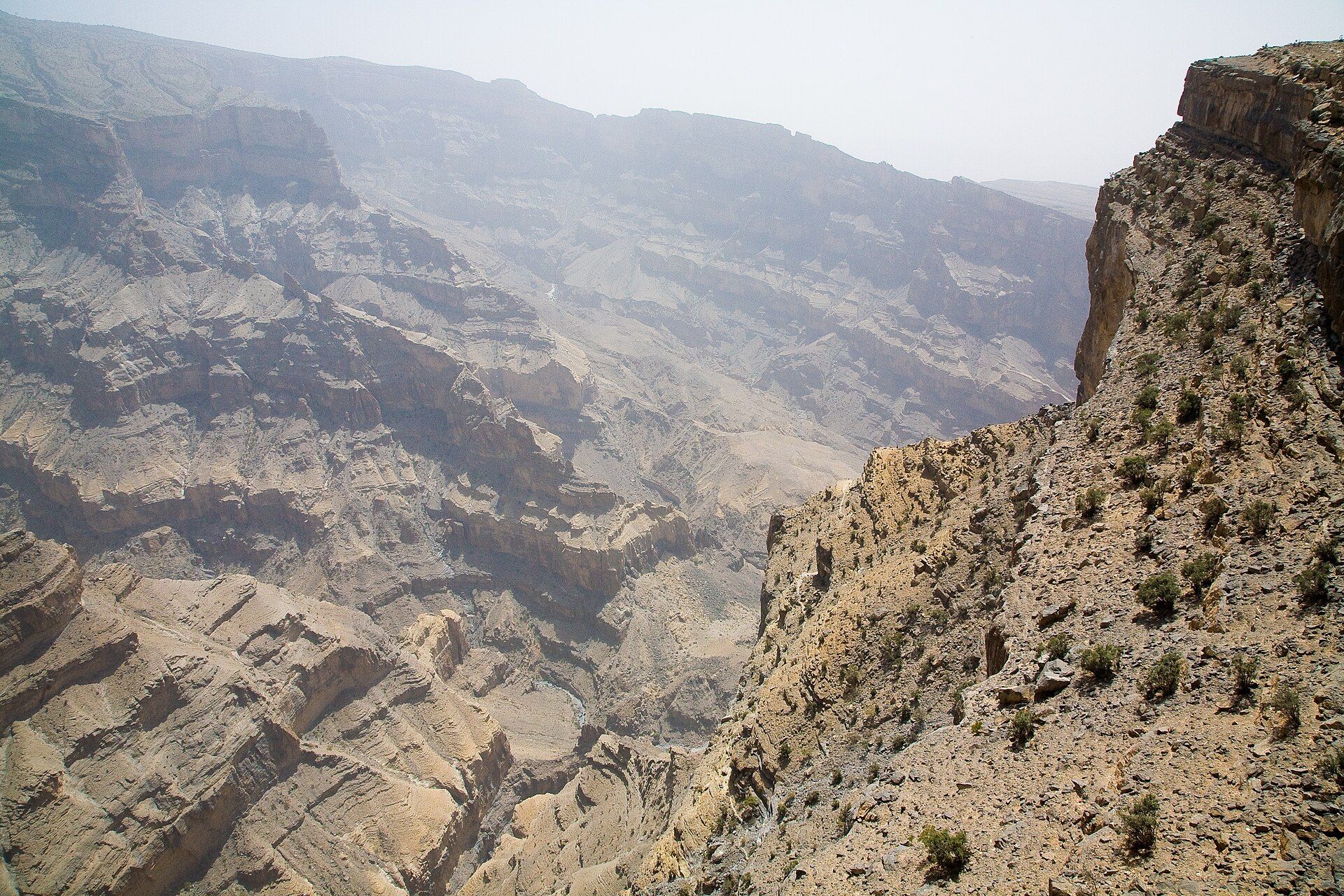
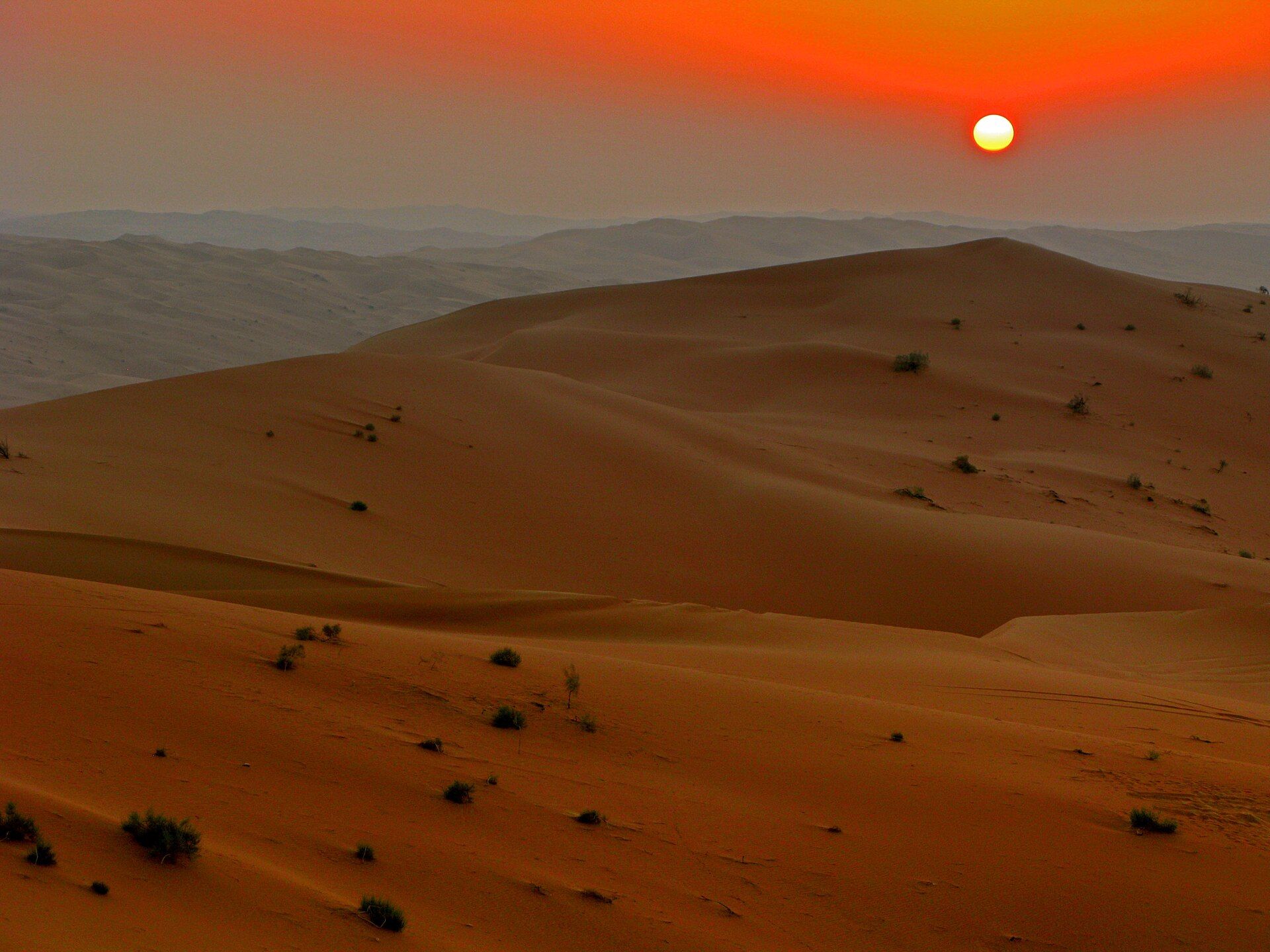
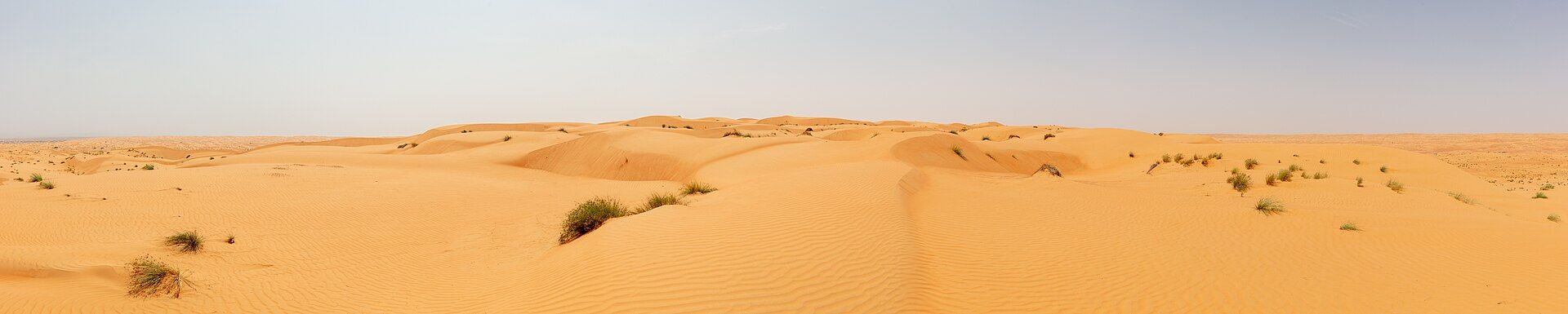
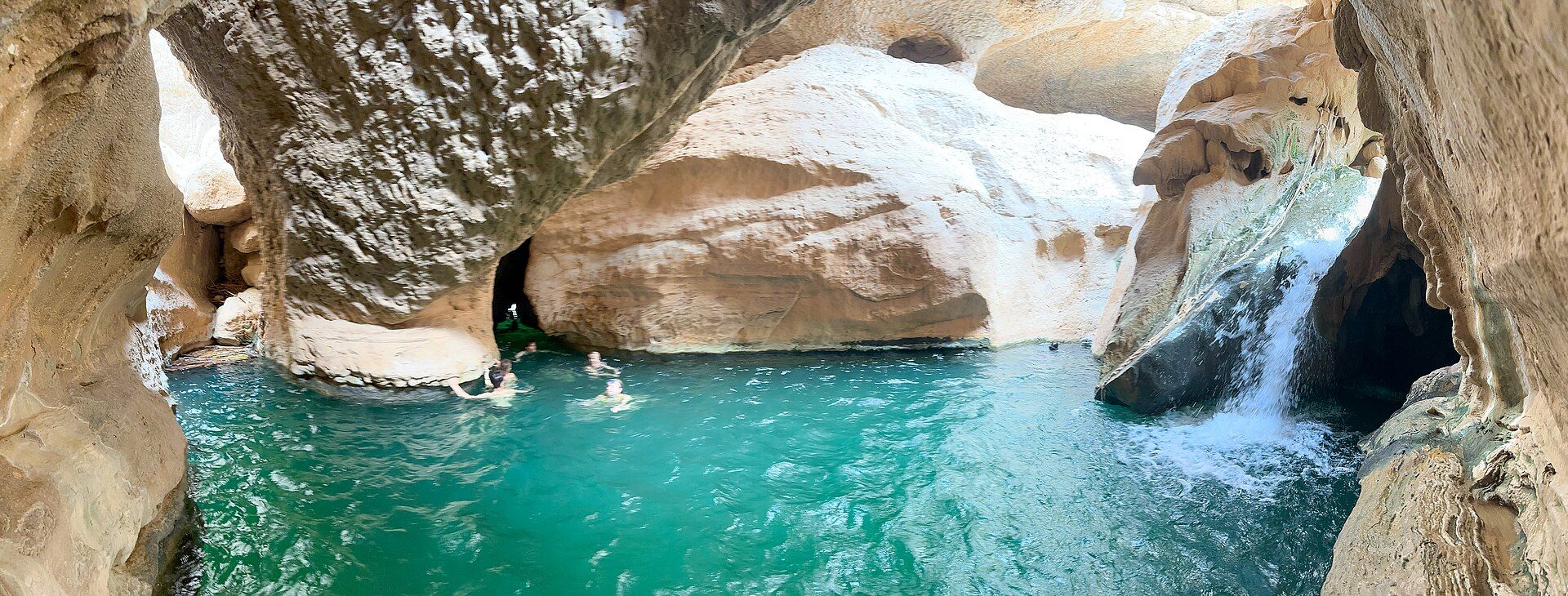
Oman's landscapes are among the most varied in Arabia. The rugged Al Hajar Mountains rise to nearly 3,000 metres at Jebel Shams, whose rim falls into the vast Wadi Ghul canyon, while spring-fed wadis like Wadi Shab hide turquoise pools and hidden waterfalls in the desert rock. Inland roll the great dunes of the Wahiba Sands, and the coast runs from Arabian Sea beaches to fjord-like inlets in the far north. It is a country where mountains, canyons, oases, and desert meet.
Where to begin
-
Wadi Shab
A palm-fringed canyon of turquoise pools and a hidden waterfall cave.
-
Jebel Shams
Oman's highest peak above the mile-deep 'Grand Canyon of Arabia'.
-
The Wahiba Sands
A rolling red-gold sand sea and living Bedouin desert.
A taste of the place
Omani food centres on fragrant rice and slow-cooked meat — shuwa, lamb roasted underground for a feast, majboos spiced rice, fresh seafood on the coast, dates, halwa, and cardamom coffee.
Traveling responsibly
- Explore the mountains, deserts, and wadis in the cool October–April season.
- Take a 4x4 for the high mountain roads and the dunes, and never enter a wadi in wet weather.
- Dress modestly and enjoy Oman's famously warm hospitality.
Oman packs an extraordinary range of nature into one corner of Arabia. The Al Hajar Mountains rise to Jebel Shams above the vast Wadi Ghul canyon; spring-fed wadis like Wadi Shab hide turquoise pools and secret waterfalls; and inland the great dunes of the Wahiba Sands roll to the horizon. This atlas begins Oman’s chapter with those three, with its fjord-like northern coast and Arabian Sea shores still to come.
Added Updated
All wonders in Oman
4 places