Kinabatangan River
📍 Sabah, Malaysian Borneo
Sabah's great wildlife river — the second longest in Malaysia, whose forested floodplain is among the best places on Earth to see wild orangutans, proboscis monkeys and pygmy elephants from a boat.
What makes it marvelous
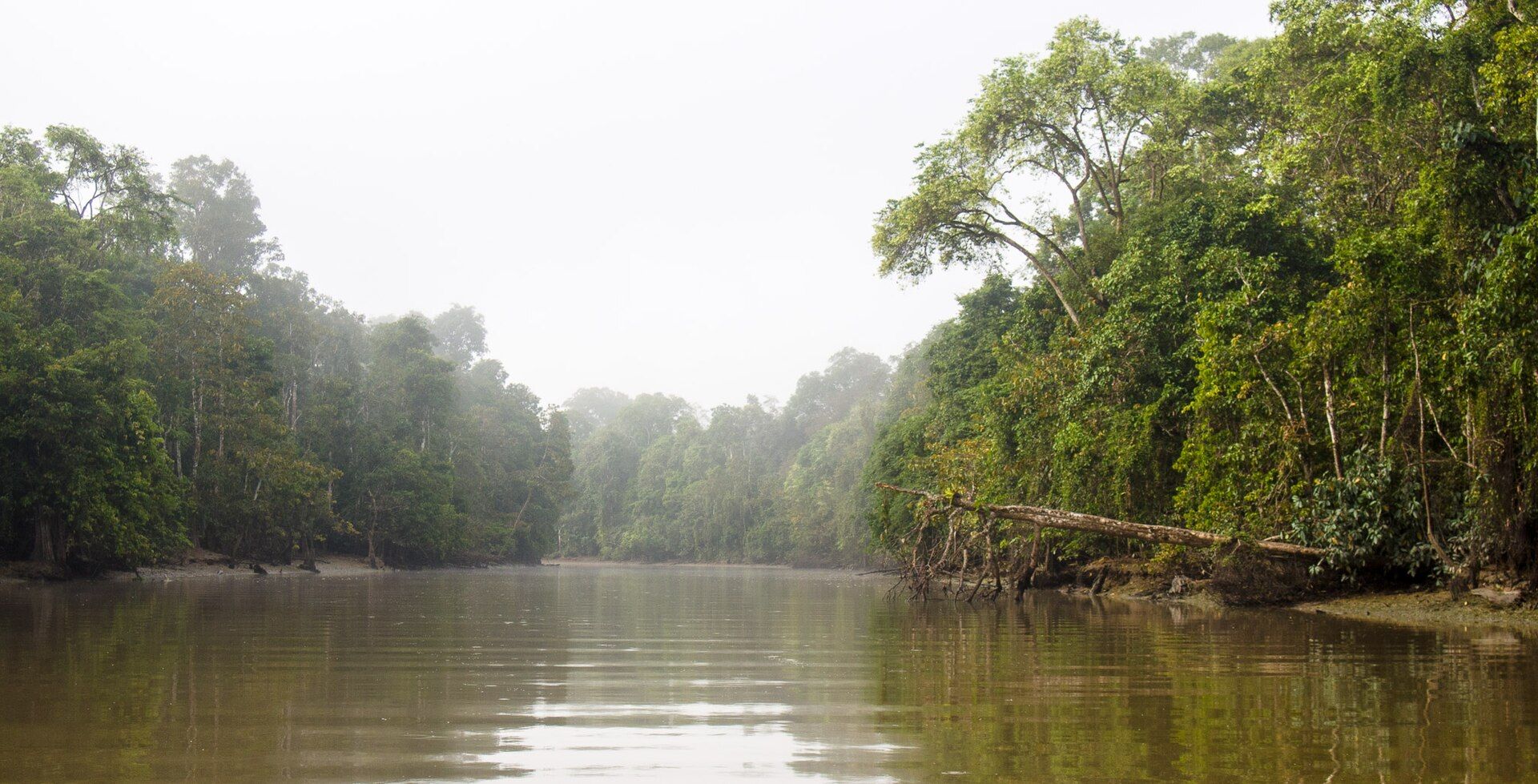
The Kinabatangan runs about 560 kilometres from the mountains of southwest Sabah to the Sulu Sea, making it the second longest river in Malaysia. Its lower floodplain, a mosaic of forest, oxbow lakes and swamp squeezed between oil-palm estates, has become one of the richest wildlife refuges in Southeast Asia. It is one of only two places on Earth where ten primate species live together, including wild Bornean orangutans, the big-nosed proboscis monkey found nowhere but Borneo, and gibbons — alongside Bornean pygmy elephants, crocodiles and hornbills. Much of the lower river is now a protected wildlife sanctuary.
Why visit
Wildlife here comes to the water, and so do you. Dawn and dusk river cruises glide past riverbanks where orangutans build their nests, proboscis monkeys leap between trees and herds of pygmy elephants come down to drink. Few places let you see so many of Borneo's rarest animals so reliably, and so gently, from the deck of a small boat — a wildlife encounter to rival any safari.
More views of Kinabatangan River
Additional photographs of the actual site — each freely licensed, with its photographer and licence credited.
What to know before you go
🗓️ Best time
Wildlife-watching is good year-round; the drier months from March to October concentrate animals along the river, while the wetter season can bring elephants closer to the banks.
🧭 Getting there & access
Reached from Sandakan by road to the village of Sukau or Bilit on the lower river, where lodges run guided boat cruises.
Good to know
- Book a lodge with a licensed naturalist guide — spotting wildlife rewards trained eyes.
- Bring binoculars, a long camera lens, insect repellent and a rain layer.
- Take the dawn and dusk cruises; midday heat sends most animals into cover.
Plan your visit
Easy🧭 Getting there
From Sandakan (airport SDK)
- Fly to Sandakan in eastern Sabah
- Transfer by road roughly 2–2h30 to Sukau or Bilit on the lower Kinabatangan, then by boat to a river lodge
- Total travel
- A half-day of travel from Sandakan
- Time at site
- Two to three days for the best chance of wildlife
- Access
- Access is through river lodges that run permitted guided cruises; no independent permit needed beyond the tour.
🎒 What to bring & consider
- Binoculars and a long camera lens for distant wildlife
- Insect repellent and long sleeves for dawn and dusk
- A light rain jacket and dry bag for boat cruises
- Neutral-coloured clothing to avoid startling animals
👁️ What to expect
- Crowds
- Boats spread out along the river; the experience stays intimate.
- Conditions
- Hot and humid; comfortable seated boat cruises with occasional rain.
- Facilities
- Riverside eco-lodges with meals and guides at Sukau and Bilit.
- The view
- A proboscis monkey against green riverbank at golden hour, or elephants at the water's edge.
Times and requirements are approximate and change with season, weather, and local rules — confirm permits, fares, and schedules with operators before you travel.
Natural riches of the area
- A 560-kilometre river and forested floodplain
- Wild Bornean orangutans and proboscis monkeys
- Bornean pygmy elephants and saltwater crocodiles
- Oxbow lakes, swamp forest and hornbills
Local food
- Hinava
- Sabahan lime-cured raw fish with chilli and shallots.
- Sayur manis
- Stir-fried Sabah 'vegetable fern' and jungle greens.
- Ikan bakar
- Charcoal-grilled river or sea fish, a Sabah staple.
The Kinabatangan is Sabah’s great wildlife river — at about 560 kilometres, the second longest in Malaysia — winding from the mountains of southwest Borneo down to the Sulu Sea. It is not the river’s length that draws travellers from across the world, but its lower floodplain: a ribbon of forest, swamp and oxbow lakes hemmed in by oil-palm plantations, where much of Borneo’s wildlife has been pushed together into one extraordinary refuge.
That concentration makes the Kinabatangan one of the finest wildlife-watching destinations in Southeast Asia. It is among only two places on Earth where ten different primate species live side by side, including wild Bornean orangutans, silvered langurs, gibbons and the extraordinary proboscis monkey — a pot-bellied, big-nosed leaf-eater found nowhere but Borneo. Along the banks move Bornean pygmy elephants, saltwater crocodiles, and hornbills that clatter overhead, while much of the lower river is now protected as a wildlife sanctuary.
The magic of the place is how you meet it: from a small boat, drifting quietly along the water at dawn and dusk when the animals come down to feed and drink. Guests stay at riverside lodges and set out with naturalist guides, and few other places on Earth offer such reliable, close and unhurried encounters with so many of the rarest creatures of the rainforest. It is a safari on water, in the wild heart of Borneo.
Kinabatangan River: common questions
How do you get to Kinabatangan River?
From Sandakan (airport SDK): Fly to Sandakan in eastern Sabah; Transfer by road roughly 2–2h30 to Sukau or Bilit on the lower Kinabatangan, then by boat to a river lodge. Total travel time: A half-day of travel from Sandakan.
When is the best time to visit Kinabatangan River?
Wildlife-watching is good year-round; the drier months from March to October concentrate animals along the river, while the wetter season can bring elephants closer to the banks.
How long should you spend at Kinabatangan River?
Two to three days for the best chance of wildlife. Total travel time: A half-day of travel from Sandakan.
What should you bring to Kinabatangan River?
Binoculars and a long camera lens for distant wildlife Insect repellent and long sleeves for dawn and dusk A light rain jacket and dry bag for boat cruises Neutral-coloured clothing to avoid startling animals
Do you need a permit or guide for Kinabatangan River?
Access is through river lodges that run permitted guided cruises; no independent permit needed beyond the tour.
Is Kinabatangan River crowded, and what are conditions like?
Boats spread out along the river; the experience stays intimate. Hot and humid; comfortable seated boat cruises with occasional rain. Facilities: Riverside eco-lodges with meals and guides at Sukau and Bilit.
Added