Morskie Oko
📍 Tatra National Park, Lesser Poland, Poland
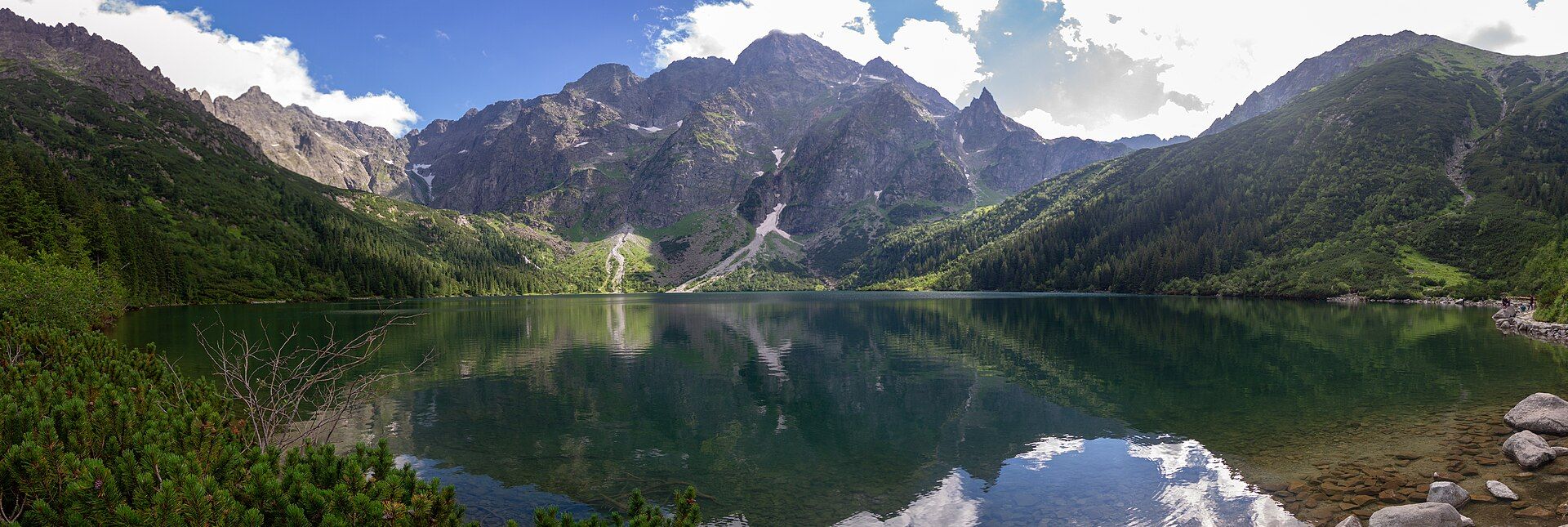
The largest and most beloved lake of the Polish Tatras — a clear alpine tarn cradled beneath the sheer Mięguszowieckie peaks, its name, the 'Eye of the Sea', matched by water clear enough to see many metres down.
What makes it marvelous
Morskie Oko fills a glacier-gouged basin at around 1,395 metres in the High Tatras, the largest lake in the Polish Tatra Mountains at nearly 35 hectares and up to about 50 metres deep. Melting ice-age glaciers scooped out its hollow, and today snowmelt and mountain streams keep it astonishingly clear, with visibility reaching many metres on a still day. Sheer granite walls of the Mięguszowieckie Summits soar directly from its far shore, mirrored in the water, while spruce forest crowds the near bank. Its name, 'Eye of the Sea', comes from an old belief that its depths reached, by hidden passage, all the way to the ocean.
Why visit
Reaching Morskie Oko is a rite of passage in Poland: a scenic walk up a valley road to a lake so photogenic it has become a national icon. The reflection of the great peaks in the clear water is unforgettable, and for the fit, a steeper climb continues to the smaller, wilder Czarny Staw tarn above. It is the gateway to the finest high-mountain scenery in the country.
More views of Morskie Oko
Additional photographs of the actual site — each freely licensed, with its photographer and licence credited.
What to know before you go
🗓️ Best time
Summer and early autumn give the safest walking and clearest reflections; winter turns the route into a snowbound trek, and the lake often freezes.
🧭 Getting there & access
Reached from Zakopane to the Palenica Białczańska car park, then a paved road walk of about 9 kilometres up to the lake; horse-drawn carts cover part of the route.
Good to know
- Private cars stop at Palenica Białczańska; from there it is roughly a 2-hour walk each way up the road.
- Go early to beat the crowds and catch the peaks mirrored in still morning water.
- Bring layers and rain gear — mountain weather changes fast even in summer.
Plan your visit
Moderate🧭 Getting there
From Zakopane, via Kraków (airport KRK)
- From Zakopane take a bus or taxi to the Palenica Białczańska car park
- Walk the paved valley road about 9 km up to the lake, roughly 2h each way, or take a horse cart part-way
- Total travel
- A full day from Zakopane
- Time at site
- A couple of hours at the lake; more to climb to Czarny Staw above
- Access
- National park entry fee at the trailhead; the access road is walked, not driven, and horse carts run part of the way.
🎒 What to bring & consider
- Comfortable walking shoes for the long paved ascent
- Layers and a rain jacket for fast-changing mountain weather
- Water and snacks, though a mountain hut sells food at the lake
- Cash for the park fee and horse carts
👁️ What to expect
- Crowds
- One of Poland's busiest natural sites in summer; early starts help greatly.
- Conditions
- A steady uphill road walk; higher trails to Czarny Staw are rockier and steeper.
- Facilities
- A historic mountain hut (schronisko) with food and toilets at the lakeshore.
- The view
- The Mięguszowieckie peaks mirrored in the still lake from the near shore at dawn.
Times and requirements are approximate and change with season, weather, and local rules — confirm permits, fares, and schedules with operators before you travel.
Natural riches of the area
- A glacier-carved alpine lake
- The sheer Mięguszowieckie granite peaks
- Exceptionally clear mountain water
- Spruce forest and high Tatra streams
Local food
- Oscypek
- Smoked sheep's-milk cheese from the Tatra highlands, often grilled.
- Kwaśnica
- A tart Podhale sauerkraut soup with smoked pork.
- Moskole
- Griddled highland potato flatbreads eaten with butter or cheese.
Morskie Oko — the “Eye of the Sea” — is the largest and best-loved lake of the Polish Tatras, and one of the most cherished natural sights in all of Poland. It fills a basin at around 1,395 metres, gouged out by ice-age glaciers, spanning nearly 35 hectares and plunging to about 50 metres deep. Fed by snowmelt and mountain streams, its water is remarkably clear, and from its far shore the granite walls of the Mięguszowieckie Summits rise almost sheer, their reflection shimmering across the surface.
Its name, the ‘Eye of the Sea’, long predates any survey of it; the lake is in fact about 51 metres deep, held in a basin gouged out by a glacier. This is a classic high-mountain tarn, ringed by spruce forest and crowned by some of the highest peaks in the range, a scene that has drawn walkers, painters and poets for generations.
Getting there is part of the experience. From the car park at Palenica Białczańska, a paved road climbs some nine kilometres up a wooded valley to the lakeshore, walked by hundreds of thousands of visitors each year — or ridden part-way by horse-drawn cart. At the top waits a historic wooden mountain hut and, for those with energy to spare, a steeper path onward to the wilder tarn of Czarny Staw above. On a still morning, with the peaks mirrored in the water, it is easy to see why Poland holds this lake so dear.
Morskie Oko: common questions
How do you get to Morskie Oko?
From Zakopane, via Kraków (airport KRK): From Zakopane take a bus or taxi to the Palenica Białczańska car park; Walk the paved valley road about 9 km up to the lake, roughly 2h each way, or take a horse cart part-way. Total travel time: A full day from Zakopane.
When is the best time to visit Morskie Oko?
Summer and early autumn give the safest walking and clearest reflections; winter turns the route into a snowbound trek, and the lake often freezes.
How long should you spend at Morskie Oko?
A couple of hours at the lake; more to climb to Czarny Staw above. Total travel time: A full day from Zakopane.
What should you bring to Morskie Oko?
Comfortable walking shoes for the long paved ascent Layers and a rain jacket for fast-changing mountain weather Water and snacks, though a mountain hut sells food at the lake Cash for the park fee and horse carts
Do you need a permit or guide for Morskie Oko?
National park entry fee at the trailhead; the access road is walked, not driven, and horse carts run part of the way.
Is Morskie Oko crowded, and what are conditions like?
One of Poland's busiest natural sites in summer; early starts help greatly. A steady uphill road walk; higher trails to Czarny Staw are rockier and steeper. Facilities: A historic mountain hut (schronisko) with food and toilets at the lakeshore.
Added Updated
More wonders to explore