Head to head · Ireland's two famous Atlantic coast sights
Cliffs of Moher vs Giant's Causeway: Which Should You See in Ireland?
The Cliffs of Moher and the Giant's Causeway are the two coastal sights most first trips to Ireland try to fit in, and they sit at opposite ends of the island. The Cliffs of Moher are in County Clare in the Republic of Ireland, on the Wild Atlantic Way. The Giant's Causeway is on the Causeway Coast in County Antrim, Northern Ireland, about an hour from Belfast.
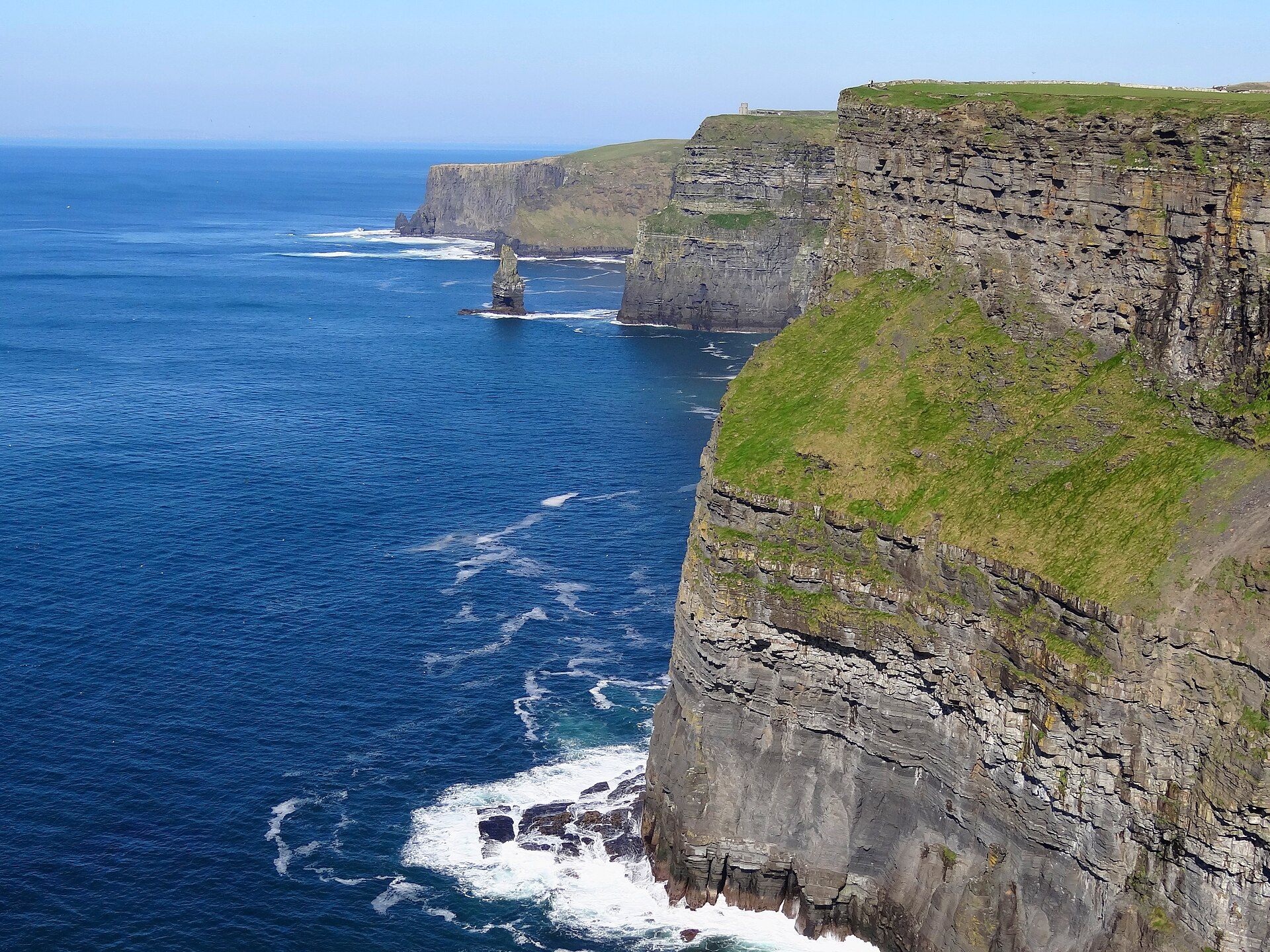
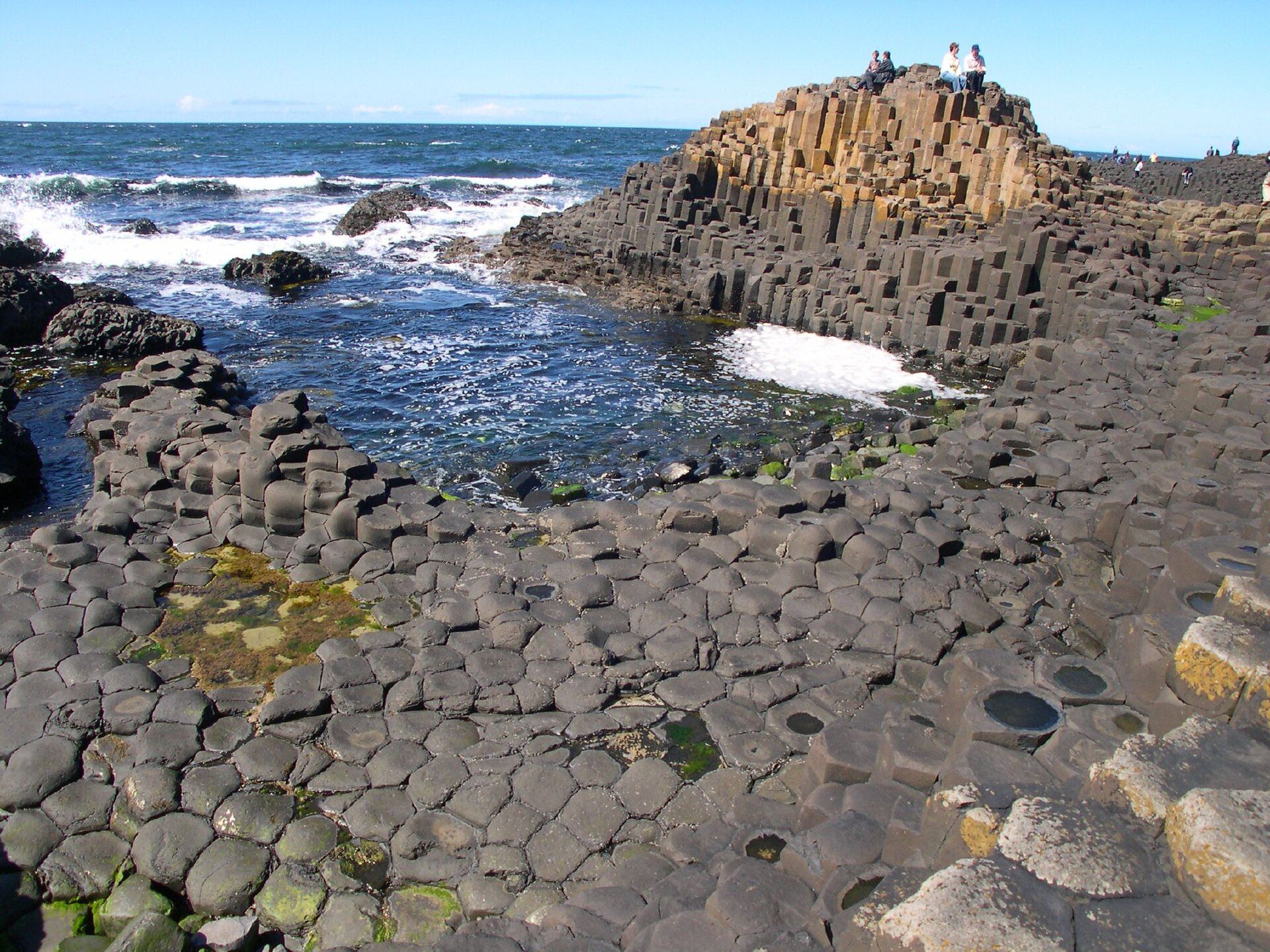
They are different kinds of spectacle. Moher is about height and scale: a wall of sea cliffs up to 214 metres high running for about 14 kilometres. The Causeway is about geometry: some 40,000 basalt columns, mostly hexagons, stepping down into the sea, left by lava that cooled about 60 million years ago.
Cliffs of Moher
A 214-metre wall of Atlantic sea cliffs
The Cliffs of Moher expose about 300-million-year-old layers of sandstone, siltstone and shale laid down by an ancient river delta. They reach 214 metres near O'Brien's Tower and run for about 14 kilometres, with seabird colonies, including puffins, razorbills and guillemots, on the ledges. They are part of the Burren and Cliffs of Moher UNESCO Global Geopark.
- Sheer height and a long cliff-top walk towards Hag's Head and Doolin
- Seabird colonies, with puffins usually present from spring to midsummer
- Easy to combine with the Burren and Galway on the west coast
Giant's Causeway
40,000 basalt columns stepping into the sea
About 40,000 interlocking basalt columns, most of them near-perfect hexagons and up to about 12 metres tall, formed as thick lava flows cooled slowly and cracked around 60 million years ago. You can walk and climb on the stones themselves. It was Northern Ireland's first UNESCO World Heritage Site and is a National Nature Reserve looked after by the National Trust.
- A formation that looks engineered — you can stand on the columns
- Open access to the stones; only the visitor centre and car park are charged
- Part of the Causeway Coast, close to Belfast
Head to head
| What matters | Cliffs of Moher | Giant's Causeway |
|---|---|---|
| What you see Edge: Toss-up | Scale: a long line of vertical cliffs dropping into the Atlantic, best from the railed viewpoints and the cliff-top trail. | Detail: honeycomb columns forming steps, stools and organ pipes at sea level. |
| Size Edge: Cliffs of Moher | Up to 214 metres high and about 14 kilometres long. | Columns up to about 12 metres tall along a stretch of the Antrim coast. |
| Getting there Edge: Toss-up | Under an hour from Ennis; Galway is the other usual base. | Half a day from Belfast, including the drive. |
| Time needed Edge: Toss-up | Two to three hours, more for the coastal walk. | Two to three hours; a full day if you also walk the clifftop path. |
| Cost Edge: Giant's Causeway | The main visitor centre charges for parking and entry, with a lower fee if you book online in advance. | The stones are open access. The visitor centre, car park and audio guide are charged, and you can walk in from the road without paying for them. |
| Safety Edge: Giant's Causeway | Beyond the walled area the trail has long unfenced stretches above a 200-metre drop, and people have died going past the barriers. Wind is the main hazard, and fog can hide the view. | A steady walk down and a real climb back up. The columns need careful footing, and the clifftop routes close in high winds. |
| Crowds Edge: Toss-up | Heavy around the visitor centre and O'Brien's Tower; the trail thins quickly as you walk away. | Busy from mid-morning with coach parties; early and late in the day the stones can be almost empty. |
Which should you choose?
Choose Cliffs of Moher if…
…your trip is on the west coast around Galway, the Burren or the Wild Atlantic Way, and you want big views and a cliff walk.
Choose Giant's Causeway if…
…you are based in Belfast or Dublin heading north, want a geological oddity you can walk on, or are on a tighter budget.
The honest verdict
Choose by your route, not by which is 'better'. The two are at opposite ends of the island, and each pairs with its own coast: Moher with the Burren and Galway, the Causeway with the rest of the Causeway Coast.
For one overwhelming view, the Cliffs of Moher win on scale. For something you can't see anywhere else in Ireland — and touch — the Giant's Causeway is the stranger, more memorable place.
At both, go early or late to avoid tour coaches, and take the wind seriously: stay behind the barriers at Moher, and expect clifftop paths at the Causeway to close in a gale.
Wonders mentioned here
Added