The Jurassic Coast
📍 Dorset and East Devon, South West England, United Kingdom
England's only natural World Heritage Site — a 95-mile coast where 185 million years of Earth history stand exposed in the cliffs, from red Triassic desert rocks to the sea-carved arch of Durdle Door.
What makes it marvelous
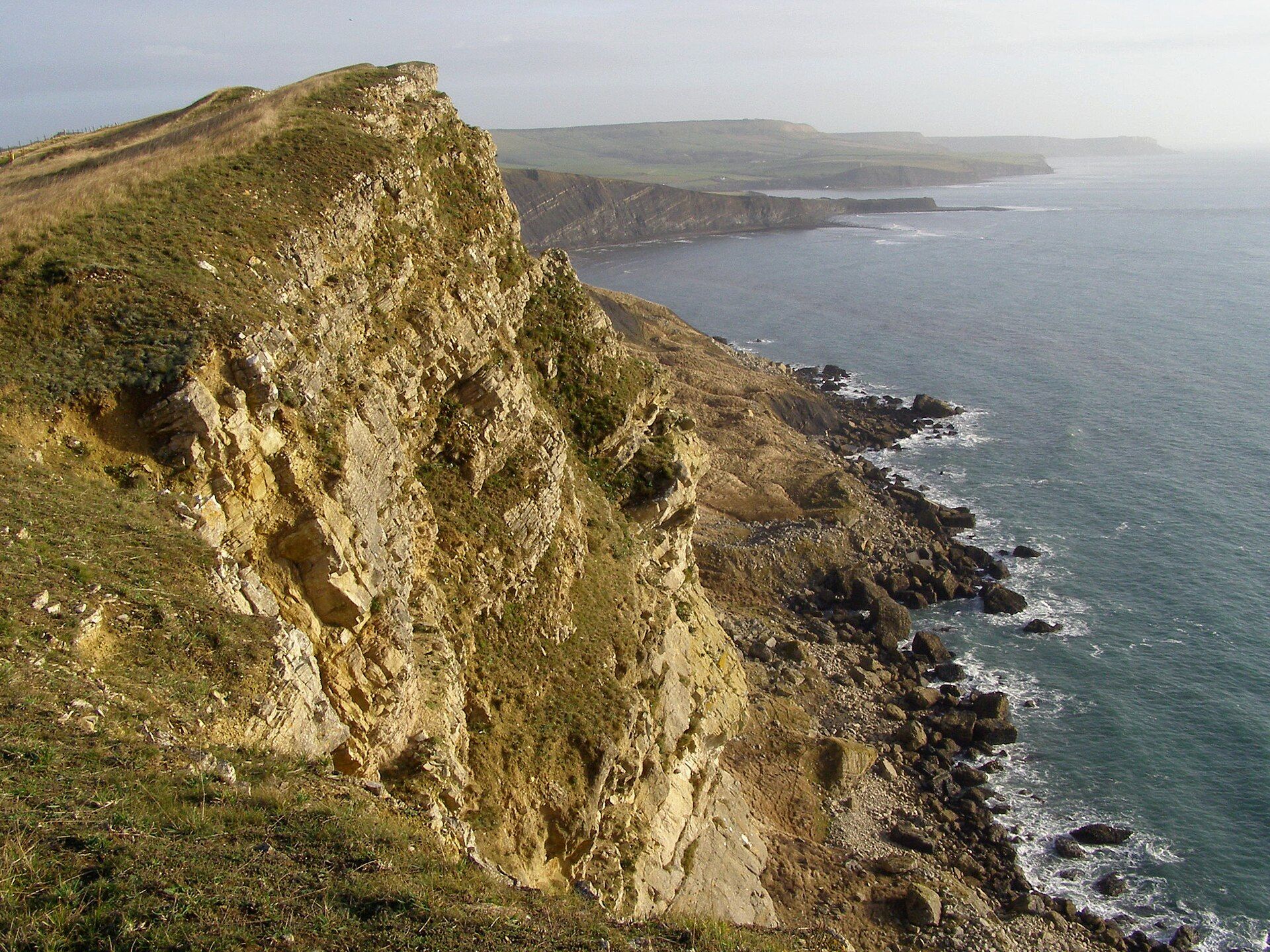
The Dorset and East Devon Coast is a walk through deep time. Because the rock strata tilt gently eastward, a 95-mile (154 km) stretch of cliffs lays out an almost unbroken record of the entire Mesozoic Era — the Triassic, Jurassic and Cretaceous periods, spanning roughly 185 million years — in the order they were laid down. Nowhere else on Earth is that full sequence exposed along a single coastline. The soft-and-hard geology has been sculpted by the sea into a gallery of landforms: the near-perfect circular bay of Lulworth Cove, the natural limestone arch of Durdle Door, the shingle barrier of Chesil Beach, and cliffs so rich in ammonites and marine reptiles that they helped found the science of palaeontology.
Why visit
This is where you can pick fossils off the beach, watch the sea drive through a stone arch, and read the history of the planet in a cliff face — all on a gentle, walkable coast of turquoise coves and chalk headlands. The South West Coast Path links it end to end, and the fossil-hunting at Lyme Regis and Charmouth is as good as anywhere in Britain.
More views of The Jurassic Coast
Additional photographs of the actual site — each freely licensed, with its photographer and licence credited.
What to know before you go
🗓️ Best time
Late spring to early autumn (May–September) for warm, settled weather and safe cliff walking; winter storms churn up the best fossils but make the cliffs hazardous.
🧭 Getting there & access
The coast runs from Exmouth in East Devon to Studland in Dorset. Bournemouth and Exeter are the nearest larger gateways, with rail to Weymouth, Dorchester and Axminster and buses linking coastal towns.
Good to know
- Never hammer or climb the cliffs — they are unstable and rockfalls are frequent; collect only loose fossils from the beach.
- Check tide times before walking beneath cliffs or around headlands to avoid being cut off.
- Lulworth and Durdle Door car parks fill by mid-morning in summer; arrive early or come off-season.
Plan your visit
Moderate🧭 Getting there
From Weymouth or Dorchester (rail); Exeter or Bournemouth by air/road
- Train to Weymouth or Dorchester, then local bus to Lulworth and the coastal villages
- By car from Bournemouth or Exeter along the A35 — roughly 1–1.5 hours to the central coast
- Total travel
- About 3 hours from London to Weymouth by train
- Time at site
- A day for the highlights; several to walk longer stretches of the path
- Access
- The coast and beaches are open and free; the South West Coast Path runs its length. Some clifftop car parks charge, and a few beaches have seasonal fees.
🎒 What to bring & consider
- Sturdy shoes for shingle beaches and steep, sometimes muddy coast-path climbs
- A tide table and awareness of unstable cliffs
- Sun and wind protection on exposed headlands
- Layers and waterproofs — coastal weather shifts quickly
👁️ What to expect
- Crowds
- Durdle Door and Lulworth Cove are very busy on summer weekends; the wider path is quieter.
- Conditions
- Breezy, walkable coast with big cliff drops and strong sun on clear days.
- Facilities
- Good — towns, cafes, car parks and visitor centres along most of the route.
- The view
- Durdle Door framed from the western clifftop path in early light.
Times and requirements are approximate and change with season, weather, and local rules — confirm permits, fares, and schedules with operators before you travel.
Natural riches of the area
- An unbroken 185-million-year rock sequence spanning the Triassic, Jurassic and Cretaceous
- World-class fossil beds of ammonites, belemnites and marine reptiles
- Sea-sculpted landforms — Durdle Door arch, Lulworth Cove and Chesil Beach
- Chalk downland, sea-bird cliffs and sheltered turquoise coves
Local food
- Dorset crab
- Sweet local crab, served dressed, in sandwiches or on chowder along the coast.
- Cider
- West Country apple cider, a staple of Devon and Dorset pubs.
- Dorset apple cake
- A moist spiced sponge studded with local apples, served with cream.
The Jurassic Coast is a 95-mile lesson in deep time. Along the shores of Dorset and East Devon the rock layers tilt gently eastward, so that walking the coast means walking forward through the Mesozoic — from the rusty red desert sandstones of the Triassic, through the Jurassic clays and limestones packed with sea creatures, to the chalk of the Cretaceous. It is the only place on Earth where that entire 185-million-year sequence stands exposed in an unbroken line, which is why in 2001 it became England’s first and only natural World Heritage Site.
The sea has been the sculptor. Where it broke through a band of hard limestone it scooped out the near-circular bowl of Lulworth Cove; a little further along it wore a headland into the great stone arch of Durdle Door, one of the most photographed views in the country. Offshore, the long shingle rampart of Chesil Beach runs for miles.
It is also the cradle of British palaeontology. The cliffs around Lyme Regis and Charmouth shed ammonites and the bones of ancient marine reptiles onto the beach with every storm — fossils that visitors can still hunt for today, provided they take only what the tide has already loosened.
The Jurassic Coast: common questions
How do you get to The Jurassic Coast?
From Weymouth or Dorchester (rail); Exeter or Bournemouth by air/road: Train to Weymouth or Dorchester, then local bus to Lulworth and the coastal villages; By car from Bournemouth or Exeter along the A35 — roughly 1–1.5 hours to the central coast. Total travel time: About 3 hours from London to Weymouth by train.
When is the best time to visit The Jurassic Coast?
Late spring to early autumn (May–September) for warm, settled weather and safe cliff walking; winter storms churn up the best fossils but make the cliffs hazardous.
How long should you spend at The Jurassic Coast?
A day for the highlights; several to walk longer stretches of the path. Total travel time: About 3 hours from London to Weymouth by train.
What should you bring to The Jurassic Coast?
Sturdy shoes for shingle beaches and steep, sometimes muddy coast-path climbs A tide table and awareness of unstable cliffs Sun and wind protection on exposed headlands Layers and waterproofs — coastal weather shifts quickly
Do you need a permit or guide for The Jurassic Coast?
The coast and beaches are open and free; the South West Coast Path runs its length. Some clifftop car parks charge, and a few beaches have seasonal fees.
Is The Jurassic Coast crowded, and what are conditions like?
Durdle Door and Lulworth Cove are very busy on summer weekends; the wider path is quieter. Breezy, walkable coast with big cliff drops and strong sun on clear days. Facilities: Good — towns, cafes, car parks and visitor centres along most of the route.
Added
More wonders to explore
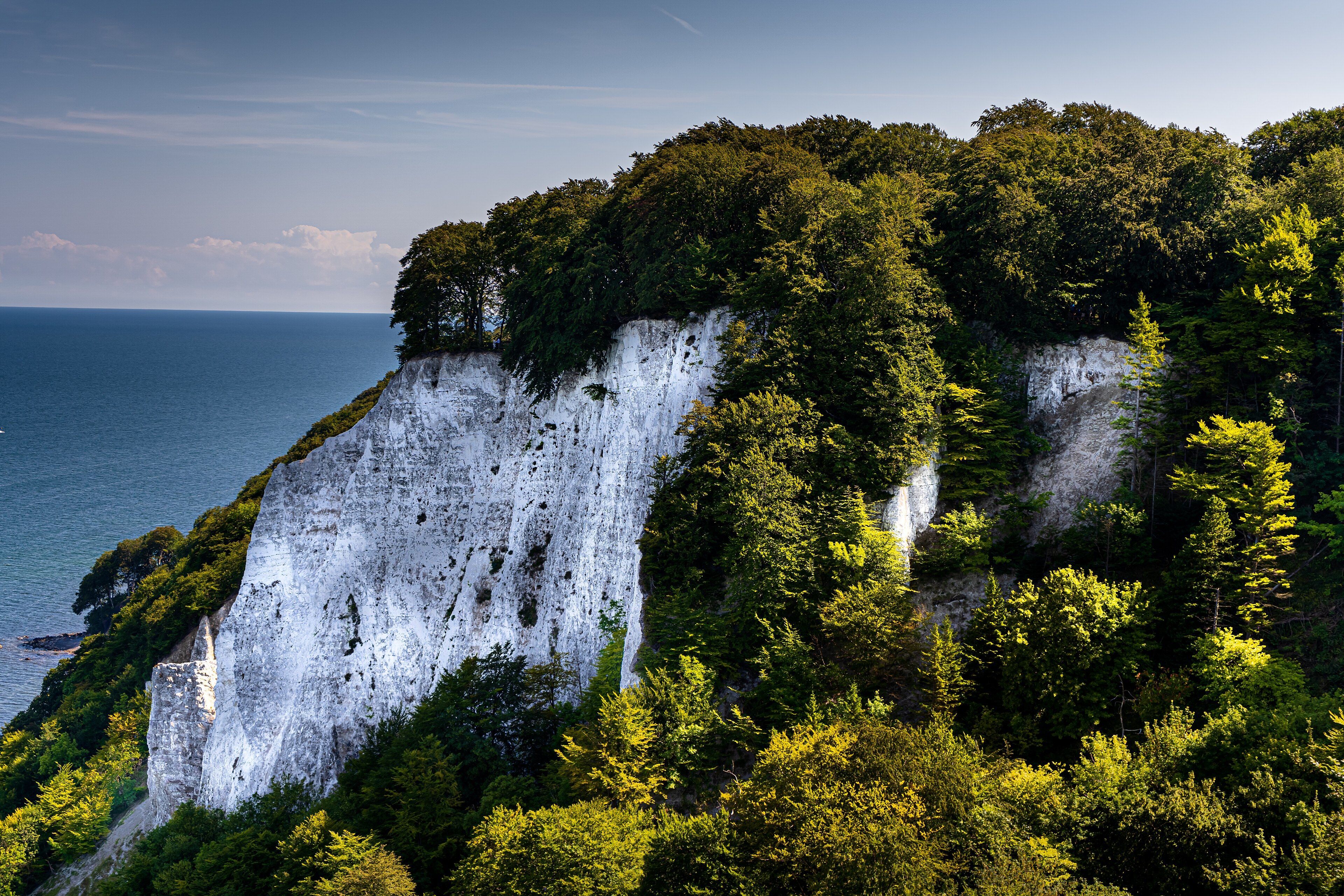
Jasmund Chalk Cliffs
Jasmund National Park, Rügen, Mecklenburg-Vorpommern, Germany
The Curonian Spit
Klaipėda County, western Lithuania, extending into Kaliningrad Oblast