Head to head · The two shores of the Channel
Jurassic Coast vs Étretat: Which Arched Coastline Is Worth the Trip?
The Jurassic Coast and Étretat face each other across the English Channel, and both are famous for sea-carved arches: Durdle Door in Dorset, and the Porte d'Aval, Porte d'Amont and Manneporte in Normandy. But one is a 95-mile coastline you could spend a week walking, and the other is a single bay you can see in half a day.
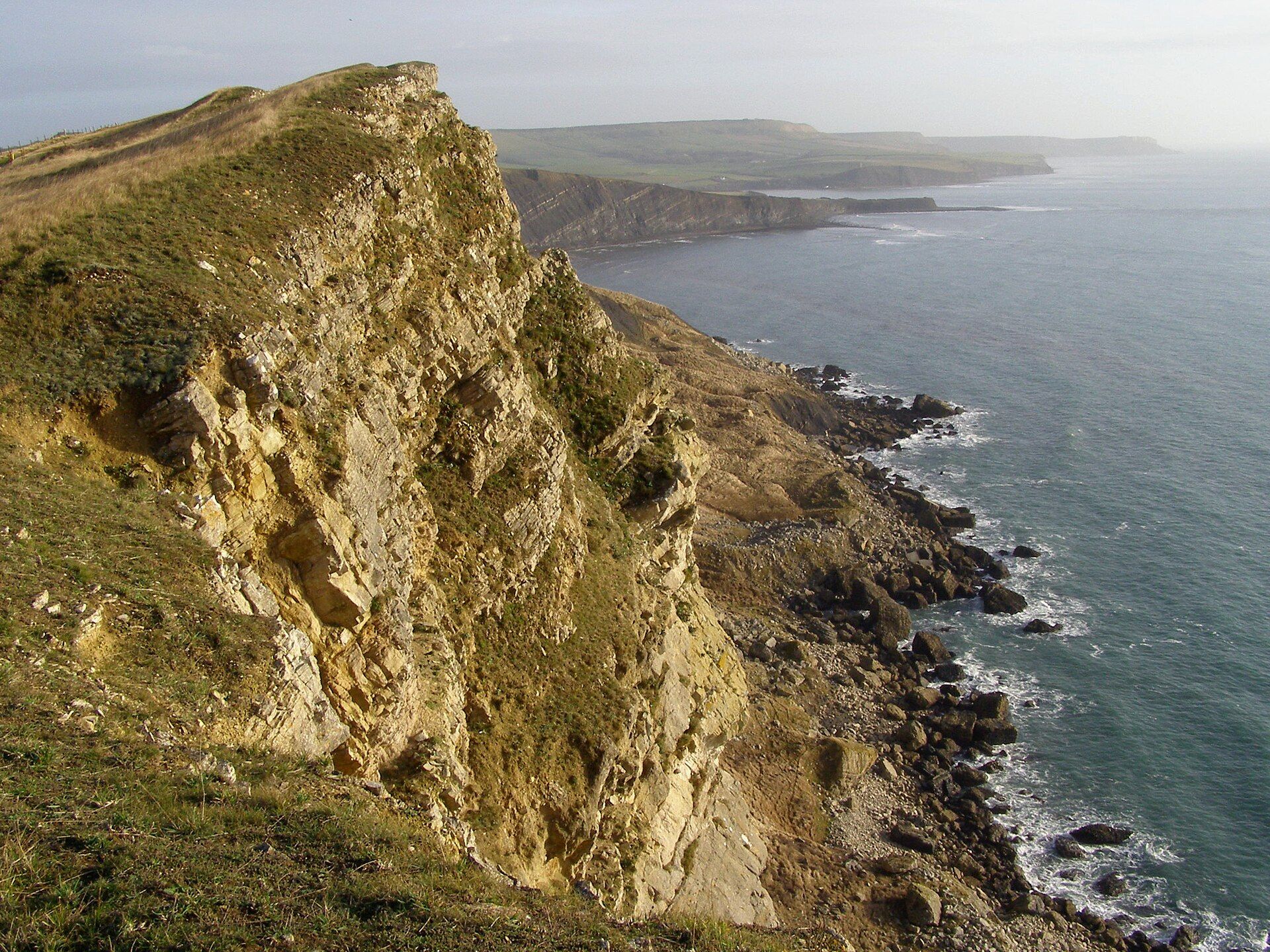
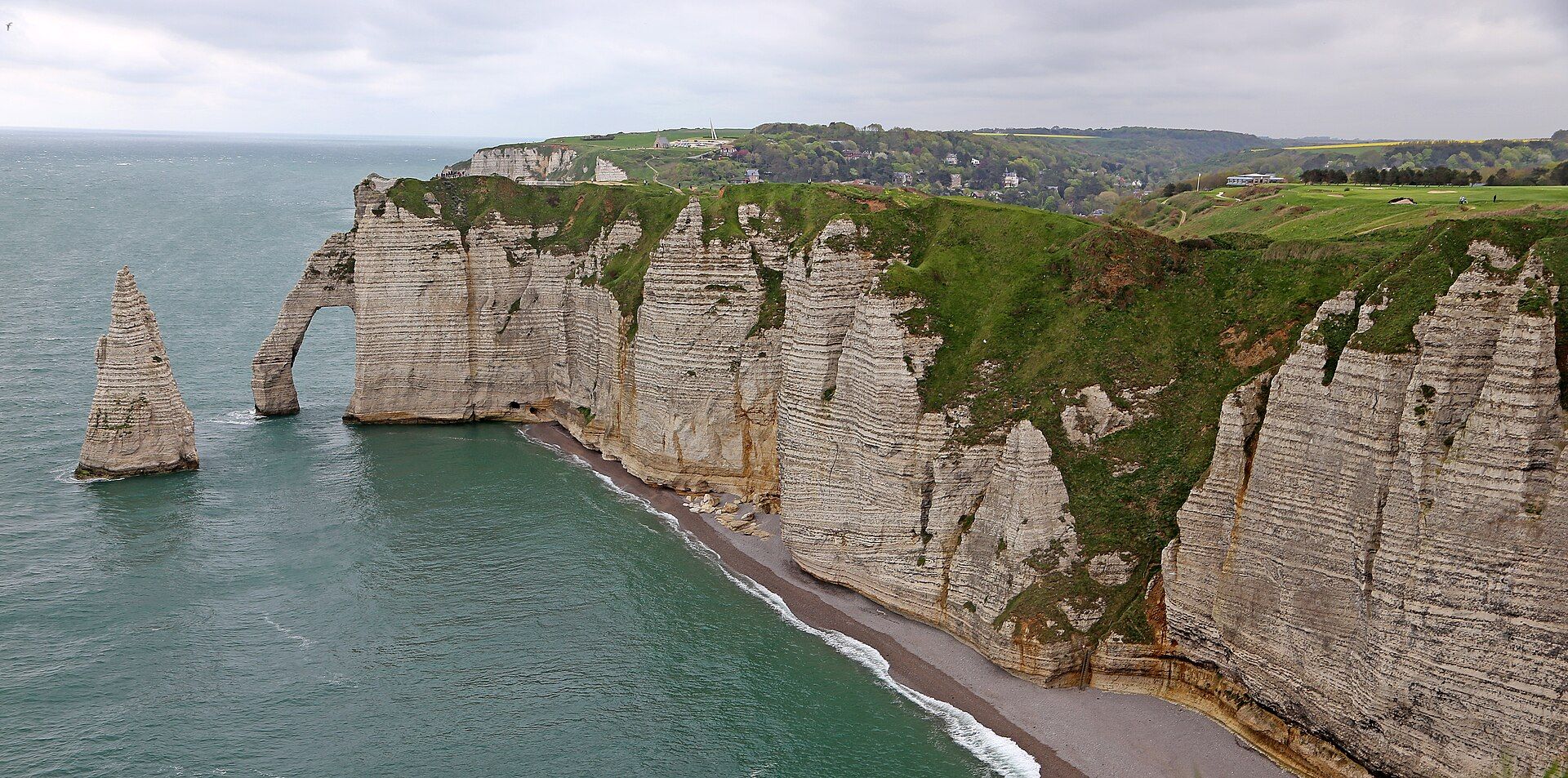
The Dorset and East Devon Coast, a UNESCO World Heritage Site since 2001, exposes roughly 185 million years of Triassic, Jurassic and Cretaceous rock along 154 km, with Lulworth Cove, Chesil Beach and the fossil beaches of Lyme Regis and Charmouth. At Étretat, chalk cliffs up to about 90 m high have been cut into three arches and a lone needle of rock, the scene Monet painted again and again.
Jurassic Coast
95 miles of arches, coves and fossils
England's World Heritage coast from Exmouth to Studland, linked end to end by the South West Coast Path. Train from London to Weymouth or Dorchester (about 3 hours), then local buses; or the A35 by car from Bournemouth or Exeter. The coast and beaches are free; some car parks and beaches charge.
- Fossil hunting on the beaches at Lyme Regis and Charmouth
- Durdle Door, Lulworth Cove and Chesil Beach on one coast
- Days of walking on the South West Coast Path
Étretat
Three chalk arches and a needle
A small town on the Normandy coast about 32 km northeast of Le Havre, with clifftop paths climbing from both ends of its pebble beach. Train from Paris to Le Havre (about 2 hours), then bus or car. The paths are free; much of the edge is unfenced.
- Three arches and the Aiguille seen together from the cliffs
- Half a day covers both cliffs
- The coast Monet, Courbet and Boudin painted
Head to head
| What matters | Jurassic Coast | Étretat |
|---|---|---|
| Scale Edge: Jurassic Coast | 154 km (95 miles) of coast. | One bay with a cliff on each side. |
| Getting there Edge: Toss-up | About 3 hours by train from London to Weymouth, then local buses. | About 3 hours from Paris: train to Le Havre, then 32 km by bus or car. |
| Time needed Edge: Étretat | A day for the highlights; several days to walk longer stretches. | Half a day for both cliffs; a full day with the GR 21 coastal path. |
| Arches Edge: Étretat | Durdle Door, a limestone arch, with Lulworth Cove next door. | Porte d'Aval, Porte d'Amont, the Manneporte, and the free-standing Aiguille. |
| Beyond the arches Edge: Jurassic Coast | Fossil beaches, a 185-million-year rock sequence, Chesil Beach, turquoise coves. | The art history: Monet, Courbet, Boudin, Daubigny; Leblanc's Arsène Lupin. |
| Best months Edge: Toss-up | May–September for settled weather; winter storms expose fossils but make cliffs hazardous. | May–September for clifftop walks and long evening light. |
| Crowds Edge: Toss-up | Durdle Door and Lulworth Cove very busy on summer weekends; car parks fill by mid-morning. | Busy on summer weekends and holidays; quiet early and late in the day. |
| Safety Edge: Toss-up | Unstable cliffs with frequent rockfalls — collect only loose fossils; check tides. | Mostly unfenced, crumbling chalk edges; the rising tide cuts off the beach. |
Which should you choose?
Choose Jurassic Coast if…
…you have several days, want to hunt for fossils, or want a long coast walk with many landforms rather than a single view.
Choose Étretat if…
…you have half a day from Paris or Normandy, want the classic arch-and-needle view, or are following Monet's coast.
The honest verdict
For a single, unforgettable view on a short trip, Étretat: both cliffs in half a day, with the arches and the Aiguille in one frame from the Falaise d'Amont or above on the Falaise d'Aval.
For a whole trip, the Jurassic Coast: Durdle Door is one stop on 95 miles of coast, and fossil beaches, Lulworth Cove and Chesil Beach give you days of walking.
On both, stay back from the edge and walk beneath the cliffs only with a tide table. Arrive early on summer weekends.
Wonders mentioned here
Added