The Gobustan Mud Volcanoes
📍 Gobustan District, southwest of Baku, Azerbaijan
A grey lunar plain of cones that erupt cold — mud, brine and methane pushed up from kilometres below by gas pressure rather than heat, in the country that has more of them than anywhere on Earth.
What makes it marvelous
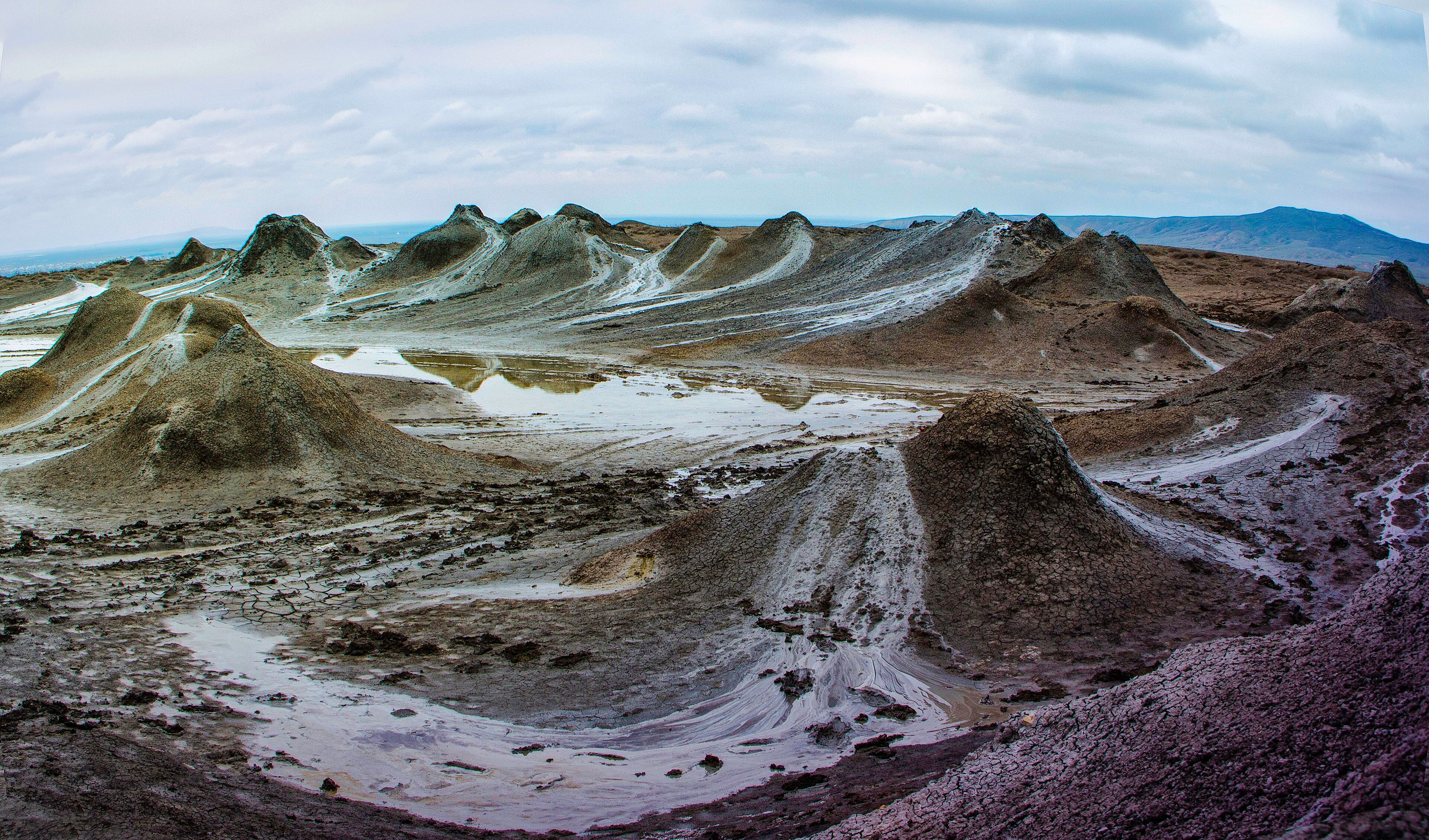
A mud volcano is not a volcano in the usual sense. There is no magma and no lava: what comes out is a slurry of clay, salt water and hydrocarbon gas, forced upward through a fault by pressure imbalances deep underground. Around 86 per cent of the gas released is methane. The mud is usually close to ambient temperature — you can put your hand in it — and the cones it builds range from bubbling pots a metre across to hills hundreds of metres high. Azerbaijan has roughly 400 of them, the greatest concentration anywhere on Earth, and the reason is the same reason the country has oil: it sits on a deep, gas-charged sedimentary basin at the collision zone between two continents. The field southwest of Baku is the accessible one — a grey, cracked, almost vegetation-free plain of grey cones and salses, each one gulping and popping at its own rhythm. Occasionally one of Azerbaijan's mud volcanoes does erupt violently and the escaping methane ignites, throwing flame far above the plain.
Why visit
It looks like nowhere else. The ground is grey, cracked and bare, the cones are the size of anthills up to the size of hills, and the whole plain is quietly moving — cold mud rising, doming, breaking and running downslope in pale grey tongues. It is also very easy to reach from Baku, and it sits alongside the Gobustan rock-art reserve, so the two are usually visited together.
What to know before you go
🗓️ Best time
April to June and September to October are the most comfortable, with mild temperatures and firm ground. Summer is very hot and exposed; winter and early spring turn the approach track to deep mud, which is the one thing that reliably stops vehicles getting there.
🧭 Getting there & access
About 65 km southwest of Baku, roughly an hour by road. The last few kilometres are unsurfaced and often impassable to ordinary cars, so most visitors change to a local four-wheel-drive at the turn-off or come on an organised trip. The mud volcano field and the Gobustan rock-art reserve are close together and normally combined.
Good to know
- Wear shoes you can hose down. The mud is greasy, salty and gets everywhere.
- Do not step onto the smooth-looking surface around a vent — the crust is thin and the mud below is deep.
- Expect to change vehicles for the last stretch; the track defeats normal cars, especially after rain.
- Late afternoon light picks out the cone shapes; midday flattens the whole plain to grey.
Plan your visit
Easy🧭 Getting there
From Baku (GYD), Azerbaijan
- Fly into Baku
- Drive about an hour southwest toward Gobustan
- Change to a four-wheel-drive for the final unsurfaced track
- Combine with the Gobustan rock-art reserve on the same trip
- Total travel
- About an hour from Baku
- Time at site
- Half a day, combined with the reserve
- Access
- The field itself is open ground with no ticket, but the access track is the constraint — local drivers wait at the turn-off and charge a fixed fare for the last stretch, and after rain even they may not go. The adjoining rock-art reserve is separately ticketed with a visitor centre.
🎒 What to bring & consider
- Footwear you can clean or discard
- Sun protection; the plain is fully exposed with no shade at all
- Cash in manat for the transfer vehicle
- Water, since there is nothing on site
- A bag for muddy clothes on the way back
👁️ What to expect
- Crowds
- Light. Most visits are half-day trips from Baku and the field is large enough to absorb them.
- Conditions
- Hot, dry, bare and windy. Flat walking on cracked mud that is slick where it is wet.
- Facilities
- None at the mud volcanoes. A visitor centre at the rock-art reserve nearby.
- The view
- A line of grey cones with tongues of fresh mud running downslope, in low afternoon light that gives the plain some relief.
Times and requirements are approximate and change with season, weather, and local rules — confirm permits, fares, and schedules with operators before you travel.
Natural riches of the area
- Around 400 mud volcanoes nationally — the highest concentration on Earth
- Cones, gryphons and salses venting cold mud, brine and methane
- A gas-charged sedimentary basin at a continental collision zone
- Cracked, salt-crusted badlands with almost no vegetation
- The Caspian coast and the Absheron oil province immediately alongside
Local food
- Plov
- Saffron rice with meat, fruit and herbs, cooked in a crust of flatbread.
- Dolma
- Vine or cabbage leaves stuffed with spiced lamb and rice.
- Qutab
- Thin folded flatbread filled with herbs, pumpkin or meat and griddled.
- Caspian sturgeon and black tea
- Tea drunk from armudu glasses with jam is the standard end to any meal.
The word volcano is doing something unusual here. There is no magma under these cones and nothing molten comes out of them. What rises is a cold slurry of clay, salt water and gas — about 86 per cent of it methane — pushed up through a fault by pressure differences kilometres below, and the mud arriving at the surface is usually close to the temperature of the air. You can stand beside a vent and watch it swell, dome and burst without feeling any heat at all.
Azerbaijan has around 400 of them, which is the largest concentration anywhere on the planet, and the reason is the same one that made Baku an oil city: the country sits on a deep sedimentary basin charged with hydrocarbons, at the point where the Arabian plate is pushing into Eurasia. The field southwest of Baku, beside the Gobustan reserve, is the one most people see.
What it looks like is a grey plain with the vegetation removed. Cracked salt-crusted ground, pale tongues of fresh mud running downslope, and cones ranging from knee-high gryphons up to hills — all of them making small wet noises. Every vent works at its own pace, so the plain is never quite still.
They are not always this placid. Mud volcanoes elsewhere in Azerbaijan have erupted violently, and because what they are venting is methane, an eruption can ignite and send flame a long way above the plain. Those events are rare and unpredictable. The ordinary state of the field is the strange one: a landscape of volcanoes with nothing hot in it.
The Gobustan Mud Volcanoes: common questions
How do you get to The Gobustan Mud Volcanoes?
From Baku (GYD), Azerbaijan: Fly into Baku; Drive about an hour southwest toward Gobustan; Change to a four-wheel-drive for the final unsurfaced track; Combine with the Gobustan rock-art reserve on the same trip. Total travel time: About an hour from Baku.
When is the best time to visit The Gobustan Mud Volcanoes?
April to June and September to October are the most comfortable, with mild temperatures and firm ground. Summer is very hot and exposed; winter and early spring turn the approach track to deep mud, which is the one thing that reliably stops vehicles getting there.
How long should you spend at The Gobustan Mud Volcanoes?
Half a day, combined with the reserve. Total travel time: About an hour from Baku.
What should you bring to The Gobustan Mud Volcanoes?
Footwear you can clean or discard Sun protection; the plain is fully exposed with no shade at all Cash in manat for the transfer vehicle Water, since there is nothing on site A bag for muddy clothes on the way back
Do you need a permit or guide for The Gobustan Mud Volcanoes?
The field itself is open ground with no ticket, but the access track is the constraint — local drivers wait at the turn-off and charge a fixed fare for the last stretch, and after rain even they may not go. The adjoining rock-art reserve is separately ticketed with a visitor centre.
Is The Gobustan Mud Volcanoes crowded, and what are conditions like?
Light. Most visits are half-day trips from Baku and the field is large enough to absorb them. Hot, dry, bare and windy. Flat walking on cracked mud that is slick where it is wet. Facilities: None at the mud volcanoes. A visitor centre at the rock-art reserve nearby.
Added