Churchill
📍 Churchill, Manitoba, western Hudson Bay, Canada
The stretch of sub-Arctic coast where roughly 900 polar bears gather each autumn, waiting on the tundra for Hudson Bay to freeze — and where thousands of beluga whales fill the river estuary through the short northern summer.
What makes it marvelous
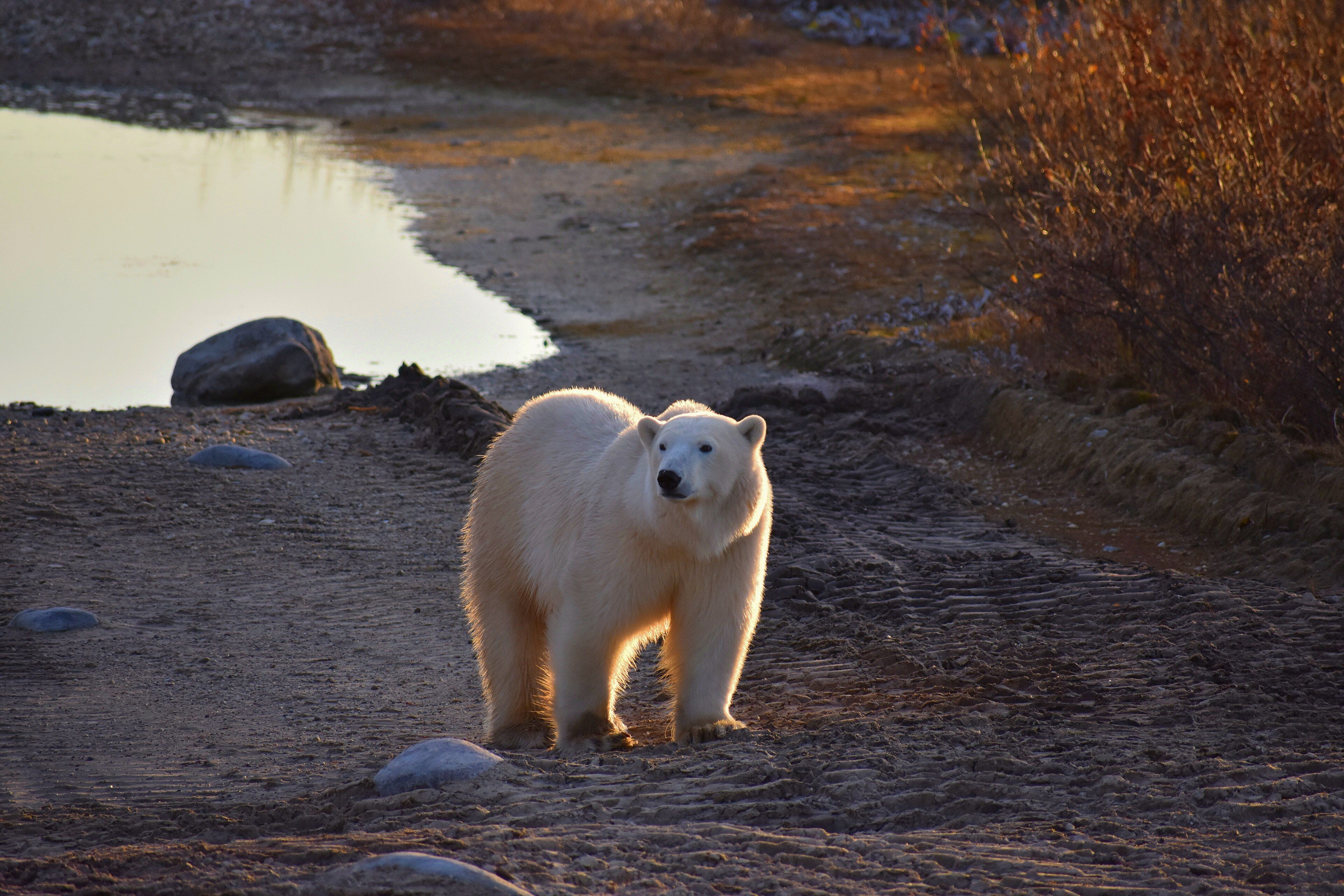
Churchill exists as a wildlife spectacle because of a quirk of geography and ice. Hudson Bay freezes and thaws completely every year, and polar bears can only hunt seals from sea ice — so when the bay melts in summer the western Hudson Bay population is forced ashore to fast. Come October and November they converge on the coast near Churchill, where a combination of currents, freshwater outflow and prevailing winds means the ice reliably forms first, and around 900 bears wait there for the bay to close. It is the densest predictable concentration of polar bears anywhere accessible to visitors. The same estuary reverses the season in summer: from roughly mid-June to August, thousands of beluga whales — among the densest gatherings of the species on Earth — move into the relatively warm, shallow Churchill River to calve and moult. Add a position beneath the auroral oval, and one small town on the tundra collects three separate natural events.
Why visit
Very few places let you watch a large predator at close range in genuinely wild conditions, and fewer still add whales and reliable aurora to the same address. Churchill also sits on a real ecological seam — boreal forest gives out and treeless tundra begins within a few kilometres — so the landscape itself explains why the wildlife behaves the way it does.
What to know before you go
🗓️ Best time
Mid-October to mid-November for polar bears, as they gather waiting for freeze-up. Mid-June to August for beluga whales in the estuary, when the tundra is also in flower. Aurora is best in the dark, cold months from January to March. There is no single best season — pick the animal.
🧭 Getting there & access
There is no road to Churchill. Access is by air from Winnipeg, roughly a 2.5-hour flight, or by rail on a scenic but slow journey of around two days. Polar bear viewing is done from purpose-built high-clearance tundra vehicles with licensed operators; independent wandering outside town is genuinely dangerous and effectively not permitted in bear season.
Good to know
- Book tundra-vehicle trips six to twelve months ahead — the October–November season sells out that far in advance.
- Treat the bear-safety briefings as literal instructions, not formalities; bears do enter the town.
- For belugas, choose a boat or snorkel operator that keeps a respectful distance rather than chasing pods.
- Budget generously — remoteness makes flights, rooms and tours expensive, and there is no cheap alternative.
- Pack for wind chill rather than the thermometer; the exposed coast makes cold far sharper than the forecast suggests.
Plan your visit
Moderate🧭 Getting there
From Winnipeg (YWG), Manitoba, Canada
- Fly into Winnipeg
- Take the roughly 2.5-hour flight north to Churchill, or the rail journey of about two days
- Transfer to your operator in town
- Head out onto the tundra by licensed high-clearance vehicle, or onto the estuary by boat in summer
- Total travel
- A full travel day from most of North America; two days by rail
- Time at site
- 3–5 nights, so weather cancelling a day does not cost the trip
- Access
- No road access. Polar bear viewing is only via licensed operators in permitted vehicles, and numbers on the tundra are capped. Book far ahead; walking outside town in bear season is not an option.
🎒 What to bring & consider
- Genuine cold-weather kit for autumn — insulated boots, windproof outer layers, hat and mitts
- A long lens; the vehicles keep a legal and sensible distance from the bears
- Spare camera batteries, which drain fast in the cold
- Travel insurance and schedule slack, since weather routinely delays flights
- Cash and patience for a remote town with limited services
👁️ What to expect
- Crowds
- Vehicle numbers on the tundra are capped, so sightings rarely feel crowded — but the town itself is fully booked through the bear season.
- Conditions
- Sub-Arctic and exposed. Autumn brings hard wind, sub-zero temperatures and early darkness; summer is mild, bright and mosquito-heavy.
- Facilities
- A small town with hotels, restaurants, a health centre and outfitters. Nothing at all once you are out on the tundra.
- The view
- Low autumn sun on a bear against frost-bleached tundra; in summer, belugas surfacing pale against the dark estuary water.
Times and requirements are approximate and change with season, weather, and local rules — confirm permits, fares, and schedules with operators before you travel.
Natural riches of the area
- The western Hudson Bay polar bear population, roughly 900 animals gathering each autumn
- One of the world's densest summer concentrations of beluga whales in the Churchill River estuary
- The boreal forest–tundra transition, where treeline gives out on the bay coast
- Continuous permafrost and coastal tundra vegetation
- A position beneath the auroral oval, giving frequent winter aurora
Local food
- Arctic char
- A cold-water relative of salmon and trout, the staple northern fish.
- Bannock
- A simple pan or oven bread long made across northern Canada.
- Wild berries
- Cloudberries, crowberries and blueberries ripening across the tundra in late summer.
- Northern game
- Caribou and other locally harvested meat, where legally and seasonally available.
Hudson Bay is unusual among large northern seas in that it freezes over completely each winter and melts out completely each summer. That single fact makes Churchill what it is. Polar bears hunt seals from sea ice and can do little else; when the bay opens up in summer the western Hudson Bay population is pushed ashore to wait it out, largely fasting. By October they are moving toward the coast near Churchill, because currents, the outflow of cold river water and the prevailing wind mean the ice sets there first. Roughly 900 bears gather along that shore each autumn — the densest reliable concentration of the species anywhere a visitor can reasonably reach.
The same water does something entirely different in July. Thousands of beluga whales crowd into the Churchill River estuary to calve and moult in its comparatively warm shallows, one of the largest summer gatherings of the species anywhere. Between the two seasons the town sits under the auroral oval, so the winter sky performs as well. The land itself is worth noticing too: within a few kilometres, straggling boreal spruce gives out entirely and continuous tundra begins over permafrost — the treeline crossing the coast, which is precisely why the wildlife here does what it does. There is no road in. Everything arrives by air or by a two-day train.
Churchill: common questions
How do you get to Churchill?
From Winnipeg (YWG), Manitoba, Canada: Fly into Winnipeg; Take the roughly 2.5-hour flight north to Churchill, or the rail journey of about two days; Transfer to your operator in town; Head out onto the tundra by licensed high-clearance vehicle, or onto the estuary by boat in summer. Total travel time: A full travel day from most of North America; two days by rail.
When is the best time to visit Churchill?
Mid-October to mid-November for polar bears, as they gather waiting for freeze-up. Mid-June to August for beluga whales in the estuary, when the tundra is also in flower. Aurora is best in the dark, cold months from January to March. There is no single best season — pick the animal.
How long should you spend at Churchill?
3–5 nights, so weather cancelling a day does not cost the trip. Total travel time: A full travel day from most of North America; two days by rail.
What should you bring to Churchill?
Genuine cold-weather kit for autumn — insulated boots, windproof outer layers, hat and mitts A long lens; the vehicles keep a legal and sensible distance from the bears Spare camera batteries, which drain fast in the cold Travel insurance and schedule slack, since weather routinely delays flights Cash and patience for a remote town with limited services
Do you need a permit or guide for Churchill?
No road access. Polar bear viewing is only via licensed operators in permitted vehicles, and numbers on the tundra are capped. Book far ahead; walking outside town in bear season is not an option.
Is Churchill crowded, and what are conditions like?
Vehicle numbers on the tundra are capped, so sightings rarely feel crowded — but the town itself is fully booked through the bear season. Sub-Arctic and exposed. Autumn brings hard wind, sub-zero temperatures and early darkness; summer is mild, bright and mosquito-heavy. Facilities: A small town with hotels, restaurants, a health centre and outfitters. Nothing at all once you are out on the tundra.
Added
More wonders to explore